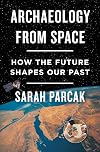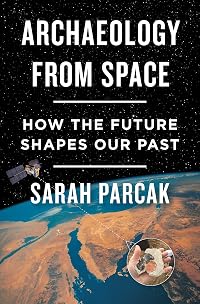
Archaeology from Space : How the Future Shapes our Past
by Sarah Parcak
On This Page
Description
"A down-and-out so-and-so gets more than she bargained for when new technologies developed for use in space allow an anthropologist a new perspective on earth's ancient histories and new ways of coping with those"--Tags
Recommendations












Member Reviews
Informative, humorous and inspiring!
Sarah Parcak is enthusiastic and stimulating about archaeological data gathering, and advances in that field, of how satellite imaging has helped amongst many things, new archeological discoveries and assisted in the investigation of looting of sites globally. A leader in her field, a winner of the Ted talk 2015 million dollar award, and a force to be reckoned with.
Yet there is a humility to her writing that makes this book so much more engaging. She's witty and a fabulous communicator making this work so very approachable.
I felt like I was actually there with her. I'm no archeological or technological buff but I was mostly able to understand what she was talking about. She brings to the topic show more excitement, awe and the ability to inspire. This book is just so very readable!
Her humorous part about meeting Harrison Ford I found delightful. Actually she has quite a few humorous, even self deprecating asides throughout the book.
I remember traveling by bus (yes it was dangerous) across Mexico many, many moons ago, looking at the shapes of the mountains and the jungles and wondering what was hidden there. It seems Sarah and her associates may have found that way.
I read with some excitement about the investigations in Newfoundland. Having followed Norse settlements around that isle including L’Anse aux Meadows, over to Ireland, and whenever I'm in a part of the world where this is relevant, added to my delight. Her remarks about Vinland are fascinating, including her statement, 'I believe that more Norse sites will be found in Canada in the next decade.'
And then at the last there is what is happening now via the GlobalXplorer (GX) platform where ordinary folk can contribute to discovering the history of our civilizations. Parcak's 'inspiring idea' for the Ted talk award 'that would lead to global change', was to 'discover the millions of unknown archaeological sites across the globe. By building an online citizen-science platform and training a 21st-century army of global explorers, [to] find and protect the world’s hidden heritage, which contains clues to humankind’s collective resilience and creativity.'
As Sarah so aptly paraphrases at one stage, 'The game is afoot.'
And we could be part of it!
A Henry Holt ARC via NetGalley show less
Sarah Parcak is enthusiastic and stimulating about archaeological data gathering, and advances in that field, of how satellite imaging has helped amongst many things, new archeological discoveries and assisted in the investigation of looting of sites globally. A leader in her field, a winner of the Ted talk 2015 million dollar award, and a force to be reckoned with.
Yet there is a humility to her writing that makes this book so much more engaging. She's witty and a fabulous communicator making this work so very approachable.
I felt like I was actually there with her. I'm no archeological or technological buff but I was mostly able to understand what she was talking about. She brings to the topic show more excitement, awe and the ability to inspire. This book is just so very readable!
Her humorous part about meeting Harrison Ford I found delightful. Actually she has quite a few humorous, even self deprecating asides throughout the book.
I remember traveling by bus (yes it was dangerous) across Mexico many, many moons ago, looking at the shapes of the mountains and the jungles and wondering what was hidden there. It seems Sarah and her associates may have found that way.
I read with some excitement about the investigations in Newfoundland. Having followed Norse settlements around that isle including L’Anse aux Meadows, over to Ireland, and whenever I'm in a part of the world where this is relevant, added to my delight. Her remarks about Vinland are fascinating, including her statement, 'I believe that more Norse sites will be found in Canada in the next decade.'
And then at the last there is what is happening now via the GlobalXplorer (GX) platform where ordinary folk can contribute to discovering the history of our civilizations. Parcak's 'inspiring idea' for the Ted talk award 'that would lead to global change', was to 'discover the millions of unknown archaeological sites across the globe. By building an online citizen-science platform and training a 21st-century army of global explorers, [to] find and protect the world’s hidden heritage, which contains clues to humankind’s collective resilience and creativity.'
As Sarah so aptly paraphrases at one stage, 'The game is afoot.'
And we could be part of it!
A Henry Holt ARC via NetGalley show less
I requested an advance review copy of this last year from LibraryThing but I wasn't selected. As I only request books I am interested in (novel concept, I know, but some people just like to get lots of books and shotgun their requests...I'm judicious with the reading time I have left!), I filed it away for some day in the future to look for after it was published. So it's someday. Actually, last month was someday. I finished this at the end of January, but have had a hard time taking the time to write reviews. Call it "reviewer's block". Anyway...
Ms. Parcak writes a fun, informative, encouraging (and discouraging...more on that later) book. She talks about different technologies, her and others' uses of them, even projects a future of show more archeology. Not in great depth, but deep enough (pardon that...couldn't resist). And she has a sense of humor; talking about excavating Tebilla, an important port town of Egypt, and the use of 40 year old declassified satellite photos that later photos could not have picked up, she gave a bit of historical background
Some readers seem to have disliked Parcak fleshing out her story with an imagined story, but those readers clearly have no clue how to piece together puzzles from the past. That kind of approach helps, to a degree. Parcak says of the makeup of an excavation team: to "know anything about the function of an object requires so much more than the object in isolation, which is why a dig team pools such varied expertise." For an fun eye-opener, I recommend David Macaulay’s Motel of the Mysteries. Two thousand years in the future, when an amateur archeologist crossed an "abandoned excavation site he felt the ground give way beneath him and found himself at the bottom of a shaft, which, judging from the DO NOT DISTURB sign hanging from an archaic doorknob, was clearly the entrance to a still-sealed burial chamber." I won't spoil Macaulay’s delightful book, but you should be able to imagine the point.
She talks about some of her work with the BBC, which had her analyze different locations for probable Norse sites. When told by the BBC that they had settled on a place on the island of Papa Stour in Scotland, where a couple had found on their farm a loom stone used by Vikings, she said "Hey, that place ranked last for us, eighth out of the eight sites for which we had data." And asking the director of the show if they had found anything yet, his "You'll see." prompted
A laugher for me, she said "After growing up in Maine, I’ve lived in the South now for 12 years, and I have come to like the heat. A lot." I grew up in Connecticut and have lived on both US coasts, north, south, middle and South Korea, stopping in Texas in 2007. so I've lived here 13 years. I will never like nor get used to the heat! I'm a bit older now and the cold isn't all that attractive, but the heat? Nope.
Now...discouraging... There is so much looting going on in the world (there are also the ideological destructions of Talibans and Daesh and ...) The interweb has enabled antiquities piracy and black marketing even more than the already sophisticated underworld had established. And the looting is visible from space. During "Arab Spring", Ms. Parcak met with meeting with Egypt’s ministers of tourism, foreign relations, antiquities, and foreign affairs, about which she said
In closing a chapter titled, "The Challenge", she says
Ms. Parcak writes a fun, informative, encouraging (and discouraging...more on that later) book. She talks about different technologies, her and others' uses of them, even projects a future of show more archeology. Not in great depth, but deep enough (pardon that...couldn't resist). And she has a sense of humor; talking about excavating Tebilla, an important port town of Egypt, and the use of 40 year old declassified satellite photos that later photos could not have picked up, she gave a bit of historical background
Herodotus called Artaxerxes III “a great warrior,” and he was certainly tenacious. He attacked Egypt again and again, first as head of the army and heir to the throne in 359 BC, and then as king of Persia, having knocked off 80 of his nearest and dearest at home to maintain control.The space analyses enabled the archeologists to locate walls of the city and artifacts likely residue from the sacking by Artaxerxes forces. And she pulls in her childhood idol Indiana Jones from Raiders of the Lost Ark:
The purpose of archaeology is, to quote Indiana Jones, “… the search for fact, not truth. If it’s truth you’re interested in, Dr. Tyree’s philosophy class is right down the hall.”She met Harrison Ford in 2016 after a TED talk in Vancouver:
"Indiana Jones inspired me to go into archeology," I told him, "and inspired so many in my field. from all of us, thank you."And when it came time for photos, she produced a brown fedora at which Ford shook his head. I was going to be an archeologist...when I was 10... (yeah, well, I was going to be a paleontologist when I was 8 and an anthropologist when I was 9... I read a lot even then) Of those three broad disciplines/fields, archeology still has an attraction. I like structures.
"You do realize that I was just a character, right? You know more lines from that movie than I do." [...] Maybe he's just a very good actor, but I genuinely do not think he understood the impact he'd had on recent generations of our field until that moment.
Some readers seem to have disliked Parcak fleshing out her story with an imagined story, but those readers clearly have no clue how to piece together puzzles from the past. That kind of approach helps, to a degree. Parcak says of the makeup of an excavation team: to "know anything about the function of an object requires so much more than the object in isolation, which is why a dig team pools such varied expertise." For an fun eye-opener, I recommend David Macaulay’s Motel of the Mysteries. Two thousand years in the future, when an amateur archeologist crossed an "abandoned excavation site he felt the ground give way beneath him and found himself at the bottom of a shaft, which, judging from the DO NOT DISTURB sign hanging from an archaic doorknob, was clearly the entrance to a still-sealed burial chamber." I won't spoil Macaulay’s delightful book, but you should be able to imagine the point.
She talks about some of her work with the BBC, which had her analyze different locations for probable Norse sites. When told by the BBC that they had settled on a place on the island of Papa Stour in Scotland, where a couple had found on their farm a loom stone used by Vikings, she said "Hey, that place ranked last for us, eighth out of the eight sites for which we had data." And asking the director of the show if they had found anything yet, his "You'll see." prompted
Something I do not understand about the television world is their yen for a big reveal with the presenter, to catch the “Oh my God!” moment of discovery. It frustrated the crap out of me. The team from the local archaeology unit had worked at Papa Stour for two days, but I was in the dark.She said upon seeing the 1,200 year old stone structure that her caution had nearly cost them the chance to see something ancient. Digs cost money. And time away from money-making jobs. And they're not the only things that cost. In a subsection appropriately titled "Knowledge Is Not as free as It Should Be"
Male or female, if you do not come from an upper-middle-class or a wealthy family, then your chances decrease for having an education, books, and internet access, let alone a successful career. If you’re lucky enough to have all these, plus the right connections, only then might you get the training you need to be an archaeologist. But as you begin your graduate work, you hit a literal wall. You’ll hit many of them: paywalls. Access to academic research represents one of the greatest hurdles to budding scientists across the world, when a single article from an online journal can cost $25 to download, which is easily a week’s wages for many government workers outside most Western countries. Journal subscriptions, bundled by corporate publishing superpowers such as Elsevier, can cost thousands of dollars, far beyond what any poorly funded ministry or university can affordSo true. I detest when papers are not available, or cost far more than my research is willing to pay (which is nothing.) Paywalls for information suck.
A laugher for me, she said "After growing up in Maine, I’ve lived in the South now for 12 years, and I have come to like the heat. A lot." I grew up in Connecticut and have lived on both US coasts, north, south, middle and South Korea, stopping in Texas in 2007. so I've lived here 13 years. I will never like nor get used to the heat! I'm a bit older now and the cold isn't all that attractive, but the heat? Nope.
Now...discouraging... There is so much looting going on in the world (there are also the ideological destructions of Talibans and Daesh and ...) The interweb has enabled antiquities piracy and black marketing even more than the already sophisticated underworld had established. And the looting is visible from space. During "Arab Spring", Ms. Parcak met with meeting with Egypt’s ministers of tourism, foreign relations, antiquities, and foreign affairs, about which she said
Those meetings changed my life. I knew, of course, the role of archaeology and history in global politics, but to experience them firsthand and have a role in shaping them—I had parachuted out of the ivory tower and into a bigger, scarier world.But she seems suited for it. She says "I love archaeology because it gives me insights into what it means to be human—real, physical evidence I can touch and ponder."
In closing a chapter titled, "The Challenge", she says
Archaeologists function as cultural memory hoarders, the khaki-wearing bards singing the songs of cultures long absorbed back into the earth, hoping people pause for a moment and listen. Digging is, for me, a great act of rebellion, against capitalism, the patriarchy, you name it. Because at our core, archaeologists believe that everyone in the past is worth learning about: rich and poor, mighty and weak.I feel it. I find joy when new pasts are uncovered, when artifacts are saved. I hurt when I see what looters (and poachers) are doing. And I have many things to see in my life...maybe someday I'll get to the Egypt she loves. show less
It’s not about skin color or whether someone was an immigrant or grew up on the wrong side of the donkey tracks. It’s about the human story. By the way, archaeologists are terrible gossips; we take fragments of data and spin them into grand tales of love, power, and political intrigue. Right or wrong, maybe we have added another footnote to the history of humanity.
The main challenge we face is that we are at risk of losing so much, when there is clearly so much left to find and protect.
"Empires fall but people rise."~ from Archeology From Space by Sarah Parcak
Perhaps it was the old National Geographics that Dad kept in the basement on a shelf, ordered by month and year. When I was bored I would go down and grab a dozen to read. I loved articles about Egypt and the evolution of mankind.
Or perhaps it was the big Time-Life book about early humans in the living room magazine rack. Or Gods, Graves, and Scholars which I read over and over as a teen.
By the time I took anthropology classes at college I was already long interested in humanity's distant past. I still enjoy reading articles about the latest finds and discoveries.
For Sarah Parcak, Indiana Jones in The Raiders of the Lost Ark fired her imagination. When she met show more Harrison Ford she brandished her fedora. (Hopefully, she never stapled it to her head to keep it on like Ford had to while filming!)
Parcak's grandfather was a WWII veteran of the 101st Airborne Division with a Ph.D. in forestry. He used aerial photography in his research.
Now Parcak is an archaeologist like Indy and uses space shots of Earth in her research. Archaeology from Space is the exciting story of how this cutting-edge technique helped her to discover thousands of previously unknown archeological sites, leading to new understandings of who we are by studying who we have been in the past.
I was enthralled by Parcak's imagining the life of an ancient Egyptian woman, spinning her story out of the excavated bones found at Tell Ibrahim Awad in Egypt.
She tells of the ups and downs of Egyptian empires to show how resilient humans are noting, "We've survived for over 200,000 years, and that's a decent track record." Yes, climate change is going to bring unimaginable challenges and disasters, but humans will survive.
Understanding how we have survived in the past helps us to understand--and affirm--our strengths. But sadly, looting has destroyed unstudied archeological sites all over the world. She describes landscapes littered with bones, mummy linens, and shards. The looted artifacts are sold online. Even the Christian founder of the craft and decor chain Hobby Lobby knowingly purchases stolen artifacts.
Parcak predicts all sites will be looted by mid-century. It is imperative to protect them. Her winning TED mission statement led to her creation of GlobalXplorer which gives the public a chance to participate in the important work of identifying unknown archeological sites using satellite imagery.
This is more than a book about digging around for the past; it's about the challenges of being a woman in archeology, envisioning new technologies, and how humans can use to past to better face the future.
I received a book from the publisher through LibraryThing. My review is fair and unbiased show less
Perhaps it was the old National Geographics that Dad kept in the basement on a shelf, ordered by month and year. When I was bored I would go down and grab a dozen to read. I loved articles about Egypt and the evolution of mankind.
Or perhaps it was the big Time-Life book about early humans in the living room magazine rack. Or Gods, Graves, and Scholars which I read over and over as a teen.
By the time I took anthropology classes at college I was already long interested in humanity's distant past. I still enjoy reading articles about the latest finds and discoveries.
For Sarah Parcak, Indiana Jones in The Raiders of the Lost Ark fired her imagination. When she met show more Harrison Ford she brandished her fedora. (Hopefully, she never stapled it to her head to keep it on like Ford had to while filming!)
Parcak's grandfather was a WWII veteran of the 101st Airborne Division with a Ph.D. in forestry. He used aerial photography in his research.
Now Parcak is an archaeologist like Indy and uses space shots of Earth in her research. Archaeology from Space is the exciting story of how this cutting-edge technique helped her to discover thousands of previously unknown archeological sites, leading to new understandings of who we are by studying who we have been in the past.
I was enthralled by Parcak's imagining the life of an ancient Egyptian woman, spinning her story out of the excavated bones found at Tell Ibrahim Awad in Egypt.
She tells of the ups and downs of Egyptian empires to show how resilient humans are noting, "We've survived for over 200,000 years, and that's a decent track record." Yes, climate change is going to bring unimaginable challenges and disasters, but humans will survive.
Understanding how we have survived in the past helps us to understand--and affirm--our strengths. But sadly, looting has destroyed unstudied archeological sites all over the world. She describes landscapes littered with bones, mummy linens, and shards. The looted artifacts are sold online. Even the Christian founder of the craft and decor chain Hobby Lobby knowingly purchases stolen artifacts.
Parcak predicts all sites will be looted by mid-century. It is imperative to protect them. Her winning TED mission statement led to her creation of GlobalXplorer which gives the public a chance to participate in the important work of identifying unknown archeological sites using satellite imagery.
This is more than a book about digging around for the past; it's about the challenges of being a woman in archeology, envisioning new technologies, and how humans can use to past to better face the future.
I received a book from the publisher through LibraryThing. My review is fair and unbiased show less
 This review was written for LibraryThing Early Reviewers.
Sarah Parcak describes how satellite images of the Earth, similar to Google Earth, are being used to help archaeologists decide where to dig. She looks at sites in Europe and the Americas before taking us on a tour of potential archaeological sites round the world and in particular in Egypt, her speciality.
She explains the race against time with sites being lost to development and climate change and then turns her ire on looters and the buyers of antiquities who enable them. Finally she explores crowd processing as a way to give everyone more of a stake in archaeology.
It was a bit heavy-going in places, especially in the first half, but was all in all a fascinating look at how a new field is being established.
She explains the race against time with sites being lost to development and climate change and then turns her ire on looters and the buyers of antiquities who enable them. Finally she explores crowd processing as a way to give everyone more of a stake in archaeology.
It was a bit heavy-going in places, especially in the first half, but was all in all a fascinating look at how a new field is being established.
Author Sarah Parcak begins her book with a look at what can be currently accomplished in archaeology with NASA’s state of the art satellite imaging.
Parcak enthuses over what satellite images from the 1700 earth-orbiting satellites can detect – from the older cold war Corona images, to the newer techniques using false (amplified) color and a Laser imaging technology called LIDAR.
She was first captured by aerial images from planes and hot air balloons which her grandfather shared with her when she was a child. And then, part way through her already successful archaeological career using very standard techniques such as magnetometry, she tried some satellite imaging – and detectied previously unknown Viking settlements in North show more America, followed by a huge extension of the ancient Egyptian capital of Tanis, along with Mayan and Cambodian ruins long unknown due to being hidden by dense vegetation.
Her enthusiasm extends to how our knowledge of other planets may be enhanced by studying ruins that explain their civilizations’ histories – even if the civilization is totally gone.
And lastly, she explains her platform GlobalXplorer or GX. This is a satellite imaging evaluation site where students and citizen scientists can examine satellite earth images for signs of unknown habitations and also evidence of looting. She was able to develop this platform by winning a $1 million dollar TED prize in 2016.
All applying for the TED prize are limited to fifty words. Here are hers:
“I wish for us to discover the millions of unknown archaeological sites across the globe. By building an online citizen-science platform and training a 21st army of global explorers, we’ll find and protect the world’s hidden heritage, which contains clues to humankind’s collective resilience and creativity.” P219
It leads users from game-like learning techniques of known sites to evaluating actual data. What an online learning adventure this would be during this era of homeschooling students!
Throughout the book, she writes in an easily understood, straightforward, enthusiastic style. Although some may be left wanting more information on her techniques, I was drawn quickly and happily through a complicated subject about which I previously knew nothing.
Fascinating narrative non-fiction – 4.25 stars. show less
Parcak enthuses over what satellite images from the 1700 earth-orbiting satellites can detect – from the older cold war Corona images, to the newer techniques using false (amplified) color and a Laser imaging technology called LIDAR.
She was first captured by aerial images from planes and hot air balloons which her grandfather shared with her when she was a child. And then, part way through her already successful archaeological career using very standard techniques such as magnetometry, she tried some satellite imaging – and detectied previously unknown Viking settlements in North show more America, followed by a huge extension of the ancient Egyptian capital of Tanis, along with Mayan and Cambodian ruins long unknown due to being hidden by dense vegetation.
Her enthusiasm extends to how our knowledge of other planets may be enhanced by studying ruins that explain their civilizations’ histories – even if the civilization is totally gone.
And lastly, she explains her platform GlobalXplorer or GX. This is a satellite imaging evaluation site where students and citizen scientists can examine satellite earth images for signs of unknown habitations and also evidence of looting. She was able to develop this platform by winning a $1 million dollar TED prize in 2016.
All applying for the TED prize are limited to fifty words. Here are hers:
“I wish for us to discover the millions of unknown archaeological sites across the globe. By building an online citizen-science platform and training a 21st army of global explorers, we’ll find and protect the world’s hidden heritage, which contains clues to humankind’s collective resilience and creativity.” P219
It leads users from game-like learning techniques of known sites to evaluating actual data. What an online learning adventure this would be during this era of homeschooling students!
Throughout the book, she writes in an easily understood, straightforward, enthusiastic style. Although some may be left wanting more information on her techniques, I was drawn quickly and happily through a complicated subject about which I previously knew nothing.
Fascinating narrative non-fiction – 4.25 stars. show less
This book is part memoir, part introduction to archaeology, part discussion of the technological advances in the field, and part call to prevent looting of of archaeological sites. There is also a smattering of historical fiction stories as Parcak describes one particular Egyptian dig site in detail.
The book covers enough different topics that I imagine a lot of readers will end up skimming or skipping parts of it, but Parcak's writing is clear and engaging. It's amazing how rapidly the field of archaeology is changing with technological advances. Parcak even has one science fiction chapter in which she imagines a near future where an entire archaeological site can be mapped and explored in a few hours with satellites and drones, and show more then she explains how this future really isn't very far off. Her enthusiasm and passion are contagious, and she makes a very strong case for why archaeology is important. show less
The book covers enough different topics that I imagine a lot of readers will end up skimming or skipping parts of it, but Parcak's writing is clear and engaging. It's amazing how rapidly the field of archaeology is changing with technological advances. Parcak even has one science fiction chapter in which she imagines a near future where an entire archaeological site can be mapped and explored in a few hours with satellites and drones, and show more then she explains how this future really isn't very far off. Her enthusiasm and passion are contagious, and she makes a very strong case for why archaeology is important. show less
I picked up Archaeology From Space because it was on the new books shelf at my local library, had a Library of Congress call number prefix I hadn't read before, and looked interesting. Knowing nothing about archaeology past what I've seen in Indiana Jones movies, I was looking forward to getting an education.
This book is definitely interesting and worth reading, but I did not love every aspect of it. I did not always understand the author's attempts at humor (she should have kept the tone more serious, not everybody can pull off being Mary Roach), and I did not enjoy reading her fictionalized accounts of Egyptians or future archaeologists.
That said, the book really picked up especially for the last several chapters and I found myself show more having a hard time putting this book down. I appreciated the intersectional approach to archaeology a refreshing change from most STEM-focused books written by men, and had my eyes opened to the issues of looting on a global scale contributing to the erasure our planet's history.
Definitely worth a read if you're into history, archaeology, anthropology, or just need something different to read. show less
This book is definitely interesting and worth reading, but I did not love every aspect of it. I did not always understand the author's attempts at humor (she should have kept the tone more serious, not everybody can pull off being Mary Roach), and I did not enjoy reading her fictionalized accounts of Egyptians or future archaeologists.
That said, the book really picked up especially for the last several chapters and I found myself show more having a hard time putting this book down. I appreciated the intersectional approach to archaeology a refreshing change from most STEM-focused books written by men, and had my eyes opened to the issues of looting on a global scale contributing to the erasure our planet's history.
Definitely worth a read if you're into history, archaeology, anthropology, or just need something different to read. show less
Members
- Recently Added By
Lists

Science: Astronomy
62 works; 2 members

Macmillan Publishers
129 works; 3 members
Author Information

3+ Works 285 Members
Awards and Honors
Distinctions
Common Knowledge
- Canonical title
- Archaeology from Space : How the Future Shapes our Past
- Original publication date
- 2019
- Important places
- Tanis, Egypt
- Dedication
- This book is dedicated to Susan Young, our family Pensieve
- First words
- My entire life is in ruins.
- Last words
- (Click to show. Warning: May contain spoilers.)Our future depends on our ability to search from above and beneath, so we can look out to the stars and beyond, just like our ancestors did.
- Blurbers
- Anderson, Chris; Jackson, Peter; Boylan, Jennifer Finney; Whitaker, Bill; Brusatte, Steve; Berwald, Juli
- Original language
- English
Classifications
- Genres
- Anthropology, Science & Nature, Nonfiction, General Nonfiction, History, Technology, Biography & Memoir
- DDC/MDS
- 930.1 — History & geography History of ancient world (to ca. 499) Ancient History: China, Egypt, Rome, Greece Archaeology
- LCC
- CC76.4 .P36 — Auxiliary Sciences of History Archaeology Archaeology Philosophy. Theory Methodology
- BISAC
Statistics
- Members
- 256
- Popularity
- 126,900
- Reviews
- 13
- Rating
- (3.60)
- Languages
- English, Italian, Spanish, Turkish
- Media
- Paper, Audiobook, Ebook
- ISBNs
- 7
- ASINs
- 2