On This Page
Description
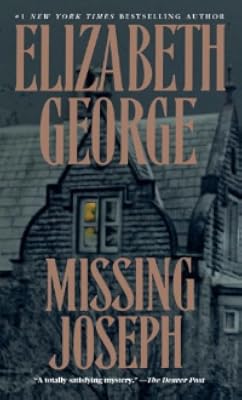
Fiction. Mystery. Suspense. Thriller. HTML:Deborah and Simon St. James have taken a holiday in the winter landscape of Lancastershire, hoping to heal the growing rift in their marriage. But in the barren countryside awaits bleak news: The vicar of Wimslough, the man they had come to see, is dead—a victim of accidental poisoning. Unsatisfied with the inquest ruling and unsettled by the close association between the investigating constable and the woman who served the deadly meal, Simon show more calls in his old friend Detective Inspector Thomas Lynley. Together they uncover dark, complex relationships in this rural village, relationships that bring men and women together with a passion, with grief, or with the intention to kill. Peeling away layer after layer of personal history to reveal the torment of a fugitive spirit, Missing Joseph is award-winning author Elizabeth George's greatest achievement. show lessTags
Recommendations



Member Reviews
content warning (for the book, not this review): sexual assault- violent rape
okay... yeah... no.
nope.
so 'missing joseph' was a total slog. i found it awkward and clunky, and very disjointed. there's just a lot going on here, and - for me - it did not come together very well. the main characters are still completely appealing, though barbara havers is not as present in this instalment of the series. she's a bit on the fringes of this one, with a couple of (slightly) longer moments where we get to spend more time with her. the mystery itself... was okay-ish, though a bit of a wacky stretch, really. as well, there is this tangential story arc that felt purposeless to me, and i'm still pondering that. the final few pages were an odd choice show more for how to wrap this story up.
while this book was a dud for me... i will press on with the series. i thought i was maybe an outlier in finding book #6 disappointing, but in scanning the GR reviews i am definitely not alone. the series is a favourite with several of my reading friends, so i'm just taking #6 as an unfortunate blip.
onward! show less
okay... yeah... no.
nope.
so 'missing joseph' was a total slog. i found it awkward and clunky, and very disjointed. there's just a lot going on here, and - for me - it did not come together very well. the main characters are still completely appealing, though barbara havers is not as present in this instalment of the series. she's a bit on the fringes of this one, with a couple of (slightly) longer moments where we get to spend more time with her. the mystery itself... was okay-ish, though a bit of a wacky stretch, really. as well, there is this tangential story arc that felt purposeless to me, and i'm still pondering that. the final few pages were an odd choice show more for how to wrap this story up.
while this book was a dud for me... i will press on with the series. i thought i was maybe an outlier in finding book #6 disappointing, but in scanning the GR reviews i am definitely not alone. the series is a favourite with several of my reading friends, so i'm just taking #6 as an unfortunate blip.
onward! show less
Far too much of Deborah's whinging on and on about not being able to have a baby. Oh woe is her that she hangs her entire identity on the lowest common denominator of all life on earth. Imagine having self-worth outside of the ability to procreate. The thought!
I loved the first Lynley mystery, A Great Deliverance, which moved me to tears and I rated five stars. I really like George's style of writing--it flows so well--and her detectives--especially Havers, even over Lynley. I've read that the later books (there are 16 to date) are stronger than the early ones, but so far, with an uptick here and there along the way (I did love Well-Schooled in Murder) these novels seem to be getting weaker, not stronger.
The book opens with Deborah St. James angsting over her inability to have a child. She takes refuge from the rain in a museum, and contemplates a Da Vinci Madonna and child. A man, who turns out to be a vicar, sits down next to her and mutters it's "missing Joseph." That it seems so few show more pictures of the infant Jesus include his father. Deborah finds a connection with the man, and she and her husband Simon go up to visit him in Lancashire--only to find he's died in what's been ruled to be an accidental poisoning.
As you might be able to tell from that title, the relationship between parent and child is key in both the mystery and the arc of the recurring characters. How it features in this mystery though defines far-fetched and overwrought. In fact no one in this novel acts in any way I find credible.
There are two things that just kill this for me though. One is the almost complete absence of Havers. I really couldn't care less about the St Jameses or their marriage. I find Deborah whiny and annoying. What I loved in the first Lynley novel was the acerbic, working class Havers, and how she played off the smoothly aristocratic Lynley. So my favorite character is practically absent, staying down in London, while my least favorite character is far too much to the fore. Also, yes, though I like George's writing and tend to think she's more than just a decent genre writer, I do want to read a good mystery, and like the preceding book, For the Sake of Helena, George cheats, entering into the mind of the murderer in a way that should strike the person off the suspect list. It makes me wary of reading more of George. I will be reading the next book in the series however, and dearly hope there'll be a lot less of the St Jameses, and a lot more of Havers. show less
The book opens with Deborah St. James angsting over her inability to have a child. She takes refuge from the rain in a museum, and contemplates a Da Vinci Madonna and child. A man, who turns out to be a vicar, sits down next to her and mutters it's "missing Joseph." That it seems so few show more pictures of the infant Jesus include his father. Deborah finds a connection with the man, and she and her husband Simon go up to visit him in Lancashire--only to find he's died in what's been ruled to be an accidental poisoning.
As you might be able to tell from that title, the relationship between parent and child is key in both the mystery and the arc of the recurring characters. How it features in this mystery though defines far-fetched and overwrought. In fact no one in this novel acts in any way I find credible.
There are two things that just kill this for me though. One is the almost complete absence of Havers. I really couldn't care less about the St Jameses or their marriage. I find Deborah whiny and annoying. What I loved in the first Lynley novel was the acerbic, working class Havers, and how she played off the smoothly aristocratic Lynley. So my favorite character is practically absent, staying down in London, while my least favorite character is far too much to the fore. Also, yes, though I like George's writing and tend to think she's more than just a decent genre writer, I do want to read a good mystery, and like the preceding book, For the Sake of Helena, George cheats, entering into the mind of the murderer in a way that should strike the person off the suspect list. It makes me wary of reading more of George. I will be reading the next book in the series however, and dearly hope there'll be a lot less of the St Jameses, and a lot more of Havers. show less
Wow. So "Missing Joseph" packs a punch. George really looks at a variety of relationships and in the end you kind of want to go why do women even deal with men? Except in the case of St. James and his wife Deborah where she continues to be the worst. There's also a look at the mother and child relationship and how those differ with regards to fathers. There is the usual mess with Deborah and honestly that's the main reason why I dropped this book a star. It's getting old. I hope George moves on from this story-line in the next book.
When St. James and Deborah go to visit Lancastershire they find out that a vicar that Deborah met and was behind the visit is dead. He accidentally digested hemlock and the local constable (Colin Shephard) show more found the woman (Mrs. Juliet Spence) who accidentally provided him the hemlock was cleared. The locals feel differently though since Shepard and Mrs. Spence are lovers. When St. James starts going over how hemlock is first diagnosed he has questions about how a known herbalist could have accidentally picked it and given it to someone to eat. He calls up Inspector Lynley who is happy to be away from Helen at the moment and the two men investigate.
I thought George actually did a better job with the secondary characters in this one than with the main ones. Juliet is a woman with a past and she was reluctant to become involved with Shephard but did. She's torn between her love of her daughter and wanting to keep her from doing something she will regret to wanting to still be with Shephard even though she knows it can't last.
Maggie Spence is 13 and I wanted to hug her. She's tied up in missing a father she never knew and telling herself she is in love with a 15 year old boy who is just as clueless as she is. Maggie is determined to get the family that she wants to make her feel loved.
Shepherd was garbage. George developed him very well though but there's a scene that made me rage. His blindness of things and his treatment of women is definitely a theme that keeps playing out in George's books.
Polly, a childhood friend of Shephard who practices Wicca who wanted Shephard to love her is the most changed by the end of this book. With her realizing eventually that just because you love someone does not mean that they deserve that love was heartbreaking.
Brendan who fancies himself in love with Poppy and is regretting the marriage he got forced into with the local rich man's daughter.
Lynley and Helen have become exhausting. Get married or don't, I just don't want to read about it anymore. George shows though that Lynley wants to dominate Helen though and marriage to him would mean that she would be there for him always. I just shook my head. St. James is the only male character that understands what marriage and love is. He keeps dealing with Deborah and her insistence on trying to get pregnant though the doctor has flat out told her she needs to give herself a year at least to wait to try again or she may end up dying. Her acting as if St. James is the selfish one gave me a headache.
Havers was barely in this one. I was ticked about that. We get to see her moving on from her family home and becoming more settled in the next stage of her life which was good.
The writing was graphic at times. Warning there is a rape scene in the book that had me checking my alarm was on before I fell asleep. The flow was a bit slow at first with just St. James and Deborah and I felt myself getting bored which hasn't happened before. Things picked up anytime we left those two behind.
The setting of Lancastershire was interesting. It seemed to be a fairly liberal place with people not really focusing on religion. That said, there was a lot of ugliness going on that George manages to tap into when you follow the primary and secondary characters.
The ending was a shocker. I honestly didn't know who the perpetrator(s) was and why they did it. When we get to the reveals I was like oh my goodness! I think ending it on the villagers after Lynley and others had left was a good idea. We can get a semblance of an idea of what will happen next. show less
When St. James and Deborah go to visit Lancastershire they find out that a vicar that Deborah met and was behind the visit is dead. He accidentally digested hemlock and the local constable (Colin Shephard) show more found the woman (Mrs. Juliet Spence) who accidentally provided him the hemlock was cleared. The locals feel differently though since Shepard and Mrs. Spence are lovers. When St. James starts going over how hemlock is first diagnosed he has questions about how a known herbalist could have accidentally picked it and given it to someone to eat. He calls up Inspector Lynley who is happy to be away from Helen at the moment and the two men investigate.
I thought George actually did a better job with the secondary characters in this one than with the main ones. Juliet is a woman with a past and she was reluctant to become involved with Shephard but did. She's torn between her love of her daughter and wanting to keep her from doing something she will regret to wanting to still be with Shephard even though she knows it can't last.
Maggie Spence is 13 and I wanted to hug her. She's tied up in missing a father she never knew and telling herself she is in love with a 15 year old boy who is just as clueless as she is. Maggie is determined to get the family that she wants to make her feel loved.
Shepherd was garbage. George developed him very well though but there's a scene that made me rage. His blindness of things and his treatment of women is definitely a theme that keeps playing out in George's books.
Polly, a childhood friend of Shephard who practices Wicca who wanted Shephard to love her is the most changed by the end of this book. With her realizing eventually that just because you love someone does not mean that they deserve that love was heartbreaking.
Brendan who fancies himself in love with Poppy and is regretting the marriage he got forced into with the local rich man's daughter.
Lynley and Helen have become exhausting. Get married or don't, I just don't want to read about it anymore. George shows though that Lynley wants to dominate Helen though and marriage to him would mean that she would be there for him always. I just shook my head. St. James is the only male character that understands what marriage and love is. He keeps dealing with Deborah and her insistence on trying to get pregnant though the doctor has flat out told her she needs to give herself a year at least to wait to try again or she may end up dying. Her acting as if St. James is the selfish one gave me a headache.
Havers was barely in this one. I was ticked about that. We get to see her moving on from her family home and becoming more settled in the next stage of her life which was good.
The writing was graphic at times. Warning there is a rape scene in the book that had me checking my alarm was on before I fell asleep. The flow was a bit slow at first with just St. James and Deborah and I felt myself getting bored which hasn't happened before. Things picked up anytime we left those two behind.
The setting of Lancastershire was interesting. It seemed to be a fairly liberal place with people not really focusing on religion. That said, there was a lot of ugliness going on that George manages to tap into when you follow the primary and secondary characters.
The ending was a shocker. I honestly didn't know who the perpetrator(s) was and why they did it. When we get to the reveals I was like oh my goodness! I think ending it on the villagers after Lynley and others had left was a good idea. We can get a semblance of an idea of what will happen next. show less
What excelled here, as usual, was the characterization. The rape scene was devastating. This book also raised interesting questions about motherhood as well as teenage sexuality and autonomy.
The mystery was not that compelling, and the writing was a bit overwrought (even for Elizabeth George). While Tommy Lynley and Helen Clyde were charming, fascinating, and believable, as always, Simon and Deborah stumbled through their tedious marital dramas once again.
Favorite lines:
1. Elizabeth George channeling Raymond Chandler in describing a femme fatale:
"She was the sort of woman who asked for the once-over twice or more."
2. Tommy and Helen, of course:
"'Making love is easy enough. It's living with it that's the devil.'"
3. Helen:
"'But grief show more comes with love, eventually. It has to. It's only the timing that no one can be sure of.'"
FORESHADOWING!!! show less
The mystery was not that compelling, and the writing was a bit overwrought (even for Elizabeth George). While Tommy Lynley and Helen Clyde were charming, fascinating, and believable, as always, Simon and Deborah stumbled through their tedious marital dramas once again.
Favorite lines:
1. Elizabeth George channeling Raymond Chandler in describing a femme fatale:
"She was the sort of woman who asked for the once-over twice or more."
2. Tommy and Helen, of course:
"'Making love is easy enough. It's living with it that's the devil.'"
3. Helen:
"'But grief show more comes with love, eventually. It has to. It's only the timing that no one can be sure of.'"
FORESHADOWING!!! show less
Elizabeth George is one of the premier “English-mystery” writers. As it happens, she lives and writes in California, but she apparently studied in England and does locale-specific research before each new novel. She’s very good at capturing the local dialect and geographic description, but, my goodness, I suspect she must have a peculiar love life because the characters of the two novels I’ve read have such bizarre, intertwined lives.
Her main character is Inspector Thomas Lynley, a certifiable Earl, who is in love with Lady Helen, who at one time had an affair with Lynley’s best friend and colleague, forensic pathologist Simon St. James, who is married to Deborah, who had an earlier affair with Lynley and lost his baby. show more Deborah is quite a few years younger than St. James and was apparently his ward — it’s not completely spelled out in this one, but my wife, who is a great fan of George assures me that reading them in order will straighten things out. Whew!
Lynley’s acerbic partner is Sergeant Barbara Havers. I think I like her character the best because she is so good at putting Lynley in his place. Anyway, in this novel, the local vicar, Mr. Sage, has been killed by accidentally ingesting water hemlock (a nasty, poisonous plant) inadvertently provided to him for dinner by Mrs. Juliet Spence, who is in love with the local constable, Colin Shepherd.
Shepherd’s investigation clears Mrs. Spence, whose daughter Maggie is sleeping with Nick, who wants to be a vet. In the meantime, Polly, daughter of the local 20 stone (English measure of weight) witch, is in love with Colin (who later rapes her), but she in turn is being lusted after by Brendon, who was forced to marry—after he got her pregnant— Rebecca, whom he utterly loathes but was reluctant to retreat from because he is a lawyer in the firm owned by her father. Whew, again!
In any case, Lynley becomes involved because St. James and Deborah have gone on holiday to this little town, and St. James realizes that something is fishy about the death of the vicar. The inquest and coroner had ruled the death an accident, following a rather clumsy investigation by Colin who, as I mentioned, is having an affair with the lady who administered the poisonous herbs mistakenly thinking they were parsnips. Apparently, New Scotland Yard CID inspectors can run around investigating closed cases in other jurisdictions willy-nilly.
Actually, this is a riveting novel with very interesting characters, but I do worry about Ms. George’s love life. show less
Her main character is Inspector Thomas Lynley, a certifiable Earl, who is in love with Lady Helen, who at one time had an affair with Lynley’s best friend and colleague, forensic pathologist Simon St. James, who is married to Deborah, who had an earlier affair with Lynley and lost his baby. show more Deborah is quite a few years younger than St. James and was apparently his ward — it’s not completely spelled out in this one, but my wife, who is a great fan of George assures me that reading them in order will straighten things out. Whew!
Lynley’s acerbic partner is Sergeant Barbara Havers. I think I like her character the best because she is so good at putting Lynley in his place. Anyway, in this novel, the local vicar, Mr. Sage, has been killed by accidentally ingesting water hemlock (a nasty, poisonous plant) inadvertently provided to him for dinner by Mrs. Juliet Spence, who is in love with the local constable, Colin Shepherd.
Shepherd’s investigation clears Mrs. Spence, whose daughter Maggie is sleeping with Nick, who wants to be a vet. In the meantime, Polly, daughter of the local 20 stone (English measure of weight) witch, is in love with Colin (who later rapes her), but she in turn is being lusted after by Brendon, who was forced to marry—after he got her pregnant— Rebecca, whom he utterly loathes but was reluctant to retreat from because he is a lawyer in the firm owned by her father. Whew, again!
In any case, Lynley becomes involved because St. James and Deborah have gone on holiday to this little town, and St. James realizes that something is fishy about the death of the vicar. The inquest and coroner had ruled the death an accident, following a rather clumsy investigation by Colin who, as I mentioned, is having an affair with the lady who administered the poisonous herbs mistakenly thinking they were parsnips. Apparently, New Scotland Yard CID inspectors can run around investigating closed cases in other jurisdictions willy-nilly.
Actually, this is a riveting novel with very interesting characters, but I do worry about Ms. George’s love life. show less
This one takes place in Lancashire, in the winter, where Simon and Deborah have gone for a short vacation. Thomas and Helen are still trying to decide about marriage, when he receives the call from Simon. Of course there's been a murder in Lancashire, and of course Lynley must go and investigate. The priest that Deborah met in a London museum, who first told her about his village in Lancashire, is the one who has been murdered. The case was investigated, and local police have determined it was an accidental poisoning. But alas, it was no accident.
I like this one a lot. There's a history behind the murder which took me quite a while to guess, and only in part.
I found myself getting sick of Helen's putting off Thomas on the question of show more marriage. I understand her reluctance, but I don't understand her life choices, and find I wonder what Thomas sees in her, She doesn't need to work, being titled and monied, but neither does she have any purpose or passion. She comes across much more sympathetically in the Masterpiece series. show less
I like this one a lot. There's a history behind the murder which took me quite a while to guess, and only in part.
I found myself getting sick of Helen's putting off Thomas on the question of show more marriage. I understand her reluctance, but I don't understand her life choices, and find I wonder what Thomas sees in her, She doesn't need to work, being titled and monied, but neither does she have any purpose or passion. She comes across much more sympathetically in the Masterpiece series. show less
Members
- Recently Added By
Lists

British Mystery
469 works; 14 members

Books Read in 2017
4,249 works; 129 members
Author Information

79+ Works 52,932 Members
Elizabeth George was born on February 26, 1949, in Warren, Ohio. She received a bachelor's degree in education from the University of California in Riverside and a master's degree in counseling/psychology from California State University at Fullerton. She taught English in high school for about thirteen years before leaving to become a full-time show more writer. She is the New York Times and internationally best selling author of twenty British crime novels featuring Detective Inspector Thomas Lynley and his unconventional partner Detective Sergeant Barbara Havers. Her novel, A Great Deliverance, won the Anthony Award, the Agatha Award, and France's Le Grand Prix de Literature Policiere in 1989. Her crime novels have been translated into 30 languages and featured on television by the BBC. She is also the author of a young adult series set on the island where she lives in the state of Washington. Her title's include Edge of Light, The Edge of the Shadows, The Edge of the Water, I, Richard, and The Punishment She Deserves. (Bowker Author Biography) show less
Some Editions
Series

Belongs to Publisher Series
Work Relationships
Is contained in
Common Knowledge
- Canonical title
- Missing Joseph
- Original title
- Missing Joseph
- Original publication date
- 1993
- People/Characters
- Thomas Lynley; Barbara Havers; Deborah St. James; Simon Allcourt-St. James; Robin Sage; Juliet Spence (show all 10); Maggie Spence; Polly Yarkin; Colin Shepherd; Nick Ware
- Important places
- Scotland Yard, London, England, UK; Winslough, Lancashire, England
- Related movies
- The Inspector Lynley Mysteries: Missing Joseph (2002 | IMDb)
- Epigraph
- I have done nothing but in care of thee,
Of thee, my dear one, thee, my daughter, who
Art ignorant of what thou art, naught knowing
Of whence I am . . .
~ The Tempest - Dedication
- For Deborah
- First words
- Cappuccino.
- Quotations
- This is what it's like ... At first it's the fear of something larger than yourself - something over which you have no control and only limited understanding - that's inside her body with a power of its own. Then it's the ang... (show all)er that some rotten disease cut into her life and yours and made a mess of both. And then it's the panic because no one has any answers that you can believe in and everyone's answer is different from everyone else's anyway. Then it's the misery of being with her and her illness ... Then it's the horror of being trapped in your house with the sights and the smells and the sounds of her dying.... So when it's over and she's gone, you don't feel released the way everyone thinks you probably feel. Instead, you feel like a form of madness.
- Last words
- (Click to show. Warning: May contain spoilers.)He felt it hard and smooth.
Classifications
Statistics
- Members
- 2,418
- Popularity
- 8,044
- Reviews
- 38
- Rating
- (3.76)
- Languages
- 10 — Dutch, English, Finnish, French, German, Italian, Norwegian (Bokmål), Russian, Spanish, Swedish
- Media
- Paper, Audiobook, Ebook
- ISBNs
- 65
- ASINs
- 26