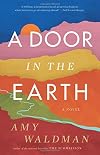
A Door in the Earth
by Amy Waldman
On This Page
Description
"Parveen Shams, a college senior in search of a calling, feels pulled between her charismatic and mercurial anthropology professor and the comfortable but predictable Afghan-American community in her Northern California hometown. When she discovers a bestselling book called Mother Afghanistan, a memoir by humanitarian Gideon Crane that has become a bible for American engagement in the country, she is inspired. Galvanized by Crane's experience, Parveen travels to a remote village in the land show more of her birth to join the work of his charitable foundation. When she arrives, however, Crane's maternity clinic, while grandly equipped, is mostly unstaffed. The villagers do not exhibit the gratitude she expected to receive. And Crane's memoir appears to be littered with mistakes, or outright fabrications. As the reasons for Parveen's pilgrimage crumble beneath her, the U.S. military, also drawn by Crane's book, turns up to pave the sole road to the village, bringing the war in their wake. When a fatal ambush occurs, Parveen must decide whether her loyalties lie with the villagers or the soldiers - and she must determine her own relationship to the truth."--Publisher description. show lessTags
Recommendations




























Member Reviews
A young American Afghan woman has just read a very popular book about life in Afghanistan and decides her life's calling is to go and help the people in a small village. The village is the subject of the book and the author has supposedly built a clinic for women in the village. After Parveen arrives, she finds a much different story than she anticipated. The clinic is there, but the doctor is only there one day a week, if that.
As the story progresses, things get more complicated as Parveen gets a real lesson in cultural differences and the effects of "doing good" when not totally understanding the culture. The war in Afghanistan is progressing so American soldiers are involved. Is a road to the village progress or a source of more show more problems to come.
This is s thought-provoking novel which presents many of the difficulties involved in working in third-world countries where the culture is so different from the western world. It is very obvious that the author was referencing the "Three Cups of Tea" book which has been discredited. I would definitely read more by this author. show less
As the story progresses, things get more complicated as Parveen gets a real lesson in cultural differences and the effects of "doing good" when not totally understanding the culture. The war in Afghanistan is progressing so American soldiers are involved. Is a road to the village progress or a source of more show more problems to come.
This is s thought-provoking novel which presents many of the difficulties involved in working in third-world countries where the culture is so different from the western world. It is very obvious that the author was referencing the "Three Cups of Tea" book which has been discredited. I would definitely read more by this author. show less
In her senior year at UC Berkeley, not quite a decade after the 911 terrorist attacks on the Twin Towers, Afghan-American anthropology student Parveen Shams happens upon a memoir, the best-selling Mother Afghanistan. In it, Dr. Gideon Crane, the prodigal son of medical missionary parents, explains his transformation from a scheming, money-obsessed physician criminally charged with Medicare fraud to a philanthropist dedicated to building women’s medical clinics in Afghanistan. Vouched for and sponsored by an evangelical mega church, the disgraced Crane claims he found a new purpose in life when, in lieu of jail time or community service in the US, he was allowed to carry out charitable medical work in Afghanistan. Now he has become a show more celebrity, earning tens of thousands of dollars for each stop on the lecture circuit. Parveen makes a point of attending one of his appearances.
The twenty-two-year-old student is particularly struck by Crane’s account of his attempt to save the life of a poor Afghan mother, Fereshta, who experienced serious complications during labour and delivery. According to Crane, the village mullah prohibited the American doctor (a foreigner, a male, and an infidel) from intervening when the unborn child became lodged in the birth canal; the woman died as a result. Haunted by her tragic death and the grief of her family, the story goes, Crane vowed to build a medical clinic in the woman’s small village to ensure that the lives of other mothers would not be lost. Since that time, Crane has built not one but several such facilities.
Like many of her fellow Americans, Parveen is inspired by the memoir. Restless and directionless, she has no real plans for life after graduation. Consequently, she decides to travel to the very village in Afghanistan where Fereshta died. Like Crane, Parveen is intoxicated by the drama of making a trip to the dangerous, war-torn country. Yes, there is a certain degree of naïve idealism in her project to assist at the clinic and perform medical anthropology fieldwork, but there are also signs of the attention-seeking and self-aggrandizement exhibited by Gideon Crane (who is obviously based on the real-life, mountain-climbing fraudster Greg Mortenson, the Three Cups of Tea author, who gained fame as a builder of Pakistani and Afghan girls’ school).
Through her protagonist, Parveen, Waldman rather heavy-handedly exposes the harm caused by bumbling and egoistic American do-gooders who are almost entirely ignorant of Afghan culture. Her novel is a send-up of both humanitarian and military interventions in post-911 Afghanistan. On arrival in the remote northern village, Parveen finds out almost immediately that the pristine, state-of-the art medical clinic has barely been used. There was briefly a male doctor on the premises, but Afghan cultural practice prohibited his providing medical care to females. There are few female physicians in the province, never mind the anesthetist who’d be needed for surgeries to occur; however, a generous female doctor and her medical-student son volunteer to drive in one day a week to care for this needy group of women, many of whom are endlessly pregnant.
Many chapters of the novel are dedicated to Parveen’s gradual uncovering of Gideon Crane’s multitudinous lies. Dr. Yasmeen is the first to fill her in on the fact that the OR, the several-bed hospital ward, and the incubators have never been used—contrary to Crane’s claims in his book that many female lives have been saved by emergency Caesarean-sections and other procedures. However, it is when Parveen undertakes translating and reading sections of Gideon Crane’s memoir to the female members of Fereshta’s family and the other village women that the extent of his distortion of the truth becomes clear. Parveen’s central dilemma revolves around what to do with this information.
The second and third sections of the three-part novel revolve around the arrival of the American military, in whom Dr. Gideon’s book has inspired the idea of blasting a proper road into the village. An evenly paved surface into the community will improve its economic prospects and make it easier for medical personnel to access the place. The village council is silently opposed to the project, and, it turns out, for good reason. The American presence in this corner of the country attracts insurgents who begin placing IEDs, killing or maiming local labourers and military personnel.
Waldman’s is a fairly incident-rich novel. The details provided reflect the author’s considerable knowledge of Afghan culture. There are several subplots, and the author weighs in on many aspects of American attitudes to and presence in Afghanistan. It is necessary for the reader to suspend a certain amount of disbelief regarding Parveen’s situation in the village. First of all, it is hard to believe a young woman who grew up in America would be as fluent in Dari as Parveen is. Furthermore, the young woman has far more access to and interaction with male characters, both Afghan and American, than would likely be the case in real life. Finally, Parveen’s initial cluelessness about Afghanistan, the country she was born in, is pretty over-the-top. Bringing cosmetics, a hair dryer, an exercise ball, and a yoga mat to a remote Afghan village and demanding one’s own bedroom while staying with a poor Afghan family? Come on. The author didn’t need to go that far.
I enjoyed this novel but I think a more nuanced, economical approach would have improved the work significantly. show less
The twenty-two-year-old student is particularly struck by Crane’s account of his attempt to save the life of a poor Afghan mother, Fereshta, who experienced serious complications during labour and delivery. According to Crane, the village mullah prohibited the American doctor (a foreigner, a male, and an infidel) from intervening when the unborn child became lodged in the birth canal; the woman died as a result. Haunted by her tragic death and the grief of her family, the story goes, Crane vowed to build a medical clinic in the woman’s small village to ensure that the lives of other mothers would not be lost. Since that time, Crane has built not one but several such facilities.
Like many of her fellow Americans, Parveen is inspired by the memoir. Restless and directionless, she has no real plans for life after graduation. Consequently, she decides to travel to the very village in Afghanistan where Fereshta died. Like Crane, Parveen is intoxicated by the drama of making a trip to the dangerous, war-torn country. Yes, there is a certain degree of naïve idealism in her project to assist at the clinic and perform medical anthropology fieldwork, but there are also signs of the attention-seeking and self-aggrandizement exhibited by Gideon Crane (who is obviously based on the real-life, mountain-climbing fraudster Greg Mortenson, the Three Cups of Tea author, who gained fame as a builder of Pakistani and Afghan girls’ school).
Through her protagonist, Parveen, Waldman rather heavy-handedly exposes the harm caused by bumbling and egoistic American do-gooders who are almost entirely ignorant of Afghan culture. Her novel is a send-up of both humanitarian and military interventions in post-911 Afghanistan. On arrival in the remote northern village, Parveen finds out almost immediately that the pristine, state-of-the art medical clinic has barely been used. There was briefly a male doctor on the premises, but Afghan cultural practice prohibited his providing medical care to females. There are few female physicians in the province, never mind the anesthetist who’d be needed for surgeries to occur; however, a generous female doctor and her medical-student son volunteer to drive in one day a week to care for this needy group of women, many of whom are endlessly pregnant.
Many chapters of the novel are dedicated to Parveen’s gradual uncovering of Gideon Crane’s multitudinous lies. Dr. Yasmeen is the first to fill her in on the fact that the OR, the several-bed hospital ward, and the incubators have never been used—contrary to Crane’s claims in his book that many female lives have been saved by emergency Caesarean-sections and other procedures. However, it is when Parveen undertakes translating and reading sections of Gideon Crane’s memoir to the female members of Fereshta’s family and the other village women that the extent of his distortion of the truth becomes clear. Parveen’s central dilemma revolves around what to do with this information.
The second and third sections of the three-part novel revolve around the arrival of the American military, in whom Dr. Gideon’s book has inspired the idea of blasting a proper road into the village. An evenly paved surface into the community will improve its economic prospects and make it easier for medical personnel to access the place. The village council is silently opposed to the project, and, it turns out, for good reason. The American presence in this corner of the country attracts insurgents who begin placing IEDs, killing or maiming local labourers and military personnel.
Waldman’s is a fairly incident-rich novel. The details provided reflect the author’s considerable knowledge of Afghan culture. There are several subplots, and the author weighs in on many aspects of American attitudes to and presence in Afghanistan. It is necessary for the reader to suspend a certain amount of disbelief regarding Parveen’s situation in the village. First of all, it is hard to believe a young woman who grew up in America would be as fluent in Dari as Parveen is. Furthermore, the young woman has far more access to and interaction with male characters, both Afghan and American, than would likely be the case in real life. Finally, Parveen’s initial cluelessness about Afghanistan, the country she was born in, is pretty over-the-top. Bringing cosmetics, a hair dryer, an exercise ball, and a yoga mat to a remote Afghan village and demanding one’s own bedroom while staying with a poor Afghan family? Come on. The author didn’t need to go that far.
I enjoyed this novel but I think a more nuanced, economical approach would have improved the work significantly. show less
The best intentions may result in nothing or even backfire , when one tries to bring change in a context without connecting with culture and the consciousness of those involved. A road that the US forces want to build partly to unlock an isolated afghan village but also for propaganda, ends up bringing violence in a previously relatively peaceful valley.
Inspired by a book she has read, Mother Afghanistan, an Afghan-American Berkeley student travels to a small village in that country ostensibly to further her anthropological studies. Reality crashes in on the romanticized view she has formed from the book.
A fascinating story, with a good depiction of the life and culture of an isolated Afghan village as well as the American military role there. I highly recommend this book.
A fascinating story, with a good depiction of the life and culture of an isolated Afghan village as well as the American military role there. I highly recommend this book.
Does a great job of laying out the difficulties, misunderstandings and contradictions inherent in the US military presence in Afganistan, particularly as it relates to the plight of the women.
A Berkley graduate, follows a Dr. , who wrote a book how he was building a hospital in Afghanistan to help the people there. She goes there and offers her help only to find out--is she really helping, do we understand the culture, people, their needs and their ways? Or is she doing more harm?
When the US goes to help countries, are we being helpful or...?
When the US goes to help countries, are we being helpful or...?
Description of life in a remote village in Afghanistan will stay with me, as will the problems and consequences of American military and aid intervention in that country.
Members
- Recently Added By
Lists

Kirkus Starred Fiction Reviews of Books Published in 2019
411 works; 12 members
Author Information

2+ Works 1,174 Members
Common Knowledge
- People/Characters
- Parveen Samsha; Aziz; Dr Gideon Crane
- Important places
- Afghanistan
- Epigraph
- Antimachus was a friend of Paris
Who put the case for war
He opened a door in the earth
And a whole generation entered
- - Alice Oswald, Memorial - Dedication
- To Alex, Ollie, and Theo
- First words
- As soon as she saw the road, she understood how it had seduced him.
Classifications
Statistics
- Members
- 132
- Popularity
- 247,650
- Reviews
- 8
- Rating
- (4.11)
- Languages
- English
- Media
- Paper, Audiobook, Ebook
- ISBNs
- 11
- ASINs
- 1