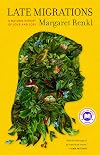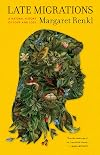
Late Migrations: A Natural History of Love and Loss
by Margaret Renkl
On This Page
Description
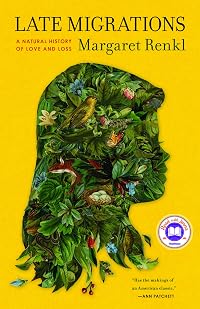
Growing up in Alabama, Margaret Renkl was a devoted reader, an explorer of riverbeds and red-dirt roads, and a fiercely loved daughter. Here, in brief essays, she traces a tender and honest portrait of her complicated parents-her exuberant, creative mother; her steady, supportive father-and of the bittersweet moments that accompany a child's transition to caregiver. And here, braided into the overall narrative, Renkl offers observations on the world surrounding her suburban Nashville home. show more Ringing with rapture and heartache, these essays convey the dignity of bluebirds and rat snakes, monarch butterflies and native bees. As these two threads haunt and harmonize with each other, Renkl suggests that there is astonishment to be found in common things: in what seems ordinary, in what we all share. For in both worlds, the natural one and our own, "the shadow side of love is always loss, and grief is only love's own twin." Gorgeously illustrated by the author's brother, Billy Renkl, Late Migrations is an assured and memorable debut. show lessTags
Recommendations


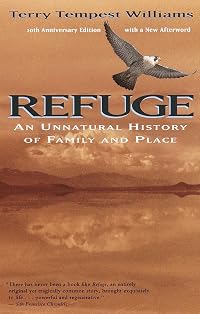
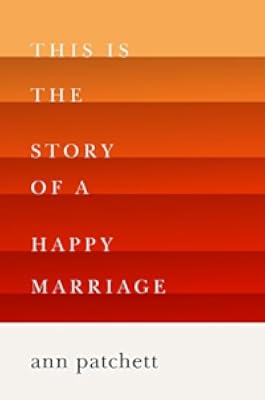

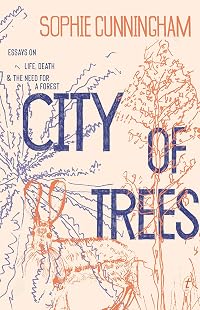
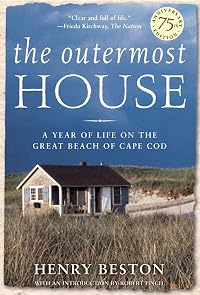



Member Reviews
Last year, I read (and loved) The Comfort of Crows: A Backyard Year, around the same time I listened to Better Living Through Birding and Soil: The Story of a Black Mother's Garden. This trio of books has taken me down a road I did not expect, one where I'm far more aware of the birds, trees, and flowers in my yard than ever before.
As I sit at my desk, I can see House Sparrows, Mourning Doves, Inca Doves, House Finches, and White-Crowned Sparrows digging around under a peanut/suet cylinder hanging from a feeding station that has many empty hooks (I need to wash the feeders and I'm lazy). The smaller birds take turns knocking bits down and the doves take advantage of their messiness. Of course, the finches and sparrows are displaced from show more ON the cylinder, back to the ground or up in the sumac, when a Gila Woodpecker, Curve-Billed Thrasher, or Northern Mockingbird fly in. The White-Crowned Sparrows are preparing to leave to their summer homes soon, and I'm dreading the day when I look out and don't spot one (but I did spot a juvenile that has not molted yet so I'm hoping I have a couple more weeks). Recently European Starlings have started visiting, I haven't decided if I'm OK with their visits though, one just booted the sparrows and is about to start a fight with a thrasher. Occasionally, a larger sparrow, particularly the Abert's Towhee, will make an appearance but they aren't as feisty as the other big larger birds. The House Sparrows have been collecting fibers from the clumpy palm, tearing them away throughout the day. And both the sparrows and the Verdins have been collecting downy feathers for nests. I've also stepped on countless spines from cacti, a couple are definitely from a Saguaro, they are MASSIVE and go straight through my worn out Crocs (I need a much sturdier shoe...). I'm pretty sure they've been brought over by the Gila Woodpeckers that are nesting across the street in a neighbor's cactus, but they could also be gifts from the thrashers that nest among cactus branches.
And so, yes, I loved Late Migrations. As a Southerner who has been away from the South for as long as I lived there, it's nice to visit in a book. It was interesting to read about her brief escape to Pennsylvania as that is also where I went when I first left the South. Is there some invisible string connecting FL and PA -- Molly ends up in FL from PA in Rubyfruit Jungle, too. And what is it with mothers and brown dachshunds -- like Ms Renkl's mother, my mom (and dad) have had three dachshunds (and many chickens) since I left home.
Highlights: "Be a Weed" and "The Imperfect-Family Beatitudes" show less
As I sit at my desk, I can see House Sparrows, Mourning Doves, Inca Doves, House Finches, and White-Crowned Sparrows digging around under a peanut/suet cylinder hanging from a feeding station that has many empty hooks (I need to wash the feeders and I'm lazy). The smaller birds take turns knocking bits down and the doves take advantage of their messiness. Of course, the finches and sparrows are displaced from show more ON the cylinder, back to the ground or up in the sumac, when a Gila Woodpecker, Curve-Billed Thrasher, or Northern Mockingbird fly in. The White-Crowned Sparrows are preparing to leave to their summer homes soon, and I'm dreading the day when I look out and don't spot one (but I did spot a juvenile that has not molted yet so I'm hoping I have a couple more weeks). Recently European Starlings have started visiting, I haven't decided if I'm OK with their visits though, one just booted the sparrows and is about to start a fight with a thrasher. Occasionally, a larger sparrow, particularly the Abert's Towhee, will make an appearance but they aren't as feisty as the other big larger birds. The House Sparrows have been collecting fibers from the clumpy palm, tearing them away throughout the day. And both the sparrows and the Verdins have been collecting downy feathers for nests. I've also stepped on countless spines from cacti, a couple are definitely from a Saguaro, they are MASSIVE and go straight through my worn out Crocs (I need a much sturdier shoe...). I'm pretty sure they've been brought over by the Gila Woodpeckers that are nesting across the street in a neighbor's cactus, but they could also be gifts from the thrashers that nest among cactus branches.
And so, yes, I loved Late Migrations. As a Southerner who has been away from the South for as long as I lived there, it's nice to visit in a book. It was interesting to read about her brief escape to Pennsylvania as that is also where I went when I first left the South. Is there some invisible string connecting FL and PA -- Molly ends up in FL from PA in Rubyfruit Jungle, too. And what is it with mothers and brown dachshunds -- like Ms Renkl's mother, my mom (and dad) have had three dachshunds (and many chickens) since I left home.
Highlights: "Be a Weed" and "The Imperfect-Family Beatitudes" show less
I regularly read Renkl's columns in the New York Times, mostly for her celebratory observations of the natural world in her yard. She watches, admires, and loves the birds, snakes, rabbits, and bugs inhabiting her half-acre of suburban Nashville, where her yard is runnelled with mole trails, riotous with dandelions and clover ("You're planting clover?" her neighbor asks incredulously), and occupied by dozens of birds and a rat snake "as thick as [my] arm." My kind of woman.
This book is a collection of short essays, some only a couple of paragraphs, assembling stories, memories, and experiences from her childhood in red-dirt Alabama to middle age and the departure of children from home and the loss of her own parents. Renkl is a fine, show more fluid writer, and her sensibilities for the living creation around her are awestruck and loving. When someone inquires "So you're a trained naturalist?" she must admit no, she's a Googler. But she declares: "the flip side of ignorance is astonishment, and I am good at astonishment." And she astonishes us, with a loveliness of ladybugs, a piebald fawn who appears on cue, the resurrection of a caterpillar, the death of a window-stunned cedar waxwing. These pieces are interspersed with intensely painful ones of aging, weakening, torturously ill, and dying family members; her own depressions and terrors; and grief. So much grief. It ends on a note of hope, as the monarch butterflies she has tried hard to attract make a late, unexpected appearance, weighing down the zinnias she has left standing in the yard. All told, the themes of life and loss and death weave throughout all the pieces, nature and human-focused, but the human misery rather weighs down the natural joy.
The writing is beautiful; the collage-like, almost Durer-esque illustrations by Margaret's gifted brother Billy are elegant and lovely. Still, the tone of the book may be exemplified by the exchange Renkl has with her disapproving neighbor about the clover. She explains she plants the clover for the honeybees. The neighbor tells her about a swarm of bees she saw recently, "a big ball of bees up in the crepe myrtle next to the garbage cans. It took a whole can of Raid to kill them." show less
This book is a collection of short essays, some only a couple of paragraphs, assembling stories, memories, and experiences from her childhood in red-dirt Alabama to middle age and the departure of children from home and the loss of her own parents. Renkl is a fine, show more fluid writer, and her sensibilities for the living creation around her are awestruck and loving. When someone inquires "So you're a trained naturalist?" she must admit no, she's a Googler. But she declares: "the flip side of ignorance is astonishment, and I am good at astonishment." And she astonishes us, with a loveliness of ladybugs, a piebald fawn who appears on cue, the resurrection of a caterpillar, the death of a window-stunned cedar waxwing. These pieces are interspersed with intensely painful ones of aging, weakening, torturously ill, and dying family members; her own depressions and terrors; and grief. So much grief. It ends on a note of hope, as the monarch butterflies she has tried hard to attract make a late, unexpected appearance, weighing down the zinnias she has left standing in the yard. All told, the themes of life and loss and death weave throughout all the pieces, nature and human-focused, but the human misery rather weighs down the natural joy.
The writing is beautiful; the collage-like, almost Durer-esque illustrations by Margaret's gifted brother Billy are elegant and lovely. Still, the tone of the book may be exemplified by the exchange Renkl has with her disapproving neighbor about the clover. She explains she plants the clover for the honeybees. The neighbor tells her about a swarm of bees she saw recently, "a big ball of bees up in the crepe myrtle next to the garbage cans. It took a whole can of Raid to kill them." show less
“My mother's grandparents went through the day in a kind of dance, preordained steps that took them away from each other—he to his rounds across the countryside, she to the closer world of clothesline and pea patch and barn, but brought them back together again and again, touching for just a moment before moving away once more.”
“Sitting on that front porch in the heat of an Alabama summer, with grasshoppers buzzing in the ag fields just across the road and bluebirds swooping off the fence posts to snatch them up, I considered the alternate future he was laying before me: a life of poems. It was a lifeline to a life.”
Renkl grew up in rural Alabama, surrounded by a loving tight-knit family. As an adult she relocated to the show more Nashville area. In these brief essays or vignettes, if you will, Renkl mines her life, examining the loss and grief, of her family members and the solace she finds in the beauty of the natural world. Either through her love of birds, butterflies, or a sun-drenched meadow.
There are also a smattering of gorgeous illustrations, by her brother, Billy, which makes the print book a necessity. Fans of H is For Hawk, Terry Tempest Williams, nature, poetry and wonderful prose, should pick up this book. show less
“Sitting on that front porch in the heat of an Alabama summer, with grasshoppers buzzing in the ag fields just across the road and bluebirds swooping off the fence posts to snatch them up, I considered the alternate future he was laying before me: a life of poems. It was a lifeline to a life.”
Renkl grew up in rural Alabama, surrounded by a loving tight-knit family. As an adult she relocated to the show more Nashville area. In these brief essays or vignettes, if you will, Renkl mines her life, examining the loss and grief, of her family members and the solace she finds in the beauty of the natural world. Either through her love of birds, butterflies, or a sun-drenched meadow.
There are also a smattering of gorgeous illustrations, by her brother, Billy, which makes the print book a necessity. Fans of H is For Hawk, Terry Tempest Williams, nature, poetry and wonderful prose, should pick up this book. show less
Poetic, somber, jubilant, heart-wrenching, and beautiful; this collection of short essays from Margaret Renkl is a must read. Essays about the nature in her backyard, history of her grandparents, her childhood, her parents, motherhood, and migratory patterns of birds. This collection encompasses love and loss through a personal and natural lens. Interspersed throughout are beautiful color images of animals and plants. A deeply touching and deeply personal memoir of sorts. One that readers will come back to time and again.
What a moving collection of observations, memories, stories, and feelings of love and loss! The author weaves brief vignettes about nature and family to create a lush, literary tapestry which wraps itself around the reader like a cocoon. Nature's events and life events co-mingle, becoming one. Margaret Renkl has used poetic prose to capture the essence and power of love and loss in our lives. Anyone who has loved and lost loved ones will resonate to these vignettes. Take your time, absorb the beauty and truth of each essay, and carry these words with you through your days.
Just as the backyard orb weaver deftly spins and recreates her web, Renkl beautifully intertwines the cycle of life playing out in her suburban neighborhood's landscape with the one happening inside her own aging family. A lovely, honest read.
More a notebook than even a collection of essays, this is uneven but occasionally brilliant. Laugh-out-loud funny in places, insightful or bringing on tears in others, but also sometimes just maudlin or boring.
Not enough through-line to give it structure, but almost worth it for the brilliant bits.
Not enough through-line to give it structure, but almost worth it for the brilliant bits.
Members
- Recently Added By
Lists

2020 Notable Books for Adults
26 works; 5 members

Book Club Suggestions for 2020
27 works; 2 members

Books Read in 2023
5,547 works; 145 members

Books Read in 2020
4,379 works; 124 members

Read with Jenna
91 works; 2 members
Author Information

7 Works 1,279 Members
Awards and Honors
Common Knowledge
- People/Characters
- Margaret Renkl
- Important places
- Tennessee, USA; Alabama, USA; Pennsylvania, USA; Philadelphia, Pennsylvania, USA
Classifications
- Genre
- Biography & Memoir
- DDC/MDS
- 818.603 — Literature & rhetoric American literature in English American miscellaneous writings in English 21st Century
- LCC
- PN4874 .R425 .A3 — Language and Literature Literature (General) Literature (General) Journalism. The periodical press, etc. By region or country
- BISAC
Statistics
- Members
- 508
- Popularity
- 59,167
- Reviews
- 20
- Rating
- (4.27)
- Languages
- English, French
- Media
- Paper, Audiobook, Ebook
- ISBNs
- 7
- ASINs
- 2