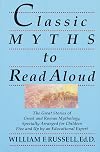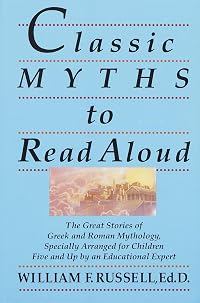
Classic Myths to Read Aloud
by William F. Russell
On This Page
Description
Presents the essential Greek and Roman myths that form the basis of our cultural literary heritage.Tags
Recommendations








Member Reviews
This book is a gem, particularly if you want to engage younger readers with ancient myths without compromising on the quality of the stories. There are two different reading levels (5+ and 8+), but the true value lies in the way the book is designed.
Each story has an about section at the beginning, giving the reader, and the audience, some extra information about why this story is worth reading. Additionally, each story has an approximate reading time (which makes it so much easier to plan which story to read when), and it includes a handy pronunciation guide for the often confusing Greek names and places. Finally, each story has “a few words more” where the author shares immediately applicable information about the impact of the show more story, which really makes an impact right after the story is finished. It highlights the root ideas of modern words, or even the colloquial expressions tied to that particular myth. This is a must-have for anyone who wants to encourage young people to explore the myths and stories of the ancient world. show less
Each story has an about section at the beginning, giving the reader, and the audience, some extra information about why this story is worth reading. Additionally, each story has an approximate reading time (which makes it so much easier to plan which story to read when), and it includes a handy pronunciation guide for the often confusing Greek names and places. Finally, each story has “a few words more” where the author shares immediately applicable information about the impact of the show more story, which really makes an impact right after the story is finished. It highlights the root ideas of modern words, or even the colloquial expressions tied to that particular myth. This is a must-have for anyone who wants to encourage young people to explore the myths and stories of the ancient world. show less
I read most of this to my daughters but didn't quite make it to the end with them, so I read the last two chunks of stories to myself.
I'm glad other parents had better luck reading these to their kids. I wonder how many of the positive reviews are from parents of boys, because wow did my girls not connect with these at all. I enjoyed reading them (honestly, I think at this point I just like spending time with my children in general) and I think it's good I "exposed" them to this material, but by the end of our time with this book together we were just kinda making fun of the predictability of the stories. It was fun to see the mortals make the same mistake of pissing off a god or goddess, and the deities being petty or jerks (or both) show more and then overreacting.
But, yeah, the stories were all about men doing stuff. If the story was about a woman, it's probably because she's super pretty, and that always means bad news for her. It's never good. It's never "she was so good-looking they decided her thoughts were probably worth hearing." And the rare times a woman actually did something it was to help the guy reach his goal.
Lest you take what I'm saying the wrong way. I'm not saying that these myths are "bad" because of the above, or trying to "cancel" them, but it's something you ought to be aware of before you share it with your kids, especially if after a dozen stories they keep seeing themselves reflected as objects rather than subjects. show less
I'm glad other parents had better luck reading these to their kids. I wonder how many of the positive reviews are from parents of boys, because wow did my girls not connect with these at all. I enjoyed reading them (honestly, I think at this point I just like spending time with my children in general) and I think it's good I "exposed" them to this material, but by the end of our time with this book together we were just kinda making fun of the predictability of the stories. It was fun to see the mortals make the same mistake of pissing off a god or goddess, and the deities being petty or jerks (or both) show more and then overreacting.
But, yeah, the stories were all about men doing stuff. If the story was about a woman, it's probably because she's super pretty, and that always means bad news for her. It's never good. It's never "she was so good-looking they decided her thoughts were probably worth hearing." And the rare times a woman actually did something it was to help the guy reach his goal.
Lest you take what I'm saying the wrong way. I'm not saying that these myths are "bad" because of the above, or trying to "cancel" them, but it's something you ought to be aware of before you share it with your kids, especially if after a dozen stories they keep seeing themselves reflected as objects rather than subjects. show less
This book is a collection of Greek and Roman myths. The book contains several different myths about why things are the way they are. The myths are quick and easy to read. The book is designed for early elementary students to middle school. The book contains a summary of Greek roots and words and what English words were derived from them. I like how this book has separate stories where a child could read or listen to the stories they are interested in instead of reading the whole book. It also has explanations at the end of each chapter on where the origin of words might come from. I personally enjoyed reading the myths and couldn't put this book down once I started reading it. The stories keep you engaged and are so quick and easy to show more read. If you want to learn about a certain god or goddess, you only have to read part of the book and not the whole thing. show less
Personal Response- I have always enjoyed this class mythology story so I included this book with my unit for a project earlier in this class. I liked that it was easy to follow and understand. Homer is difficult to read sometimes so it's refreshing to read something and understand it. I like that they included some basic background and has a pronunciation guide.
Curricular Connections- I actually used these stories at my school. I read a loud all 6 stores, students took notes to create a summary and finally they produced a google slide show on one designated story out of the six. Student enjoyed the book and even commented it's more interesting than some things on TV. I liked that they enjoyed listening to the story since that is why show more the accumulation of stories was gathered together. show less
Curricular Connections- I actually used these stories at my school. I read a loud all 6 stores, students took notes to create a summary and finally they produced a google slide show on one designated story out of the six. Student enjoyed the book and even commented it's more interesting than some things on TV. I liked that they enjoyed listening to the story since that is why show more the accumulation of stories was gathered together. show less
The story of Damon and Pythias is a classic good vs. evil where good triumphs over evil. Damon and Pythias are the best of friends, with such a close bond they would die for one another. Dionysius is a tyrannical leader who wishes to put Pythias to death because of a dream he had, but when he witnesses the trust and love Damon and Pythias have for one another he has a change of heart and lets both friends free and asks if he too could be friends with them as they are to one another. The story is a moral lesson of how true friendships should be.
This book is a great resource for teachers. This book is a collection of myths presented to be read out loud to children. Each myth has a kind of study guid to go with it,great questions to ask students. It also names the main characters in the story and who they are. Very cool book.
Mythology
Echo and Narcissus
Greek Mythology
Classic Myths to Read Aloud
William F. Russell, Ed. D.
Crown Trade Paperback
Copyright 1989 by William F. Russell
1. The gods and goddesses in this story are: the god Jupiter who enjoys philandering with the mortals and nymphs on earth, his very jealous wife Juno, Echo a very talkative nymph, and Narcissus an extremely good looking god who has a very cold heart. The goddess Nemesis who seeks to punish and reward to keep show more a balance in the universe also plays a part in this Myth.
2. Plot
Jupiter heads down to earth to party with the mortals and nymphs. His wife Juno goes looking for him. A very cheerful extremely talkative nymph named Echo who is also a nymph who services Jupiter during his time on earth tries to head off Juno with her chatter. When Juno realizes she has been tricked she is very angry and uses her divine powers to take away Echo’s voice. Echo is left with the ability to only repeat the last word of any sentence spoken to her. In the Forest Echo comes across Narcissus the very handsome cold hearted god and instantly falls in love with him. He does not return her affections and she is left to wander with a broken heart and eventually fades away leaving only traces of her faint voice behind. Narcissus also reaches his demise when a scorned maiden prays to the gods to punish Narcissus for tormenting people with his good looks and cold heart. The goddess Nemesis hears her prayer and punishes Narcissus by making him fall in love with his own reflection in a pool. Narcissus being unable to tear himself away from his own image eventually fades away as did Echo. In his place a flower with white petals and a striking golden center is left. show less
Mythology
Echo and Narcissus
Greek Mythology
Classic Myths to Read Aloud
William F. Russell, Ed. D.
Crown Trade Paperback
Copyright 1989 by William F. Russell
1. The gods and goddesses in this story are: the god Jupiter who enjoys philandering with the mortals and nymphs on earth, his very jealous wife Juno, Echo a very talkative nymph, and Narcissus an extremely good looking god who has a very cold heart. The goddess Nemesis who seeks to punish and reward to keep show more a balance in the universe also plays a part in this Myth.
2. Plot
Jupiter heads down to earth to party with the mortals and nymphs. His wife Juno goes looking for him. A very cheerful extremely talkative nymph named Echo who is also a nymph who services Jupiter during his time on earth tries to head off Juno with her chatter. When Juno realizes she has been tricked she is very angry and uses her divine powers to take away Echo’s voice. Echo is left with the ability to only repeat the last word of any sentence spoken to her. In the Forest Echo comes across Narcissus the very handsome cold hearted god and instantly falls in love with him. He does not return her affections and she is left to wander with a broken heart and eventually fades away leaving only traces of her faint voice behind. Narcissus also reaches his demise when a scorned maiden prays to the gods to punish Narcissus for tormenting people with his good looks and cold heart. The goddess Nemesis hears her prayer and punishes Narcissus by making him fall in love with his own reflection in a pool. Narcissus being unable to tear himself away from his own image eventually fades away as did Echo. In his place a flower with white petals and a striking golden center is left. show less
Ratings
Members
- Recently Added By
Lists

The Story of the World: History for the Classical Child: Activity Book One
291 works; 3 members

The Story of the World: History for the Classical Child: Activity Book Two
415 works; 2 members
Author Information
8 Works 1,204 Members
William F. Russell, Ed.D., a former teacher, editor, and syndicated columnist has written several books to help encourage family-centered, out-of-school learning.
Common Knowledge
- Canonical title
- Classic Myths to Read Aloud
- First words
- Introduction: The biggest mistake that parents and teachers make when helping children to read is that they stop reading aloud to them once the children have begun to read for themselves.
- Last words
- (Click to show. Warning: May contain spoilers.)Even the word hypnotic itself comes to us from the Greek name for the god of sleep: Hypnos, which is also the root of hypnosis.
Classifications
- Genres
- Tween, Nonfiction, Children's Books
- DDC/MDS
- 292.13 — Religion Other religions Greek & Roman Mythology Religious mythology, general classes of religion, interreligious relations and attitudes, social theology Mythology and mythological foundations
- LCC
- BL725 .R87 — Philosophy, Psychology and Religion Religions. Mythology. Rationalism Religions. Mythology. Rationalism History and principles of religions European. Occidental Classical (Etruscan, Greek, Roman)
- BISAC
Statistics
- Members
- 665
- Popularity
- 43,466
- Reviews
- 6
- Rating
- (4.04)
- Languages
- English
- Media
- Paper, Ebook
- ISBNs
- 5
- UPCs
- 1
- ASINs
- 8