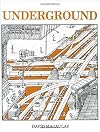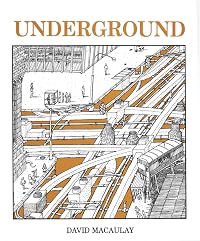
Underground
by David Macaulay
On This Page
Description
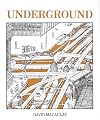
Text and drawings describe the subways, sewers, building foundations, telephone and power systems, columns, cables, pipes, tunnels, and other underground elements of a large modern city.Tags
Recommendations


































Member Reviews
This book is an exploration of a modern city and the variety of construction techniques and engineering solutions that are employed in the distribution and arrangement of utilities and facilities in the city. The book is brilliantly illustrated in a way that brings levity and humor to the pages, especially when ideal systems are compared to more realistic portrayals. Well researched as always, this book encourages readers of all ages to take a closer look at the world around them for the telltale signs of the various ingenious solutions that surround them on a day to day basis. For me, as a young reader, it helped to cultivate a real admiration for how much thought and skill and effort went into parts of the world that I had never show more thought about. show less
Meticulous, detailed drawings accompany the descriptive, explanatory text; together, words and drawings convey the complexity of the systems underneath our cities: building foundations, water supply systems, utilities, sewers, storm drains, electrical, steam and gas distribution, and telephone. Back matter includes a glossary; there is no table of contents or index.
David Macaulay said about Underground:
----
Underground was different from Castle and Cathedral and Pyramid, in that it really is intended as a guide for pedestrians wandering down the city street. So I start with a double page spread of an intersection that we’re going to look at in detail. And I put sort of circles around key familiar elements, like the fire hydrant, and a manhole cover, a ladder disappearing into the street, and a construction site excavation. I start with that. And you can move from this map, in a sense, to the corresponding page of the book, or you can just go through the book from beginning to end. Doesn’t matter. But it was intended as a guide, a kind of guide for pedestrians. Underground was a catalog of city show more sites that are clues to systems we completely take for granted until they break down, and then we say, “Hey, how come I don’t have any electricity? What’s wrong with the water?” We are so dependent on those systems, and that’s what motivated that book. I did the book because I wanted to say to people, “Hey, look again. This is amazing stuff. We all count on it.” I mean, I don’t know what we’d do without this stuff, but we just completely take it for granted.
Source (PDF)
----
Underground of course is as brilliant as the rest of Macaulay's series. It has not aged as gracefully as some of others because infrastructure technology has changed since the mid-1970's, although much of it remains the same, and of course much of it still exists in place "underground." In 2009 the word "Infrastructure" was on the minds of most Americans, and Underground shows what that really means, in a playful and fun way for kids and adults. Probably the most outstanding aspect is Macaulay's use of perspective with floating buildings and tubes in an ocean of water with bedrock as the floor and tourists looking upwards. It has the capacity to forever change how one sees a building and city, from the "ground up", to visualize and appreciate the unseen man-made ocean of curiosity beneath our feet.
--Review by Stephen Balbach, via CoolReading (c) 2008 cc-by-nd show less
----
Underground was different from Castle and Cathedral and Pyramid, in that it really is intended as a guide for pedestrians wandering down the city street. So I start with a double page spread of an intersection that we’re going to look at in detail. And I put sort of circles around key familiar elements, like the fire hydrant, and a manhole cover, a ladder disappearing into the street, and a construction site excavation. I start with that. And you can move from this map, in a sense, to the corresponding page of the book, or you can just go through the book from beginning to end. Doesn’t matter. But it was intended as a guide, a kind of guide for pedestrians. Underground was a catalog of city show more sites that are clues to systems we completely take for granted until they break down, and then we say, “Hey, how come I don’t have any electricity? What’s wrong with the water?” We are so dependent on those systems, and that’s what motivated that book. I did the book because I wanted to say to people, “Hey, look again. This is amazing stuff. We all count on it.” I mean, I don’t know what we’d do without this stuff, but we just completely take it for granted.
Source (PDF)
----
Underground of course is as brilliant as the rest of Macaulay's series. It has not aged as gracefully as some of others because infrastructure technology has changed since the mid-1970's, although much of it remains the same, and of course much of it still exists in place "underground." In 2009 the word "Infrastructure" was on the minds of most Americans, and Underground shows what that really means, in a playful and fun way for kids and adults. Probably the most outstanding aspect is Macaulay's use of perspective with floating buildings and tubes in an ocean of water with bedrock as the floor and tourists looking upwards. It has the capacity to forever change how one sees a building and city, from the "ground up", to visualize and appreciate the unseen man-made ocean of curiosity beneath our feet.
--Review by Stephen Balbach, via CoolReading (c) 2008 cc-by-nd show less
The Association of Soil and Foundation Engineers liked this book enough to publish a special edition of it for the use of their members (for gifts, presentations, or other use). That's quite an impressive recommendation.
A Horn Book Fanfare Best Book (1977)
David Macaulay takes us on a visual journey through a city's various support systems by exposing a typical section of the underground network and explaining how it works. We see a network of walls, columns, cables, pipes and tunnels required to satisfy the basic needs of a city's inhabitants.
David Macaulay takes us on a visual journey through a city's various support systems by exposing a typical section of the underground network and explaining how it works. We see a network of walls, columns, cables, pipes and tunnels required to satisfy the basic needs of a city's inhabitants.
ALAN 1977
Comprehensive information about what's holding us up with detailed drawings
Comprehensive information about what's holding us up with detailed drawings
Members
- Recently Added By
Lists

Architecture (Michelle TBR)
10 works; 1 member
Author Information

David Macaulay was born on December 2, 1946 in Lancashire, England, but moved to Bloomfield, New Jersey when he was 11. He received a bachelor's degree in architecture from the Rhode Island School of Design (RISD). Before becoming an author and illustrator, he worked as an interior designer, a junior high school teacher, and instructor of interior show more design at RISD from 1969 to 1973. His first book, Cathedral: The Story of Its Construction, was published in 1973. His other books include City, Castle, Pyramid, Mill, Underground, Mosque, The Way Things Work, Rome Antics, Shortcut,and How Machines Work. He has received numerous awards including a Caldecott Honor Medal in 1991 for Black and White and the Washington Children's Book Guild Award for a Body of Non-Fiction Work in 1977. He won the Royal Society young people¿s book prize for the best science books for children for his book How Machines Work. (Bowker Author Biography) show less
Some Editions
Awards and Honors
Common Knowledge
- Canonical title
- Underground
- Original title
- Underground
- Original publication date
- 1976
- Dedication
- For Elizabeth the saboteur and Janice the defender.
Classifications
Statistics
- Members
- 959
- Popularity
- 27,653
- Reviews
- 9
- Rating
- (4.02)
- Languages
- 7 — Dutch, English, Finnish, French, German, Japanese, Spanish
- Media
- Paper, Ebook
- ISBNs
- 14
- UPCs
- 2
- ASINs
- 7