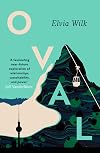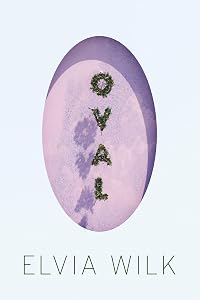
Oval: A Novel
by Elvia Wilk
On This Page
Description
"In the near future, Berlin's real estate is being flipped in the name of "sustainability," only to make the city even more unaffordable; artists are employed by corporations as consultants; and the weather is acting strange. In search of affordable housing, young couple Anja and Louis move into a community on an artificial mountain, The Berg--yet another "eco-friendly" initiative run by a corporation called Finster. They're offered a home rent-free in exchange for keeping quiet about the show more seriously malfunctioning infrastructure of the experimental house. But when Louis returns home from his mother's funeral in America, Anja is convinced he has changed. He seems to be in denial of his grief and newly idealistic, consumed by a secret project at the NGO where he works as an artist-consultant. Anja is horrified when she discovers what Louis has invented: a pill called Oval that temporarily rewires the user's brain to be more generous. Louis is convinced that if he can introduce the drug into the Berlin club scene, he can finally remedy the income disparity that has made Berlin so unlivable. Oval is a fascinating portrait of the unbalanced relationships that shape our world, as well as a prescient warning of what the future may hold"-- show lessTags
Recommendations


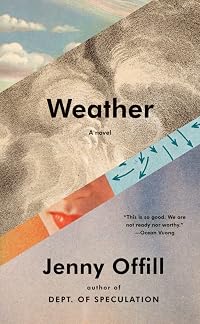

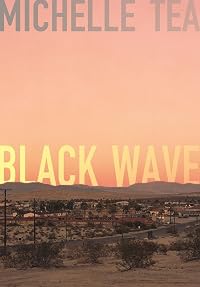
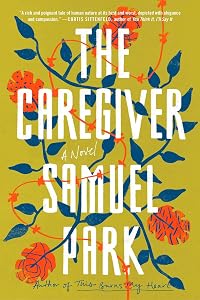

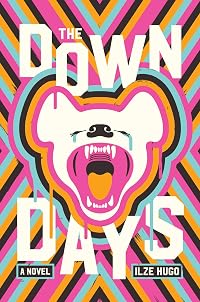

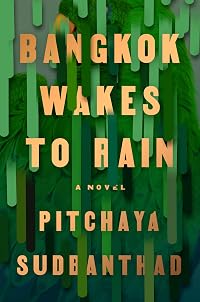
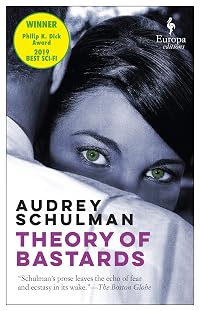
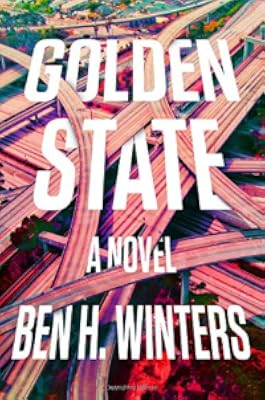
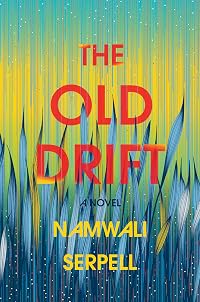
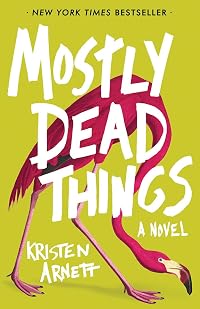
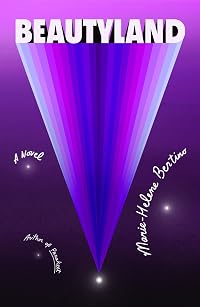
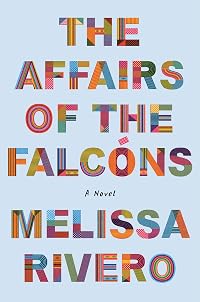
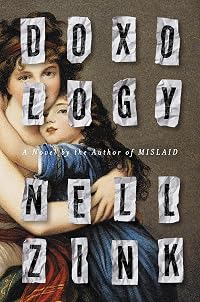

Member Recommendations
palindromes dystopia/near-future setting, female protagonist, contemporary issues
Member Reviews
I don't read too many dystopian novels. The present day can be scary enough that I don't need to insert myself into someone else's fevered imagination of what the future gone terribly wrong might look like. I can appreciate dystopias as critiques of our current society, our obsessions, the goals we strive for, and the many, many ways we get it all wrong, heading to a place from which there is no return but it can be deeply horrifying to read them. Elvia Wilk's debut novel Oval doesn't, perhaps, rise to the level of horrifying, but it shows a sinister and unpleasant future with neoliberalism, corporations, and science run amok.
Anja is a scientist who has run simulations in her lab but has yet to run the actual physical experiment. She show more lives in Berlin with Louis, an American, who is an "artistic" for a non-profit and who is developing a new pill that will induce a chemically-induced, unbridled generosity in the people who take it. The two of them live in the corporately owned Berg, a sustainable, eco-living experimental housing site, a place that is meant to push to the extreme just what it means to live zero waste. Although this near future setting might be initially appealing, as Anja and Louis's story unfolds, it becomes more and more ominous. There is corporate oversight on nearly everything from the house they live in to the jobs they have. Questioning the status quo is actively frowned upon. Technology and engineering are tested without enough safeguards or understanding of the fallout, of which both Anja's unfulfilled experiment and the gradually malfunctioning Berg are emblematic. Unexamined motivations and outcomes abound. But as much as the novel shows these horrors, it is mainly focused on Anja and Louis' crumbling relationship. They become increasingly separate and alone as the entire infrastructure around them also slides into ruin.
There is a rising creepiness to the tone of the novel but it's hard to pinpoint why. Anja and Louis seem to be detached characters, with the reader staying fairly remote from them. The descriptions of the relentless social scene, the clubbing, and the constant drug use has the effect of a flashing strobe light on the reader's sensibility, leaving them disoriented. This effect may be intentional on Wilk's part; it certainly isn't pleasant for sure. The themes of the perils of unchecked gentrification, powerful corporations, and a fervent neoliberalism weave uncomfortably throughout the novel. The secondary characters here feel flat and even Louis isn't particularly well defined for the reader. The premise of the novel doesn't really come into focus until well into the story (unless you read the cover copy) and even then, it takes a while to be clear. The ending of the novel is as strange and unsettling as the rest of it and this reader didn't know what to make of it. There's a malevolent reclamation by nature but it's not really organic so what is reclaiming everything, accelerating the decay and ruin, isn't really clear. The world of Oval is one of dissolute human beings, secretive companies, and impending disaster. This is not a world I want to live in. show less
Anja is a scientist who has run simulations in her lab but has yet to run the actual physical experiment. She show more lives in Berlin with Louis, an American, who is an "artistic" for a non-profit and who is developing a new pill that will induce a chemically-induced, unbridled generosity in the people who take it. The two of them live in the corporately owned Berg, a sustainable, eco-living experimental housing site, a place that is meant to push to the extreme just what it means to live zero waste. Although this near future setting might be initially appealing, as Anja and Louis's story unfolds, it becomes more and more ominous. There is corporate oversight on nearly everything from the house they live in to the jobs they have. Questioning the status quo is actively frowned upon. Technology and engineering are tested without enough safeguards or understanding of the fallout, of which both Anja's unfulfilled experiment and the gradually malfunctioning Berg are emblematic. Unexamined motivations and outcomes abound. But as much as the novel shows these horrors, it is mainly focused on Anja and Louis' crumbling relationship. They become increasingly separate and alone as the entire infrastructure around them also slides into ruin.
There is a rising creepiness to the tone of the novel but it's hard to pinpoint why. Anja and Louis seem to be detached characters, with the reader staying fairly remote from them. The descriptions of the relentless social scene, the clubbing, and the constant drug use has the effect of a flashing strobe light on the reader's sensibility, leaving them disoriented. This effect may be intentional on Wilk's part; it certainly isn't pleasant for sure. The themes of the perils of unchecked gentrification, powerful corporations, and a fervent neoliberalism weave uncomfortably throughout the novel. The secondary characters here feel flat and even Louis isn't particularly well defined for the reader. The premise of the novel doesn't really come into focus until well into the story (unless you read the cover copy) and even then, it takes a while to be clear. The ending of the novel is as strange and unsettling as the rest of it and this reader didn't know what to make of it. There's a malevolent reclamation by nature but it's not really organic so what is reclaiming everything, accelerating the decay and ruin, isn't really clear. The world of Oval is one of dissolute human beings, secretive companies, and impending disaster. This is not a world I want to live in. show less
Another book I asked for and received for Christmas, which I found insightful and frustrating in approximately equal measure. From the blurb, I had high hopes of it examining urban housing shortages and pervasive corporate greenwash. Which it does, when not preoccupied with the very dull relationship between the protagonist Anja and her boyfriend Louis. Separately they seemed like interesting characters, but together they were terribly boring. Why must a disintegrating straight relationship be central to any and all novels that aspire to be literary fiction? I'm so tired of hopefully searching for environmental themes amid the miscommunication, jealousy, etc, etc. Although 'Oval' was definitely less guilty of this than some, I think a show more good 50-80 pages could have been cut to make a tauter, more incisive piece of fiction. The remaining 250-odd pages were excellent, though.
As to what I specifically enjoyed, the disintegrating eco-home inhabited by Anja and Louis is fascinating. Their recursive jobs as corporate consultants are depicted with a pleasingly sharp satirical edge. The discussions about the titular substance 'Oval' are thoughtful and reminded me of a favourite sci-fi novel, [b:Stand on Zanzibar|41069|Stand on Zanzibar|John Brunner|https://i.gr-assets.com/images/S/compressed.photo.goodreads.com/books/1360613921l/41069._SY75_.jpg|2184253]. Surveillance capitalism and the meaninglessness of Corporate Social Responsibility are brought into the narrative and dissected neatly. Anja's observant and introspective narration is excellent, as long as she isn't pondering her relationship with Louis. He is a convincingly frustrating person, idealistic yet blinkered. There are many quote-worthy paragraphs, of which here is a pithy example on networking:
Anja, and by extension Wilk writing her, appear very self-aware about how straight romantic narratives dominate culture. This is explicitly talked over at one point. Similarly, the ending is discussed by characters in a distinctly meta fashion. There are a great many cleverly observed moments in 'Oval' and the writing is really good. I just wish Anja's relationship with her boyfriend had been pushed into the background by their work. show less
As to what I specifically enjoyed, the disintegrating eco-home inhabited by Anja and Louis is fascinating. Their recursive jobs as corporate consultants are depicted with a pleasingly sharp satirical edge. The discussions about the titular substance 'Oval' are thoughtful and reminded me of a favourite sci-fi novel, [b:Stand on Zanzibar|41069|Stand on Zanzibar|John Brunner|https://i.gr-assets.com/images/S/compressed.photo.goodreads.com/books/1360613921l/41069._SY75_.jpg|2184253]. Surveillance capitalism and the meaninglessness of Corporate Social Responsibility are brought into the narrative and dissected neatly. Anja's observant and introspective narration is excellent, as long as she isn't pondering her relationship with Louis. He is a convincingly frustrating person, idealistic yet blinkered. There are many quote-worthy paragraphs, of which here is a pithy example on networking:
"It's a waste of time," said Laura of partying. "You have better things to do."
I do? Anja thought. Am I 'above' partying? Am I fulfilled by my work? Do I hold a vestige of the belief in the goodness of work?
People who spent all their time out there - people like Prinz - could no longer even draw a distinction between productive and unproductive time. The act of partying had become an act of production: they were producing relations - relations as objects. And objects as opportunities. Content was subordinate.
Anja, and by extension Wilk writing her, appear very self-aware about how straight romantic narratives dominate culture. This is explicitly talked over at one point. Similarly, the ending is discussed by characters in a distinctly meta fashion. There are a great many cleverly observed moments in 'Oval' and the writing is really good. I just wish Anja's relationship with her boyfriend had been pushed into the background by their work. show less
Anja, a scientist from a privileged cosmopolitan background and her boyfriend Louis, an American who works for a ubiquitous non-profit are personified versions neo-liberalism in the futuristic novel Oval. Elvia Wilk describes a near-future Berlin in which the young couple agrees to live in an experimental eco-colony called the Berg. The Berg is a constructed mountain that has been placed on a former airfield by a company that is ostensibly dedicated to developing innovative and rigorously sustainable living solutions. In return for a home built of wholly organic and self-maintaining materials, residents must agree to follow stringent rules and be captured on continuous video. It becomes apparent that the company subsidizing the project, show more Finster Corp., is actually a shadowy bureaucracy with potentially sinister motives despite its claims. Life on the Berg is also rife with issues, as promises for improvements go unfulfilled, and the vacillating microclimates there create an environment that is “untenable” in the truest sense. Anya and Louis are also having troubles within their relationship, and Anya suspects that Louis has been deeply changed by the recent death of his mother. She also is disturbed by the mysterious way she and her lab partner (both under the employ of Finster) have been reassigned as ambiguous “consultants,” just when they were approaching a breakthrough. Louis’ work also seems to be taking a strange course as he becomes increasingly obsessed with a new drug he is helping to develop. Partying and drug experimentation are sanctioned and even encouraged in this Berlin of Wilk’s imagining. In fact, social connections are monetized and material success can be attained through a system of interpersonal bartering. Oval is a dystopic vision of “leftism” taken too far and a condemnation of political and commercial structures that seek to manipulate and pervert good intentions. Efforts to promote equality become mutated into selfish patronization and mindless philanthropy, serving to distract from the creeping expansion of a monopolizing entity. Wilk’s book is odd and difficult to navigate when it veers into Anya’s more philosophical musings. The second half also introduces science fiction elements that stretch credulity, particularly since the rest of the setting mirrors existing reality so closely. Still, the short novel contains are some interesting and timely topics portrayed in a unique manner that makes this indie release well worth a look.
Thanks to the author, Soft Skull Press for post-release copy of this book in exchange for an unbiased review. show less
Thanks to the author, Soft Skull Press for post-release copy of this book in exchange for an unbiased review. show less
I have a difficult time putting down books I don't gel with unless/until I can identify why they aren't working for me, and I'm not sure about this one. I guess it's that I don't feel anything about these characters, and the descriptions of everything (capitalism, neoliberalism, housing, consumerism, environmental issues, corporate nonsense) seem realistic and obvious but aren't giving me any new insight or information or emotion. I like a novel of ideas, but you have to develop the ideas; I like a novel with only a vague plot, if there's a rich inner life presented instead. I don't mean the ideas aren't there, but most of this book seems to be insipid people just talking around the ideas and I don't have any more space for that.
So, show more DNF - Reviews seem clear that if this is my experience now, I'm not going to be satisfied with the rest of the story. It didn't make me angry, just disaffected and bored. show less
So, show more DNF - Reviews seem clear that if this is my experience now, I'm not going to be satisfied with the rest of the story. It didn't make me angry, just disaffected and bored. show less
In an alternate/near future Berlin, Anja lives in a malfunctioning eco house on a steep hill with her American boyfriend, Lewis. It's a world where corporations control everything and artists are contracted to companies, their work and even their bodies part of the corporate machine. The weather has gone haywire, with vast fluctuations taking place within single days. Anja works as a scientist until she's promoted into a consultant role, while her boyfriend grows distant as he works on a new idea.
Wilk is more concerned with discussing the philosophical implications of the world of this novel than it is in world-building or character development. It wasn't a bad book, but it also wasn't a terribly interesting one. There are a lot of show more novels out there exploring possible futures and I would suggest choosing one of them instead of this one. show less
Wilk is more concerned with discussing the philosophical implications of the world of this novel than it is in world-building or character development. It wasn't a bad book, but it also wasn't a terribly interesting one. There are a lot of show more novels out there exploring possible futures and I would suggest choosing one of them instead of this one. show less
A wonderful thought-provoking premise and follow through, but very forgettable characters and a minimalist plot. The novel is not excessively literary but chocked full of social philosophy.
The subject seemed compelling, and with blurbs by Jeff VanderMeer and Tom McCarthy, the book seemed promising, but it was a disappointment. Wilk has some neat ideas, and she writes of things that reminded me of works by both VanderMeer and McCarthy that I admired, but ultimately, so much of the book was just dull recounting of dud relationships. It doesn't begin to be especially enjoyable until near the end, and then it stops.
Members
- Recently Added By
Lists

2020 Tournament of Books
18 works; 18 members

German Literature
518 works; 56 members

Kirkus Starred Fiction Reviews of Books Published in 2019
411 works; 12 members

Speculative Fiction from around the World
610 works; 18 members

Books Read in 2018
4,360 works; 110 members
Author Information

2 Works 246 Members
Elvia Wilk is a writer living in New York. Her first novel, Oval, was published in 2019 by Soft Skull.
Some Editions
Awards and Honors
Common Knowledge
- Original publication date
- 2019
- Dedication
- For my friends
- First words
- After death, bureaucracy takes the wheel.
- Last words
- (Click to show. Warning: May contain spoilers.)There had never been such a good time to buy.
- Blurbers
- VanderMeer, Jeff; Jackson, Shelley; McCarthy, Tom
Classifications
Statistics
- Members
- 181
- Popularity
- 180,996
- Reviews
- 11
- Rating
- (2.88)
- Languages
- English, Italian
- Media
- Paper, Audiobook, Ebook
- ISBNs
- 9
- ASINs
- 3