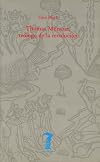
Thomas Münzer als Theologe der Revolution
by Ernst Bloch
55 Members (4.17)
On This Page
Description
"¿Qué hay en nosotros que nos pone en marcha?", se pregunta Bloch, "estamos inquietos, somos cálidos y rudos. Lo vivo está inquieto". Esta inquietud es patente en Thomas Müntzer, teólogo de la revolución (1921), un libro que puede considerarse de juventud, pero en el que está presente ya no sólo la teoría blochiana, también ese ritmo de su escritura que, como los propios discursos del rebelde Müntzer, nos arrastran con violencia y lucidez. No se piense sin embargo que estamos show more ante un libro académico o una simple reconstrucción del pasado. Como dice su autor, "tampoco en este caso ha de dirigirse nuestra mirada en modo alguno al pasado; (...) los muertos regresan, y su hacer aspira a cobrar nueva vida con nosotros". El libro sobre Müntzer es testimonio contra toda fórmula de autoridad que prescinda del ser humano. Ellos tasan y chupan a los pobres la médula de los huesos, y encima hemos de pagarles nosotros intereses por ello. ¿Y qué hay de los envidadores y especuladores, de los jugad... show lessTags
Recommendations



























Member Reviews
Members
- Recently Added By
Author Information

Ernst Bloch ranks as a major German Marxist philosopher. Beginning his career as author and teacher during World War I, he moved in the orbit of Marxist thought during the 1920s. In 1933 he left Germany and eventually found his way to the United States, where he created his major work The Principle of Hope. After World War II, he settled in East show more Germany, where from 1948 to 1957 he was professor at the University of Leipzig. His work eventually aroused the hostility of the authorities, and in 1961 he was granted political asylum in West Germany. Bloch departed from orthodox Marxism by attending to the problem of intellectual culture and refraining from treating it merely as superstructure determined by the materialist elements of political economy. Emphasizing the role of hope-as an inner drive, or hunger, in human beings-for a possible ideal future order, Bloch's thought may be described as utopian, involving the realization of a religious community akin to the kingdom of God, where people are no longer exploited but are free. Bloch's style echoes recent expressionism and is also rich in mystical overtones of biblical origin. Bloch died in 1977. (Bowker Author Biography) show less
All Editions
Some Editions
Series
Belongs to Publisher Series
Common Knowledge
- Canonical title*
- Thomas Münzer als Theologe der Revolution
- Original title
- Thomas Müntzer als Theologe der Revolution
- Original publication date
- 1921
- People/Characters
- Thomas Müntzer (c.1489-1525)
*Some information comes from Common Knowledge in other languages. Click "Edit" for more information.
Classifications
- Genres
- Nonfiction, Religion & Spirituality, History, Philosophy
- DDC/MDS
- 270.6 — Religion History of Christianity History, geographic treatment, biography of Christianity Reformation; Counter reformation (1517-1648)
- LCC
- BX4946 .M8 — Philosophy, Psychology and Religion Christian Denominations Christian Denominations Protestantism Post-Reformation Anabaptists
Statistics
- Members
- 55
- Popularity
- 557,048
- Rating
- (4.17)
- Languages
- 5 — Dutch, French, German, Italian, Spanish
- Media
- Paper, Ebook
- ISBNs
- 7
- ASINs
- 5