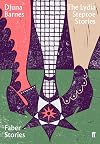
The Lydia Steptoe Stories: Faber Stories
by Djuna Barnes
On This Page
Description
'I have quite changed my mind. I am going to run away and become a boy.' In these three stories, written by Djuna Barnes under the pseudonym Lydia Steptoe, three characters find themselves on the brink of a sexual awakening - accompanied by guns, whips, and worldly innuendo. A fourteen-year-old girl plans to become 'a virago', until her mother intercepts her first tryst by dressing up as her male lover. A boy of the same age is lured into the forest by his father's mistress. A woman of forty show more falls in love and longs to kill herself, so unbearable is the return of the youth she thought she wanted. 'Alice', she tells herself, 'be a man.' Barnes makes gender and desire seem slippery and joyful - and makes the fictional Lydia Steptoe seem like a writer for our time. show lessTags
Recommendations




































Member Reviews
This very short book (40 pages) collects three "lost" stories by the modernist writer Djuna Barnes, which she wrote under the pseudonym Lydia Steptoe. They are from the early 1920s and so predate her most famous work, the novel Nightwood.
The three stories collected here are "The Diary of a Dangerous Child", "The Diary of a Small Boy" and "Madame Grows Older: A Journal at the Dangerous Age". They are written with the characteristic verve and wit of Barnes's prose, sustained by a dark humour and a queer sexual charge. The first two stories, to my mind, are the most successful, capturing the strangeness and uncertainty of adolescence desire. In the first story, we meet a teenage girl who intends to lure a Brazilian diplomat to her garden show more at midnight to teach him a lesson; in the second story a teenage boy takes his father's gun into the woods to protect his cousin from 'water snakes'.
This is a lovely pocket edition and I hope it is the sign that further out of print works by Barnes might be published. show less
The three stories collected here are "The Diary of a Dangerous Child", "The Diary of a Small Boy" and "Madame Grows Older: A Journal at the Dangerous Age". They are written with the characteristic verve and wit of Barnes's prose, sustained by a dark humour and a queer sexual charge. The first two stories, to my mind, are the most successful, capturing the strangeness and uncertainty of adolescence desire. In the first story, we meet a teenage girl who intends to lure a Brazilian diplomat to her garden show more at midnight to teach him a lesson; in the second story a teenage boy takes his father's gun into the woods to protect his cousin from 'water snakes'.
This is a lovely pocket edition and I hope it is the sign that further out of print works by Barnes might be published. show less
Ratings
Members
- Recently Added By
Lists

Every Lesbian Book I read
13 works; 1 member
Author Information

65+ Works 5,349 Members
Although Djuna Barnes was a New Yorker who spent much of her long life in Greenwich Village, where she died a virtual recluse in 1982, she resided for extended periods of time in France and England. Her writings are representative modernist works in that they seem to transcend all national boundaries to take place in a land peculiarly her own. show more Deeply influenced by the French symbolists of the late nineteenth century and by the surrealists of the 1930s, she also wrote as a liberated woman, whose unconventional way of life is reflected in the uncompromising individuality of her literary style. Barnes's dreamlike and haunted writings have never found a wide popular audience, but they have strongly influenced such writers as Rebecca West, Nelson Algren, Dahlberg, Lowry, Miller, and especially Nin, in whose works a semifictional character named Djuna sometimes appears. In 1915 Barnes anonymously published The Book of Repulsive Women. Not long after she moved to Paris and became associated with the colony of writers and artists who made that city the international center of culture during the 1920s and early 1930s. Her Ladies Almanack was privately printed in Paris in 1928, the same year that Liveright in the United States published Ryder, her first novel. The book on which Barnes's fame largely rests is Nightwood (1936), a surrealistic story set in Paris and the United States, dealing with the complex relationships among a group of strangely obsessed characters, most of them homosexuals and lesbians. Barnes wrote little after Nightwood. In 1952, she professed to Malcolm Lowry that the experience of writing that searing work so frightened her that she was unable to write anything after it. Fortunately, her literary talents revived with The Antiphon, a verse-drama originally published in 1958, which is now available in Selected Works (1962). (Bowker Author Biography) show less
Some Editions
Series
Belongs to Publisher Series
Common Knowledge
- Original publication date
- 2019-01-03
Classifications
Statistics
- Members
- 61
- Popularity
- 493,022
- Reviews
- 1
- Rating
- (3.64)
- Languages
- English, Italian
- Media
- Paper, Ebook
- ISBNs
- 3
- ASINs
- 1