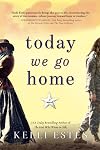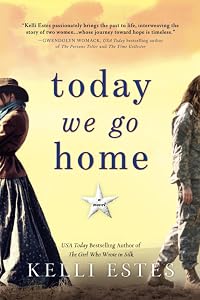
Today We Go Home
by Kelli Estes 
On This Page
Description
Larkin Bennett has always known her place, whether it's surrounded by her loving family in the lush greenery of the Pacific Northwest, or riding on a dusty convoy in Afghanistan. But all that changed the day tragedy struck her unit and took away everything she held dear. Soon after, Larkin discovers an unexpected treasure: the diary of Emily Wilson, a young woman who disguised herself as a man to fight for the Union in the Civil War. As Larkin struggles to heal, she finds herself drawn deep show more into Emily's life and the secrets she kept.Indiana, 1861The only thing more dangerous to Emily Wilson than a rebel soldier is her own comrades in the Union. But in the minds of her fellow soldiers, if it dresses like a man, swears like a man, and shoots like a man, it must be a man. As the war marches on and takes its terrible toll, Emily begins to question everything she has been told about the freedom she is supposed to be fighting for. show lessTags
Recommendations










Member Recommendations
Member Reviews
Today We Go Home by Kelli Estes is a compelling novel that features dual timelines.
In the present, Larkin Bennett is struggling with severe PTSD following her final tour in Afghanistan. Medically discharged from the Army, she has returned home to stay with her beloved Grams while she tries to recover from the loss of her best friend, Sarah Faber, whose death she feels responsible for. Larkin finds solace in a civil war era diary that was given to her by Sarah. While reading the diary, she becomes obsessed with searching for other women with unconventional wartime service. Despite the diary's distraction, Larkin continues to suffer from debilitating nightmares, guilt, self-loathing and anger control issues. She is also self-medicating show more with alcohol and ignoring the advice of her therapist. Will connecting with Sarah's estranged brother Zach help her comes to terms with her devastating loss?
In 1861, the Civil War has just begun and Emily Wilson's father and older brother David enlist in the Union Army. She worries about their safety and she finds comfort in writing in her diary. Emily and her younger brother Ben eventually leave their Indiana farm and she makes the unusual decision to masquerade as a man in order to fight alongside her brother. As the months pass, Emily revels in the freedom she receives from her disguise. But as she, Ben and their fellow soldiers go into battle, she finally begins to realize exactly what she is fighting for. And like Larkin in the present, Emily discovers transitioning back into civilian life does not mean she leaves her wartime experiences behind her.
Today We Go Home is a poignant novel with a thought-provoking storyline. Larkin's post-war experiences are realistically portrayed. It is absolutely heart-wrenching to witness her struggles to recover from her survivors guilt and PTSD. Emily's story springs vibrantly to life through her diary entries and chapters written from her perspective. The novel is extremely well-written and researched is impeccably. The story is quite fascinating and Kelli Estes highlights the struggles that women face during and after military service. I truly enjoyed and highly recommend this informative and engrossing novel. show less
In the present, Larkin Bennett is struggling with severe PTSD following her final tour in Afghanistan. Medically discharged from the Army, she has returned home to stay with her beloved Grams while she tries to recover from the loss of her best friend, Sarah Faber, whose death she feels responsible for. Larkin finds solace in a civil war era diary that was given to her by Sarah. While reading the diary, she becomes obsessed with searching for other women with unconventional wartime service. Despite the diary's distraction, Larkin continues to suffer from debilitating nightmares, guilt, self-loathing and anger control issues. She is also self-medicating show more with alcohol and ignoring the advice of her therapist. Will connecting with Sarah's estranged brother Zach help her comes to terms with her devastating loss?
In 1861, the Civil War has just begun and Emily Wilson's father and older brother David enlist in the Union Army. She worries about their safety and she finds comfort in writing in her diary. Emily and her younger brother Ben eventually leave their Indiana farm and she makes the unusual decision to masquerade as a man in order to fight alongside her brother. As the months pass, Emily revels in the freedom she receives from her disguise. But as she, Ben and their fellow soldiers go into battle, she finally begins to realize exactly what she is fighting for. And like Larkin in the present, Emily discovers transitioning back into civilian life does not mean she leaves her wartime experiences behind her.
Today We Go Home is a poignant novel with a thought-provoking storyline. Larkin's post-war experiences are realistically portrayed. It is absolutely heart-wrenching to witness her struggles to recover from her survivors guilt and PTSD. Emily's story springs vibrantly to life through her diary entries and chapters written from her perspective. The novel is extremely well-written and researched is impeccably. The story is quite fascinating and Kelli Estes highlights the struggles that women face during and after military service. I truly enjoyed and highly recommend this informative and engrossing novel. show less
I gained so much insight reading Today we go Home.
The story of two women soldiers, Emily Wilson, who fought with the Union Army disguised as a man and Larkin Bennett, a US Army soldier who was deployed to Afghanistan twice.
In the present-day, Larkin is trying to cope with PTSD, grief and guilt over the death of her best friend Sarah.
We travel to the past as Larkin reads the Civil War journal kept by Emily chronicling her enlistment in Indiana's 9th Infantry as a male Union soldier.
I loved the historical detail and accounting of how women had disguised themselves as men to enlist in the service during the civil war. I also felt the flow between the two women in dual time frames made me want to keep reading.
The stories helped me to show more understand the parallel struggles of female soldiers in the past and female soldiers from our own time in history. Also, it was important to be reminded of the fact that women who serve are also suffer from PTSD.
I thought there were some inconsistencies in the language used during the Civil War period, but that did not affect my enjoyment of the book
I received an advance copy of the book from Sourcebooks Landmark through BookBrowse. show less
The story of two women soldiers, Emily Wilson, who fought with the Union Army disguised as a man and Larkin Bennett, a US Army soldier who was deployed to Afghanistan twice.
In the present-day, Larkin is trying to cope with PTSD, grief and guilt over the death of her best friend Sarah.
We travel to the past as Larkin reads the Civil War journal kept by Emily chronicling her enlistment in Indiana's 9th Infantry as a male Union soldier.
I loved the historical detail and accounting of how women had disguised themselves as men to enlist in the service during the civil war. I also felt the flow between the two women in dual time frames made me want to keep reading.
The stories helped me to show more understand the parallel struggles of female soldiers in the past and female soldiers from our own time in history. Also, it was important to be reminded of the fact that women who serve are also suffer from PTSD.
I thought there were some inconsistencies in the language used during the Civil War period, but that did not affect my enjoyment of the book
I received an advance copy of the book from Sourcebooks Landmark through BookBrowse. show less
In the present, Larkin has returned from Afghanistan after being medically discharged. Her best friend Sarah was killed overseas, in an accident that Larkin blames on herself. Larkin is trying to figure out how to live day-to-day away from war and without her best friend. In the past, Emily Wilson watches as her father and brother leave to fight for the Union during the civil war. Her father is killed in battle, and Emily receives notice that her brother is deathly ill in a military hospital. After the death of her battle, Emily cuts her hair and dresses like a man. Together with her remaining brother, they join up.
Although I found both stories interesting and enjoyable, they did not really work well together. Both would have been show more better as standalone stories. I often found that when I was reading about Larking, I was wondering about Emily, and vice a versa. Despite this criticism, I enjoyed the stories and would read more from this author. Overall, 4 out of 5 stars. show less
Although I found both stories interesting and enjoyable, they did not really work well together. Both would have been show more better as standalone stories. I often found that when I was reading about Larking, I was wondering about Emily, and vice a versa. Despite this criticism, I enjoyed the stories and would read more from this author. Overall, 4 out of 5 stars. show less
I will admit I read half of this book - the civil war parts aka Emily’s parts. I’ve always been fascinated about women disguising themselves as males to make it in the world and Emily’s story is just that. I was enthralled by her strength to keep going despite all the heartache she has suffered. I really enjoyed her story.
Although this story is fiction, there are many truths in it. The truth that PTSD is real and can control your life. The truth that throughout history women have not been respected or honored for their contributions, especially in the military. But it is also a story of how through the love of family and friends, you can find hope again! Definitely recommended!
LFL find. I might not like, but Eloise might, so read it on the way to visit her.
Ratings
Members
- Recently Added By
Author Information

5 Works 754 Members
Kelli Estes is a LibraryThing Author, an author who lists their personal library on LibraryThing.
Common Knowledge
- Canonical title
- Today We Go Home
- Original publication date
- 2019
- People/Characters
- Larkin Bennett; Emily Wilson
- Important places
- Pacific Northwest, USA; Afghanistan
- Epigraph
- Home isn't where our house is,
But wherever we are understood.
--Christian Morgenstern in Stages: A Development in Aphorisms and Diary Notes - Dedication
- Dedicated to all women, past or present, who have served in the military.
Thank you. - First words
- April 16, 1861: Wilson Family Farm, Stampers Creek, Indiana
The sounds of gunshots echoed across the field, each one making Emily clench her teeth tighter together until her jaw ached. - Last words
- (Click to show. Warning: May contain spoilers.)Hope tasted so sweet.
Classifications
Statistics
- Members
- 118
- Popularity
- 276,178
- Reviews
- 6
- Rating
- (3.73)
- Languages
- English
- Media
- Paper, Audiobook, Ebook
- ISBNs
- 13
- ASINs
- 2