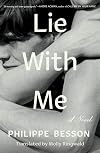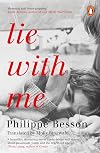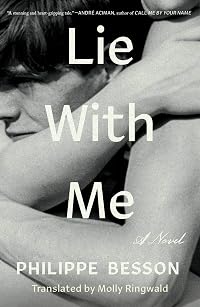
Lie With Me
by Philippe Besson
On This Page
Description
"The award-winning, bestselling French novel by Philippe Besson--"the French Brokeback Mountain" (Elle)--about an affair between two teenage boys in 1984 France, translated with subtle beauty and haunting lyricism by the iconic and internationally acclaimed actress/writer Molly Ringwald. We drive at high speed along back roads, through woods, vineyards, and oat fields. The bike smells like gasoline and makes a lot of noise, and sometimes I'm frightened when the wheels slip on the gravel on show more the dirt road, but the only thing that matters is that I'm holding on to him, that I'm holding on to him outside. Just outside a hotel in Bordeaux, Philippe chances upon a young man who bears a striking resemblance to his first love. What follows is a look back at the relationship he's never forgotten, a hidden affair with a gorgeous boy named Thomas during their last year of high school. Without ever acknowledging they know each other in the halls, they steal time to meet in secret, carrying on a passionate, world-altering affair. Dazzlingly rendered in English by Ringwald in her first-ever translation, Besson's powerfully moving coming-of-age story captures the eroticism and tenderness of first love--and the heartbreaking passage of time"-- show lessTags
Recommendations

























Member Reviews
The Publisher Says: The award-winning, bestselling French novel by Philippe Besson about an affair between two teenage boys in 1984 France, translated with subtle beauty and haunting lyricism by the iconic and internationally acclaimed actress/writer Molly Ringwald.
We drive at high speed along back roads, through woods, vineyards, and oat fields. The bike smells like gasoline and makes a lot of noise, and sometimes I’m frightened when the wheels slip on the gravel on the dirt road, but the only thing that matters is that I’m holding on to him, that I’m holding on to him outside.
Just outside a hotel in Bordeaux, Philippe chances upon a young man who bears a striking resemblance to his first love. What follows is a look back at the show more relationship he’s never forgotten, a hidden affair with a gorgeous boy named Thomas during their last year of high school. Without ever acknowledging they know each other in the halls, they steal time to meet in secret, carrying on a passionate, world-altering affair.
Dazzlingly rendered in English by Ringwald in her first-ever translation, Besson’s powerfully moving coming-of-age story captures the eroticism and tenderness of first love—and the heartbreaking passage of time.
My Review: I've spoken in previous reviews about the power of the (mostly) French art form, the récit, an ill-defined, "you'll know it when you see it" form of literary tale-telling. And all those ambiguous layers of the latter phrase, from straightforward "telling a story" to "tattling on someone" to "inventing a lie" are each present in the récit itself. The qualities I can suss out as being sine qua non for a work to be a récit are length—brevity is the soul of wit, lingerie, and récits—and interiority. Nothing describable as a récit can take place in "real time" or include voices not mediated by the narrator and/or author through a single tightly focused lens. If you've read Camus's [The Fall], you've read a peak-experience récit. If you didn't like reading it, I venture to suggest that you not pay a lot of attention to the genre.
Brevity this book has: In 148pp, Besson tells the oldest gay love story there is: Boy meets boy; boy loves boy, is loved by boy; neither one says the right "wrong" thing to his belovèd to make the "forbidden" connection happen; and they go their separate, unequal, always intertwined ways. Interiority it simply is: All the words we read are Philippe's or Philippe's reports of conversations recently or distantly past. Philippe-the-narrator tells us several times that, as a novelist, he makes stuff up; he implies that he's done that habitually; so we're left to our own devices to decide about his honesty, his accuracy, and his intentions in telling us this tale.
I'm going to let you read Philippe-the-author and Philippe-the-narrator's words unmediated by my own commentary on them. In my own way, I want to honor the form of the récit as a review. The book is beautiful for many reasons. Translator Ringwald has made a beautiful thing in this book. I haven't read the French text, but I know enough from previous Besson encounters to believe this is a deft and charming rendering of his original. As to Besson's tale told...well..."is it autobiographical" is the first line of defense against immersion into the unreliability of Memory that this, a beautiful and moving and elegiac récit, invites its readers to experience. I recommend reading it, experiencing it, absorbing its beauties and funnies and rawnesses, without any additional removes from immediacy. Don't, then, place harsh lights on it or look for factual details in it; let it become the limpid waters of Monet's water-lily pond for your inner reader's delight and refreshment.
Chapter One (1984)
Chapter Two (2007)
Chapter Three (2016)
We drive at high speed along back roads, through woods, vineyards, and oat fields. The bike smells like gasoline and makes a lot of noise, and sometimes I’m frightened when the wheels slip on the gravel on the dirt road, but the only thing that matters is that I’m holding on to him, that I’m holding on to him outside.
Just outside a hotel in Bordeaux, Philippe chances upon a young man who bears a striking resemblance to his first love. What follows is a look back at the show more relationship he’s never forgotten, a hidden affair with a gorgeous boy named Thomas during their last year of high school. Without ever acknowledging they know each other in the halls, they steal time to meet in secret, carrying on a passionate, world-altering affair.
Dazzlingly rendered in English by Ringwald in her first-ever translation, Besson’s powerfully moving coming-of-age story captures the eroticism and tenderness of first love—and the heartbreaking passage of time.
My Review: I've spoken in previous reviews about the power of the (mostly) French art form, the récit, an ill-defined, "you'll know it when you see it" form of literary tale-telling. And all those ambiguous layers of the latter phrase, from straightforward "telling a story" to "tattling on someone" to "inventing a lie" are each present in the récit itself. The qualities I can suss out as being sine qua non for a work to be a récit are length—brevity is the soul of wit, lingerie, and récits—and interiority. Nothing describable as a récit can take place in "real time" or include voices not mediated by the narrator and/or author through a single tightly focused lens. If you've read Camus's [The Fall], you've read a peak-experience récit. If you didn't like reading it, I venture to suggest that you not pay a lot of attention to the genre.
Brevity this book has: In 148pp, Besson tells the oldest gay love story there is: Boy meets boy; boy loves boy, is loved by boy; neither one says the right "wrong" thing to his belovèd to make the "forbidden" connection happen; and they go their separate, unequal, always intertwined ways. Interiority it simply is: All the words we read are Philippe's or Philippe's reports of conversations recently or distantly past. Philippe-the-narrator tells us several times that, as a novelist, he makes stuff up; he implies that he's done that habitually; so we're left to our own devices to decide about his honesty, his accuracy, and his intentions in telling us this tale.
I'm going to let you read Philippe-the-author and Philippe-the-narrator's words unmediated by my own commentary on them. In my own way, I want to honor the form of the récit as a review. The book is beautiful for many reasons. Translator Ringwald has made a beautiful thing in this book. I haven't read the French text, but I know enough from previous Besson encounters to believe this is a deft and charming rendering of his original. As to Besson's tale told...well..."is it autobiographical" is the first line of defense against immersion into the unreliability of Memory that this, a beautiful and moving and elegiac récit, invites its readers to experience. I recommend reading it, experiencing it, absorbing its beauties and funnies and rawnesses, without any additional removes from immediacy. Don't, then, place harsh lights on it or look for factual details in it; let it become the limpid waters of Monet's water-lily pond for your inner reader's delight and refreshment.
Chapter One (1984)
I'm not beautiful, but I get attention; that I know. Not because of my appearance, but because of my {good} grades. "He is brilliant," they whisper, "much more advanced than the others, he will go far, like his brother, this family is one to be reckoned with." We are in a place, in a moment, where nearly everyone goes nowhere; it garners me equal parts sympathy and antipathy.(pp8–9)
Upstairs, after climbing a makeshift staircase, you would enter a room full of anything and everything. There was even a mattress. It was on this mattress where I rolled around in {his first love}'s embrace for the first time. We had not gone through puberty yet, but we were curious about each other's bodies. His was the first male sex I held in my hand, other than my own. My first kiss was the one he gave me. My first embrace, skin against skin, was with him. ... Today I'm struck by our creativity because at the time, there was no internet, not even videocassettes or cable TV. We had never seen any porn, and( yet we still knew how to do it. There are things one knows how to do even as a child. By puberty, we would be even more imaginative. That would come fast(p13)
A million questions flash through my mind: How did it begin for him? How and at what age did it reveal itself? How is it that no one can see it on him? Yes, how can it be so undetectable? And then: Is it about suffering? Only suffering? And again: Will I be the first? Or were there others before me? Others who were also secret? And: What does he imagine exactly? I don't ask any of these questions, of course. I follow his lead, accepting the rules of the game.(p28)
He says: I know a place.
I discover that absence has a consistency, like the dark water of a river, like oil, some kind of sticky dirty liquid that you can struggle and perhaps drown in. It has a thickness like night, an indefinite space with no landmarks, nothing to bang against, where you search for a light, some small glimmer, something to hang on to and guide you. But absence is, first and foremost, silence. A vast, enveloping silence that weighs you down and puts you in a state where any unforeseeable, unidentifiable sound can make you jump.(p37)
He says that for me things are simple, that everything will be fine, that I will get out of it, it's already written, that there's nothing to worry about, the world will greet me with open arms. Whereas for him there's a barrier, an impenetrable wall, forbidding him to deviate from what has been predetermined.(pp46–47)
Whenever he mentions this question of the forbidden I will try in vain to show him that he's wrong.
A few weeks later he'll take me for a ride. He'll pick me up at the edge of town, with a helmet this time. I don't know if it's as a precaution, to respect the law, or so that we won't be recognized, but I get on the back of the bike and hold on to him. We drive at high speed along back roads, through woods, vineyards, and oat fields. The bike smells like gasoline and makes a lot of noise, and sometimes I'm frightened when the wheels slip on the gravel on the dirt road, but the only thing that matters is that I'm holding on to him, that I'm holding on to him outside.(p65)
...there is often a staggering intimacy between us, a closeness beyond imagining, but the rest of the time our separateness is absolute. Such schizophrenia could bring even those with the strongest equilibrium to the edge of reason, and let's admit it, I didn't have much equilibrium to begin with.(p77)
There is the insanity of not being able to be seen together. An insanity that is aggravated in this case by the unprecedented situation of finding ourselves in the middle of a crowd and having to act like strangers. It seems crazy not to be able to show our happiness. Such an impoverished word. Others have this right, and they exercise it freely. Sharing their happiness makes them even more happy, makes them expand with joy. But we're left stunted, compromised, by the burden of having to always lie and censor ourselves.
This passion that can't be talked about, that has to be concealed, gives way to the terrible question: if it isn't talked about, how can one know that it really exists? One day, when it's over, when it finally comes to an end, no one will be able to attest to what took place.
...I hurry to get what I want before he changes his mind. I take the picture. In it, he's wearing jeans, a plaid shirt with rolled-up sleeves. He has the blade of grass between his fingers and he's smiling, a slight, complicit smile, almost tender. This smile devastated me for a long time after, whenever I happened to look at this photograph. It upsets me even now as I write these lines and contemplate the image, resting on my desk, right next to my keyboard. Because now I know. I know that {he} consented to this single picture only because he knew (had decided) that it was our last moment together. He smiled so that I could take his smile with me.(pp89–90)
Chapter Two (2007)
I know that there are those who will object to my refusal to accept that he changed course, switched orientation, simply succumbed to a feeling that was previously unknown to him. I could be seen as upset, jealous, or even obtuse, and yet I persist in thinking that he put the same stubborn application into this as he did to his work. The same desire to forget himself, to return to the righteous path set out by his mother, the only one permissible. Does he end up believing it himself? That's the fundamental question. If the answer is yes, then moving forward in life would be possible. If the answer is no, then it is a life condemned to interminable misery.(p106)
(I correct myself because I've just been lying. Of course, it took time, a lot of time, before I admitted that everything was lost, before I decided to say goodbye forever. I kept hoping for a sign. I thought of initiating another meeting, I started letters that I never sent. Desire does not go out like a match, it extinguishes slowly as it burns into ash. In the end I gave up on all possibility of a reunion.)(p112)
...I live with a man with a man who is fifteen years younger than me and doesn't like boys but loves me. Who knows why? It's a vulnerable relationship, and I will be scared to disturb this precarious equilibrium. Calling {him}, talking to him, asking to see him again, would be anything but innocuous. I cannot say: This is only a phone call. I know it's more than that. Even if I were granted immunity, the act of calling him has the allure of betrayal (we come back to that, always we come back to it) or without going to that extreme, a gesture toward {him} would be a gesture of mistrust toward the man I live with—a decision to put distance between us, to admit to a love that is not enough.(p120)
Chapter Three (2016)
In that first moment, when he heard me say that I had seen you, he didn't move, but I swear he lost his balance. At that exact moment I was certain that he had been in love with you. That such a thing had existed—my father in love with a boy. I didn't need to ask him the question. I couldn't have found the courage anyway. Afterward, I said to myself: Maybe it was just a phase. Okay, yes, it existed, but it ended. He moved on to something else—to a life, a woman, a child...that must happen often, these things. I told myself: when he saw you on TV, it brought back the memory, but it was just nostalgia. A secret from the past...everyone has secrets; besides, it's good to have things that belong only to you. I could have stayed there. It should have stayed there. Except that two days after our conversation, my father brought us together to announce he was leaving.(p142–143) show less
A beautifully straightforward coming-of-age story. A teen romance taking place in suburban France against the backdrop of the music and culture of the mid-80s, and culminating in a tragedy today, so many years later. That it was a love story of two teenage boys didn't bother me; any teen romance is about the joy and excitement of discovery, exploration, and the possibilities inherent in our bodies. Wonder expressed with skin, mouths, hands and all those pleasure receptors we are blessed with. Despite my being on the hetero end of the spectrum, I found the sex scenes recognizable and erotic and always in furtherance of this story of boys becoming men. And then men aging, fading, succeeding, failing, forgetting remembering, dying... Molly show more Ringwald, herself an icon of the 80s, does a fantastic job with Besson's novel, bringing it to English with simple, sparkling language that carries the story along like a blown-glass bubble created in a different era, carrying its simple atmosphere into today. show less
This is kind of “Brokeback Vineyard” — a love story between two country lads who are in their final year of school in a small town in the Charente region in 1984. But it’s really framed more as a discussion about truth and different kinds of lying: the narrator has gone off to the big city and grown up to be a very out gay novelist, but his fiction all circles around one key event in his life without ever quite touching it, whilst his first love, farmer’s son Thomas, stuck in the country, has never quite been able to admit publicly that he loves men, and finds himself pushed into obligations of heterosexual marriage and parenthood that he isn’t comfortable with.
Whilst this is clearly a personal settling of accounts with the show more past for the narrator (and implicitly for Besson himself), it is also a kind of experience that a lot of readers of Besson’s generation and before will be able to identify with, and I found the description of the teenage love affair very evocative, without ever getting sentimental. show less
Whilst this is clearly a personal settling of accounts with the show more past for the narrator (and implicitly for Besson himself), it is also a kind of experience that a lot of readers of Besson’s generation and before will be able to identify with, and I found the description of the teenage love affair very evocative, without ever getting sentimental. show less
A beautiful novella/memoir. Besson insists it is fiction, but the novella itself is replete with references to the main character denying his novels are actually memoir and each time he is totally lying. If this is fiction, Besson is a master. He created a beautiful and utterly believable story.
The book covers the first love of our narrator who is named, like the "novelist", Philippe, and his reintroduction to that lover's story 20+ years after he left. Besson magically captures the ephemeral beauty of first love, which in spite of that ephemerality, remains with us forever because it is the only love we ever have before heartbreak makes us too cautious to be fully vulnerable. The story's end, many years later reached by coincidence or show more fate breaks the heart into smaller bits. There is nothing surprising or revolutionary here. Rather it is a relatable tale, filled with feelings most of us have had, told in the simplest yet most lyrical way. It is simply lovely. I listened to the audio, and thought the narrator, Jacques Roy, was excellent. show less
The book covers the first love of our narrator who is named, like the "novelist", Philippe, and his reintroduction to that lover's story 20+ years after he left. Besson magically captures the ephemeral beauty of first love, which in spite of that ephemerality, remains with us forever because it is the only love we ever have before heartbreak makes us too cautious to be fully vulnerable. The story's end, many years later reached by coincidence or show more fate breaks the heart into smaller bits. There is nothing surprising or revolutionary here. Rather it is a relatable tale, filled with feelings most of us have had, told in the simplest yet most lyrical way. It is simply lovely. I listened to the audio, and thought the narrator, Jacques Roy, was excellent. show less
In Lie with Me, Philippe Besson weaves a haunting, bittersweet tale that lingers in the shadows of memory and desire. The novel begins in a seemingly unassuming hotel in Bordeaux, where Philippe, a successful writer, is being interviewed. But in a single instant, time fractures. A familiar face flashes before him, calling forth a memory buried deep, and suddenly, the past floods in, relentless and unforgiving.
That face belongs to Thomas, a boy Philippe once knew in the haunting quiet of their youth. Thomas, the farmer's son, with his fate sealed by the weight of familial duty, his future chained to the fields and soil that bound him to the earth. There was no room for flight, no space for love beyond the silent, heavy expectations of show more tradition. And yet, in the stillness of their small town, between the pressing burdens of life, an undeniable connection sparked between Philippe and Thomas, an unspoken language of stolen glances, whispered promises, and fleeting touches.
Besson spins this tale with the quiet ache of a love that could never fully breathe, a romance woven in secrecy and cloaked in the tension of a world that wasn’t ready to understand. The vineyard winds carry their love like a ghost, brushing gently through the leaves, a reminder of a time long past, when kisses were stolen in hidden corners and affection lived only in the spaces where eyes met.
As Philippe confronts the son of his lost love, the echoes of his youthful passion swirl and twist, dragging him into a labyrinth of what once was and what might have been. It’s a love story both tender and tragic, where the heart is left grasping at the ghosts of what could never be. A tale of longing, of fleeting moments that slip away with time, and of the agony that comes from knowing some loves are destined to remain hidden, known only to the wind and the whispers of the past. show less
That face belongs to Thomas, a boy Philippe once knew in the haunting quiet of their youth. Thomas, the farmer's son, with his fate sealed by the weight of familial duty, his future chained to the fields and soil that bound him to the earth. There was no room for flight, no space for love beyond the silent, heavy expectations of show more tradition. And yet, in the stillness of their small town, between the pressing burdens of life, an undeniable connection sparked between Philippe and Thomas, an unspoken language of stolen glances, whispered promises, and fleeting touches.
Besson spins this tale with the quiet ache of a love that could never fully breathe, a romance woven in secrecy and cloaked in the tension of a world that wasn’t ready to understand. The vineyard winds carry their love like a ghost, brushing gently through the leaves, a reminder of a time long past, when kisses were stolen in hidden corners and affection lived only in the spaces where eyes met.
As Philippe confronts the son of his lost love, the echoes of his youthful passion swirl and twist, dragging him into a labyrinth of what once was and what might have been. It’s a love story both tender and tragic, where the heart is left grasping at the ghosts of what could never be. A tale of longing, of fleeting moments that slip away with time, and of the agony that comes from knowing some loves are destined to remain hidden, known only to the wind and the whispers of the past. show less
Lie With Me by Philippe Besson, translated by Molly Ringwald (yes THAT Molly Ringwald)
I want you to take a moment and remember your first love. The feeling in your chest on catching sight of them. The sound of their voice, their laughter. The way your hand would tingle after their touch. The hours spent daydreaming of what your future would be like. How it felt that there could not possibly be a love stronger than this. How still to this day you think of them. Wonder about them. About what might have been.
Now, let me introduce you to Lie With Me by Philippe Besson
While being interviewed in a hotel lobby for his latest novel, Philippe glimpses a young man who bears a striking resemblance to his first love. Without thinking he follows show more the man and takes us back to the story of his first love, Thomas.
This book captures the intensity and uncertainty of young love. The fumbling emotions and jealousy made more pointed by the difficulties of being gay. Philippe and Thomas's relationship is intense and all-consuming, and Besson does a fantastic job of bringing this to life. The story does not shy away from the fear, confusion, and isolation that many queer individuals experience, and a reminder of the challenges that many people still face today.
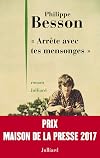
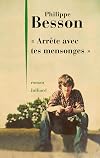
The novel reads like memoir but we are made to wonder how authentic the material is. From the outset the author himself declares that as a writer he tends towards embellishing and misremembering. The English title of the book (different from the French "Arrête avec tes mensonges," which means "Stop with your lies.") has so many meaning - romantic, invitational, and colluding – but it doesn’t take away from the story itself.
Lie with Me is a moving exploration of queer love, desire, and heartbreak. It is about how first love can define our lives and is a memory that you will carry with you for the rest of your life. show less
I want you to take a moment and remember your first love. The feeling in your chest on catching sight of them. The sound of their voice, their laughter. The way your hand would tingle after their touch. The hours spent daydreaming of what your future would be like. How it felt that there could not possibly be a love stronger than this. How still to this day you think of them. Wonder about them. About what might have been.
Now, let me introduce you to Lie With Me by Philippe Besson
While being interviewed in a hotel lobby for his latest novel, Philippe glimpses a young man who bears a striking resemblance to his first love. Without thinking he follows show more the man and takes us back to the story of his first love, Thomas.
This book captures the intensity and uncertainty of young love. The fumbling emotions and jealousy made more pointed by the difficulties of being gay. Philippe and Thomas's relationship is intense and all-consuming, and Besson does a fantastic job of bringing this to life. The story does not shy away from the fear, confusion, and isolation that many queer individuals experience, and a reminder of the challenges that many people still face today.
The novel reads like memoir but we are made to wonder how authentic the material is. From the outset the author himself declares that as a writer he tends towards embellishing and misremembering. The English title of the book (different from the French "Arrête avec tes mensonges," which means "Stop with your lies.") has so many meaning - romantic, invitational, and colluding – but it doesn’t take away from the story itself.
Lie with Me is a moving exploration of queer love, desire, and heartbreak. It is about how first love can define our lives and is a memory that you will carry with you for the rest of your life. show less
On reflection, this was a beautiful short read. I came very close to tears welling in my eyes, which for me is the equivalent of effusive weeping for regular schmucks. Ringwald's translation is sensitive and elegantly pitched; the whole affair is draped in a kind of fragile grace.
(My only complaint is both minimal and mundane, and directed at the translator, the one and only Ms. Molly Ringwald. I think we need to retire the use of the word "sex" as a noun describing the genitals. It's a little too... Lawrence Durrell.)
(My only complaint is both minimal and mundane, and directed at the translator, the one and only Ms. Molly Ringwald. I think we need to retire the use of the word "sex" as a noun describing the genitals. It's a little too... Lawrence Durrell.)
Members
- Recently Added By
Lists

Top Five Books of 2020
982 works; 348 members

Books Read in 2023
5,547 works; 145 members

Five Star Novels
20 works; 2 members

Class mobility in fiction
18 works; 1 member
Author Information

35+ Works 2,035 Members
Some Editions
Awards and Honors
Awards
Common Knowledge
- Canonical title
- Lie With Me
- Original title
- Arrête avec tes mensonges
- Original publication date
- 2017
- People/Characters
- Philippe [Lie With Me]; Thomas Andrieu; Lucas Andrieu
- Important places
- France
- Related movies
- Lie with Me (2022 | IMDb)
- Epigraph
- You didn't have to attract desire... Either it was there at first glance or else it had never been. It was instant knowledge of sexual relationship or it was nothing.
~ Marguerite Duras, The Lover
I concluded with an aching finality that the could-happen possibilities were gone, and that doing whatever you wanted was over. The future didn't exist anymore. Everything was in the past and would stay there.
~ Bret Easto... (show all)n Ellis, Lunar Park - Dedication
- In memory of Thomas Andrieu (1966-2016)
- First words
- One day -- I can say precisely when, I know the date -- I find myself in the bar of a hotel lobby in a provincial city, sitting in an armchair across from a journalist, a low round table between us, being interviewed for my l... (show all)atest novel, which recently came out.
- Last words
- (Click to show. Warning: May contain spoilers.)I just wanted to write to tell you that I have been happy during these months together, that I have never been so happy, and that I already know I will never be so happy again.
- Original language
- French
Classifications
Statistics
- Members
- 825
- Popularity
- 33,364
- Reviews
- 38
- Rating
- (4.09)
- Languages
- 8 — Dutch, English, French, German, Italian, Portuguese (Portugal), Romanian, Spanish
- Media
- Paper, Audiobook, Ebook
- ISBNs
- 28
- ASINs
- 7