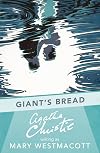
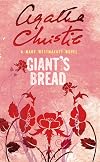
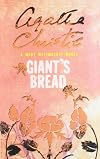
Giant's Bread
by Mary Westmacott
On This Page
Description
A spellbinding novel of romantic obsession by Agatha Christie, written under the pseudonym Mary Westmacott.Agatha Christie, famous for her ingenious crime novels, also wrote about crimes of the heart. Written under the pseudonym Mary Westmacott, Christie's tales of romantic suspense further explore the human psychology she was so intrigued by, freed from the expectations of her mystery fans.
In the first of six novels written under this nom de plume, Giant's Bread tells the story of Vernon show more Deyre, a young composer who reinvents his identity after being declared dead in World War I. Vernon Deyre is a sensitive and brilliant musician, even a genius. But there is a high price to be paid for his talent, especially by his family and the two women in his life. His sheltered childhood in the home he loves has not prepared Vernon for the harsh reality of his adult years, and in order to write the great masterpiece of his life, he has to make a crucial decision with no time left to count the cost...
Giant's Bread is a bittersweet tale of passion and ambition. Critically acclaimed upon publication, it was published fifteen years before Mary Westmacott's true identity was revealed.
. show less
Tags
Recommendations



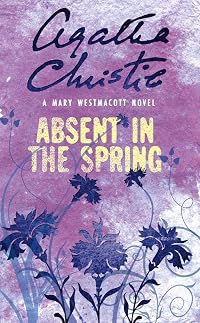
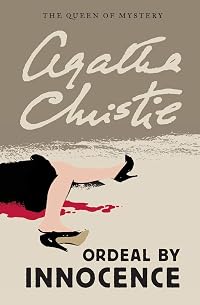









Member Reviews
I am reading through Christie’s books in chronological order, and what has so far really surprised me is the great variety in her writing. She appears to be constantly reinventing herself, covering international adventures, domestic “thrillers”, and now something between a Bildungsroman and a sensationalist romance. I can’t say I really enjoyed this novel, but I can appreciate the craft of its writer.
Not sure that the writing rises to the heights but the story is fascinating, how the giant of genius, working through an essentially weak young man, grinds the bones of heredity, environment and sex/love to make the bread of a brilliant work of art (i.e. fee, fie, fo, fum...I'll grind his bones to make my bread) Helps if you have some knowledge of early 20th century arts and history - some of the more ridiculous sounding art in this book is taken from reality e.g. Tatlin's monument to the 3rd international - see http://en.wikipedia.org/wiki/Tatlin's_Tower An ambitious work chock full of ideas!
2026 re-read - after listening to the Westmapod podcast (and many epsodes of All About Agatha and The Swinging Christies) I revisited this first show more of the Westmacotts. This time I was more aware of the theme of choice - Vernon has to choose between money, his ancestral home, his love and his Art, he wants it all, but as Jane tells him, life doesn't work that way.
I was conscious also of the thematic parallels with Dorothy Sayer's 1937 "Gaudy night" and it's themes of intellectual and personal integrity. particularly Harriet's question "How is one to know which things are really of overmastering importance" and Miss de Vine's answer "We can only know that ... when they have overmastered us" as well as Peter and Harriet's discussion about her choosing to write about people, not puzzles and the following dialogue: "I'll think about that, it would hurt like hell" "What would that matter, if it made a good book". Again, the choice between happiness and integrity.
There's also the line at the beginning of "Busman's honeymoon" - "What's a poet? Something that can't go to bed without making a song about it" which sprang to mind with the final scene of Giant's Bread.
Without being too spoiler-y, this book also uses the theme of Enoch Arden, which Christie (writing under her own name) uses at least twice - in the short story "While the light lasts" and in the novel "Taken at the flood").
I was also drawn to the childhood scene (book 1, chapter 7 part 6) when Joe and Vernon decide to make friends with Sebastian, after all out war, and approach him under a white flag of truce - this was strongly reminiscent of the Swallows and the Amazons making peace in "Swallows and Amazons" and I was interested to notice that both Giants Bread and S&A were published three months apart in 1930 - so that type of imaginative play was not the invention of either Christie or Ransome!
Finally, the Dostoevsky quote (in part 4 of chapter 4 of book 4) "And we alone, we who guard the mystery, we alone shall be unhappy. There will be thousands of millions of happy children and only a hundred thousand martyrs who have taken on themselves the curse of good and evil." made me think of the recent Apple TV series "Pluribus" which I've heard about but not yet seen. A quick google suggests that that series is beholden to this idea in Dostoevsky.
So, though "Giant's Bread" is not a perfect book (perhaps a little melodramatic) it is very much a book that attempts to deal with big questions, a book of its time, but a book that remains relevant today. show less
2026 re-read - after listening to the Westmapod podcast (and many epsodes of All About Agatha and The Swinging Christies) I revisited this first show more of the Westmacotts. This time I was more aware of the theme of choice - Vernon has to choose between money, his ancestral home, his love and his Art, he wants it all, but as Jane tells him, life doesn't work that way.
I was conscious also of the thematic parallels with Dorothy Sayer's 1937 "Gaudy night" and it's themes of intellectual and personal integrity. particularly Harriet's question "How is one to know which things are really of overmastering importance" and Miss de Vine's answer "We can only know that ... when they have overmastered us" as well as Peter and Harriet's discussion about her choosing to write about people, not puzzles and the following dialogue: "I'll think about that, it would hurt like hell" "What would that matter, if it made a good book". Again, the choice between happiness and integrity.
There's also the line at the beginning of "Busman's honeymoon" - "What's a poet? Something that can't go to bed without making a song about it" which sprang to mind with the final scene of Giant's Bread.
Without being too spoiler-y, this book also uses the theme of Enoch Arden, which Christie (writing under her own name) uses at least twice - in the short story "While the light lasts" and in the novel "Taken at the flood").
I was also drawn to the childhood scene (book 1, chapter 7 part 6) when Joe and Vernon decide to make friends with Sebastian, after all out war, and approach him under a white flag of truce - this was strongly reminiscent of the Swallows and the Amazons making peace in "Swallows and Amazons" and I was interested to notice that both Giants Bread and S&A were published three months apart in 1930 - so that type of imaginative play was not the invention of either Christie or Ransome!
Finally, the Dostoevsky quote (in part 4 of chapter 4 of book 4) "And we alone, we who guard the mystery, we alone shall be unhappy. There will be thousands of millions of happy children and only a hundred thousand martyrs who have taken on themselves the curse of good and evil." made me think of the recent Apple TV series "Pluribus" which I've heard about but not yet seen. A quick google suggests that that series is beholden to this idea in Dostoevsky.
So, though "Giant's Bread" is not a perfect book (perhaps a little melodramatic) it is very much a book that attempts to deal with big questions, a book of its time, but a book that remains relevant today. show less
Once I set aside the fact that this was authored by Agatha Christie and stopped expecting someone to stumble upon a body, I got into this story. It still has dramatic (sometimes melodramatic) twists and turns, and I really enjoy Christie's/Westmacott's exploration of character and of the prevailing ideas following WWI. I can't say that she sticks the landing, but overall this novel was a worthwhile read.
I don't know what I expected when I learned that Agatha Christie had written 6 romance novels earlier in her writing career using the pseudonym Mary Westmacott. All I knew for sure is that I had to purchase them and read them in the order in which they were written.
I have finished reading "Giant's Bread" and it was a truly incredible reading experience. Why? The author is very insightful and through the characters she creates not merely a love story but shares the complexities of human nature for childhood friends up through their adult years. There is a poignancy to the experiences through the years of WWI that bring an unexpected impact.
I am looking forward to reading the next romance titled, "Unfinished Portrait."
Don't miss reading show more more about the novels by Christie's daughter, Rosalind Hicks...
https://www.agathachristie.com/about-christie/family-memories/the-mary-westmacot... show less
I have finished reading "Giant's Bread" and it was a truly incredible reading experience. Why? The author is very insightful and through the characters she creates not merely a love story but shares the complexities of human nature for childhood friends up through their adult years. There is a poignancy to the experiences through the years of WWI that bring an unexpected impact.
I am looking forward to reading the next romance titled, "Unfinished Portrait."
Don't miss reading show more more about the novels by Christie's daughter, Rosalind Hicks...
https://www.agathachristie.com/about-christie/family-memories/the-mary-westmacot... show less
This is the first of Christie's undertakings under the pseudonym of Mary Westmacott. I find it rather refreshing from all of her mystery novels with Poirot, Marple, et.al. This really takes you into the mindset of the main characters and all their flawed thoughts. Its almost a psychological view of what some people will go through to either get what they want or to deny themselves what they want. I think she did quite well to begin this story with the childhood of several of the main characters, which sets the table to what will happen later on. Although I was a bit surprised at the end with which of the 2 women in his life he saved. I originally picked this up with some debate as to whether I would like it or not. It does seem to have show more a way of growing on you as you make your way through the book. show less
?????????????!?!!?!?!?!?!!!!!!!!!!!!!!!!
i was GOING to write something COHERENT and then the ending happened and now all i can think is "?!?!?!?!!!!!!!!"
i was GOING to write something COHERENT and then the ending happened and now all i can think is "?!?!?!?!!!!!!!!"
Book 1: told from the point of view of a child. Vernon is a young boy. He hates music.
Members
- Recently Added By
Lists

Agatha Christie
28 works; 3 members
Author Information

2,196+ Works 442,397 Members
One of the most successful and beloved writer of mystery stories, Agatha Mary Clarissa Christie was born in 1890 in Torquay, County Devon, England. She wrote her first novel, The Mysterious Affair at Styles, in 1920, launching a literary career that spanned decades. In her lifetime, she authored 79 crime novels and a short story collection, 19 show more plays, and six novels written under the name of Mary Westmacott. Her books have sold over a billion copies in the English language with another billion in 44 foreign languages. Some of her most famous titles include Murder on the Orient Express, Mystery of the Blue Train, And Then There Were None, 13 at Dinner and The Sittaford Mystery. Noted for clever and surprising twists of plot, many of Christie's mysteries feature two unconventional fictional detectives named Hercule Poirot and Miss Jane Marple. Poirot, in particular, plays the hero of many of her works, including the classic, The Murder of Roger Ackroyd (1926), and Curtain (1975), one of her last works in which the famed detective dies. Over the years, her travels took her to the Middle East where she met noted English archaeologist Sir Max Mallowan. They married in 1930. Christie accompanied Mallowan on annual expeditions to Iraq and Syria, which served as material for Murder in Mesopotamia (1930), Death on the Nile (1937), and Appointment with Death (1938). Christie's credits also include the plays, The Mousetrap and Witness for the Prosecution (1953; film 1957). Christie received the New York Drama Critics' Circle Award for 1954-1955 for Witness. She was also named Dame Commander of the Order of the British Empire in 1971. Christie died in 1976. (Bowker Author Biography) show less
Some Editions
Work Relationships
Is contained in
Common Knowledge
- Canonical title
- Giant's Bread
- Original title
- Giant's Bread
- Original publication date
- 1930
- People/Characters
- Vernon Deyre; Nell Vereker; Jane Harding
- Original language
- English
Classifications
Statistics
- Members
- 384
- Popularity
- 81,772
- Reviews
- 7
- Rating
- (3.47)
- Languages
- 14 — Chinese, English, Estonian, Finnish, French, German, Greek, Hungarian, Italian, Polish, Portuguese, Serbian, Spanish, Swedish
- Media
- Paper, Audiobook, Ebook
- ISBNs
- 41
- ASINs
- 19