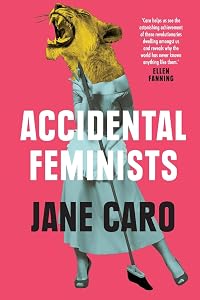
Accidental Feminists
by Jane Caro
On This Page
Description
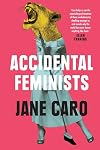
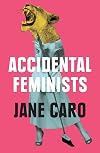
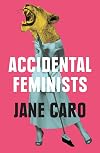
Women over fifty-five are of the generation that changed everything. We didn't expect to. Or intend to. We weren't brought up much differently from the women who came before us, and we rarely identified as feminists, although almost all of us do now. Accidental Feminists is our story. It explores how the world we lived in-with the pill and a regular pay cheque-transformed us and how, almost in spite of ourselves, we revolutionised the world. It is a celebration of grit, adaptability, energy show more and persistence. It is also a plea for future generations to keep agitating for a better, fairer world. show lessTags
Recommendations











Member Reviews
In ‘The Accidental Feminist’ Jane Caro dissects how women currently in the 55-year plus range became both liberated and shackled through the contraceptive pill, the tampon and the pay check.
For those who are not aware Jane Caro is a social commentator, author, columnist and business woman who utilises a diverse range of media platforms to highlight a broad range of issues. I have always enjoyed watching Jane appear on shows like The Drum’ and enjoy her no nonsense, straight up, slap you in the face opinions. I was rather chuffed, to be offered the opportunity to read Jane’s latest book for an honest review.
Caro expertly peels back at how currently women in 55 plus bracket have been able to forge ahead. They are the first show more generation to receive a pay check, they are the first generation to access the pill, and they are the first generation to have access to the tampon. For those younger readers these may seem like simple achievements but I want you to imagine a world where you do not have the convenience of a tampon and continue to lead your current lifestyle.
The joys of earning your own wage have been tainted by the inability to plan for retirement. It is this group of women that Caro turns the torch onto. Having raised their children, worked hard, they find themselves in serious financial hardship with many facing homelessness. This is a growing problem and there is little focus by policy makers to address the issue. With housing prices high, rents high, it will take some clever thinking to find a solution. It these sections of the book that will make many women feel uncomfortable. That as a woman no matter what your age, the ongoing fragility of your financial predicament is going to remain a constant. That having a safe place to live, the ability to be independent could be taken away in a heartbeat through the loss of income, a relationship break up or ill health. It will have you really thinking about your financial future and looking for trustworthy advisor.
Caro explores other issues throughout the book as to how women have been categorised. From being hags, gold-diggers, slags, bossy bitch and dutiful housewives all these terms have been heaped onto women as they move through life. The power of the terminology, how it shapes, defines and continues to be place women into boxes. The continual battle women face that going out at night, having a couple of drinks and dressing in a seemingly provocative way is not an invitation for rape.
There is so much to unpack in this book. I found the chapter ‘Vessels of Repulsion’ extremely thought provoking as Caro explores the ownership of a woman’s body. From how women are told to dress and how to behave when expecting. It certainly highlights the conundrum women find themselves in.
Towards the last couple of chapters you wonder is there an upside as even Caro admits “If you are female, and try to get ahead there will be bigger, wider, deeper and deeper obstacles in your way.” Yet, things are changing; the extraordinarily brave women who have raised their voice through #metoo are having an impact. There is progress talk of quotas in politics, company boards are being discussed. I would say that even the ready acceptance of women’s sport on prime television has been important as has the success of the book Good Night Stories for Rebel Girls’ has provided access to role models for women. The last two chapters bring hope, rebellion and policy to the forefront.
Caro’s writing style is chatty and keeps you engaged. It is extremely well researched and not preachy. Caro lays out the facts, the issues in no nonsense way. Yes, there are parts of this book that are uncomfortable but you need that. There are women out there struggling who have become invisible and Caro rightly brings these issues into the spotlight.
The Accidental Feminist is a celebration of women how much they have achieved and a damning indictment on how much is still to be done. show less
For those who are not aware Jane Caro is a social commentator, author, columnist and business woman who utilises a diverse range of media platforms to highlight a broad range of issues. I have always enjoyed watching Jane appear on shows like The Drum’ and enjoy her no nonsense, straight up, slap you in the face opinions. I was rather chuffed, to be offered the opportunity to read Jane’s latest book for an honest review.
Caro expertly peels back at how currently women in 55 plus bracket have been able to forge ahead. They are the first show more generation to receive a pay check, they are the first generation to access the pill, and they are the first generation to have access to the tampon. For those younger readers these may seem like simple achievements but I want you to imagine a world where you do not have the convenience of a tampon and continue to lead your current lifestyle.
The joys of earning your own wage have been tainted by the inability to plan for retirement. It is this group of women that Caro turns the torch onto. Having raised their children, worked hard, they find themselves in serious financial hardship with many facing homelessness. This is a growing problem and there is little focus by policy makers to address the issue. With housing prices high, rents high, it will take some clever thinking to find a solution. It these sections of the book that will make many women feel uncomfortable. That as a woman no matter what your age, the ongoing fragility of your financial predicament is going to remain a constant. That having a safe place to live, the ability to be independent could be taken away in a heartbeat through the loss of income, a relationship break up or ill health. It will have you really thinking about your financial future and looking for trustworthy advisor.
Caro explores other issues throughout the book as to how women have been categorised. From being hags, gold-diggers, slags, bossy bitch and dutiful housewives all these terms have been heaped onto women as they move through life. The power of the terminology, how it shapes, defines and continues to be place women into boxes. The continual battle women face that going out at night, having a couple of drinks and dressing in a seemingly provocative way is not an invitation for rape.
There is so much to unpack in this book. I found the chapter ‘Vessels of Repulsion’ extremely thought provoking as Caro explores the ownership of a woman’s body. From how women are told to dress and how to behave when expecting. It certainly highlights the conundrum women find themselves in.
Towards the last couple of chapters you wonder is there an upside as even Caro admits “If you are female, and try to get ahead there will be bigger, wider, deeper and deeper obstacles in your way.” Yet, things are changing; the extraordinarily brave women who have raised their voice through #metoo are having an impact. There is progress talk of quotas in politics, company boards are being discussed. I would say that even the ready acceptance of women’s sport on prime television has been important as has the success of the book Good Night Stories for Rebel Girls’ has provided access to role models for women. The last two chapters bring hope, rebellion and policy to the forefront.
Caro’s writing style is chatty and keeps you engaged. It is extremely well researched and not preachy. Caro lays out the facts, the issues in no nonsense way. Yes, there are parts of this book that are uncomfortable but you need that. There are women out there struggling who have become invisible and Caro rightly brings these issues into the spotlight.
The Accidental Feminist is a celebration of women how much they have achieved and a damning indictment on how much is still to be done. show less
To afficionados of the ABC current affairs program The Drum, Jane Caro’s Accidental Feminists is exactly what you might expect of the author: forthright, amusing, full of pithy anecdotes to illustrate a point, and witheringly authentic.
While (of course) not everyone accessed higher education, Caro acknowledges that the Whitlam government’s abolition of university fees was pivotal:
However…
Caro attributes this to ‘flexibility’ — because (again backed up by her statistics) most women still do the ‘second shift’ i.e. the housework, the cooking, the childcare. Again there are also structural reasons like expensive child-care and high effective marginal tax-rates when moving from three to four days a week to full-time work due to the loss of family and child benefits. (p.75)
The take-home message of Accidental Feminists is this: there is a cohort of older women in dire financial straits because of structural and social impediments to financial independence that have affected their entire lives.
To read the rest of my review please visit https://anzlitlovers.com/2019/02/18/accidental-feminists-by-jane-caro/ show less
What was revolutionary about our generation was that the generation born in the 1950s and 1960s is the first in history where most of the women worked for wages for most of their lives. And because money is power, this has changed everything.
While (of course) not everyone accessed higher education, Caro acknowledges that the Whitlam government’s abolition of university fees was pivotal:
If tertiary education was free, it was harder to rationalise preventing girls from accompanying their brothers,show more
especially as so many of us had higher marks. More than that, however, our mothers also began to grasp the chance that was offered to them. It was female mature-age students who radically swelled the ranks at universities during that tiny window of opportunity…(p.71)
However…
[women] tend to be concentrated in lower-status industries and at the lower end of the pay scale. Even more depressing is the fact that previously high-status, well-paid occupations tend to fall in both status and pay when they become female dominated. General medical practice, marketing and human resources (the latter of which once meant a board position) spring to mind. (p.72)
Caro attributes this to ‘flexibility’ — because (again backed up by her statistics) most women still do the ‘second shift’ i.e. the housework, the cooking, the childcare. Again there are also structural reasons like expensive child-care and high effective marginal tax-rates when moving from three to four days a week to full-time work due to the loss of family and child benefits. (p.75)
The take-home message of Accidental Feminists is this: there is a cohort of older women in dire financial straits because of structural and social impediments to financial independence that have affected their entire lives.
To read the rest of my review please visit https://anzlitlovers.com/2019/02/18/accidental-feminists-by-jane-caro/ show less
I think this could be a good read - unfortunately I only dipped into it on audiobook - but I must return to it one day.
Ratings
Members
- Recently Added By
Lists

2021 - List of books read
53 works; 1 member
Author Information

12+ Works 334 Members
Jane Caro was born in 1957 in London. She attended Macquarie University, where she graduated with a Bachelor of Arts with a major in English literature in 1977. She soon moved into the field of advertising. She appeared on the T.V. show Sunrise, ABC television's Q&A and as a regular panelist on The Gruen Transfer. Caro has worked in the show more advertising industry and lectures in advertising at the School of Humanities and Communication Arts at University of Western Sydney. She is an author. Her books include The Stupid Country: How Australia is Dismantling Public Education, along with Chris Bonnor, The F Word. How we learned to swear by feminism, along with Catherine Fox, Just a Girl, What Makes a Good School? Along with Chris Bonnor and, with Pan Macmillan, For God's Sake! An atheist, Christian, Jew and Muslim battle it out, along with Antony Lowenstein, Simon Smart and Rachel Woodlock, and her memoir Plain-speaking Jane. In 2018, she won the Walkley Foundation's Women's Leadership in Media Award for the nonfiction book she edited Unbreakable: Women Share Stories of Resilience and Hope. (Bowker Author Biography) show less
Classifications
- Genres
- Nonfiction, Sexuality and Gender Studies, History, Literature Studies and Criticism
- DDC/MDS
- 305.4209 — Society, government, & culture Social sciences, sociology & anthropology Social group - Age, Gender, Ethnicity Women Social role and status of women Standard subdivisions History, geographic treatment, biography
- LCC
- HQ1121 — Social sciences The family. Marriage, Women and Sexuality The Family. Marriage. Women Women. Feminism
- BISAC
Statistics
- Members
- 29
- Popularity
- 954,255
- Reviews
- 3
- Rating
- (4.00)
- Languages
- English
- Media
- Paper, Audiobook, Ebook
- ISBNs
- 6
- ASINs
- 3