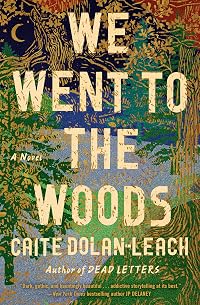
We Went to the Woods
by Caite Dolan-Leach
On This Page
Description
"They went off the grid. Their secrets didn't... Certain that society is on the verge of economic and environmental collapse, five disillusioned twenty-somethings make a bold decision: They gather in upstate New York to transform an abandoned farm, once the site of a turn-of-the-century socialist commune, into an idyllic self-sustaining compound called the Homestead. Louisa spearheads the project, as her wealthy family owns the plot of land. Beau is the second to commit; as mysterious and show more sexy as he is charismatic, he torments Louisa with his nightly disappearances and his other relationships. Chloe, a dreamy musician, is naturally able to attract anyone to her - which inevitably results in conflict. Jack, the most sensible and cerebral of the group, is the only one with any practical farm experience. Mack, the last to join, believes it's her calling to write their story - but she is not the most objective narrator, and inevitably complicates their increasingly tangled narrative. Initially exhilarated by restoring the rustic dwellings, planting a garden, and learning the secrets of fermentation, the group is soon divided by slights, intense romantic and sexual relationships, jealousies, and suspicions. And as winter settles in, their experiment begins to feel not only misguided, but deeply isolating and dangerous. Caite Dolan-Leach spins a poignant and deeply human tale with sharp insights into our modern anxieties, our collective failures, and the timeless desire to withdraw from the world"--Publisher description. show lessTags
Recommendations




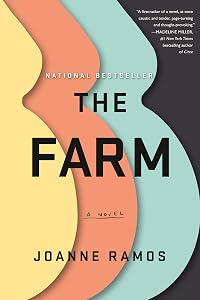
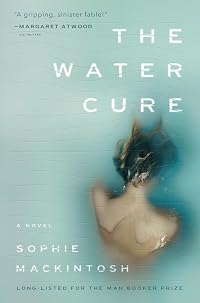
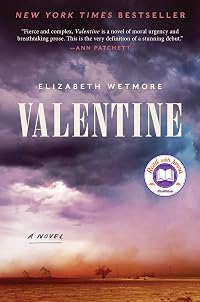


Member Reviews
This review can also be found on my blog.
disclaimer: I received an advanced copy of this book from NetGalley and the publisher in exchange for review consideration. All of the opinions presented below are my own. All quotes have been taken from the advanced copy and are subject to change upon publication.
We Went to the Woods is a quietly intense novel following five not-quite-yet adults as they leave the comforts of the modern world to create a commune of sorts in upstate New York. All are there for different reasons but the narrator of the novel, Mack, is attempting to escape her infamy after a very public experiment goes awry. While the threads of a mystery are woven throughout, this is very much not a thriller; the focus is held much show more more deeply on the characters and their relationships and introspections than on the plot itself.
Even if most of my days felt useless, days where I came home with some cash felt like they hadn’t been entirely wasted. This depressed me, this feeling that my life mattered only as it was measured out in paper dollars.
Mack herself is quite relatable in some ways: she has fallen into this tightly knit friend group and feels more like an outsider than anything else. As readers, we are not privy to the ins and outs of the four other characters and must slowly figure them out alongside Mack. There is a strong element of voyeurism to this and it was difficult not to be torn between wanting things to settle down and wanting to watch the drama unfurling.
Could I learn to live? The clouds opened up and I let them drench me, waiting to feel something. The intensity I wanted seemed close, attainable -- the chill I felt out here and the coziness I would feel inside, with them? Was that what I hoped for? The distance between two feelings?
I found the parallels drawn between past and present to be quite interesting. Mack begins researching older communities that had struck out from society at large in similar ways. It seems obvious that humanity keeps making the same mistakes rather than learning from those who came before them. Even when drawing comparisons to the Collective, another nearby commune, this much is obvious. Whilst Mack’s group has struck out alone in an effort to avoid existing groups and their mistakes, this means they simply turn around and make their own.
But action is not something that has ever come easily to me; I wait for others’ decisiveness, not choosing for myself. Never recognizing that my passivity, too, is a choice.
There is a lot to be said about the portrayal of sexuality in this novel, and I’m intrigued to see what others have gotten from it. It is clear that Mack’s draw to the others in the group is firmly rooted in the erotic tension they all share. This is something that Mack herself focuses heavily on, literally obsessed with the physical relationships between each of them. There seems to be little delineation as far as gender or sexual orientation goes and most of the focus is on “free love” though it is clear that not all of the characters enjoy participating in non-monogamy. Indeed, it’s clear that any lack of boundaries is more forced than natural, particularly as secret upon secret is slowly unearthed.
But then, how can one small group of committed individuals hope to alter a whole society bent on injustice?
As much as I enjoyed the novel, there were some aspects that I felt could have been handled better. For one, Mack’s infamy is a point of interest throughout the book that I felt was played up a bit too much. It is quite some time before the reader finds out what had happened and in my opinion, the eventual reveal was quite anticlimactic. It felt heavy-handed and clunky in the moment and I felt it could have been woven in better. Aside from that, the reason itself just confused me. Sure, what Mack did was terrible, but I was expecting something so much worse and felt let down by what had promised to be a major confession. Where Mack ends up in the end also irritated me and seemed like a throwaway, but that’s something I can’t get into without spoilers.
“That is the saddest thing I’ve ever heard,” Jack said, musing. “The idea that you don’t have a home inside your own head. That breaks my heart.”
Speaking of which, what an ending it was! While the tension slowly builds throughout the novel and a climax is strongly alluded to (there are a lot of “had I known what I was coming…” reflections), I was still unprepared for where it led. Again this is difficult to discuss without spoilers, but I’d compare Caite Dolan-Leach’s writing to a well-done score: it is easy not to realize how much it is impacting you until you realize you are taut with anxiety and all hell is about to break loose.
“Do you think it’s because of the pesticides?” I asked finally. “I think it’s because of the whole damn world, Wee Mack. There’s nowhere to get away from the poison.”
Anyway, yeah this is a doozy of a read. I wasn’t sure what to think of it as I progressed but I have to say that the last act really cemented things for me. I was actually racing through the pages and dreaded the idea of not finishing before I would have to put it down. There’s much more to think about than what I touched on here, and even what I discussed could be analyzed at great length. I’m really interested in seeing what others have gotten out of this, and definitely recommend it if you’re looking for a slower, more intense read. show less
disclaimer: I received an advanced copy of this book from NetGalley and the publisher in exchange for review consideration. All of the opinions presented below are my own. All quotes have been taken from the advanced copy and are subject to change upon publication.
We Went to the Woods is a quietly intense novel following five not-quite-yet adults as they leave the comforts of the modern world to create a commune of sorts in upstate New York. All are there for different reasons but the narrator of the novel, Mack, is attempting to escape her infamy after a very public experiment goes awry. While the threads of a mystery are woven throughout, this is very much not a thriller; the focus is held much show more more deeply on the characters and their relationships and introspections than on the plot itself.
Even if most of my days felt useless, days where I came home with some cash felt like they hadn’t been entirely wasted. This depressed me, this feeling that my life mattered only as it was measured out in paper dollars.
Mack herself is quite relatable in some ways: she has fallen into this tightly knit friend group and feels more like an outsider than anything else. As readers, we are not privy to the ins and outs of the four other characters and must slowly figure them out alongside Mack. There is a strong element of voyeurism to this and it was difficult not to be torn between wanting things to settle down and wanting to watch the drama unfurling.
Could I learn to live? The clouds opened up and I let them drench me, waiting to feel something. The intensity I wanted seemed close, attainable -- the chill I felt out here and the coziness I would feel inside, with them? Was that what I hoped for? The distance between two feelings?
I found the parallels drawn between past and present to be quite interesting. Mack begins researching older communities that had struck out from society at large in similar ways. It seems obvious that humanity keeps making the same mistakes rather than learning from those who came before them. Even when drawing comparisons to the Collective, another nearby commune, this much is obvious. Whilst Mack’s group has struck out alone in an effort to avoid existing groups and their mistakes, this means they simply turn around and make their own.
But action is not something that has ever come easily to me; I wait for others’ decisiveness, not choosing for myself. Never recognizing that my passivity, too, is a choice.
There is a lot to be said about the portrayal of sexuality in this novel, and I’m intrigued to see what others have gotten from it. It is clear that Mack’s draw to the others in the group is firmly rooted in the erotic tension they all share. This is something that Mack herself focuses heavily on, literally obsessed with the physical relationships between each of them. There seems to be little delineation as far as gender or sexual orientation goes and most of the focus is on “free love” though it is clear that not all of the characters enjoy participating in non-monogamy. Indeed, it’s clear that any lack of boundaries is more forced than natural, particularly as secret upon secret is slowly unearthed.
But then, how can one small group of committed individuals hope to alter a whole society bent on injustice?
As much as I enjoyed the novel, there were some aspects that I felt could have been handled better. For one, Mack’s infamy is a point of interest throughout the book that I felt was played up a bit too much. It is quite some time before the reader finds out what had happened and in my opinion, the eventual reveal was quite anticlimactic. It felt heavy-handed and clunky in the moment and I felt it could have been woven in better. Aside from that, the reason itself just confused me. Sure, what Mack did was terrible, but I was expecting something so much worse and felt let down by what had promised to be a major confession. Where Mack ends up in the end also irritated me and seemed like a throwaway, but that’s something I can’t get into without spoilers.
“That is the saddest thing I’ve ever heard,” Jack said, musing. “The idea that you don’t have a home inside your own head. That breaks my heart.”
Speaking of which, what an ending it was! While the tension slowly builds throughout the novel and a climax is strongly alluded to (there are a lot of “had I known what I was coming…” reflections), I was still unprepared for where it led. Again this is difficult to discuss without spoilers, but I’d compare Caite Dolan-Leach’s writing to a well-done score: it is easy not to realize how much it is impacting you until you realize you are taut with anxiety and all hell is about to break loose.
“Do you think it’s because of the pesticides?” I asked finally. “I think it’s because of the whole damn world, Wee Mack. There’s nowhere to get away from the poison.”
Anyway, yeah this is a doozy of a read. I wasn’t sure what to think of it as I progressed but I have to say that the last act really cemented things for me. I was actually racing through the pages and dreaded the idea of not finishing before I would have to put it down. There’s much more to think about than what I touched on here, and even what I discussed could be analyzed at great length. I’m really interested in seeing what others have gotten out of this, and definitely recommend it if you’re looking for a slower, more intense read. show less
This book is squarely in my wheelhouse and was probably the most engaging read I've picked up this year. I've always loved books with the equivalent of an ensemble cast and where the characters are not necessarily likable. Think Secret History by Donna Tartt, The Girls by Emma Cline, or Lake of Dead Languages by Carol Goodman, and you'll get my drift. If you need to love the characters to enjoy a novel, I don't suggest picking this one up.
Mack, Chloe, Louisa, Beau and Jack are present day millenial types who decide to try to live sustainably off the land, growing their own food, and sans electricity or plumbing in upstate New York. As someone who was born in Ithaca and lived upstate for twenty years, I think the characterization of show more upstate NY and the weather and challenges with living off the land year around were well portrayed. There's a lot of underlying tension, both hostile and sexual, in this book, not simply amongst the five aforementioned, but with the neighboring Collective.
The author does a nice job building suspense throughout though I felt like there were a few unanswered plot points in the end that made for a less than perfectly satisfying reading experience. Nonetheless, I love a dark, suspenseful, character driven novel, and this one checked a lot of boxes for me personally. show less
Mack, Chloe, Louisa, Beau and Jack are present day millenial types who decide to try to live sustainably off the land, growing their own food, and sans electricity or plumbing in upstate New York. As someone who was born in Ithaca and lived upstate for twenty years, I think the characterization of show more upstate NY and the weather and challenges with living off the land year around were well portrayed. There's a lot of underlying tension, both hostile and sexual, in this book, not simply amongst the five aforementioned, but with the neighboring Collective.
The author does a nice job building suspense throughout though I felt like there were a few unanswered plot points in the end that made for a less than perfectly satisfying reading experience. Nonetheless, I love a dark, suspenseful, character driven novel, and this one checked a lot of boxes for me personally. show less
I received an ARC of this book from the publisher in exchange for an honest review. This did not affect my opinion of the book or my review itself.
Our narrator, Mack, is coming off a stint on a reality show that has left America hating her. Desperate to find a fresh start, she is swept up into the idea of The Homestead, an off the grid living community made up of four young adults she has recently become involved with.
Determined to become entirely self-sustaining, so as to fight against capitalism and the environmental disasters they feel are imminent, the five strive to create their own Utopia. But as Mack does research on other such communities, she begins to realize that despite their best intentions, they are all, in the end, only show more human.
I love a book that is both smart and accessible. Dolan-Leach has a lot to say, but it never feels preachy. Both sides of all the issues are shown in all their beauty and ugliness.
These are some believably complicated characters as well, all thinking they are doing what is best for the world, but still driven by human desires and foibles.
There is also this amazing sense of foreboding hanging over the whole book. From the start, Mack lets the readers know something is going to happen, something she feels she should have seen coming. And whether it's what Mack did on the reality show, what happened to the Oneida community that was there before The Homestead, or what is truly going on at The Collective, a large and seemingly thriving self-sustaining community nearby, there are so many twists and surprises.
I thought I might struggle through the parts about growing vegetables or Utopian philosophy, but Dolan-Leach weaves everything together so well that nothing felt difficult or boring to read.
There were a few parts with animals I struggled with, but that's because it made me really sad what happened to the animals, not because those parts weren't well-written or didn't fit into the narrative.
I would definitely recommend this book. It feels almost like a trend now to say a book is like The Secret History (a book I absolutely love), but I can definitely see really positive similarities in the ways Dolan-Leach explores the concepts of intelligence, communities, relationships, and intentions. show less
Our narrator, Mack, is coming off a stint on a reality show that has left America hating her. Desperate to find a fresh start, she is swept up into the idea of The Homestead, an off the grid living community made up of four young adults she has recently become involved with.
Determined to become entirely self-sustaining, so as to fight against capitalism and the environmental disasters they feel are imminent, the five strive to create their own Utopia. But as Mack does research on other such communities, she begins to realize that despite their best intentions, they are all, in the end, only show more human.
I love a book that is both smart and accessible. Dolan-Leach has a lot to say, but it never feels preachy. Both sides of all the issues are shown in all their beauty and ugliness.
These are some believably complicated characters as well, all thinking they are doing what is best for the world, but still driven by human desires and foibles.
There is also this amazing sense of foreboding hanging over the whole book. From the start, Mack lets the readers know something is going to happen, something she feels she should have seen coming. And whether it's what Mack did on the reality show, what happened to the Oneida community that was there before The Homestead, or what is truly going on at The Collective, a large and seemingly thriving self-sustaining community nearby, there are so many twists and surprises.
I thought I might struggle through the parts about growing vegetables or Utopian philosophy, but Dolan-Leach weaves everything together so well that nothing felt difficult or boring to read.
There were a few parts with animals I struggled with, but that's because it made me really sad what happened to the animals, not because those parts weren't well-written or didn't fit into the narrative.
I would definitely recommend this book. It feels almost like a trend now to say a book is like The Secret History (a book I absolutely love), but I can definitely see really positive similarities in the ways Dolan-Leach explores the concepts of intelligence, communities, relationships, and intentions. show less
I was intrigued by the premise of this book, but I felt it could have used more fleshing-out. I would have liked more character development -- everyone seems to just be conveniently "mysterious" but I wanted to know more about each member of the Homestead and what brought them there. There was also so much foreshadowing of "something goes terribly wrong" that I was expecting something with a little more twists and turns throughout, rather than it all just kind of happening at once at the very end. I did enjoy reading about their various homesteading projects, as that's something that has always appealed to me.
Thanks to NetGalley for an ARC of We Went to the Woods by Caite Dolan-Leach in exchange for an honest review.
First - the good: This novel was beautifully written, with a fair amount of character development. I could feel the grittiness of the earth, the commune, the fragile relationships. I could feel the ease as well as the tension as they navigated through life on the Homestead.
Now - the bad: I could not wait for this novel to end. I just wanted it to be over! It took forever to get to the point, and to the climax of the story. I nearly did not finish this novel, but I felt that I had to since I was given an ARC. To me, the story just dragged on and on and on.
The story is about 5 millennials who are disillusioned with the world and show more the corporate impact on the environment. They are adamant about preserving the earth for future generations. They are all from well-to-do families, except for Mack (Mackenzie) who is a struggling former PhD candidate (anthropology) who had an unfortunate and embarrassing moment on reality television. Of course, I didn't think it was so bad that it warranted all the attention - plus it took a long time for that incident to be revealed. Plus, there is a seedy undertone to the entire commune experience that comes to light late in the book.
I feel as if this was not the book for me. I like more action, and I felt like I was watching paint dry. This just didn't do it for me.
#WeWenttotheWoods #CaiteDolanLeach #NetGalley show less
First - the good: This novel was beautifully written, with a fair amount of character development. I could feel the grittiness of the earth, the commune, the fragile relationships. I could feel the ease as well as the tension as they navigated through life on the Homestead.
Now - the bad: I could not wait for this novel to end. I just wanted it to be over! It took forever to get to the point, and to the climax of the story. I nearly did not finish this novel, but I felt that I had to since I was given an ARC. To me, the story just dragged on and on and on.
The story is about 5 millennials who are disillusioned with the world and show more the corporate impact on the environment. They are adamant about preserving the earth for future generations. They are all from well-to-do families, except for Mack (Mackenzie) who is a struggling former PhD candidate (anthropology) who had an unfortunate and embarrassing moment on reality television. Of course, I didn't think it was so bad that it warranted all the attention - plus it took a long time for that incident to be revealed. Plus, there is a seedy undertone to the entire commune experience that comes to light late in the book.
I feel as if this was not the book for me. I like more action, and I felt like I was watching paint dry. This just didn't do it for me.
#WeWenttotheWoods #CaiteDolanLeach #NetGalley show less
I'm the wrong one to tell our story. I was the late arrival, the last on board, the self-effacing supplement to the lopsided structure of which Louisa and Beau were the main architects. If only it were Beau telling our tale, drawling his way through it, cigarillo danging from his lips. Or Louisa, nattering on with her breakneck fluency. Best of all, maybe Jack, with his sculpted insights, frank amazement, arms carving out a circumference of joy. Chloe could convince anyone that we were beautiful and right and noble to do what we did. Instead, of the five of us, I am the only one left. I was the least important, the watchful cipher who served only as an audience and an extra body, an afterthought. Maybe Beau knew that he would need show more someone outside their tight quadrilateral, to record and capture them, to witness--an extra point to make a pentagon. After all, he was the only one who knew the ending of the story we all thought we were writing together.
From the very beginning, you know that things will not end well for these five millennials who attempt to homestead in upstate New York. You know because "Mack" (short for Mackenzie) tells you so right there in the opening paragraph, but also because these things never end well. If they do, they aren't worth writing a novel about, right? But in this first paragraph, you also get a glimpse of all the parts of the story that didn't work for me.
Mack is the wrong one to tell the story. She's supposed to be in her mid-twenties, a grad-school drop out who has been disgraced on an internet reality show, but her perspective is more like a naive teenager. She watches her "friends" make choices, while she mopes and moons and waits to be included. And maybe she's correct that she was chosen for that reason, to observe and record, but it's really frustrating to watch the unraveling from her perspective. The other characters are often caricatures when seen through her eyes; it's difficult to get a grip on who they are really supposed to be. This is a case where alternating points of view would have improved the narrative.
All the characters are frustratingly idealistic and self-righteous, but of course they are. They're (a) millennials who (b) start a mini-commune. [Insert many speeches about late-stage consumerism, interspersed with drunken, naked romps through the woods.] Later you learn that they're actually a reaction (almost, but not quite an off-shoot) to another, larger, better organized group in the area, which is not to say that group is without its own issues. (In fact, those issues become a major plot line in a novel where very little happens.)
And finally, this first paragraph -- one of many examples of heavy-handed foreshadowing -- is deceiving. Semi-spoiler (but only if you LIKE being tricked by an author) without any details:Beau didn't really know how things were going to end and Mack isn't the only one left alive to tell their story. show less
From the very beginning, you know that things will not end well for these five millennials who attempt to homestead in upstate New York. You know because "Mack" (short for Mackenzie) tells you so right there in the opening paragraph, but also because these things never end well. If they do, they aren't worth writing a novel about, right? But in this first paragraph, you also get a glimpse of all the parts of the story that didn't work for me.
Mack is the wrong one to tell the story. She's supposed to be in her mid-twenties, a grad-school drop out who has been disgraced on an internet reality show, but her perspective is more like a naive teenager. She watches her "friends" make choices, while she mopes and moons and waits to be included. And maybe she's correct that she was chosen for that reason, to observe and record, but it's really frustrating to watch the unraveling from her perspective. The other characters are often caricatures when seen through her eyes; it's difficult to get a grip on who they are really supposed to be. This is a case where alternating points of view would have improved the narrative.
All the characters are frustratingly idealistic and self-righteous, but of course they are. They're (a) millennials who (b) start a mini-commune. [Insert many speeches about late-stage consumerism, interspersed with drunken, naked romps through the woods.] Later you learn that they're actually a reaction (almost, but not quite an off-shoot) to another, larger, better organized group in the area, which is not to say that group is without its own issues. (In fact, those issues become a major plot line in a novel where very little happens.)
And finally, this first paragraph -- one of many examples of heavy-handed foreshadowing -- is deceiving. Semi-spoiler (but only if you LIKE being tricked by an author) without any details:
Told in first person by one of the participants, WE WENT TO THE WOODS, by Caite Dolan-Leach, is the story of a group of five individuals who attempt to create a self-sustaining community in upstate New York. Our narrator, Mack, has a hidden agenda in joining the group, and at the same time though, she can't help getting wrapped up in the romantic vision of living off the grid. As they days and weeks unfold, physical relationships start and quickly intertwine within the group and secrets about each participant come out that forever change the idyllic vibe that Mack was attracted to and wanting to wrap herself in like a warm blanket. As time moves on in the community, called Homestead, Mack discovers nothing is quite what she thought and show more her year with the group takes turns she never conceived of.
Dolan-Leach's writes the story through the eyes of Mack, one of the participants, and there is a strong vibe of reluctant sharing by Mack, as if she questions sharing anything and everything from her time with Homestead. But that reluctance fuels the reader's desire to read on and find out why Mack is so tentative to share what really happened. The secrets are revealed slowly and with care and the reader starts to piece together the whole truth along with Mack. Their is also aura of animal magnetism to the novel as well, most likely due to the intimate interaction with the people, the animals, and the land at the Homestead. There was a subplot or two that are distracting from the main drive of the story, but overall the book keeps it moving and building towards the climax and leaves the reader with a satisfying resolution.
WE WENT TO THE WOODS is mesmerizing tale of rediscovery and the truth about keeping secrets.
Thank you to Random House, Caite Dolan-Leach, and Netgalley for a copy of this book in exchange for an honest review! show less
Dolan-Leach's writes the story through the eyes of Mack, one of the participants, and there is a strong vibe of reluctant sharing by Mack, as if she questions sharing anything and everything from her time with Homestead. But that reluctance fuels the reader's desire to read on and find out why Mack is so tentative to share what really happened. The secrets are revealed slowly and with care and the reader starts to piece together the whole truth along with Mack. Their is also aura of animal magnetism to the novel as well, most likely due to the intimate interaction with the people, the animals, and the land at the Homestead. There was a subplot or two that are distracting from the main drive of the story, but overall the book keeps it moving and building towards the climax and leaves the reader with a satisfying resolution.
WE WENT TO THE WOODS is mesmerizing tale of rediscovery and the truth about keeping secrets.
Thank you to Random House, Caite Dolan-Leach, and Netgalley for a copy of this book in exchange for an honest review! show less
Members
- Recently Added By
Lists

20 Books Off the Beaten Path
20 works; 2 members
Author Information
3 Works 755 Members
Awards and Honors
Distinctions
Common Knowledge
- Canonical title
- We Went to the Woods
Classifications
Statistics
- Members
- 105
- Popularity
- 309,143
- Reviews
- 10
- Rating
- (3.18)
- Languages
- English
- Media
- Paper, Audiobook, Ebook
- ISBNs
- 6
- ASINs
- 1