On This Page
Description
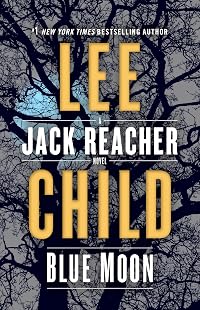
"In the next highly anticipated installment of Lee Child's acclaimed suspense series, Jack Reacher comes to the aid of an elderly couple...and confronts his most dangerous opponents yet. This isn't one of those times. Reacher is on a Greyhound bus, minding his own business, with no particular place to go, and all the time in the world to get there. Then he steps off the bus to help an old man who is obviously just a victim waiting to happen. But you know what they say about good deeds. Now show more Reacher wants to make it right. An elderly couple have made a few well-meaning mistakes, and now they owe big money to some very bad people. One brazen move leads to another, and suddenly Reacher finds himself a wanted man in the middle of a brutal turf war between rival Ukrainian and Albanian gangs. Reacher has to stay one step ahead of the loan sharks, the thugs, and the assassins. He teams up with a fed-up waitress who knows a little more than she's letting on, and sets out to take down the powerful and make the greedy pay. It's a long shot. The odds are against him. But Reacher believes in a certain kind of justice...the kind that comes along once in a blue moon."--provided by publisher. show lessTags
Recommendations

















Member Reviews
Let me say in starting, that I'm a sucker for Jack Reacher books. I'll read them until Lee Child finally decides he's made enough money off the character. In recent Jack Reacher novels, Jack has seemed a little like he's getting too old for this kind of stuff. He seemed slower to recover from injuries, even getting a concussion. And Jack is getting older, he's nearing 60 and ought to be slowing down. I'd like to read about that.
In this novel, invulnerable Jack is back and it's not necessarily a good thing.
As he usually does, Jack is trying to help someone smaller and weaker than he is. He saves an old man from a mugging near the bus terminal in an unnamed small city. The old man is carrying a lot of money to pay off a loan shark. Since show more he's a bit shaken up by the interrupted mugging, Jack offers to make the payment for him. Jack finds that the guy taking the payment is not the guy the old man has been dealing with and decides to make his own terms.
The subplot is that the old man and his wife need the money to pay for cancer treatments for their daughter who's insurance dropped when the dot com company she worked for went bust. By the way, the president of the company is a Ukrainian who has disappeared.
This leads Jack into getting involved in a war between the Ukrainian and Albanian gangs that control everything in town. Actually, he doesn't get involved in the gang war, he inadvertently starts it. The early moves by Jack as he tries to recover some money for the old couple are confusing to the gangsters and eventually they come to the conclusion that Russians are trying to move in on their territory.
That's the plot, now for the criticism. As I mentioned, I've read all the Jack Reacher books. Not all have been good but I read them anyway. This is one of the worst. The usual stilted dialogue is worst than usual. Think "Reacher said nothing" as being witty repartee in this book. And you know how Jack likes to work out every action in his head? There's way too much of that here and then what actually happens is far from clear.
But the worst part of the book is the appalling bloodshed. It's unclear how many gangsters die (50?, 75?) mostly at Jack's hand, mostly by bullet. To mix things up a bit, he beats a few guys to death. He takes a few punches but mostly comes out completely unscathed. Along the way he recruits some helpers, a waitress (who he sleeps with, naturally) and couple of ex-soldiers and a drummer (don't ask). I'm guessing these people, even the soldiers, will be in for years of psychotherapy to get over PTSD.
Jack himself, I think, has become completely psychotic. I imagine the next novel will find him committed in an institution battling demons in his head. show less
In this novel, invulnerable Jack is back and it's not necessarily a good thing.
As he usually does, Jack is trying to help someone smaller and weaker than he is. He saves an old man from a mugging near the bus terminal in an unnamed small city. The old man is carrying a lot of money to pay off a loan shark. Since show more he's a bit shaken up by the interrupted mugging, Jack offers to make the payment for him. Jack finds that the guy taking the payment is not the guy the old man has been dealing with and decides to make his own terms.
The subplot is that the old man and his wife need the money to pay for cancer treatments for their daughter who's insurance dropped when the dot com company she worked for went bust. By the way, the president of the company is a Ukrainian who has disappeared.
This leads Jack into getting involved in a war between the Ukrainian and Albanian gangs that control everything in town. Actually, he doesn't get involved in the gang war, he inadvertently starts it. The early moves by Jack as he tries to recover some money for the old couple are confusing to the gangsters and eventually they come to the conclusion that Russians are trying to move in on their territory.
That's the plot, now for the criticism. As I mentioned, I've read all the Jack Reacher books. Not all have been good but I read them anyway. This is one of the worst. The usual stilted dialogue is worst than usual. Think "Reacher said nothing" as being witty repartee in this book. And you know how Jack likes to work out every action in his head? There's way too much of that here and then what actually happens is far from clear.
But the worst part of the book is the appalling bloodshed. It's unclear how many gangsters die (50?, 75?) mostly at Jack's hand, mostly by bullet. To mix things up a bit, he beats a few guys to death. He takes a few punches but mostly comes out completely unscathed. Along the way he recruits some helpers, a waitress (who he sleeps with, naturally) and couple of ex-soldiers and a drummer (don't ask). I'm guessing these people, even the soldiers, will be in for years of psychotherapy to get over PTSD.
Jack himself, I think, has become completely psychotic. I imagine the next novel will find him committed in an institution battling demons in his head. show less
Jack Reacher enters an unnamed city and comes to the rescue of an elderly gentleman, Aaron Shevick, who is injured during an attempted mugging. After taking him home, Reacher learns that Aaron and his wife are in a deep financial hole. Meg, the Shevicks' daughter, has cancer, lost her health insurance, and desperately needs expensive treatments if she is to have any chance of survival. Her frantic father has resorted to borrowing money from criminals who charge exorbitant interest on their loans. Two gangs, one led by a Ukrainian named Gregory and the other by an Albanian named Dino, have split up the territory, but Gregory and Dino would each prefer to eliminate his rival.
In Lee Child's "Blue Moon," Reacher gets the lay of the land, show more and devises an unlikely scheme to bring the hoodlums to justice and obtain funds for the Shevicks. Furthermore, when he gets wind of a hacking ring masterminded by a hostile foreign power, Reacher adds another item to his to-do list: stopping Maxim Trulenko, the brains behind this operation. So far, so good. Fans of Child's iconic hero appreciate his brilliant tactical and investigative skills; incredible strength and agility (he is "six feet five of bone and muscle and 250 pounds of moving mass"); and ability to outthink and outfight his adversaries, even when he is greatly outnumbered. Along the way, Reacher meets a lovely waitress, Abigail Gibson, who joins him in his mission, and he also enlists the aid of two men whose knowledge and skills may prove useful.
Sad to say, "Blue Moon" is one of Lee Child's most ill-conceived and least satisfying efforts. The Shevicks and Abigail are stock characters who are fail to engage our emotions; the villains are so inept that they do not qualify as worthy adversaries; and Reacher's matter-of-fact attitude while he pummels and executes one thug after another is more creepy than heroic. Members of the police department (who supposedly are intimidated by or paid off by the mobsters) stand by while the population is reduced, thanks to Reacher's murderous rampage. This is formulaic writing at its worst, with underdeveloped themes, little genuine heart, a shaky moral center, and enough mindless carnage to fill two or three books. show less
In Lee Child's "Blue Moon," Reacher gets the lay of the land, show more and devises an unlikely scheme to bring the hoodlums to justice and obtain funds for the Shevicks. Furthermore, when he gets wind of a hacking ring masterminded by a hostile foreign power, Reacher adds another item to his to-do list: stopping Maxim Trulenko, the brains behind this operation. So far, so good. Fans of Child's iconic hero appreciate his brilliant tactical and investigative skills; incredible strength and agility (he is "six feet five of bone and muscle and 250 pounds of moving mass"); and ability to outthink and outfight his adversaries, even when he is greatly outnumbered. Along the way, Reacher meets a lovely waitress, Abigail Gibson, who joins him in his mission, and he also enlists the aid of two men whose knowledge and skills may prove useful.
Sad to say, "Blue Moon" is one of Lee Child's most ill-conceived and least satisfying efforts. The Shevicks and Abigail are stock characters who are fail to engage our emotions; the villains are so inept that they do not qualify as worthy adversaries; and Reacher's matter-of-fact attitude while he pummels and executes one thug after another is more creepy than heroic. Members of the police department (who supposedly are intimidated by or paid off by the mobsters) stand by while the population is reduced, thanks to Reacher's murderous rampage. This is formulaic writing at its worst, with underdeveloped themes, little genuine heart, a shaky moral center, and enough mindless carnage to fill two or three books. show less
Where Has Jack Reacher Gone?
The Jack Reacher of old would be the guy plotting to eliminate the Jack Reacher of Blue Moon. Because sometime after the opening of the novel, this Jack Reacher becomes unhinged and transforms into nothing less than a homicidal maniac.
In this outing, Reacher squares off against a bunch of mobsters, Ukrainians on one side and Albanians on the other. These are bad guys doing the usual bad guy things, and even at that they come off better than Reacher, though not only are they criminals but they are cardboard cutout criminals dressed in black suits; that is, even at that they have more substance than this Reacher. Having read all the Reacher novels up this point and until recently admiring Reacher’s show more character, Blue Moon feels like the precursor to a bad end for the series. Perhaps Lee Child should take a hint from quality television series fare and bring things to a close on a higher note, because it appears the creative juices have gone sluggish.
Here, Reacher finds himself in an unnamed medium size city rescuing an old man who is about to fall prey to a young thug. The man has a wad of cash in his pocket. Turns out he and his wife have a daughter. She is being treated for an unnamed pernicious cancer. Out of money and goods, they have been paying for her treatment with loan shark money. Well, that offends Reacher’s self-righteousness and he sets out to correct the situation. Then he finds himself in a bar and music joint where he and the young waitress take a shine to each other. They tumble into bed and mercifully Child does not go into the gruesome details of their lovemaking, gruesome because he has amply demonstrated he cannot write anything approaching a decent love scene.
Anyway, one thing leads to another with plenty of confusion ensuing. However, Reacher calculates that these bad guys, who really don’t seem any badder that those he’s encountered in the past twenty years or so—these bad guys have to go; all of them; all of them in hails of gunfire and crushed skulls. If that isn’t enough, twice in this novel, Reacher holds a defenseless person at gunpoint and decides with the approval of his ragtag band of vigilantes that he has earned a death sentence. With a body count approaching nearly a hundred, it might seem odd to single out two. However, these two outright murders demonstrate how far over the edge Reacher has gone. You might say, but it’s only fiction, only make-believe. Yes, but many fans admire Jack Reacher. He represents the epitome of an upstanding guy, one who will right wrongs. Though a tad self-righteous, he’s still the kind of man you’d want around if things are headed south. Judicious, thoughtful, cunning, and fair, these are character traits to admire. This Jack Reacher, though, is simply a cold-blooded killer. It’s a sad denouement to his career. show less
The Jack Reacher of old would be the guy plotting to eliminate the Jack Reacher of Blue Moon. Because sometime after the opening of the novel, this Jack Reacher becomes unhinged and transforms into nothing less than a homicidal maniac.
In this outing, Reacher squares off against a bunch of mobsters, Ukrainians on one side and Albanians on the other. These are bad guys doing the usual bad guy things, and even at that they come off better than Reacher, though not only are they criminals but they are cardboard cutout criminals dressed in black suits; that is, even at that they have more substance than this Reacher. Having read all the Reacher novels up this point and until recently admiring Reacher’s show more character, Blue Moon feels like the precursor to a bad end for the series. Perhaps Lee Child should take a hint from quality television series fare and bring things to a close on a higher note, because it appears the creative juices have gone sluggish.
Here, Reacher finds himself in an unnamed medium size city rescuing an old man who is about to fall prey to a young thug. The man has a wad of cash in his pocket. Turns out he and his wife have a daughter. She is being treated for an unnamed pernicious cancer. Out of money and goods, they have been paying for her treatment with loan shark money. Well, that offends Reacher’s self-righteousness and he sets out to correct the situation. Then he finds himself in a bar and music joint where he and the young waitress take a shine to each other. They tumble into bed and mercifully Child does not go into the gruesome details of their lovemaking, gruesome because he has amply demonstrated he cannot write anything approaching a decent love scene.
Anyway, one thing leads to another with plenty of confusion ensuing. However, Reacher calculates that these bad guys, who really don’t seem any badder that those he’s encountered in the past twenty years or so—these bad guys have to go; all of them; all of them in hails of gunfire and crushed skulls. If that isn’t enough, twice in this novel, Reacher holds a defenseless person at gunpoint and decides with the approval of his ragtag band of vigilantes that he has earned a death sentence. With a body count approaching nearly a hundred, it might seem odd to single out two. However, these two outright murders demonstrate how far over the edge Reacher has gone. You might say, but it’s only fiction, only make-believe. Yes, but many fans admire Jack Reacher. He represents the epitome of an upstanding guy, one who will right wrongs. Though a tad self-righteous, he’s still the kind of man you’d want around if things are headed south. Judicious, thoughtful, cunning, and fair, these are character traits to admire. This Jack Reacher, though, is simply a cold-blooded killer. It’s a sad denouement to his career. show less
Jack Reacher is on a bus bound for nowhere in particular when he observes an old man with a thick bank envelope sticking out of his shirt pocket. A shady character is also eying the envelope. The bus stops, the old man and observer get off, and Reacher follows. As he expected, the observer attempts to steal the money, Reacher intervenes, and soon learns that he is in a town controlled by rival gangs. On one side is the Albanians, on the other is the Ukrainians, and Reacher is set to do battle with both.
Lee Child announced recently that “Blue Moon,” his most recent Jack Reacher novel, will be his last. He is turning the series over to his brother, Andrew Child. Lee and Andrew will collaborate on the next book or so in the series show more before Andrew assumes sole responsibility. This review reflects on the entire Jack Reacher series.
It has always been apparent that Jack Reacher is a quasi-moral sociopath. Reacher was introduced in “The Killing Floor” in 1997 as a drifter who uses murder as an effective strategy for achieving his version of justice. As his backstory emerged in books like “The Affair” we learned this was not a recent development. Over the years he has murdered a General in the Pentagon, a Colonel, and a U. S. Senator. As the back story continued to expand, however, we see nothing that explains his sociopathy. His mother was a resistance fighter in France during World War II and his father was a U. S. Marine, but there is no hint of pathology in his upbringing.
Another aspect of his sociopathy is Reacher’s unwillingness or inability to form lasting interpersonal relationships. He moves aimlessly from place to place to place and routinely engages in sexual conquests but avoids a lasting commitment. His one genuine love ended after two volumes when his desire to roam hither and yon was stronger than his affection for another person. The leading female figure he never seduced is sergeant Frances Neagley, a woman whose talents rival those of Reacher, but who cannot stand to have anyone touch her. At least he had an excuse.
Stories about Reacher follow a familiar pattern. He arrives on scene and observes an injustice he decides to correct, or alternatively, for no good reason the locals tell him to move along, triggering his aversion to authority. Almost immediately he meets a nubile woman and they tumble into bed before the ink is dry on the pages. A number of encounters follow that demonstrate Reacher’s prowess, he finishes murdering the bad guys, spends a last night with the sexy young woman, and, succumbing to his wanderlust, heads out of town.
Several scenarios appear with the regularity of the do-overs in Groundhog Day. Their repetition entertains readers, while revealing Child’s lack of fresh ideas. The Reacher fight with multiple (often five) adversaries appears in some form in most books. Reacher often tells the combatants what to expect, giving readers the benefit of prescience and the scene a sense of verisimilitude. It’s not me against five, he explains, it’s me against three. First, I’ll incapacitate your leader — most often with a head butt or elbow to the head — and then the next two who are closest. The remaining two will turn and run. Reacher seldom needs a weapon, but he is not above using whatever is at hand: a pool cue in one instance. In Child’s penultimate novel, “Past Tense,” Reacher engaged in three such fights. After repetition in so many books the customary fight has grown stale, but Child’s decision to triple the number is merely stale tripled.
Reacher penchant for murdering miscreants is well established, but in “Blue Moon” he engages in wholesale slaughter. I wish I had started counting at the beginning as the number of baddies he dispatched must be close to 50. Many were killed in firefights, but some were rendered helpless, then shot or strangled.
The better novels in the series depicted Reacher while still in the military. My personal favorite is “The Affair.” Perhaps the military structure provided a framework that muted Reacher’s sociopathic tendencies and brought more nuanced qualities into play. For example, “Night School,” another favorite, offers a genuine mystery and features sergeant Frances Neagley, a character deserving her own series.
In an appearance at “Third Place Books” a couple of years ago, Child said his contract was ending and he was not sure the series would continue. That may, in part, have reflected his growing sense that he was ready to move on. Reacher is now at a crossroad. It will be interesting to see what changes Andrew Child has in mind for Reacher. show less
Lee Child announced recently that “Blue Moon,” his most recent Jack Reacher novel, will be his last. He is turning the series over to his brother, Andrew Child. Lee and Andrew will collaborate on the next book or so in the series show more before Andrew assumes sole responsibility. This review reflects on the entire Jack Reacher series.
It has always been apparent that Jack Reacher is a quasi-moral sociopath. Reacher was introduced in “The Killing Floor” in 1997 as a drifter who uses murder as an effective strategy for achieving his version of justice. As his backstory emerged in books like “The Affair” we learned this was not a recent development. Over the years he has murdered a General in the Pentagon, a Colonel, and a U. S. Senator. As the back story continued to expand, however, we see nothing that explains his sociopathy. His mother was a resistance fighter in France during World War II and his father was a U. S. Marine, but there is no hint of pathology in his upbringing.
Another aspect of his sociopathy is Reacher’s unwillingness or inability to form lasting interpersonal relationships. He moves aimlessly from place to place to place and routinely engages in sexual conquests but avoids a lasting commitment. His one genuine love ended after two volumes when his desire to roam hither and yon was stronger than his affection for another person. The leading female figure he never seduced is sergeant Frances Neagley, a woman whose talents rival those of Reacher, but who cannot stand to have anyone touch her. At least he had an excuse.
Stories about Reacher follow a familiar pattern. He arrives on scene and observes an injustice he decides to correct, or alternatively, for no good reason the locals tell him to move along, triggering his aversion to authority. Almost immediately he meets a nubile woman and they tumble into bed before the ink is dry on the pages. A number of encounters follow that demonstrate Reacher’s prowess, he finishes murdering the bad guys, spends a last night with the sexy young woman, and, succumbing to his wanderlust, heads out of town.
Several scenarios appear with the regularity of the do-overs in Groundhog Day. Their repetition entertains readers, while revealing Child’s lack of fresh ideas. The Reacher fight with multiple (often five) adversaries appears in some form in most books. Reacher often tells the combatants what to expect, giving readers the benefit of prescience and the scene a sense of verisimilitude. It’s not me against five, he explains, it’s me against three. First, I’ll incapacitate your leader — most often with a head butt or elbow to the head — and then the next two who are closest. The remaining two will turn and run. Reacher seldom needs a weapon, but he is not above using whatever is at hand: a pool cue in one instance. In Child’s penultimate novel, “Past Tense,” Reacher engaged in three such fights. After repetition in so many books the customary fight has grown stale, but Child’s decision to triple the number is merely stale tripled.
Reacher penchant for murdering miscreants is well established, but in “Blue Moon” he engages in wholesale slaughter. I wish I had started counting at the beginning as the number of baddies he dispatched must be close to 50. Many were killed in firefights, but some were rendered helpless, then shot or strangled.
The better novels in the series depicted Reacher while still in the military. My personal favorite is “The Affair.” Perhaps the military structure provided a framework that muted Reacher’s sociopathic tendencies and brought more nuanced qualities into play. For example, “Night School,” another favorite, offers a genuine mystery and features sergeant Frances Neagley, a character deserving her own series.
In an appearance at “Third Place Books” a couple of years ago, Child said his contract was ending and he was not sure the series would continue. That may, in part, have reflected his growing sense that he was ready to move on. Reacher is now at a crossroad. It will be interesting to see what changes Andrew Child has in mind for Reacher. show less
Probably the highest body count of any of the Jack Reacher books, which is saying something, and yet an oddly satisfying story, in a far-fetched, highly unlikely kind of way. I don’t plan to continue with the Reacher books written (or co-written) by Lee Child’s brother, so this was a good place to wrap things up.
I've always liked the character of Jack Reacher, He's independent, fair to a fault, the man you want on your side in a fight... and he always takes up the cause of the underdog. This time there was an entire community of underdogs because of the two rival gangs that ruled their section of town with an iron hand and a big gun. Jack chose to take the case of two elderly people who had been taken advantage of by having to borrow from the gangs to try to pay for their daughter's cancer treatments...which they shouldn't have had to pay for at all. Another case of the system taking advantage of the helpless and those that don't know how things work. I love to watch Jack in action but in this book there was almost too much action. If I hadn't show more read 23 of the other books in this series I would have probably rated it higher but I knew how over the top with the action this one was. Still worth 4 stars. show less
Entertaining, but a bit too fantastical even by Reacher standards.
More dead bodies strewn about than any ten people can count, all the while Reacher manages to steer clear of all the bad guys on one entire half of town that have eyes and ears across every square foot of their territory, all the bad guys on the other entire half of town who also have eyes and ears across every square foot of their territory, plus all the police across everyone's territory who are also the eyes and ears of all the bad guys. In addition to storming the most secure and fortified bastion in the 50 United States without a scratch, and then everyone living happily ever after with the exception of the trail of dead guys piled up all across the entire town.
This show more is also one of the Lee Child books where every character starts to think and sound like Jack Reacher. And by the end of the book they have so adopted their inner- Reacher that there is effectively 5 of him for the final battle. show less
More dead bodies strewn about than any ten people can count, all the while Reacher manages to steer clear of all the bad guys on one entire half of town that have eyes and ears across every square foot of their territory, all the bad guys on the other entire half of town who also have eyes and ears across every square foot of their territory, plus all the police across everyone's territory who are also the eyes and ears of all the bad guys. In addition to storming the most secure and fortified bastion in the 50 United States without a scratch, and then everyone living happily ever after with the exception of the trail of dead guys piled up all across the entire town.
This show more is also one of the Lee Child books where every character starts to think and sound like Jack Reacher. And by the end of the book they have so adopted their inner- Reacher that there is effectively 5 of him for the final battle. show less
Members
- Recently Added By
Lists

Jack Reacher - Lee Child
28 works; 1 member
Author Information

181+ Works 143,897 Members
Lee Child is the pen name of Jim Grant, who was born in Coventry, England on October 29, 1954. He attended law school at Sheffield University, worked in the theater, and finally worked as a presentation director for Granada Television. After being laid off in 1995 because of corporate restructuring, he decided to write a book. The Killing Floor show more won the Anthony Award for Best First Novel and became the first book in the Jack Reacher series. In 2012, the first Jack Reacher film was released starring Tom Cruise. His book's, Worth Dying For and Past Tense, made the bestseller list in 2018. (Bowker Author Biography) show less

Lee Child is a LibraryThing Author, an author who lists their personal library on LibraryThing.
Some Editions
Awards and Honors
Series

Common Knowledge
- Canonical title
- Blue Moon
- Original title
- Blue Moon
- Original publication date
- 2019
- People/Characters
- Jack Reacher; Aaron Shevick; Maxim Trulenko; Abigail Gibson; Gregory; Dino (show all 17); Maria Shevick; Gino Vettoretto; Julian Harvey Wood; Isaac Mehay-Byford; Abigail "Abby" Gibson; Frank Barton; Joe Hogan; Guy Vantresca; Gezim Hoxha; Danilo Rosati; Barbara Buckley
- Dedication
- For Jane and Ruth
My tribe - First words
- The city looked small on a map of America.
- Last words
- (Click to show. Warning: May contain spoilers.)So far his record was sparkling.
- Blurbers
- Follett, Ken
Classifications
Statistics
- Members
- 2,883
- Popularity
- 6,295
- Reviews
- 93
- Rating
- (3.59)
- Languages
- 9 — Dutch, English, Finnish, French, German, Italian, Polish, Spanish, Swedish
- Media
- Paper, Audiobook, Ebook
- ISBNs
- 50
- ASINs
- 9