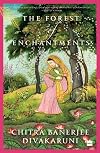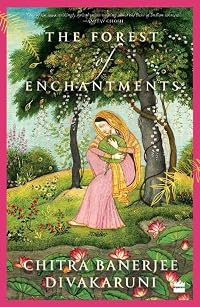
The Forest of Enchantments
by Chitra Banerjee Divakaruni
On This Page
Description
The Ramayana, one of the world's greatest epics, is also a tragic love story. In this brilliant retelling, Chitra Banerjee Divakaruni places Sita at the centre of the novel: this is Sita's version. The Forest of Enchantments is also a very human story of some of the other women in the epic, often misunderstood and relegated to the margins: Kaikeyi, Surpanakha, Mandodari. A powerful comment on duty, betrayal, infidelity and honour, it is also about women s struggle to retain autonomy in a show more world that privileges men, as Chitra transforms an ancient story into a gripping, contemporary battle of wills. While the Ramayana resonates even today, she makes it more relevant than ever, in the underlying questions in the novel: How should women be treated by their loved ones? What are their rights in a relationship? When does a woman need to stand up and say, Enough! show lessTags
Recommendations






Member Reviews
Proclaimed by the author to be a feminist interpretation of the fundamental Indian religious tale The Ramayana, this narration is by Sita, the foundling who becomes the wife of the immortal god Ram and an avatar of the goddess Lakshmi. Their romance and relationship are fraught and laced with misery for both, but Sita's strength takes her to her own glory, power, and self-knowledge. The most dramatic parts of the retelling are Sita's kidnapping by the demon Ravan, including their veiled connection, and her love and admiration for Hanuman, the monkey god who joins RaM to defeat Ravan in battle. Their touching parting reminded me of the hobbits' farewell at Grey Havens at the end of Lord of the Rings. Ram, seen as an avatar of Lord Vishnu show more in Sita’s stunning vision , comes off as the ultimate politician, devoted to his people but willing to let their worse nature destroy his family. Sita's inner thoughts are magnificently portrayed in this moving, updated version where she becomes the true hero of the story. show less
I have waited too too long to read this book. When the release date was first announced, I was full of joy only to realize it wasn’t coming yet in the US. I waited almost 6 months for the ebook to get to my kindle and I’m even more glad that I got to read this during our independence week.
The Palace of Illusions is one of my all time favorites and it was such a joy to read the amazing Mahabharata through Draupadi’s eyes. So, I was quite excited to see what the author would do with Sita’s story. And she definitely doesn’t disappoint. The writing is beautiful and lyrical and evokes that magical feeling of being a part of something bigger than us. We see both Ram and Sita, not just as incarnations of God in earth, but as human show more as everyone else, with flaws and prejudices and frailties. But I can’t deny that I struggled with the book at certain parts. The pacing is pretty inconsistent, with some parts being very deep and contemplative, while others just rushing through years of storyline. The languid pace at times almost made it feel boring and I wasn’t prepared for that. But I will also not deny that I’m biased and my general disinterest in the Ramayana may have affected my opinion of this story as well. However, it was actually refreshing to not read about the whole war and instead get a closer look at the consequences and devastation, especially how the citizens of Lanka were affected. I think I also expected to see a little more of Sita’s story after her exile and her relationship with her sons - which was quite heartwarming and wonderful to read about but I felt was too short and deserved more page time. But whatever my gripes and complaints, the absolutely brilliant ending makes up for a lot of it.
Getting a chance to deep dive into Sita’s thought process was a fascinating experience. We get to know her as more than Ram’s wife and see a bit more of her as a sister to Urmila and the daughter-in-law of Kaushalya - which also gives us an opportunity to know more about these women from the epic. Urmila is particularly someone we hardly ever read anything about, so it was awesome to get to know about her feelings for Lakshman and her suffering during the fourteen years of exile. The other two women whom we don’t even consider very important usually are given time here - Surpanakha and Mandodari. I particularly liked how Sita always questions the bodily harm that was meted out to Surpanakha and if it really was a justifiable response. Mandodari is also shown as a wise and intelligent queen but someone who can’t always check her husband’s worst impulses.
The men in the book don’t get as much page time as the canon versions and I definitely didn’t have a problem with that. But it also gives us an opportunity to understand them more through the perspective of Sita, especially Ram. She loves him a lot and it’s evident, but she also never glosses over some of his flaws. She realizes that his need for perfection is not always right, and that some of his prejudices are uncalled for - but she also never truly confronts him about it all because she doesn’t want to make him unhappy. We as readers too understand that he is a good person but someone who is very much set in his ways, and while he does want to be perfect and establish a model kingdom, he loses sight of everything that’s important in his personal life for the sake of that perfection. While we also get to see Raavan as more than just an evil Asura King, I didn’t really feel much invested in his storyline.
But ultimately, this book is about Sita. The story goes into detail about her life before marriage and I thought the author did a great job showing us her relationship with her mother and sister, as well as an insight into her love for all things nature. I particularly enjoyed that the author made Sita a healer, who especially knows a lot about plants and herbs - which is canon divergent but still thematically relevant because we do consider her to be the daughter of the earth. We see her evolve as a wife, as a daughter in law, and later adapt to the life of a forest dweller - never complaining about her change in stature. She is content in her love for Ram and it really shows in every action and word of hers. But her plight after her abduction by Raavan and later her exile from Ayodhya are some of the most painful parts of the story, but I also marveled at her strength that kept her going. She really is the epitome of endurance and that came across very well.
There are many many themes that form the crux of this book and I’m not sure if I even absorbed them all. There is a lot of commentary (but mostly internal) about the importance of giving equal voice to both men and women, how striving for perfection in everything is not ideal nor feasible, nature and all its inhabitants are the responsibility of the leader and conservation is equally necessary as much as the welfare of the people, and most importantly - as much as it’s needed that a leader model righteous behavior for his subjects to follow, duty and responsibility towards the subjects is not mutually exclusive from the duty towards loved ones. But ultimately, the major theme of this book is love. The one thing that Sita does throughout the book is contemplate the meaning of love - and she discovers every version of it by observing the actions of those around her and also in the way she behaves towards others. From the love that consumes and leads to destruction like that of Dasharath and Kaikeyi, to the unconditional love of Urmila or Mandodari towards their husbands, we get to see and understand it in all its forms. But the one major realization that Sita arrives at which totally hit me with how relevant it is to our lives was that even if we love someone with all our heart, we can’t change their inherent nature or innate prejudices, we can only change ourselves and adapt to live peacefully with them. This is the reality for so many women even now and left me wondering what has truly changed for women in the millennia.
In the end, all I can say is that this book has its flaws just like the epic, but it’s still a wonderful and insightful read and I loved getting to know the story through a unique lens. If you like reading Indian mythological retellings or have loved reading The Palace of Illusions before, then this book is perfect for you. If you particularly have a soft spot for the Ramayana, I think you will really appreciate the perspective provided in this book. And that amazing ending - I just wish everyone gets a chance to really experience that. show less
The Palace of Illusions is one of my all time favorites and it was such a joy to read the amazing Mahabharata through Draupadi’s eyes. So, I was quite excited to see what the author would do with Sita’s story. And she definitely doesn’t disappoint. The writing is beautiful and lyrical and evokes that magical feeling of being a part of something bigger than us. We see both Ram and Sita, not just as incarnations of God in earth, but as human show more as everyone else, with flaws and prejudices and frailties. But I can’t deny that I struggled with the book at certain parts. The pacing is pretty inconsistent, with some parts being very deep and contemplative, while others just rushing through years of storyline. The languid pace at times almost made it feel boring and I wasn’t prepared for that. But I will also not deny that I’m biased and my general disinterest in the Ramayana may have affected my opinion of this story as well. However, it was actually refreshing to not read about the whole war and instead get a closer look at the consequences and devastation, especially how the citizens of Lanka were affected. I think I also expected to see a little more of Sita’s story after her exile and her relationship with her sons - which was quite heartwarming and wonderful to read about but I felt was too short and deserved more page time. But whatever my gripes and complaints, the absolutely brilliant ending makes up for a lot of it.
Getting a chance to deep dive into Sita’s thought process was a fascinating experience. We get to know her as more than Ram’s wife and see a bit more of her as a sister to Urmila and the daughter-in-law of Kaushalya - which also gives us an opportunity to know more about these women from the epic. Urmila is particularly someone we hardly ever read anything about, so it was awesome to get to know about her feelings for Lakshman and her suffering during the fourteen years of exile. The other two women whom we don’t even consider very important usually are given time here - Surpanakha and Mandodari. I particularly liked how Sita always questions the bodily harm that was meted out to Surpanakha and if it really was a justifiable response. Mandodari is also shown as a wise and intelligent queen but someone who can’t always check her husband’s worst impulses.
The men in the book don’t get as much page time as the canon versions and I definitely didn’t have a problem with that. But it also gives us an opportunity to understand them more through the perspective of Sita, especially Ram. She loves him a lot and it’s evident, but she also never glosses over some of his flaws. She realizes that his need for perfection is not always right, and that some of his prejudices are uncalled for - but she also never truly confronts him about it all because she doesn’t want to make him unhappy. We as readers too understand that he is a good person but someone who is very much set in his ways, and while he does want to be perfect and establish a model kingdom, he loses sight of everything that’s important in his personal life for the sake of that perfection. While we also get to see Raavan as more than just an evil Asura King, I didn’t really feel much invested in his storyline.
But ultimately, this book is about Sita. The story goes into detail about her life before marriage and I thought the author did a great job showing us her relationship with her mother and sister, as well as an insight into her love for all things nature. I particularly enjoyed that the author made Sita a healer, who especially knows a lot about plants and herbs - which is canon divergent but still thematically relevant because we do consider her to be the daughter of the earth. We see her evolve as a wife, as a daughter in law, and later adapt to the life of a forest dweller - never complaining about her change in stature. She is content in her love for Ram and it really shows in every action and word of hers. But her plight after her abduction by Raavan and later her exile from Ayodhya are some of the most painful parts of the story, but I also marveled at her strength that kept her going. She really is the epitome of endurance and that came across very well.
There are many many themes that form the crux of this book and I’m not sure if I even absorbed them all. There is a lot of commentary (but mostly internal) about the importance of giving equal voice to both men and women, how striving for perfection in everything is not ideal nor feasible, nature and all its inhabitants are the responsibility of the leader and conservation is equally necessary as much as the welfare of the people, and most importantly - as much as it’s needed that a leader model righteous behavior for his subjects to follow, duty and responsibility towards the subjects is not mutually exclusive from the duty towards loved ones. But ultimately, the major theme of this book is love. The one thing that Sita does throughout the book is contemplate the meaning of love - and she discovers every version of it by observing the actions of those around her and also in the way she behaves towards others. From the love that consumes and leads to destruction like that of Dasharath and Kaikeyi, to the unconditional love of Urmila or Mandodari towards their husbands, we get to see and understand it in all its forms. But the one major realization that Sita arrives at which totally hit me with how relevant it is to our lives was that even if we love someone with all our heart, we can’t change their inherent nature or innate prejudices, we can only change ourselves and adapt to live peacefully with them. This is the reality for so many women even now and left me wondering what has truly changed for women in the millennia.
In the end, all I can say is that this book has its flaws just like the epic, but it’s still a wonderful and insightful read and I loved getting to know the story through a unique lens. If you like reading Indian mythological retellings or have loved reading The Palace of Illusions before, then this book is perfect for you. If you particularly have a soft spot for the Ramayana, I think you will really appreciate the perspective provided in this book. And that amazing ending - I just wish everyone gets a chance to really experience that. show less
One of the things I really liked about the novel was the focus on plants and smells (and tastes to a lesser extent). For example, at their wedding Sita talks about some herb that they have because it is Ram's favorite. That's a through line. I actually wished the book came with scratch 'n' sniff panels for some of the more arcane plants and flavors (for a Westerner).
All was well until page 170, when she became stupid & forgot/ignored her dream of foretelling and went against her nature & inner knowing.
At that point, Sita, acted so very out of character, that I gave up and put the book down.
Too bad/so sad, I liked Divakaruni's earlier works better.
At that point, Sita, acted so very out of character, that I gave up and put the book down.
Too bad/so sad, I liked Divakaruni's earlier works better.
I was always curious about the story from Sita's perspective. And this book brought that perspective to life.
Ratings
Members
- Recently Added By
Author Information

35+ Works 11,032 Members
Chitra Banerjee Divakaruni was born in India and later moved to the United States to attend college. She earned a M. A. at Wright State University and a Ph.D. from the University of California at Berkeley. Divakaruni held many odd jobs until she was able to become an accomplished writer. She was the president of MAITRI, a crisis hotline for female show more South Asian victims of domestic abuse, and is currently a professor at Foothill College in California. Her works have been recognized in more than 50 magazines and 30 anthologies. She also has been awarded two PEN Syndicated Fiction Project Awards, a Pushcart Prize, and the Allen Ginsberg Poerty Prize. Divakaruni's books include Arranged Marriage and The Mistress of Spices. Her Title One Amazing Thing made The New York Times Best Seller List. (Bowker Author Biography) Chitra Divakaruni is the author of the bestselling novels "The Mistress of Spices" & "Sister of My Heart", the story collection "Arranged Marriage", which won several awards, including the American Book Award, & four collections of poetry. Her work has appeared in "The New Yorker", "The Atlantic Monthly", "Ms.", & other publications. Born in India, she lives in the San Francisco area. (Bowker Author Biography) show less

Chitra Banerjee Divakaruni is a LibraryThing Author, an author who lists their personal library on LibraryThing.
Awards and Honors
Awards
Classifications
Statistics
- Members
- 252
- Popularity
- 128,848
- Reviews
- 5
- Rating
- (3.76)
- Languages
- English
- Media
- Paper, Audiobook, Ebook
- ISBNs
- 3
- ASINs
- 2