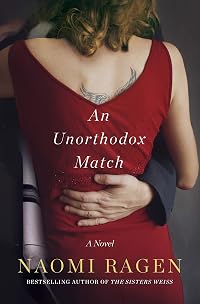
On This Page
Description
A powerful and moving novel of faith, love, and acceptance, from the international bestselling author of The Devil in Jerusalem. Yaakov is a man of God, a father, a Talmud scholar, and a widower. After failing to save his wife's life, he is struggling both financially and spiritually. Lola is a woman from the secular world who has suffered terrible tragedy and hardship in her life. To find her place she has turned to God and the Orthodox community in Brooklyn. She now goes by the name of show more Leah. Yaakov needs help to keep his home and his children in order; Leah needs a purpose and a place in the Orthodox community. They both need a partner in life, a perfect match. But the instant chemistry they share is fraught with drama and prohibition. Forces are against them while necessity pushes them together. And then there is the possibility - will love win, or won't it? show lessTags
Recommendations

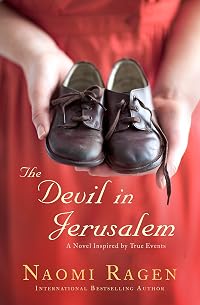
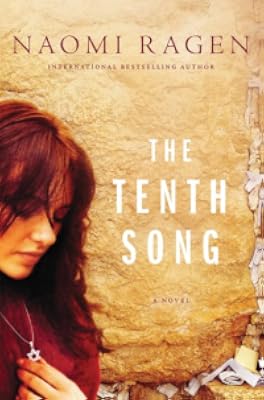
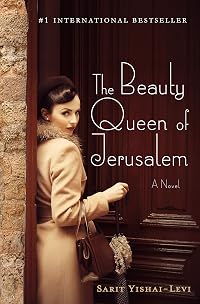
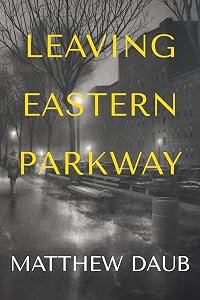


Member Recommendations
Member Reviews
I have been reading Naomi Ragen novels for twenty years, since my mom recommended Jephte's Daughter to me. She always tells an engaging story, with interesting characters and very human dilemmas to solve. They are set among the orthodox Jewish community. Her newest, An Unorthodox Match, does not disappoint.
The story is about a a young widower, Yaakov, with five children. After a year of struggling emotionally and financially since his young wife's untimely death he realizes that he needs to find a new wife. In his community lives a young unmarried convert (although born Jewish) to orthodoxy, Leah. After losing her fiancé in an accident Leah is trying to find her life's purpose in that Orthodox community in Boro Park, Brooklyn where show more Yaakov resides. She too needs a new partner and strongly desires to be a mother. She volunteers to help others and becomes the part time baby sitter to Yaakov's youngest two children. They adore her. But also living in the home is a sixteen year old daughter who resents Leah and does whatever she can to sabotage the arrangement. Also figuring prominently (and a bit humorously) in the story is the role and purpose of the shadchan (matchmaker) in the orthodox community. And then there is Yaakov's mother-in-law, who wants Yaakov to remarry but lives with regret and self blame for her family's woes.
Regan explores the many forces that are against Yaakov and Leah coming together. She also inserts a bit of a mystery as to what actually lead to the death of Yaakov's first wife and skillfully deals with the issue towards the end of the book. Regan, as she always does, enhances her work with a more general exploration of faith in god and religious purpose. It is beautifully written and a compelling read.
You will find a glossary at the end that defines the many Yiddish terms used throughout the book. If I have any quibble it is that a number of terms were not included, despite being italicized in the text. Since I read an early review copy, perhaps the final glossary will be expanded. Although I knew many of the terms, I knew far from all, so the glossary was very helpful. show less
The story is about a a young widower, Yaakov, with five children. After a year of struggling emotionally and financially since his young wife's untimely death he realizes that he needs to find a new wife. In his community lives a young unmarried convert (although born Jewish) to orthodoxy, Leah. After losing her fiancé in an accident Leah is trying to find her life's purpose in that Orthodox community in Boro Park, Brooklyn where show more Yaakov resides. She too needs a new partner and strongly desires to be a mother. She volunteers to help others and becomes the part time baby sitter to Yaakov's youngest two children. They adore her. But also living in the home is a sixteen year old daughter who resents Leah and does whatever she can to sabotage the arrangement. Also figuring prominently (and a bit humorously) in the story is the role and purpose of the shadchan (matchmaker) in the orthodox community. And then there is Yaakov's mother-in-law, who wants Yaakov to remarry but lives with regret and self blame for her family's woes.
Regan explores the many forces that are against Yaakov and Leah coming together. She also inserts a bit of a mystery as to what actually lead to the death of Yaakov's first wife and skillfully deals with the issue towards the end of the book. Regan, as she always does, enhances her work with a more general exploration of faith in god and religious purpose. It is beautifully written and a compelling read.
You will find a glossary at the end that defines the many Yiddish terms used throughout the book. If I have any quibble it is that a number of terms were not included, despite being italicized in the text. Since I read an early review copy, perhaps the final glossary will be expanded. Although I knew many of the terms, I knew far from all, so the glossary was very helpful. show less
Thirty-four-year-old Leah (formerly Lola) Howard has had a tumultuous past. She was raised by her single mom, Cheryl, an atheist. Leah's fiancé, whom she adored, died tragically and she subsequently endured additional personal and professional tribulations that left her heartbroken. Her life has been capricious if not cruel, and Leah wonders if she will ever be happy again. She longs for stability, and gravitates towards the structure and spirituality of Orthodox Judaism. After taking the first steps towards her goal of becoming religiously observant, she consults Rabbi Weintraub of Boro Park, Brooklyn, about what to do next. She continues to pursue her Jewish studies; takes a job at a local yeshiva; and even volunteers to provide show more babysitting services for a widowed scholar. Much to her mother's displeasure, Leah dresses modestly, prays regularly, and keeps the Sabbath and other holy days.
Meanwhile, forty-year-old Yaakov Lehman, a Talmudic scholar, was widowed when his wife, Zissel Sara, died thirteen months earlier. Yaakov is in debt and three of his children—fifteen-year-old Shaindele, five-year-old Chasya, and fifteen-month-old Mordechai Shalom--are not coping well. Like a guardian angel, Leah Howard steps in, washing laundry, cooking, cleaning, and providing the Lehman children with much-needed affection. Unfortunately, Shaindele resents Leah's competence and close relationship with Chasya and Mordechai, and the teenager hatches a plan to rid her family of this do-gooder. When Yaakov and Leah decide they they have feelings for one another, they encounter fierce opposition among those who oppose the possible union of a Talmudic scholar and a ba'alas teshuva—a previously non-observant Jewish woman who returns to the fold.
Naomi Ragen sensitively and skillfully explores such hot-button issues as hypocrisy, bigotry, family dysfunction, the economic hardships confronting men who choose to study Torah instead of earning a living, and the stigma of mental illness. Leah is likeable and appealing but a bit too good to be true. She uses her degree in marketing to make a comfortable living and showers love on Mordechai Shalom and Chasya who, in turn, adore her. Ragen portrays Yaakov more realistically. He is conflicted, naïve, and until now, has relied on others, particularly his mother-in-law and Shaindel, to take care of the practical matters he neglects. Although "An Unorthodox Match" holds few surprises, the author insightfully describes Yaakov and Leah's hardships and determination to imbue their lives with meaning and holiness. She also exposes the selfishness, short-sightedness, and prejudice of certain sanctimonious individuals, but at the same time, lavishes praise on religious Jews who are virtuous, sincere, and welcoming towards their newly-observant brethren. This is an entertaining, poignant, humorous, and engrossing novel that looks behind the facade that many people adopt in order hide their character from public scrutiny. "An Unorthodox Match" should appeal to a wide audience, and will likely generate lively discussions among its readers. show less
Meanwhile, forty-year-old Yaakov Lehman, a Talmudic scholar, was widowed when his wife, Zissel Sara, died thirteen months earlier. Yaakov is in debt and three of his children—fifteen-year-old Shaindele, five-year-old Chasya, and fifteen-month-old Mordechai Shalom--are not coping well. Like a guardian angel, Leah Howard steps in, washing laundry, cooking, cleaning, and providing the Lehman children with much-needed affection. Unfortunately, Shaindele resents Leah's competence and close relationship with Chasya and Mordechai, and the teenager hatches a plan to rid her family of this do-gooder. When Yaakov and Leah decide they they have feelings for one another, they encounter fierce opposition among those who oppose the possible union of a Talmudic scholar and a ba'alas teshuva—a previously non-observant Jewish woman who returns to the fold.
Naomi Ragen sensitively and skillfully explores such hot-button issues as hypocrisy, bigotry, family dysfunction, the economic hardships confronting men who choose to study Torah instead of earning a living, and the stigma of mental illness. Leah is likeable and appealing but a bit too good to be true. She uses her degree in marketing to make a comfortable living and showers love on Mordechai Shalom and Chasya who, in turn, adore her. Ragen portrays Yaakov more realistically. He is conflicted, naïve, and until now, has relied on others, particularly his mother-in-law and Shaindel, to take care of the practical matters he neglects. Although "An Unorthodox Match" holds few surprises, the author insightfully describes Yaakov and Leah's hardships and determination to imbue their lives with meaning and holiness. She also exposes the selfishness, short-sightedness, and prejudice of certain sanctimonious individuals, but at the same time, lavishes praise on religious Jews who are virtuous, sincere, and welcoming towards their newly-observant brethren. This is an entertaining, poignant, humorous, and engrossing novel that looks behind the facade that many people adopt in order hide their character from public scrutiny. "An Unorthodox Match" should appeal to a wide audience, and will likely generate lively discussions among its readers. show less
I have been a fan of Naomi Ragen’s books for many years. I loved all of her earlier books, until around 2010. The three books after that date I did not care for. But I still am a fan and am thrilled to report that I LOVED “An Unorthodox Match”. This is a beautiful story of faith, love, forgiveness, second chances, and acceptance.
“An Unorthodox Match” is set in Borough Park, Brooklyn, home to one of the largest Orthodox Jewish communities outside Israel. Yaakov, a devout Talmud scholar, is struggling to care for his five children after the death of his beloved wife. Recognizing that he is not coping well at all he finally accepts that he must look for a new wife so he contacts the local matchmakers.
Leah feels like a fish out of show more water in Borough Park. Understandable as she grew up as Lola, a secular Jew, knowing very little about the traditions of her faith. But after the death of her fiancé she turns to the faith she learned from her observant Jewish grandparents and decides to become a baal teshuva, a returnee to the faith, and joins the ultraorthodox neighborhood in Borough Park. She is looking for the structure the ultraorthodox lifestyle provides. Leah has many obstacles to overcome – primary being her mother’s insistence that she is ruining her life, and the non-acceptance by the Borough Park residents. As an act of mercy she volunteers to go to Yaakov’s home to care for the younger children and to tidy their home.
When Yaakov and Leah finally meet they are immediately attracted to each other but their match is considered – well, unorthodox. The matchmakers disapprove. Yaakov’s 15-year-old daughter Shaindele resents Leah’s visits to their home. Ragen’s portrayal of Shaindele is truly heart-breaking. After her mother’s death, Shaindele’s childhood is over. She must now take care of the younger children, clean the house, do the laundry, and do some cooking. And she still must attend school and do her homework. Shaindele resents that Leah can do all this and she couldn’t. The mother-in-law disapproves of Leah. So how can Yaakov and Leah possibly be together? I loved Yaakov and Leah so much I wanted them to just ignore all this, but that they could not do that.
I found this is be a complex story, as life itself is complex. Ragen dishes up the good, bad, and the ugly. While presenting the beautiful side of Orthodox Judaism she also exposes the ugly side. Like any community, those are those who are cruel and judgmental, and those who are kind, loving, and generous. This was an intimate look inside a very insular community, a community that follows a very strict code of conduct. I am sure that some readers will probably be offended by the rules of the community, but this is their way of life. This book is full of great characters, some being very minor in the story. Ragen writes of the parent-child upheavals after the death of one of the parents. The struggle Yaakov and Leah have with their faith and their community was poignant. Above all, a well written book should evoke emotions in its reader. This book did just that – I felt compassion, anger, fear, and joy.
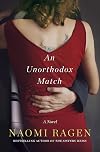
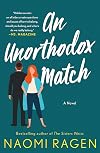
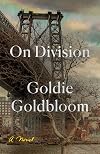
Note: The cover has nothing to do with the story inside. This is a clean romance between two Orthodox people.
Thank you to Jordan Hanley at St. Martin's Press for the advance reading copy. All opinions expressed are my own. show less
“An Unorthodox Match” is set in Borough Park, Brooklyn, home to one of the largest Orthodox Jewish communities outside Israel. Yaakov, a devout Talmud scholar, is struggling to care for his five children after the death of his beloved wife. Recognizing that he is not coping well at all he finally accepts that he must look for a new wife so he contacts the local matchmakers.
Leah feels like a fish out of show more water in Borough Park. Understandable as she grew up as Lola, a secular Jew, knowing very little about the traditions of her faith. But after the death of her fiancé she turns to the faith she learned from her observant Jewish grandparents and decides to become a baal teshuva, a returnee to the faith, and joins the ultraorthodox neighborhood in Borough Park. She is looking for the structure the ultraorthodox lifestyle provides. Leah has many obstacles to overcome – primary being her mother’s insistence that she is ruining her life, and the non-acceptance by the Borough Park residents. As an act of mercy she volunteers to go to Yaakov’s home to care for the younger children and to tidy their home.
When Yaakov and Leah finally meet they are immediately attracted to each other but their match is considered – well, unorthodox. The matchmakers disapprove. Yaakov’s 15-year-old daughter Shaindele resents Leah’s visits to their home. Ragen’s portrayal of Shaindele is truly heart-breaking. After her mother’s death, Shaindele’s childhood is over. She must now take care of the younger children, clean the house, do the laundry, and do some cooking. And she still must attend school and do her homework. Shaindele resents that Leah can do all this and she couldn’t. The mother-in-law disapproves of Leah. So how can Yaakov and Leah possibly be together? I loved Yaakov and Leah so much I wanted them to just ignore all this, but that they could not do that.
I found this is be a complex story, as life itself is complex. Ragen dishes up the good, bad, and the ugly. While presenting the beautiful side of Orthodox Judaism she also exposes the ugly side. Like any community, those are those who are cruel and judgmental, and those who are kind, loving, and generous. This was an intimate look inside a very insular community, a community that follows a very strict code of conduct. I am sure that some readers will probably be offended by the rules of the community, but this is their way of life. This book is full of great characters, some being very minor in the story. Ragen writes of the parent-child upheavals after the death of one of the parents. The struggle Yaakov and Leah have with their faith and their community was poignant. Above all, a well written book should evoke emotions in its reader. This book did just that – I felt compassion, anger, fear, and joy.
Note: The cover has nothing to do with the story inside. This is a clean romance between two Orthodox people.
Thank you to Jordan Hanley at St. Martin's Press for the advance reading copy. All opinions expressed are my own. show less
There's been a recent fascination with the lives of women in Orthodox Jewish communities, and this novel is set in the American center of that world, Boro Hall, Brooklyn. Jacob, a widower with five children, is struggling to continue his studies after the trauma of his wife's death. The community provides him with a helper, Leah, born Lola, who is of Jewish parentage but is considered a convert, as is any person raised outside the Orthodox community. Here, the restrictions of this life (dietary, behavioral, rigid dress codes and gender roles) pales in comparison to the terribly judgmental and critical actions of the allegedly pious community, featuring the actual shunning of anyone not born into this insular world. This reality is show more presented in contrast with the Torah instructions and rabbinical teachings, which urge acceptance, respect, and charity. The portrayal of the hypocrisy, as seen through the eyes of Jacob's mother-in-law, is vivid and revelatory. show less
I started off not liking this book. I did not like the author's depiction of feminists as superficial, narrow-minded, and not very bright. She did this by the way she painted the minor character Cheryl Howard, mother of the central character Leah Howard. Cheryl is very rejecting of Leah's plan to move to Boro Park, Brooklyn N.Y., and become a member of an Orthodox Jewish community there. But despite all her mother's arguments and fears, Leah does just that, hoping to embrace, and be embraced by, the religious life and culture of her grandparents, a life her mother had left behind.
I have to say, this book definitely grew on me. As Leah attempts to find a role for herself in her new community, she begins to understand that sometimes the show more "piously stringent were vicious". She finds herself a victim of the rumor-mongers among the most orthodox, and to be found wanting for her appearance, her newness to the community, and her past. While Leah had been tired of the dominant culture, of being ogled by men, at the casualness about sex, now she finds that the opposite values can be just as harmful and hurtful. She faces judgementalism, rigidity, and arrogance. At one point she says "I used to think religious people were kinder, nicer, had better character". She sees now that too often that is not the case.
But there are still those in this community that truly want to practice their faith, to be accepting, to show love. There are several quotes from the Torah that remind us that we are to "not oppress or ill treat the stranger" or even "to love the stranger among us", and other quotes that lay bare the wrongness in how Leah has been treated and perceived.
This was at it's heart a love story, but the author encases the romance of the story within an exploration of an ultra orthodox Jewish community, and a look at the often buried meanings of faith. show less
I have to say, this book definitely grew on me. As Leah attempts to find a role for herself in her new community, she begins to understand that sometimes the show more "piously stringent were vicious". She finds herself a victim of the rumor-mongers among the most orthodox, and to be found wanting for her appearance, her newness to the community, and her past. While Leah had been tired of the dominant culture, of being ogled by men, at the casualness about sex, now she finds that the opposite values can be just as harmful and hurtful. She faces judgementalism, rigidity, and arrogance. At one point she says "I used to think religious people were kinder, nicer, had better character". She sees now that too often that is not the case.
But there are still those in this community that truly want to practice their faith, to be accepting, to show love. There are several quotes from the Torah that remind us that we are to "not oppress or ill treat the stranger" or even "to love the stranger among us", and other quotes that lay bare the wrongness in how Leah has been treated and perceived.
This was at it's heart a love story, but the author encases the romance of the story within an exploration of an ultra orthodox Jewish community, and a look at the often buried meanings of faith. show less
Compelling plot; engaging pacing, characters, timing, and dialogue add up to a very good read.
Ragen describes the good and bad of both the secular and religious worlds, allowing some of the characters to act as 'the critical judges.' Cheryl Howard, Leah's mother is the judge against the ultra-orthodox, while Shaindele, grandmother Fruma Esther, the matchmakers, and many other members in the ultra-orthodox community are the judges against the secular world, and against fully accepting sincere Baalei T'shuvim (those who 'return' to orthodoxy).
The path from secularlism to orthodoxy is not for the weak. One must be passionately committed to learning a remarkably new way of seeing the world; to changing one's life-style, behavior, dress, show more food, and more.
It takes Leah years to make this committment.to the ultra-orthodox way of life where she hopes to find a loving husband and start a family. But the cynical, hypercritical matchmakers match her up with awful candidates that insult her intelligence, embarrass and anger her. Why did they even bother; did they think she thought herself as worthless as they considered her?
But Leah attracts many friends and supporters who help her reach her well-deserved goals.
I definitely recommend this book! show less
Ragen describes the good and bad of both the secular and religious worlds, allowing some of the characters to act as 'the critical judges.' Cheryl Howard, Leah's mother is the judge against the ultra-orthodox, while Shaindele, grandmother Fruma Esther, the matchmakers, and many other members in the ultra-orthodox community are the judges against the secular world, and against fully accepting sincere Baalei T'shuvim (those who 'return' to orthodoxy).
The path from secularlism to orthodoxy is not for the weak. One must be passionately committed to learning a remarkably new way of seeing the world; to changing one's life-style, behavior, dress, show more food, and more.
It takes Leah years to make this committment.to the ultra-orthodox way of life where she hopes to find a loving husband and start a family. But the cynical, hypercritical matchmakers match her up with awful candidates that insult her intelligence, embarrass and anger her. Why did they even bother; did they think she thought herself as worthless as they considered her?
But Leah attracts many friends and supporters who help her reach her well-deserved goals.
I definitely recommend this book! show less
A fun romance novel set in an orthodox Jewish community. I expected this book to take a serious look at people entering the Orthodox community and very soon I realized that this was a romance novel first and foremost and I would have to give up my expectations to enjoy the book. After I started looking at it like a Hallmark movie I really enjoyed it.
Members
- Recently Added By
Lists

Top Five Books of 2019
387 works; 107 members

Top Five Books of 2019
5 works; 1 member
Author Information

18+ Works 2,677 Members
Series

Common Knowledge
- Canonical title
- An Unorthodox Match
- Original publication date
- 2019-09
- People/Characters
- Yaakov Lehman; Lola "Leah" Howard; Zissele Sarah Sonnenbaum Lehman; Elchanon Yehoshua Lehman; Dovid Yitzchak Lehman; Shaindele Lehman (show all 18); Chaysa Lehman; Mordechai Shalom Lehman; Cheryl Howard; Ravi; Fruma Esther Sonnenbaum; Rachel; Joshua; Shoshana Glaser; Dvorah; Rebbitzen Basha; Meir Halpern; Aaron Gluck
- Important places
- Boro Park, Brooklyn, New York, New York, USA; Lakewood, New Jersey, USA; San Jose, California, USA; Santa Clara University
- Epigraph
- I will lead the blind by a road they did not know, and I will make them walk by the paths they never knew. I will turn darkness before them to light, and rough places into level ground; these are the promises, I will keep the... (show all)m without fail.
---ISAIAH 42:16 - Dedication
- For Alex
Half a century of friendship, love, support, joy, partnership.
Thank you, my dear husband. - First words
- Leah Howard sat there facing Rabbi Weintraub's empty chair, rehearsing what she was going to say to him.
- Quotations
- They are so strict about laws that were never written in the Torah and so lax about the laws that are actually there!
- Last words
- (Click to show. Warning: May contain spoilers.)And that they---as a community---had had the great privilege of embracing a pious young woman who had, like Ruth at long last found her way to them, and to the God who had clearly directed the uneven steps of her long journey home.
Classifications
Statistics
- Members
- 135
- Popularity
- 243,165
- Reviews
- 12
- Rating
- (3.72)
- Languages
- English, Hebrew
- Media
- Paper, Audiobook, Ebook
- ISBNs
- 6
- ASINs
- 2