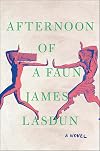
Afternoon of a Faun
by James Lasdun
On This Page
Description
When expat English journalist Marco Rosedale is accused of sexual assault in a former girlfriend's memoir, he confides in a close friend, who finds himself caught between loyalty to Marco and an urgent desire to uncover the truth.Tags
Recommendations






































Member Reviews
Setting this novella during the months leading up to the Trump election, with his history of female maltreatment and loose affiliation with the truth, lends power to its #MeToo story. Its central theme is a search for truth in a time when the truth has become malleable. On the one hand, the unnamed narrator claims that truth is rigid: “The truth might be hard to bring to light, but that didn’t mean it didn’t exist, because it did exist: fixed in its moment, unalterable and certainly not a matter of ‘belief.’” Nevertheless, he slowly comes to realize that truth can be defined by culture with no faction having the ultimate claim to it. Lasdun’s focus here is on gender differences and he seems to conclude that obtaining the show more truth of what happened can indeed be elusive.
Much like the time-honored judicial approach to a search for truth, Lasdun gives us two litigants and an “unbiased” judge. Marco Rosedale and Julia Gault have opposing views of a drunken sexual encounter that occurred 40 years earlier during a journalistic assignment in Ulster. Julia is convinced it was rape, while Marco saw it as consensual. The judge in this case is our unnamed narrator. This man not only seems to be a kind and loyal friend to Marco, but also an old friend to Julia, who worked with his mother and was the object of a youthful crush. He is scrupulous in recording the facts but, at least at the outset, seems to side with his friend, Marco. However, when his wife admits that she often had sex “reluctantly” he begins to doubt his own history with pressuring women to have sex.
Lasdun renders his characters as flawed people. He characterizes Rosedale as a self-absorbed man, and somewhat of a Lothario. He had promising career prospects as a younger man but now has settled for less. As a middle-aged TV personality living in Brooklyn with a grown daughter, her same sex partner, and a much younger girlfriend, Marco seems to have settled into a comfortable lifestyle. Julia is portrayed as a sane and credible woman who has fallen on hard times. Julia admits to telling lies to advance her case. She has written a memoir about her career as a television journalist wherein she tells about the rape.
Marco perceives this admission as a threat to his reputation and proceeds to block publication of the manuscript. He surfaces a letter written to him from her boyfriend at the time that suggests Julia may have been in love with Marco. When that tactic fails to deter Julia, Marco discovers a book proposal she once wrote where she praises a Nazi collaborator. Since Julia’s last resort publisher is the wife of a Holocaust survivor, the book deal inevitably falls through.
Lasdun masterfully maintains a riveting and unsettling mood throughout by slowly revealing information that bounces back and forth between the two versions of the truth. He resists any impulses to take a moral stand, leaving the readers to examine the evidence for themselves. It would not be surprising that readers may differ on who is at fault here. Certainly, such an outcome is realistic. show less
Much like the time-honored judicial approach to a search for truth, Lasdun gives us two litigants and an “unbiased” judge. Marco Rosedale and Julia Gault have opposing views of a drunken sexual encounter that occurred 40 years earlier during a journalistic assignment in Ulster. Julia is convinced it was rape, while Marco saw it as consensual. The judge in this case is our unnamed narrator. This man not only seems to be a kind and loyal friend to Marco, but also an old friend to Julia, who worked with his mother and was the object of a youthful crush. He is scrupulous in recording the facts but, at least at the outset, seems to side with his friend, Marco. However, when his wife admits that she often had sex “reluctantly” he begins to doubt his own history with pressuring women to have sex.
Lasdun renders his characters as flawed people. He characterizes Rosedale as a self-absorbed man, and somewhat of a Lothario. He had promising career prospects as a younger man but now has settled for less. As a middle-aged TV personality living in Brooklyn with a grown daughter, her same sex partner, and a much younger girlfriend, Marco seems to have settled into a comfortable lifestyle. Julia is portrayed as a sane and credible woman who has fallen on hard times. Julia admits to telling lies to advance her case. She has written a memoir about her career as a television journalist wherein she tells about the rape.
Marco perceives this admission as a threat to his reputation and proceeds to block publication of the manuscript. He surfaces a letter written to him from her boyfriend at the time that suggests Julia may have been in love with Marco. When that tactic fails to deter Julia, Marco discovers a book proposal she once wrote where she praises a Nazi collaborator. Since Julia’s last resort publisher is the wife of a Holocaust survivor, the book deal inevitably falls through.
Lasdun masterfully maintains a riveting and unsettling mood throughout by slowly revealing information that bounces back and forth between the two versions of the truth. He resists any impulses to take a moral stand, leaving the readers to examine the evidence for themselves. It would not be surprising that readers may differ on who is at fault here. Certainly, such an outcome is realistic. show less
The Past Comes Knocking
An old female associate, Julia Gault, of moderately successful documentarian Marco Rosedale, down on her luck, writes a memoir in which in one short paragraph she recalls that Marco had nonconsensual sex with her. It occurred years ago, in 1975, when he was filming a story on The Troubles and she assisted. Both had had too much to drink and though at first she accepted his advances, in the final moments she said no. He did it anyway. They slept the night together and worked with each other several times after the incident. Marco learns he’s been accused of sexual assault only when a newspaper reporter contacts him for comment, before they publish an excerpt of the book. Though Julia treats the incident lightly, show more he reacts with anger, because he recognizes that it could harm his career and his relationship with his girlfriend and daughter. The narrator recounting all that transpires once Marco learns of the pending publication is a friend of Marco. As the story unfolds, the narrator becomes more involved in the story, even to the point where he calls on Julia to hear her side of the story. Unforeseen consequences result that shake the narrator and leave readers still with the quandary of whom to believe.
The narrator leaves it to every reader to decide for themselves exactly what happened between Marco and Julia in the room in 1975. They both agree they had sex and even agree that up until a certain point it was consensual. But, as readers will discover, the story changes subtlety, and at one point quite dramatically when sadism enters the picture. Many readers, also, will find Marco a less than sympathetic character (for example, he refers to the exposure as his “ordeal”). Julia, too, has tendencies that readers will find less than desirable. Then there is the question of what passed for acceptable behavior in one time but no longer. In the end, all boils down to she said/he said with the facts as gathered by the narrator for us to make our decisions upon.
As this review is written, the latest chapter in the Matt Lauer saga has broken, with him now accused of rape by an NBC News colleague while covering the 2014 Sochi Olympics. And, as in the book, Lauer and the public are learning of it from a book excerpt. Lasdun’s novel couldn’t be more timely. show less
An old female associate, Julia Gault, of moderately successful documentarian Marco Rosedale, down on her luck, writes a memoir in which in one short paragraph she recalls that Marco had nonconsensual sex with her. It occurred years ago, in 1975, when he was filming a story on The Troubles and she assisted. Both had had too much to drink and though at first she accepted his advances, in the final moments she said no. He did it anyway. They slept the night together and worked with each other several times after the incident. Marco learns he’s been accused of sexual assault only when a newspaper reporter contacts him for comment, before they publish an excerpt of the book. Though Julia treats the incident lightly, show more he reacts with anger, because he recognizes that it could harm his career and his relationship with his girlfriend and daughter. The narrator recounting all that transpires once Marco learns of the pending publication is a friend of Marco. As the story unfolds, the narrator becomes more involved in the story, even to the point where he calls on Julia to hear her side of the story. Unforeseen consequences result that shake the narrator and leave readers still with the quandary of whom to believe.
The narrator leaves it to every reader to decide for themselves exactly what happened between Marco and Julia in the room in 1975. They both agree they had sex and even agree that up until a certain point it was consensual. But, as readers will discover, the story changes subtlety, and at one point quite dramatically when sadism enters the picture. Many readers, also, will find Marco a less than sympathetic character (for example, he refers to the exposure as his “ordeal”). Julia, too, has tendencies that readers will find less than desirable. Then there is the question of what passed for acceptable behavior in one time but no longer. In the end, all boils down to she said/he said with the facts as gathered by the narrator for us to make our decisions upon.
As this review is written, the latest chapter in the Matt Lauer saga has broken, with him now accused of rape by an NBC News colleague while covering the 2014 Sochi Olympics. And, as in the book, Lauer and the public are learning of it from a book excerpt. Lasdun’s novel couldn’t be more timely. show less
4.5 A very erudite look at the MeToo movement - in a fictional context. The narrator is a college professor, writer, and a self-proclaimed sounding board for his friend Marco Rosedale who is currently accused of sexual assault 40 years ago by a woman the narrator also knows well. Julia Gault was a fellow journalist with Marco on an assignment in Belfast and while he claims the encounter was consensual, she claims it was rape. Because of the narrator's literal caught-in-the-middle position, we get a sense of the toll the accusation takes on everyone. It becomes a true battle with escalating ammo on both sides and the narration manages to stay somewhat detached to let us feel the effects and choose our own sides. "The onus of belief is on show more the believer" says the narrator somewhat glibly at the outset until he becomes more embroiled in the situation and finds himself on a quest for truth. Ironically timed in the lead-up months before the 2016 election, this book is an astute commentary on truth, memory, power, gender roles, and the increasing difficulty in remaining neutral in a charged environment. show less
The Past Comes Knocking
An old female associate, Julia Gault, of moderately successful documentarian Marco Rosedale, down on her luck, writes a memoir in which in one short paragraph she recalls that Marco had nonconsensual sex with her. It occurred years ago, in 1975, when he was filming a story on The Troubles and she assisted. Both had had too much to drink and though at first she accepted his advances, in the final moments she said no. He did it anyway. They slept the night together and worked with each other several times after the incident. Marco learns he’s been accused of sexual assault only when a newspaper reporter contacts him for comment, before they publish an excerpt of the book. Though Julia treats the incident lightly, show more he reacts with anger, because he recognizes that it could harm his career and his relationship with his girlfriend and daughter. The narrator recounting all that transpires once Marco learns of the pending publication is a friend of Marco. As the story unfolds, the narrator becomes more involved in the story, even to the point where he calls on Julia to hear her side of the story. Unforeseen consequences result that shake the narrator and leave readers still with the quandary of whom to believe.
The narrator leaves it to every reader to decide for themselves exactly what happened between Marco and Julia in the room in 1975. They both agree they had sex and even agree that up until a certain point it was consensual. But, as readers will discover, the story changes subtlety, and at one point quite dramatically when sadism enters the picture. Many readers, also, will find Marco a less than sympathetic character (for example, he refers to the exposure as his “ordeal”). Julia, too, has tendencies that readers will find less than desirable. Then there is the question of what passed for acceptable behavior in one time but no longer. In the end, all boils down to she said/he said with the facts as gathered by the narrator for us to make our decisions upon.
As this review is written, the latest chapter in the Matt Lauer saga has broken, with him now accused of rape by an NBC News colleague while covering the 2014 Sochi Olympics. And, as in the book, Lauer and the public are learning of it from a book excerpt. Lasdun’s novel couldn’t be more timely. show less
An old female associate, Julia Gault, of moderately successful documentarian Marco Rosedale, down on her luck, writes a memoir in which in one short paragraph she recalls that Marco had nonconsensual sex with her. It occurred years ago, in 1975, when he was filming a story on The Troubles and she assisted. Both had had too much to drink and though at first she accepted his advances, in the final moments she said no. He did it anyway. They slept the night together and worked with each other several times after the incident. Marco learns he’s been accused of sexual assault only when a newspaper reporter contacts him for comment, before they publish an excerpt of the book. Though Julia treats the incident lightly, show more he reacts with anger, because he recognizes that it could harm his career and his relationship with his girlfriend and daughter. The narrator recounting all that transpires once Marco learns of the pending publication is a friend of Marco. As the story unfolds, the narrator becomes more involved in the story, even to the point where he calls on Julia to hear her side of the story. Unforeseen consequences result that shake the narrator and leave readers still with the quandary of whom to believe.
The narrator leaves it to every reader to decide for themselves exactly what happened between Marco and Julia in the room in 1975. They both agree they had sex and even agree that up until a certain point it was consensual. But, as readers will discover, the story changes subtlety, and at one point quite dramatically when sadism enters the picture. Many readers, also, will find Marco a less than sympathetic character (for example, he refers to the exposure as his “ordeal”). Julia, too, has tendencies that readers will find less than desirable. Then there is the question of what passed for acceptable behavior in one time but no longer. In the end, all boils down to she said/he said with the facts as gathered by the narrator for us to make our decisions upon.
As this review is written, the latest chapter in the Matt Lauer saga has broken, with him now accused of rape by an NBC News colleague while covering the 2014 Sochi Olympics. And, as in the book, Lauer and the public are learning of it from a book excerpt. Lasdun’s novel couldn’t be more timely. show less
This Weinstein related novel by James Lasdun that shows how a man accused of rape thinks of the allegation and what he can do about it if he has any power. It's a short book with a nice hint of what a woman can have in store for her if she dare point the finger at a powerful man.
Reminiscent of Ian McEwan's writing. Description of a "me-too" moment that unfolds in the waning months of 2016, when we are still positive of Donald Trump's status of a clownish reality TV star, never a president.
Ratings
Members
- Recently Added By
Lists

Kirkus Starred Fiction Reviews of Books Published in 2019
411 works; 12 members

Books Read in 2019
4,052 works; 110 members

Best Contemporary Literary Fiction (Around the Last 30 Years)
388 works; 124 members
Author Information

Awards and Honors
Distinctions
Common Knowledge
- Canonical title
- Afternoon of a Faun
Classifications
Statistics
- Members
- 55
- Popularity
- 556,025
- Reviews
- 6
- Rating
- (4.10)
- Languages
- English, Turkish
- Media
- Paper, Audiobook, Ebook
- ISBNs
- 7
- ASINs
- 1