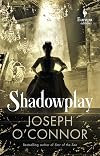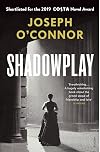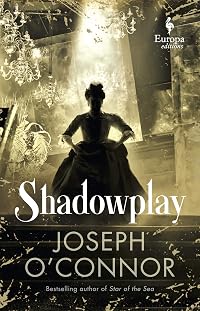
Shadowplay
by Joseph O'Connor
On This Page
Description
"Henry Irving is Victorian London's most celebrated actor and theater impresario. He has introduced groundbreaking ideas to the theater, bringing to the stage performances that are spectacular, shocking, and always entertaining. When Irving decides to open his own London theater with the goal of making it the greatest playhouse on earth, he hires a young Dublin clerk harboring literary ambitions by the name of Bram Stoker to manage it. As Irving's theater grows in reputation and financial show more solvency, he lures to his company of mummers the century's most beloved actress, the dazzlingly talented leading lady Ellen Terry, who nightly casts a spell not only on her audiences but also on Stoker and Irving both. Bram Stoker's extraordinary experiences at the Lyceum Theatre, his early morning walks on the streets of a London terrorized by a serial killer, his long, tempestuous relationship with Irving, and the closeness he finds with Ellen Terry, inspire him to write Dracula, the most iconic and best-selling supernatural tale ever published"-- show lessTags
Recommendations















Member Reviews
Joseph O'Connor's Shadowplay is an absolute delight—a novelization of the relationship among actor and producer Henry Irving, actress Ellen Terry, and theatre producer and author Bram Stoker. This tale belongs to Stoker more than the other two, and O'Connor presents it in a variety of formats similar to those Stoker used when writing Dracula: recordings, letters, journals. Such fun!
This is one of those titles you'll race through, not because it's short or simple (it's a rich piece of writing), but because you can't bear to put it down. O'Connor evokes the readers emotions again and again in all sorts of ways, but never leaves the reader feeling manipulated.
If you're interested in theatre history, the private lives of the famous, the show more relationships among artists, or just ripping good reads, youu'll want to get started on Shadowplay as soon as possible. show less
This is one of those titles you'll race through, not because it's short or simple (it's a rich piece of writing), but because you can't bear to put it down. O'Connor evokes the readers emotions again and again in all sorts of ways, but never leaves the reader feeling manipulated.
If you're interested in theatre history, the private lives of the famous, the show more relationships among artists, or just ripping good reads, youu'll want to get started on Shadowplay as soon as possible. show less
Resurrects London from Time’s Coffin
Joseph O’Connor gives us an erudite and witty look into the lives of Bram Stoker, Ellen Terry, and Henry Irving when they worked together at the Lyceum Theatre in the last quarter of the 19th century, as well as a picturesque of London of that time. It is a novel lovers of literature and theater should not miss.
Most readers will know Bram Stoker as the author of the influential Dracula. While not the first vampire novel, it became the novel that planted these mythical creatures firmly into the minds of people worldwide and spawned an industry in print, film, TV, and theater that continues strong today. But most will find it news that Stoker earned his living as the business manager for the Lyceum show more Theatre working under the mercurial leadership of British actor and impresario Henry Irving, one of the most popular performers of his day. That Stoker was able to work with him for twenty-seven years, putting up with all manner of mania and abuse will strike some as miraculous. In this rendering, O’Connor portrays Stoker as, at the very least, adoring Irving and Irving, for his part, dependent on Stoker to keep his affairs straight and profitable. Ellen Terry will probably be a new personality to many American readers. She was on of the most popular actresses of her day, performed often with Irving in Lyceum productions, and led an unorthodox life for a woman of that era, marrying at seventeen, leaving her marriage after ten months, then later living with another man for several years while having two children. During their years together at the Lyceum, Stoker found himself strongly drawn to her.
Amid all this interaction of personalities, the novel focuses on Stoker’s struggle to write, particularly the novel that become Dracula. Self-doubt often plagued him, intensified by the fact his novels, including Dracula, did not sell well. Added to his, he wrestled with his sexuality. He married Florence Balcombe, who was also pursued by his Trinity College friend Oscar Wilde, in 1878 in Dublin and later they had one child, Noel. However, while he loved her and Noel dearly and worked hard to support them quite well, sexual relations with his wife were dearth. Stoker found himself attracted to men, and O’Connor shows him roaming London seeking but pulling away from male sexual companionship. O’Connor also has Stoker revealing his sexual preference to a friend and employee on the pledge that she would keep it secret. This sexual latency, scholars believe, further indicated by his profound admiration of Walt Whitman, Hall Caine, and Wilde, found itself expressed in his writing, with many of the homoerotic aspects of Dracula as example.
O’Connor has Stoker recounting a meeting with Whitman during the Lyceum’s American tour in the 1880s in a letter to the poet. Among other things, he writes about his struggles as a writer, while heaping accolades on Whitman himself. Many aspiring or struggling authors can certainly identify with his feelings:
“Another difficulty, loath though I am to face it square, is the Antarctica of time that I have squandered on my writing. The few shillings this has earned over the years will not be sufficient to pay for a tombstone and have proven costly indeed, not only on the family battlefront—where much harm has been done by my absence—but in other, more private respects. When we are young we do not think that time is currency. Then we notice the account running low.
“Bitterly I regret that I ever saw a book in my life and rue the day I ever permitted that horrid succubus, Ambition, to sharpen my pen.”
O’Connor’s resurrection of late 19th century London plays up its dampness, smokiness, and fog, and within this shroud the fear engendered by the Jack the Ripper murders (1888-1891) that kept the city on edge for several years and lived vividly in memory for decades more. His dialogue, especially that placed in the mouths of Irving and Terry, is witty and often very sharp. Stoker comes off as the steadying influence, or the straight man when the words really fly, and soother when Irving’s dark side flares. Most agree Stoker used Irving as the model for Count Dracula, which you might look at as a little revenge for mistreatment or love, given the Count’s imagined and real immortality.
Readers shouldn’t miss this and many who read it may count it as among the best of the year so far. show less
Joseph O’Connor gives us an erudite and witty look into the lives of Bram Stoker, Ellen Terry, and Henry Irving when they worked together at the Lyceum Theatre in the last quarter of the 19th century, as well as a picturesque of London of that time. It is a novel lovers of literature and theater should not miss.
Most readers will know Bram Stoker as the author of the influential Dracula. While not the first vampire novel, it became the novel that planted these mythical creatures firmly into the minds of people worldwide and spawned an industry in print, film, TV, and theater that continues strong today. But most will find it news that Stoker earned his living as the business manager for the Lyceum show more Theatre working under the mercurial leadership of British actor and impresario Henry Irving, one of the most popular performers of his day. That Stoker was able to work with him for twenty-seven years, putting up with all manner of mania and abuse will strike some as miraculous. In this rendering, O’Connor portrays Stoker as, at the very least, adoring Irving and Irving, for his part, dependent on Stoker to keep his affairs straight and profitable. Ellen Terry will probably be a new personality to many American readers. She was on of the most popular actresses of her day, performed often with Irving in Lyceum productions, and led an unorthodox life for a woman of that era, marrying at seventeen, leaving her marriage after ten months, then later living with another man for several years while having two children. During their years together at the Lyceum, Stoker found himself strongly drawn to her.
Amid all this interaction of personalities, the novel focuses on Stoker’s struggle to write, particularly the novel that become Dracula. Self-doubt often plagued him, intensified by the fact his novels, including Dracula, did not sell well. Added to his, he wrestled with his sexuality. He married Florence Balcombe, who was also pursued by his Trinity College friend Oscar Wilde, in 1878 in Dublin and later they had one child, Noel. However, while he loved her and Noel dearly and worked hard to support them quite well, sexual relations with his wife were dearth. Stoker found himself attracted to men, and O’Connor shows him roaming London seeking but pulling away from male sexual companionship. O’Connor also has Stoker revealing his sexual preference to a friend and employee on the pledge that she would keep it secret. This sexual latency, scholars believe, further indicated by his profound admiration of Walt Whitman, Hall Caine, and Wilde, found itself expressed in his writing, with many of the homoerotic aspects of Dracula as example.
O’Connor has Stoker recounting a meeting with Whitman during the Lyceum’s American tour in the 1880s in a letter to the poet. Among other things, he writes about his struggles as a writer, while heaping accolades on Whitman himself. Many aspiring or struggling authors can certainly identify with his feelings:
“Another difficulty, loath though I am to face it square, is the Antarctica of time that I have squandered on my writing. The few shillings this has earned over the years will not be sufficient to pay for a tombstone and have proven costly indeed, not only on the family battlefront—where much harm has been done by my absence—but in other, more private respects. When we are young we do not think that time is currency. Then we notice the account running low.
“Bitterly I regret that I ever saw a book in my life and rue the day I ever permitted that horrid succubus, Ambition, to sharpen my pen.”
O’Connor’s resurrection of late 19th century London plays up its dampness, smokiness, and fog, and within this shroud the fear engendered by the Jack the Ripper murders (1888-1891) that kept the city on edge for several years and lived vividly in memory for decades more. His dialogue, especially that placed in the mouths of Irving and Terry, is witty and often very sharp. Stoker comes off as the steadying influence, or the straight man when the words really fly, and soother when Irving’s dark side flares. Most agree Stoker used Irving as the model for Count Dracula, which you might look at as a little revenge for mistreatment or love, given the Count’s imagined and real immortality.
Readers shouldn’t miss this and many who read it may count it as among the best of the year so far. show less
Resurrects London from Time’s Coffin
Joseph O’Connor gives us an erudite and witty look into the lives of Bram Stoker, Ellen Terry, and Henry Irving when they worked together at the Lyceum Theatre in the last quarter of the 19th century, as well as a picturesque of London of that time. It is a novel lovers of literature and theater should not miss.
Most readers will know Bram Stoker as the author of the influential Dracula. While not the first vampire novel, it became the novel that planted these mythical creatures firmly into the minds of people worldwide and spawned an industry in print, film, TV, and theater that continues strong today. But most will find it news that Stoker earned his living as the business manager for the Lyceum show more Theatre working under the mercurial leadership of British actor and impresario Henry Irving, one of the most popular performers of his day. That Stoker was able to work with him for twenty-seven years, putting up with all manner of mania and abuse will strike some as miraculous. In this rendering, O’Connor portrays Stoker as, at the very least, adoring Irving and Irving, for his part, dependent on Stoker to keep his affairs straight and profitable. Ellen Terry will probably be a new personality to many American readers. She was on of the most popular actresses of her day, performed often with Irving in Lyceum productions, and led an unorthodox life for a woman of that era, marrying at seventeen, leaving her marriage after ten months, then later living with another man for several years while having two children. During their years together at the Lyceum, Stoker found himself strongly drawn to her.
Amid all this interaction of personalities, the novel focuses on Stoker’s struggle to write, particularly the novel that become Dracula. Self-doubt often plagued him, intensified by the fact his novels, including Dracula, did not sell well. Added to his, he wrestled with his sexuality. He married Florence Balcombe, who was also pursued by his Trinity College friend Oscar Wilde, in 1878 in Dublin and later they had one child, Noel. However, while he loved her and Noel dearly and worked hard to support them quite well, sexual relations with his wife were dearth. Stoker found himself attracted to men, and O’Connor shows him roaming London seeking but pulling away from male sexual companionship. O’Connor also has Stoker revealing his sexual preference to a friend and employee on the pledge that she would keep it secret. This sexual latency, scholars believe, further indicated by his profound admiration of Walt Whitman, Hall Caine, and Wilde, found itself expressed in his writing, with many of the homoerotic aspects of Dracula as example.
O’Connor has Stoker recounting a meeting with Whitman during the Lyceum’s American tour in the 1880s in a letter to the poet. Among other things, he writes about his struggles as a writer, while heaping accolades on Whitman himself. Many aspiring or struggling authors can certainly identify with his feelings:
“Another difficulty, loath though I am to face it square, is the Antarctica of time that I have squandered on my writing. The few shillings this has earned over the years will not be sufficient to pay for a tombstone and have proven costly indeed, not only on the family battlefront—where much harm has been done by my absence—but in other, more private respects. When we are young we do not think that time is currency. Then we notice the account running low.
“Bitterly I regret that I ever saw a book in my life and rue the day I ever permitted that horrid succubus, Ambition, to sharpen my pen.”
O’Connor’s resurrection of late 19th century London plays up its dampness, smokiness, and fog, and within this shroud the fear engendered by the Jack the Ripper murders (1888-1891) that kept the city on edge for several years and lived vividly in memory for decades more. His dialogue, especially that placed in the mouths of Irving and Terry, is witty and often very sharp. Stoker comes off as the steadying influence, or the straight man when the words really fly, and soother when Irving’s dark side flares. Most agree Stoker used Irving as the model for Count Dracula, which you might look at as a little revenge for mistreatment or love, given the Count’s imagined and real immortality.
Readers shouldn’t miss this and many who read it may count it as among the best of the year so far. show less
Joseph O’Connor gives us an erudite and witty look into the lives of Bram Stoker, Ellen Terry, and Henry Irving when they worked together at the Lyceum Theatre in the last quarter of the 19th century, as well as a picturesque of London of that time. It is a novel lovers of literature and theater should not miss.
Most readers will know Bram Stoker as the author of the influential Dracula. While not the first vampire novel, it became the novel that planted these mythical creatures firmly into the minds of people worldwide and spawned an industry in print, film, TV, and theater that continues strong today. But most will find it news that Stoker earned his living as the business manager for the Lyceum show more Theatre working under the mercurial leadership of British actor and impresario Henry Irving, one of the most popular performers of his day. That Stoker was able to work with him for twenty-seven years, putting up with all manner of mania and abuse will strike some as miraculous. In this rendering, O’Connor portrays Stoker as, at the very least, adoring Irving and Irving, for his part, dependent on Stoker to keep his affairs straight and profitable. Ellen Terry will probably be a new personality to many American readers. She was on of the most popular actresses of her day, performed often with Irving in Lyceum productions, and led an unorthodox life for a woman of that era, marrying at seventeen, leaving her marriage after ten months, then later living with another man for several years while having two children. During their years together at the Lyceum, Stoker found himself strongly drawn to her.
Amid all this interaction of personalities, the novel focuses on Stoker’s struggle to write, particularly the novel that become Dracula. Self-doubt often plagued him, intensified by the fact his novels, including Dracula, did not sell well. Added to his, he wrestled with his sexuality. He married Florence Balcombe, who was also pursued by his Trinity College friend Oscar Wilde, in 1878 in Dublin and later they had one child, Noel. However, while he loved her and Noel dearly and worked hard to support them quite well, sexual relations with his wife were dearth. Stoker found himself attracted to men, and O’Connor shows him roaming London seeking but pulling away from male sexual companionship. O’Connor also has Stoker revealing his sexual preference to a friend and employee on the pledge that she would keep it secret. This sexual latency, scholars believe, further indicated by his profound admiration of Walt Whitman, Hall Caine, and Wilde, found itself expressed in his writing, with many of the homoerotic aspects of Dracula as example.
O’Connor has Stoker recounting a meeting with Whitman during the Lyceum’s American tour in the 1880s in a letter to the poet. Among other things, he writes about his struggles as a writer, while heaping accolades on Whitman himself. Many aspiring or struggling authors can certainly identify with his feelings:
“Another difficulty, loath though I am to face it square, is the Antarctica of time that I have squandered on my writing. The few shillings this has earned over the years will not be sufficient to pay for a tombstone and have proven costly indeed, not only on the family battlefront—where much harm has been done by my absence—but in other, more private respects. When we are young we do not think that time is currency. Then we notice the account running low.
“Bitterly I regret that I ever saw a book in my life and rue the day I ever permitted that horrid succubus, Ambition, to sharpen my pen.”
O’Connor’s resurrection of late 19th century London plays up its dampness, smokiness, and fog, and within this shroud the fear engendered by the Jack the Ripper murders (1888-1891) that kept the city on edge for several years and lived vividly in memory for decades more. His dialogue, especially that placed in the mouths of Irving and Terry, is witty and often very sharp. Stoker comes off as the steadying influence, or the straight man when the words really fly, and soother when Irving’s dark side flares. Most agree Stoker used Irving as the model for Count Dracula, which you might look at as a little revenge for mistreatment or love, given the Count’s imagined and real immortality.
Readers shouldn’t miss this and many who read it may count it as among the best of the year so far. show less
Ambivalent about this melodramatic tosh, which so well combined literary references, descriptions of Victorian London and interesting characterisation of historic persons (Bram Stoker of Dracula fame, Henry Irving and Ellen Terry who were the most famous actors of their time). All would normally be fine and dandy, but O’Connor admits in a Caveat at the end that many liberties have been taken with facts, characterisation and chronologies.
If the book had just been fiction, then it wouldn’t be a problem. But because it is based on fact, taking such liberties with the facts created disbelief for me, as I somehow doubted the chronology of the story, checked and found it was incorrect. Once I doubted the veracity of the facts, it soured show more the whole reading experience for me. Even though I knew it was fiction, because I doubted the actual facts of the Stoker, Irving and Terry, I lost faith in the story. For me, it would have been better to have stayed more closely to the known facts, or to have created a parallel totally fictional story such as Daisy Jones and the Six.
So overall only a middling read, which is a shame, as the idea of the book and the period description is excellent.
Told through journal extracts, reminiscences and flashbacks
First Act 1878.
Bram Stoker meets Henry Irving, the leading British actor, in Dublin and is engaged as his personal secretary to assist on the opening of The Lyceum Theatre in London. He marries Florence, an intelligent and independently spirited beauty, and travels to Victorian London, where both the noisy filth and opulence is described. Stoker is made general manager of The Lyceum Theatre, and various ideas which will be included in Dracula arise, Harker, Mina etc.
Second Act 1888, 1895, 1897
Ellen Terry is introduced, more ideas for Dracula arise with Jack the Ripper and Oscar Wilde referenced for period detail, Irving is knighted and Stoker publishes Dracula (it is a failure).
Third Act 1905
Irving and Stoker arrive in Bradford on Irving’s Farewell tour.
Coda 1912
Stoker meets with Terry again before the end. show less
If the book had just been fiction, then it wouldn’t be a problem. But because it is based on fact, taking such liberties with the facts created disbelief for me, as I somehow doubted the chronology of the story, checked and found it was incorrect. Once I doubted the veracity of the facts, it soured show more the whole reading experience for me. Even though I knew it was fiction, because I doubted the actual facts of the Stoker, Irving and Terry, I lost faith in the story. For me, it would have been better to have stayed more closely to the known facts, or to have created a parallel totally fictional story such as Daisy Jones and the Six.
So overall only a middling read, which is a shame, as the idea of the book and the period description is excellent.
Told through journal extracts, reminiscences and flashbacks
First Act 1878.
Bram Stoker meets Henry Irving, the leading British actor, in Dublin and is engaged as his personal secretary to assist on the opening of The Lyceum Theatre in London. He marries Florence, an intelligent and independently spirited beauty, and travels to Victorian London, where both the noisy filth and opulence is described. Stoker is made general manager of The Lyceum Theatre, and various ideas which will be included in Dracula arise, Harker, Mina etc.
Second Act 1888, 1895, 1897
Ellen Terry is introduced, more ideas for Dracula arise with Jack the Ripper and Oscar Wilde referenced for period detail, Irving is knighted and Stoker publishes Dracula (it is a failure).
Third Act 1905
Irving and Stoker arrive in Bradford on Irving’s Farewell tour.
Coda 1912
Stoker meets with Terry again before the end. show less
Before reading this novel, all I knew about Henry Irving was that he died in my hometown of Bradford in 1905 - the chair he expired on was given by the Midland Hotel to the Garrick Club in London. Bram Stoker wrote Dracula. Ellen Terry was the actress sister of Fred Terry, who played Sir Percy Blakeney on stage. I like to think I know more about these literary and dramatic personalities now, even if the factual bones of Joseph O'Connor's story have been considerably fictionalised. But boy howdy, did I lack the patience to really enjoy what I was reading!
Starting in 1878, when a pre-vampire Stoker went to work for Irving as manager of the Lyceum, and dragging on past the actor's death in Bradford with many unnecessary codas, there isn't show more really a plot and I think the theatre is the best character. I did enjoy the bitchy bants between Irving and Stoker, and some of the narrative was amusing in places and spooky in others, but 432 pages of padded Wikipedia references is - just - too - long! Dying in Bradford sounds like a perfectly respectable ending to me - NOW STOP WRITING! show less
Starting in 1878, when a pre-vampire Stoker went to work for Irving as manager of the Lyceum, and dragging on past the actor's death in Bradford with many unnecessary codas, there isn't show more really a plot and I think the theatre is the best character. I did enjoy the bitchy bants between Irving and Stoker, and some of the narrative was amusing in places and spooky in others, but 432 pages of padded Wikipedia references is - just - too - long! Dying in Bradford sounds like a perfectly respectable ending to me - NOW STOP WRITING! show less
A book in which an author bemoans the fact that readers can't believe he just makes stuff up, that tries to provide a source or explanation for everything the author made up.
That gripe aside, this portrait of "love and friendship" did not show me either. It told me it was showing them, but I didn't feel it. The mixed-media approach that works so well for Dracula just adds too much distance here, so that everything feels a long time ago and unimportant. Irving comes across as a horrible bully and Stoker's affection for him is unfathomable. Ellen Terry was interesting but wasted, her theatre life only alluded to but never described.
Whereas lots of other things were described to death - e.g. the Coda taking 40 pages to set a scene when it show more could happily have taken two.
All this makes it sound like it was a bad book, and it wasn't - there was a lot to like. Often, the excessive detail was very interesting, and I certainly learnt a lot about Bram Stoker's life. The best bits were the struggles and triumphs of the Lyceum Theatre, and I thought the way the book teased you about who Jack the Ripper might be was clever. But on the whole I found this tiresome, and the structure too fussy. show less
That gripe aside, this portrait of "love and friendship" did not show me either. It told me it was showing them, but I didn't feel it. The mixed-media approach that works so well for Dracula just adds too much distance here, so that everything feels a long time ago and unimportant. Irving comes across as a horrible bully and Stoker's affection for him is unfathomable. Ellen Terry was interesting but wasted, her theatre life only alluded to but never described.
Whereas lots of other things were described to death - e.g. the Coda taking 40 pages to set a scene when it show more could happily have taken two.
All this makes it sound like it was a bad book, and it wasn't - there was a lot to like. Often, the excessive detail was very interesting, and I certainly learnt a lot about Bram Stoker's life. The best bits were the struggles and triumphs of the Lyceum Theatre, and I thought the way the book teased you about who Jack the Ripper might be was clever. But on the whole I found this tiresome, and the structure too fussy. show less
It is obvious any author wants an idea for a book, but O'Connor, by his own admission at the end, has taken the facts and ignored them. What he has done is written a book that the casual reader might take as biographical and end up with a totally erroneous view of the history of the characters involved, and of their reputations. To my mind O'Connor has created a romantic novel and tried to make it popular by randomly throwing in causes and incidents of the era and later, and has used the names of famous people for his characters and, in the process, totally twisted and mangled the reality of how these people lived.
My poor impression of Joseph O'Connor's work remains intact.
My poor impression of Joseph O'Connor's work remains intact.
Members
- Recently Added By
Lists

EU Fiction: 1950-2022
223 works; 70 members

Top Five Books of 2019
387 works; 111 members

Walter Scott Prize Winners and Shortlist
66 works; 6 members
Author Information

30+ Works 5,479 Members
Awards and Honors
Awards
Distinctions
Common Knowledge
- People/Characters
- Bram Stoker; Ellen Terry; Henry Irving
- Epigraph
- In every being who lives, there is a second self very little known to anyone. You who read this have a real person hidden under your better-known personality, and hardly anyone knows it - it's the best part of you, the most i... (show all)nteresting, the most curious, the most heroic, and it explains that part of you that puzzles us. It is your second self. -Edward Gordon Craig (Ellen Terry's son) from Ellen Terry and Her Secret Self
- First words
- Victoria Cottage Hospital, Near Deal
Kent.
20tth February, 1909
My dearest Ellen,
Please excuse this too-long-delayed response. As you'll gather from the above, I'm afraid I've not been too well. Mone... (show all)y worries & the strain of overwork weakened me over this wretched winter until I broke down like an old cab-horse on the side of the road. What's good is that they say little permanent damage is done. My poor espoused saint has moved down her from London, too, to a little boarding house on the sea front & comes in on the 'bus to read to me daily so we can continue irritating one another contentedly as only married people can. We enjoy quarrelling abut little things like sandwiches and democracy. I am still able to type write as you see. - Canonical DDC/MDS
- 823.914
- Canonical LCC
- PR6065.C558
Classifications
Statistics
- Members
- 274
- Popularity
- 118,311
- Reviews
- 13
- Rating
- (3.97)
- Languages
- English, French, Hungarian
- Media
- Paper, Audiobook, Ebook
- ISBNs
- 22
- ASINs
- 4