On This Page
Description
They were Roman soldiers--and they were still alive because there were no better killers in the galaxy. The Galactics need fighters who could win battles without the aid of technology. That's why, when Rome's legions suffered disaster at Carrhae, secretive alien traders were waiting to buy them on the Persian slave market. Now, virtually immortal, the Romans fight strange enemies on stranger worlds; and though they win every battle, the spoils of victory never include freedom. If the show more legionaries are ever to return to Earth, it must be through the beam weapons and force screens of their ruthless alien owners. But no matter the odds, 2,000 years is a long time; the Romans are coming home. At the publisher's request, this title is sold without DRM (Digital Rights Management). show lessTags
Recommendations
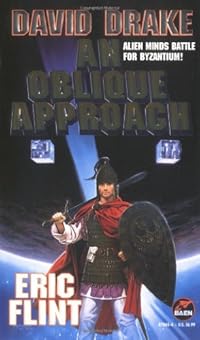

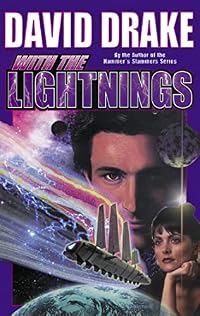
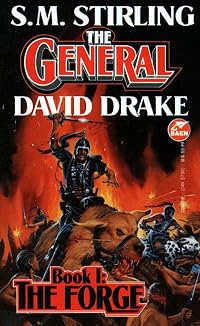
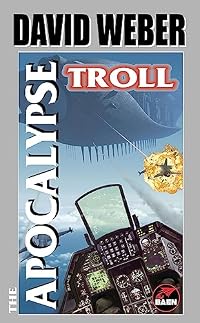

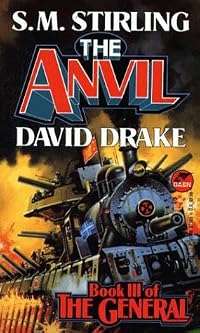
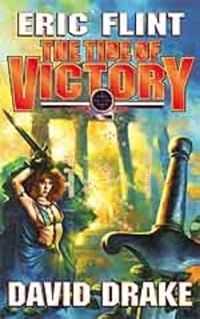
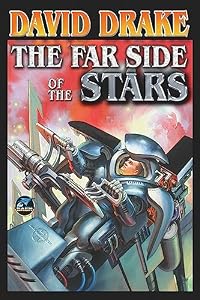
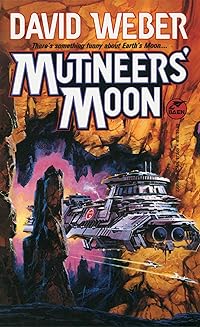
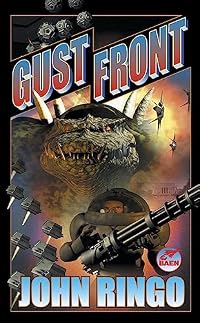
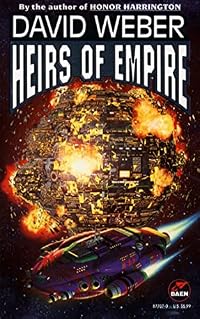
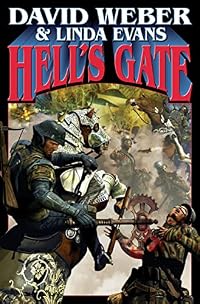
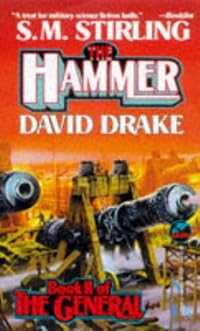
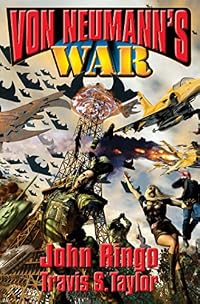
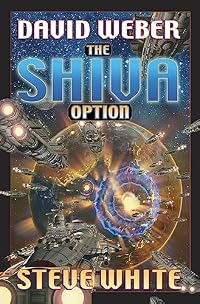
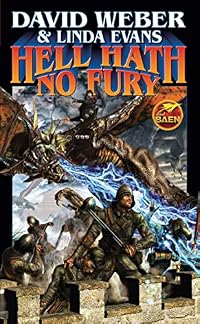
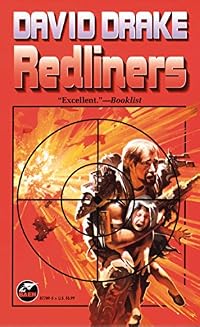
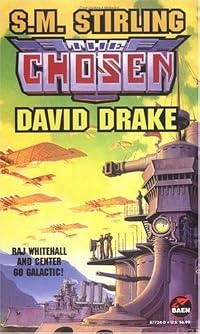
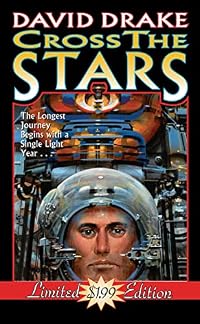
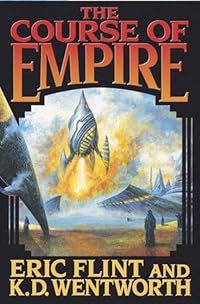
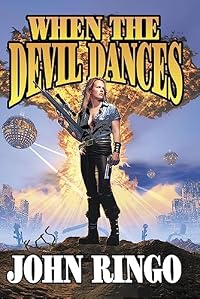


Member Recommendations

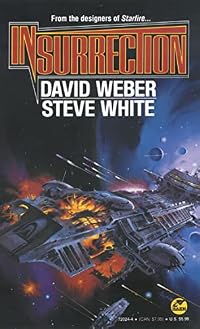
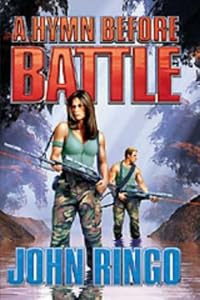
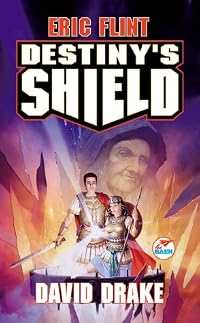
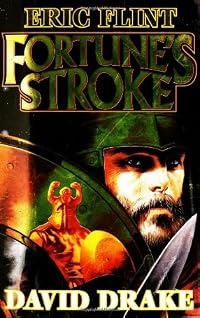
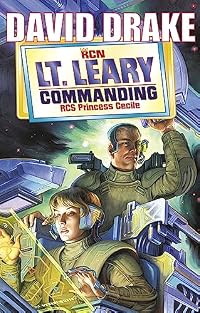
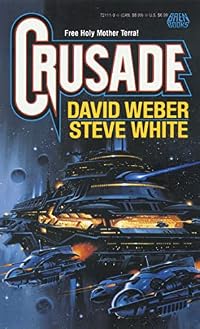
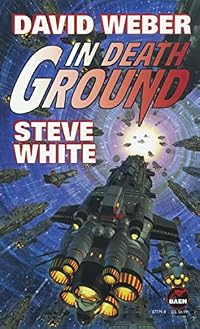
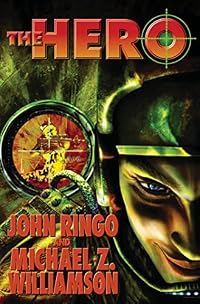
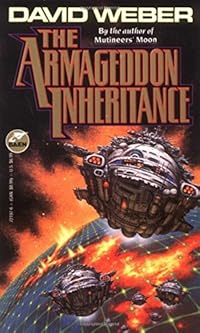
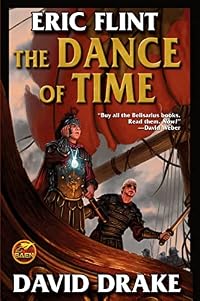
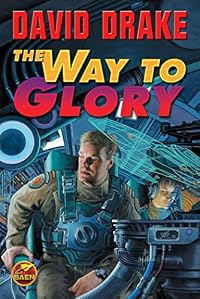
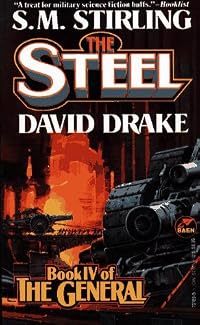
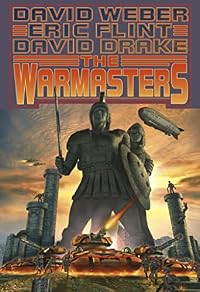
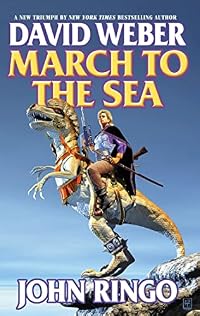
DemetriosX The books have similar themes of aliens taking groups of soldiers from one planet and using them to fight elsewhere in the galaxy.
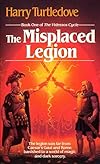
DemetriosX Both books involve a Roman legion from around the same time period being whisked away from Earth. Ranks of Bronze is more SF, while the Turtledove is fantasy, but the Romans remain Romans
Member Reviews
In the year 53 BC, Crassus, the richest man in Rome, led an army to a humiliating defeat by the Parthian Empire at Carrhae. The poet Horace mentions, in the novel's Prologue, captive Roman soldiers marrying barbarian women and growing old fighting for their new masters.
That bit from Horace's _Odes_ neatly sums up this story except, rather than growing old with the Parthians, the Romans become the military assets of an alien trading guild who uses them to fight the low tech wars somehow required by their political system. The Romans prove quite adept at their new duties. In between campaigns, they whore with aliens surgically altered to mostly resemble human women, watch and participate in strange combat simulations with alien beasts, show more and try not to think too hard about how they and their comrades are repaired after nearly every injury.
There's plenty to like in this novel: the development of tribune Gaius Vibulenas from a callow youth to a true leader of men; Drake's nitty gritty consideration of all the physical aspects - balance, footing, strength, stamina, sight - of battle; the understated relationship Vibulenas has with alien "woman" Quartilla; the very believable spark that finally triggers revolt and characteristic Roman terror.
The only disappointment I had with the novel was its sometimes confusing descriptions of battle and Roman military organization - even though I know something of the Roman army of the period. show less
That bit from Horace's _Odes_ neatly sums up this story except, rather than growing old with the Parthians, the Romans become the military assets of an alien trading guild who uses them to fight the low tech wars somehow required by their political system. The Romans prove quite adept at their new duties. In between campaigns, they whore with aliens surgically altered to mostly resemble human women, watch and participate in strange combat simulations with alien beasts, show more and try not to think too hard about how they and their comrades are repaired after nearly every injury.
There's plenty to like in this novel: the development of tribune Gaius Vibulenas from a callow youth to a true leader of men; Drake's nitty gritty consideration of all the physical aspects - balance, footing, strength, stamina, sight - of battle; the understated relationship Vibulenas has with alien "woman" Quartilla; the very believable spark that finally triggers revolt and characteristic Roman terror.
The only disappointment I had with the novel was its sometimes confusing descriptions of battle and Roman military organization - even though I know something of the Roman army of the period. show less
There's a core idea in Ranks of Bronze that is worth delving into - what if galactic law forbid trade guilds from fighting at a technological level higher than that of the planet they are on? For advanced species capable of laser warfare and interstellar travel, it would be something of a waste to use your own citizens - untrained in ancient warfare, unused to hardship, and likely not willing to risk nass death at spear point in order to enrich another. The solution - capture or purchase warriors from other planets of lower technological levels, and use them to fight your trade wars instead. In this particular case, the lower-tech soldiery happen to be Roman legionaries.
An absolutely fascinating idea, but one which is not explored to show more its fullest potential. The vast majority of the book is pitting the Roman against a host of similarly teched Xenos on aliens worlds, fighting for their overlords who they increasingly believe not to be worthy of their service or respect. As one would expect from Drake, the battle scenes feel strongly as of written by someone who experienced the Vietnam War in a personal capacity - as was very much the case with Drake. As with Vietnam, the legionaries struggle with a sense of between concept themselves as soldiers, and the "duty" in Wars they do not fully understand, for goals they do not know, and against enemies who ultimately are more like themselves than those who give them their orders.
The ending is a foregone conclusion, from the outset it's the logical place for the story the go, the only question being how that is to place, and what event will provide them with the opportunity to pursue it.
The ending is in some ways a disappointment - it doesn't provide as much closure as I would have like, but that's not necessarily a bad thing. Authors often provide too much explanation, and leave too little to the imagination. I'm this case, the lack of closure probably works to the novels advantage - I can imagine readers having a wide variety of preferences as to how the protagonists stories ultimately end, though there will always be a yearning for a more "official" conclusion.
Sequels have been written by other authors which delve into greater details regarding the federation and trade guilds, but personally I'd prefer to leave some of those details as a bit of a mystery, and I. That respect Ranks of Bronze stands best on its own. show less
An absolutely fascinating idea, but one which is not explored to show more its fullest potential. The vast majority of the book is pitting the Roman against a host of similarly teched Xenos on aliens worlds, fighting for their overlords who they increasingly believe not to be worthy of their service or respect. As one would expect from Drake, the battle scenes feel strongly as of written by someone who experienced the Vietnam War in a personal capacity - as was very much the case with Drake. As with Vietnam, the legionaries struggle with a sense of between concept themselves as soldiers, and the "duty" in Wars they do not fully understand, for goals they do not know, and against enemies who ultimately are more like themselves than those who give them their orders.
The ending is a foregone conclusion, from the outset it's the logical place for the story the go, the only question being how that is to place, and what event will provide them with the opportunity to pursue it.
The ending is in some ways a disappointment - it doesn't provide as much closure as I would have like, but that's not necessarily a bad thing. Authors often provide too much explanation, and leave too little to the imagination. I'm this case, the lack of closure probably works to the novels advantage - I can imagine readers having a wide variety of preferences as to how the protagonists stories ultimately end, though there will always be a yearning for a more "official" conclusion.
Sequels have been written by other authors which delve into greater details regarding the federation and trade guilds, but personally I'd prefer to leave some of those details as a bit of a mystery, and I. That respect Ranks of Bronze stands best on its own. show less
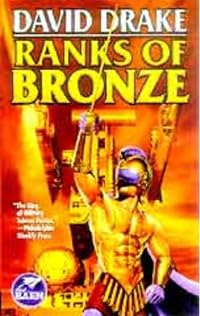
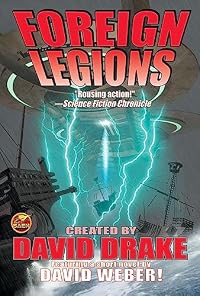
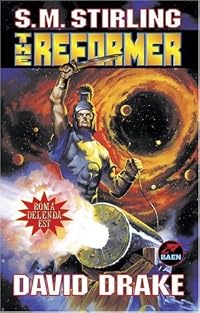
Good concept, interesting characters, OK ending - but it doesn't thrill me. This is a reread - I've read it several times before, and I just read Foreign Legions, an anthology in this universe - but a little too grim for me, and a little too...not exactly repetitive, there's new events in each campaign, but...something. Also, there's a story somewhere about the Romans coming back to Earth - I thought that would be in here, but it's not, it's somewhere else apparently. The concept, of aliens taking humans to be mercenaries or conscript soldiers, is interesting - there's a lot of ways it could have gone. But - I mostly don't _like_ the Romans; even the tribune, the one with the most developed character, is often opaque in his motivations show more and actions. Sometimes opaque to himself, for that matter. I'll keep it, I'll probably reread it - the concept is worth that - but not a favorite. By the way - the cover is really truly dumb (mine is the orange one with the soldier in "armor" with a space helmet (visor on a Roman helm) and a spaceship behind him). That armor is so totally useless it's quite funny. Vast expanses of shoulder and underarm wide open to a cut or stab...it's pretty Halloween armor, nothing like the (many, many times described in the story) armor the Romans actually fight in. show less
After being defeated by the Parthians in battle, a Roman legion is sold to an alien Merchant Guild (!) which intends to use them in wars of conquest against worlds with a similar level of technology (!!!). The use of the same level of technology being a rule imposed by some kind of intergalactic federation on the guilds which is a nonsensical but useful plot conceit. A goofy but nonetheless entertaining read.
Ranks of Bronze is a military science fiction story with much emphasis on the “military” aspect. It features soldiers from ancient Rome who have been recruited by an odd commander to fight various odd enemies, which they’re transported to via odd methods while enjoying odd forms of recuperation and entertainment between battles. The characters don’t really understand what’s going on, but it’s easy enough for the reader to extrapolate given the knowledge that this is a science fiction book.
The story started out very sloooow for me. We enter the story at the beginning of long battle scene, featuring characters that didn’t seem very interesting to me, and without anything else besides the battle to really draw me into the show more story. Things became a little more interesting as the story progressed, but it definitely wasn’t a page-turner for me. I struggled through the first half and considered giving up a few times, but I did become quite a bit more engaged in the second half.
I’ve enjoyed military science fiction before, including the Belisarius series which was set in a similar time period and was co-written by the author of this book. I loved that series, actually, even though it was arguably heavier on the military aspect than this book was. I think the difference was that the Belisarius series had characters who I found more likable, plus a lot more humor. The military portions of the Belisarius series focused on more interesting strategies and had great interaction between the characters. The characters in this book were ok, but I never got that attached.
We’re given a more-or-less complete story, but the way things were left at the end seemed to set up a far more interesting story that tempted me to continue on with the series. However, I wasn’t sure I really wanted to read more books written in the same style as this one. In trying to make up my mind, I read the synopses for the other two books in the series and it doesn’t seem like they continue the story in the way I expected. That helped me make up my mind to stop with this book, although I was leaning toward that decision anyway. show less
The story started out very sloooow for me. We enter the story at the beginning of long battle scene, featuring characters that didn’t seem very interesting to me, and without anything else besides the battle to really draw me into the show more story. Things became a little more interesting as the story progressed, but it definitely wasn’t a page-turner for me. I struggled through the first half and considered giving up a few times, but I did become quite a bit more engaged in the second half.
I’ve enjoyed military science fiction before, including the Belisarius series which was set in a similar time period and was co-written by the author of this book. I loved that series, actually, even though it was arguably heavier on the military aspect than this book was. I think the difference was that the Belisarius series had characters who I found more likable, plus a lot more humor. The military portions of the Belisarius series focused on more interesting strategies and had great interaction between the characters. The characters in this book were ok, but I never got that attached.
We’re given a more-or-less complete story, but the way things were left at the end seemed to set up a far more interesting story that tempted me to continue on with the series. However, I wasn’t sure I really wanted to read more books written in the same style as this one. In trying to make up my mind, I read the synopses for the other two books in the series and it doesn’t seem like they continue the story in the way I expected. That helped me make up my mind to stop with this book, although I was leaning toward that decision anyway. show less
The unstoppable force of the Roman Legions have been bought by an alien race whose Galactic guild uses them to defeat other less technologically advanced civilazations and worlds. The Tribune Gaius Vibulenas Caper, along with his friends; First Cohort centurion Gnaeus Clodius Afer, Legionary Pompilius Niger (who is forever seeking honey to make his beloved mead), and thousands of other Roman soldiers have become the near immortal slaves of the alien Commander. They inhabit a space ship which provides such pleasures as alien females altered to resemble human females, military exercises including a virtual reality battle game, and various other awesome stuff. I loved following Vibulenas and his men into various vaguely familiar battles on show more alien worlds. Both fans of Tacitus and Sci Fi will enjoy the blood and glory to be found here. show less
Roman legionaries sold into servitude after a defeat find themselves fighting against very strange foes for nonhuman commanders.
Worth reading once.
Worth reading once.
Members
- Recently Added By
Author Information

269+ Works 34,928 Members
David Drake was born on September 24, 1945, in Dubuque, Iowa. He attended University of Iowa, where he graduated with a degree in History (with honors) and Latin. He then attended Duke Law School. He was drafted out of law school, served in the army for two years and then returned to school. He worked as an Assistant Town Attorney of Chapel Hill show more and then part-time as a city bus driver before he became a full-time writer. Drake is considered a master of Science Fiction and Fantasy. The Hammer's Slammers, military science fiction, was his first published series. His other titles include Northworld series, The Dragon Lord, Starliner, Ranks of Bronze, and Redliners. In recognition of his work, he won a World Fantasy award in 1976. He currently resides in North Carolina. (Bowker Author Biography) show less
Some Editions
Series

Common Knowledge
- Original publication date
- 1986
Classifications
Statistics
- Members
- 482
- Popularity
- 62,559
- Reviews
- 9
- Rating
- (3.65)
- Languages
- English
- Media
- Paper, Ebook
- ISBNs
- 5
- ASINs
- 2