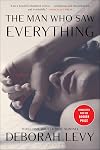
The Man Who Saw Everything
by Deborah Levy
On This Page
Description
Longlisted for the Booker PrizeNamed a Best Book of the Year By: The New York Times Book Review (Notable Books of the Year) * The New York Public Library * The Washington Post * Time.com * The New York Times Critics' (Parul Seghal's Top Books of the Year) * St. Louis Post Dispatch * Apple * Publisher's Weekly
An electrifying novel about beauty, envy, and carelessness from Deborah Levy, author of the Booker Prize finalists Hot Milk and Swimming Home.
It is 1988 and Saul Adler, a narcissistic show more young historian, has been invited to Communist East Berlin to do research; in exchange, he must publish a favorable essay about the German Democratic Republic. As a gift for his translator's sister, a Beatles fanatic who will be his host, Saul's girlfriend will shoot a photograph of him standing in the crosswalk on Abbey Road, an homage to the famous album cover. As he waits for her to arrive, he is grazed by an oncoming car, which changes the trajectory of his life.
The Man Who Saw Everything is about the difficulty of seeing ourselves and others clearly. It greets the specters that come back to haunt old and new love, previous and current incarnations of Europe, conscious and unconscious transgressions, and real and imagined betrayals, while investigating the cyclic nature of history and its reinvention by people in power. Here, Levy traverses the vast reaches of the human imagination while artfully blurring sexual and political binaries-feminine and masculine, East and West, past and present—to reveal the full spectrum of our world. LGBTQIA+ (Fiction.) Literature. Fiction. show less
Tags
Recommendations









































Member Reviews
“ I smiled at his careful reconstruction of history, blatantly told in his favour …”
“I’m trying to cross the road …. Yes, she said, you’ve been trying to cross the road for thirty years but stuff happened on the way.”
In 1988, Saul Adler, a young, Jewish historian, is getting photographed, crossing Abbey Road, like the famous Beatles album cover. His girlfriend, who just broke up with him, is taking the photo. He is then struck by a car. This is where the novel gets trippy, and timelines collapse and the narrative shifts to 2016, where Saul also finds himself recovering from an auto accident. He becomes a man in pieces, as he attempts to reconstruct his life and his past. There is a lot going on here and I am sure I have show more missed a metaphor or two, but I think the primary theme here, is how difficult it is examining and understanding our own lives and the lives of the people closest to us. The writing is excellent and Levy gives the reader plenty to chew on here. This is my introduction to her work and I was left quite impressed. show less
“I’m trying to cross the road …. Yes, she said, you’ve been trying to cross the road for thirty years but stuff happened on the way.”
In 1988, Saul Adler, a young, Jewish historian, is getting photographed, crossing Abbey Road, like the famous Beatles album cover. His girlfriend, who just broke up with him, is taking the photo. He is then struck by a car. This is where the novel gets trippy, and timelines collapse and the narrative shifts to 2016, where Saul also finds himself recovering from an auto accident. He becomes a man in pieces, as he attempts to reconstruct his life and his past. There is a lot going on here and I am sure I have show more missed a metaphor or two, but I think the primary theme here, is how difficult it is examining and understanding our own lives and the lives of the people closest to us. The writing is excellent and Levy gives the reader plenty to chew on here. This is my introduction to her work and I was left quite impressed. show less
7. [23091502::The Man Who Saw Everything] by [[Deborah Levy]]
reader: [[George Blagden]]
published: 2019
format: 6:05 audible audiobook (200 pages in hardcover)
acquired: January
listened: Jan 27 – Feb 5 (and again, Feb 7-13)
rating: 4
locations: London & Berlin
about the author South African born, half of Jewish-Lithuanian descent. Grew up in London since 1968. Born 6 August 1959.
A beautiful, mysterious, and sophisticated little book. Actually, you have to read it twice, so double the length, but you will get two very different books out of it.
I stumbled through the book the first time, carried on by the very odd narrator, historian Saul Addler, who had a very adventurous September 1988. A striking beauty, he, in quick succession, has show more multiple affairs with the different sexes and on different sides of the Iron Curtain. Sensual and quick to fall in love, Saul is also distant, I would guess somehow on the spectrum. He is spectacularly self-centered, to the point he has trouble really understanding or taking in the world around him, making the title a bit of a mockery. Instead he focuses on whatever he is drawn to. And he is most attracted to those obsessed with him, especially his girlfriend, Jennifer Moreau, who makes art out of photographs of him. He'll carry this from London to East Berlin, bringing, in place of requested, hard-to-get canned pineapples, a picture of himself crossing Abbey Road...because the sister of a translator he is working with is a huge Beatles fan.
We readers get a strange language that meshes well with his idea of a Stasi surveillance and his perspective of self-censorship. These worlds are confusing and yet fascinated through Saul's distorted, falsely precise view and absolute confidence. Then the book jumps to 2016 and seems to get more confusing. But, it still drew me because the language is elegant (and the reader is excellent), Saul and all his connections, and his girlfriend from 1988, are curiously fascinating and beautiful in their human flaws. There is a lot of human texture here. But I finished the book without understanding what I read.
So, I started hunting down published reviews - and the ones I found gave nothing away. All I could grasp was that, yes the book all makes sense and all ties together, that it might be a bit tragic, and that all readers, like this one reviewer I came across, should, upon finishing, immediately read it again. After a day I did try starting the audio over again. I immediately picked up many forgotten or overlooked details, but it took a while, and then it finally clicked, the key little aspect I was missing, and suddenly I had a completely different book. Equally beautiful and confounding, but absolutely different. I can't say, like that one reviewer, it all ties together, because I was left with a lot of loose ends. But, the book has left me thinking. It's sad, plays on longing, and leaves the reader wanting to hang around a bit. And details coalesce. There's a lot of oh!...but wait, now that I figured that out, what does it mean?
I hopefully won't give anything away here, because I really enjoyed the state of confusion listening to this book the first time, and that can't be replicated now. Now I'll always see the new picture.
Recommended to anyone this review interests. It's a terrific book, you'll be rewarded, as long as you have the patience to read it twice.
https://www.librarything.com/topic/315313#7067278 show less
reader: [[George Blagden]]
published: 2019
format: 6:05 audible audiobook (200 pages in hardcover)
acquired: January
listened: Jan 27 – Feb 5 (and again, Feb 7-13)
rating: 4
locations: London & Berlin
about the author South African born, half of Jewish-Lithuanian descent. Grew up in London since 1968. Born 6 August 1959.
A beautiful, mysterious, and sophisticated little book. Actually, you have to read it twice, so double the length, but you will get two very different books out of it.
I stumbled through the book the first time, carried on by the very odd narrator, historian Saul Addler, who had a very adventurous September 1988. A striking beauty, he, in quick succession, has show more multiple affairs with the different sexes and on different sides of the Iron Curtain. Sensual and quick to fall in love, Saul is also distant, I would guess somehow on the spectrum. He is spectacularly self-centered, to the point he has trouble really understanding or taking in the world around him, making the title a bit of a mockery. Instead he focuses on whatever he is drawn to. And he is most attracted to those obsessed with him, especially his girlfriend, Jennifer Moreau, who makes art out of photographs of him. He'll carry this from London to East Berlin, bringing, in place of requested, hard-to-get canned pineapples, a picture of himself crossing Abbey Road...because the sister of a translator he is working with is a huge Beatles fan.
We readers get a strange language that meshes well with his idea of a Stasi surveillance and his perspective of self-censorship. These worlds are confusing and yet fascinated through Saul's distorted, falsely precise view and absolute confidence. Then the book jumps to 2016 and seems to get more confusing. But, it still drew me because the language is elegant (and the reader is excellent), Saul and all his connections, and his girlfriend from 1988, are curiously fascinating and beautiful in their human flaws. There is a lot of human texture here. But I finished the book without understanding what I read.
So, I started hunting down published reviews - and the ones I found gave nothing away. All I could grasp was that, yes the book all makes sense and all ties together, that it might be a bit tragic, and that all readers, like this one reviewer I came across, should, upon finishing, immediately read it again. After a day I did try starting the audio over again. I immediately picked up many forgotten or overlooked details, but it took a while, and then it finally clicked, the key little aspect I was missing, and suddenly I had a completely different book. Equally beautiful and confounding, but absolutely different. I can't say, like that one reviewer, it all ties together, because I was left with a lot of loose ends. But, the book has left me thinking. It's sad, plays on longing, and leaves the reader wanting to hang around a bit. And details coalesce. There's a lot of oh!...but wait, now that I figured that out, what does it mean?
I hopefully won't give anything away here, because I really enjoyed the state of confusion listening to this book the first time, and that can't be replicated now. Now I'll always see the new picture.
Recommended to anyone this review interests. It's a terrific book, you'll be rewarded, as long as you have the patience to read it twice.
https://www.librarything.com/topic/315313#7067278 show less
This is not an easy book. The first half appears to be a fairly straightforward telling of young love and loss, careerism, and, of course, a minor accident at the famous Abby Road zebra crossing. But the second half becomes much more unsettling. Things are not what they seem, the timeline shifts back and forth, people come and go, characters you thought had died appear, etc. The reader learns details in snippets and never quite trusts the narrator's grasp of reality. One may be tempted to quit at this point, but that would be a mistake because Levy is masterfully evoking the kind of reality that one experiences in a morphine fog in an ICU. Saul Adler has had a second accident 28 years later and this time it was not minor. Friends and show more family visit, he slips in and out, and especially, his mind wanders, conjuring dreamlike memories in no particular order and with a surreal quality. Through it all, Saul struggles with feelings of guilt and regret.
Levy sets her novel in Europe during the 28 years (1988-2016) following the collapse of the Soviet Union and the emergence of Brexit. She brings us from the East German Stasi and the Beatles to digital cameras and alternative lifestyles. Not unlike the Beatles tune, Penny Lane, there is a lot going on here. Much of it is mundane but some is "very strange." show less
Levy sets her novel in Europe during the 28 years (1988-2016) following the collapse of the Soviet Union and the emergence of Brexit. She brings us from the East German Stasi and the Beatles to digital cameras and alternative lifestyles. Not unlike the Beatles tune, Penny Lane, there is a lot going on here. Much of it is mundane but some is "very strange." show less
A short, quirky book that grabbed me - I couldn't put it down.
The central character is a young academic historian from a working class family and is set in 1988 and 2016. The book tells of some of his romantic relationships, both serious and casual, and thire various outcomes. But nothing in the book is as simple as that last sentence. First, the protagonist is confused by time. In 1988 he 'knows' the fall of the Berlin wall, while for much of the time in 2016, he thinks he's in 1988.
Second, The book is intentionally ambiguous. The ending, like much of the book, leaves the reader to fill in the possible details. This could be annoying, but it isn't. The author is in total control, and brings the reader along. I loved it.
The central character is a young academic historian from a working class family and is set in 1988 and 2016. The book tells of some of his romantic relationships, both serious and casual, and thire various outcomes. But nothing in the book is as simple as that last sentence. First, the protagonist is confused by time. In 1988 he 'knows' the fall of the Berlin wall, while for much of the time in 2016, he thinks he's in 1988.
Second, The book is intentionally ambiguous. The ending, like much of the book, leaves the reader to fill in the possible details. This could be annoying, but it isn't. The author is in total control, and brings the reader along. I loved it.
This was a strange, unsettling little novel. Moving back and forth between the GDR/East Berlin and London, back and forth between 1988 and 2016, the story centers around Saul Adler, a "minor historian" whose girlfriend photographs him walking across the zebra crossing of Beatles Abbey Road fame. His plan for the photo: to take it (along with a tin of pineapple) to the younger sister of his German interpreter when he visits East Berlin for his research. There is also an accident at same zebra crossing, many delightful references to elements of Beatles music now permanently imbedded in our culture, and themes of love, death, passion, loneliness, and fear. That may seem like a lot for such a short novel, but it's all there.
Initially show more strange but straightforward, the novel becomes downright weird in the second half. Levy explores time and space and memory, independence and interconnectedness. Still, as weird as it is, it's also absolutely readable and engaging. It just requires a certain mental release, giving the author permission to wander as she sees fit, and allowing the emotional impact to land. I was surprised by the poignancy of the last few chapters. Pleasantly so. show less
Initially show more strange but straightforward, the novel becomes downright weird in the second half. Levy explores time and space and memory, independence and interconnectedness. Still, as weird as it is, it's also absolutely readable and engaging. It just requires a certain mental release, giving the author permission to wander as she sees fit, and allowing the emotional impact to land. I was surprised by the poignancy of the last few chapters. Pleasantly so. show less
"Hello, Saul. How is it going?"
"I'm trying to cross the road."
"Yes," she said, 'you've been trying to cross the road for over thirty years but stuff happened on the way."
Good fiction helps us see that we don't often reach where we are going.
Reality is precarious. Time is relative to our perception of it. We can live the same moment over and over and never work it all out. And the passage of time really doesn't matter in the summation of it. A moment past thirty years ago can keep a hold over us and everything that happened after.
Anything I write about this book is a spoiler. I've not experienced this before. If I say it's in two parts and the second part reveals the first part, I feel it's a spoiler.
Then I had this thought: it reminds show more me of Dennis Potter's "The Singing Detective."
Oh, that's probably a kind of spoiler too. show less
"I'm trying to cross the road."
"Yes," she said, 'you've been trying to cross the road for over thirty years but stuff happened on the way."
Good fiction helps us see that we don't often reach where we are going.
Reality is precarious. Time is relative to our perception of it. We can live the same moment over and over and never work it all out. And the passage of time really doesn't matter in the summation of it. A moment past thirty years ago can keep a hold over us and everything that happened after.
Anything I write about this book is a spoiler. I've not experienced this before. If I say it's in two parts and the second part reveals the first part, I feel it's a spoiler.
Then I had this thought: it reminds show more me of Dennis Potter's "The Singing Detective."
Oh, that's probably a kind of spoiler too. show less
(3.5) It’s best to read this book cold, not primed by reviews that provide too much information about the plot, so I’m going to give only the barest of details. The narrative revolves around the apparently surpassingly beautiful and self-absorbed Saul Adler, a 28-year-old graduate student in history. As the novel opens, it is 1988, and he is preparing to travel to the German Democratic Republic to conduct research on cultural opposition to the rise of fascism in the 1930s. However, he has a private research project closer to home about the psychology of male tyrants, and he is preoccupied with the totalitarian currents in his own family. He has strained relationships with his father, who has long been committed to the socialist show more cause, and his brother, Matthew, whom Saul describes as the preferred son, a “Bolshevik hero”, and a bully.
Before he leaves London, Saul’s ambitious art-student/photographer girlfriend, Jennifer Moreau, is scheduled to take a photograph of him at the famous zebra crossing on Abbey Road. Jennifer will attempt to replicate the iconic cover of the Beatles’ 1969 album in a photograph that will be presented as a gift to the Beatles-obsessed sister of Saul’s East German interpreter. We are told that while Saul waits on the famous street for Jennifer to arrive with her camera and gear, he is hit by a car. Although there’s some blood and bruising, his injuries are apparently minor. The photograph is taken, a parting amorous episode between Saul and Jennifer transpires, a marriage proposal is rejected, and Saul goes on his way to the German Democratic Republic, where he proceeds to fall in love with his interpreter.
The first half of Levy’s inventive and allusive novel reads rather strangely. Because of the novel’s epigraph—a quotation from Susan Sontag about the ways in which photography violates its human subjects, as it presents them as they never know and see themselves— and because Jennifer refers to Saul as her “muse” and forbids him to describe her physical beauty, I was under the impression that Levy was aiming to subvert stereotypes about women and art—those in which the female is the object for the male creator to “symbolically possess”. Levy suggests that even though Saul and Jennifer are lovers, Jennifer isn’t interested in Saul as a person; his striking appearance is useful to her —a commodity to be exploited. In the end, though, this theme is a secondary one. Jennifer is not Levy’s main interest; although important to the story, she’s not its focus. Instead, Saul’s curious, occasionally surreal experiences on the eastern side of the Berlin Wall take centre stage. There are odd, inexplicable elements to this part of the story, and Saul’s thinking and behaviour are often puzzling. He is paradoxically highly observant and peculiarly obtuse.
If the first half of the novel is a kind of rich but strange tapestry, the second half exposes how that material came to be woven. The narrative now becomes propulsive as the reader learns what the threads actually consist of and how they’ve been interlaced to create a particular, deceptive picture. The strangeness of the first half of the book becomes understandable. This makes for very satisfying reading, and I mostly admired Levy’s skill and cleverness. At the same time, I felt there was something lacking in her depiction of Saul’s psychology and conflicts. His strained relationships with his father and brother and an early, formative loss are not convincingly explained. Some of the dialogue is a bit too mannered, and there’s a slightly soap-opera-ish feel to this part of the book. For these reasons, I’ve rounded my rating down rather than up.
Thank you to Net Galley and Penguin Random House of Canada for providing me with a digital ARC of this book. show less
Before he leaves London, Saul’s ambitious art-student/photographer girlfriend, Jennifer Moreau, is scheduled to take a photograph of him at the famous zebra crossing on Abbey Road. Jennifer will attempt to replicate the iconic cover of the Beatles’ 1969 album in a photograph that will be presented as a gift to the Beatles-obsessed sister of Saul’s East German interpreter. We are told that while Saul waits on the famous street for Jennifer to arrive with her camera and gear, he is hit by a car. Although there’s some blood and bruising, his injuries are apparently minor. The photograph is taken, a parting amorous episode between Saul and Jennifer transpires, a marriage proposal is rejected, and Saul goes on his way to the German Democratic Republic, where he proceeds to fall in love with his interpreter.
The first half of Levy’s inventive and allusive novel reads rather strangely. Because of the novel’s epigraph—a quotation from Susan Sontag about the ways in which photography violates its human subjects, as it presents them as they never know and see themselves— and because Jennifer refers to Saul as her “muse” and forbids him to describe her physical beauty, I was under the impression that Levy was aiming to subvert stereotypes about women and art—those in which the female is the object for the male creator to “symbolically possess”. Levy suggests that even though Saul and Jennifer are lovers, Jennifer isn’t interested in Saul as a person; his striking appearance is useful to her —a commodity to be exploited. In the end, though, this theme is a secondary one. Jennifer is not Levy’s main interest; although important to the story, she’s not its focus. Instead, Saul’s curious, occasionally surreal experiences on the eastern side of the Berlin Wall take centre stage. There are odd, inexplicable elements to this part of the story, and Saul’s thinking and behaviour are often puzzling. He is paradoxically highly observant and peculiarly obtuse.
If the first half of the novel is a kind of rich but strange tapestry, the second half exposes how that material came to be woven. The narrative now becomes propulsive as the reader learns what the threads actually consist of and how they’ve been interlaced to create a particular, deceptive picture. The strangeness of the first half of the book becomes understandable. This makes for very satisfying reading, and I mostly admired Levy’s skill and cleverness. At the same time, I felt there was something lacking in her depiction of Saul’s psychology and conflicts. His strained relationships with his father and brother and an early, formative loss are not convincingly explained. Some of the dialogue is a bit too mannered, and there’s a slightly soap-opera-ish feel to this part of the book. For these reasons, I’ve rounded my rating down rather than up.
Thank you to Net Galley and Penguin Random House of Canada for providing me with a digital ARC of this book. show less
Members
- Recently Added By
Lists

History: Eastern Europe
97 works; 2 members

Kirkus Starred Fiction Reviews of Books Published in 2019
411 works; 12 members

Books by Jewish Authors
68 works; 5 members

Global Reads: Books Set in Western Europe
186 works; 10 members
Author Information

37+ Works 5,388 Members
Some Editions
Awards and Honors
Awards
Distinctions
Notable Lists
Common Knowledge
- Canonical title*
- Der Mann, der alles sah
- Original title
- The Man Who Saw Everything
- Important places
- German Democratic Republic; Berlin, Germany
- Epigraph
- Poetic thought, unlike rootless orchids, did not grow in a greenhouse and did not faint when confronted with today's traumas.
Karel Teige, The Shooting Gallery (1946)
To photograph people is to violate them, by seeing them as they never see themselves, by having knowledge of them they can never have; it turns people into objects that can be symbolically possessed.
Susan Sontag, 'In Plat... (show all)o's Cave', from On Photography (1977) - First words
- It's like this, Saul Adler: when I was twenty-three I loved the way you touched me, but when the afternoon slipped in and you slipped out of me, you were already looking for someone else.
- Last words
- (Click to show. Warning: May contain spoilers.)I continued walking and when I got very close to the other side I reached out to touch her hand.
- Original language
- English
*Some information comes from Common Knowledge in other languages. Click "Edit" for more information.
Classifications
Statistics
- Members
- 582
- Popularity
- 50,677
- Reviews
- 33
- Rating
- (3.71)
- Languages
- 9 — Catalan, Dutch, English, Finnish, German, Greek, Portuguese (Portugal), Slovenian, Swedish
- Media
- Paper, Audiobook, Ebook
- ISBNs
- 31
- ASINs
- 6