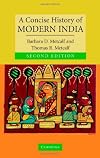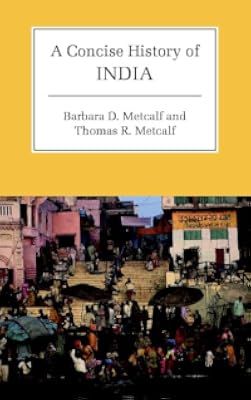
A Concise History of Modern India (Cambridge Concise Histories)
by Barbara D. Metcalf
Cambridge Concise Histories
On This Page
Description
In a second edition of their successful Concise History of Modern India, Barbara Metcalf and Thomas Metcalf explore India's modern history afresh and update the events of the last decade. These include the takeover of Congress from the seemingly entrenched Hindu nationalist party in 2004, India's huge advances in technology and the country's new role as a major player in world affairs. From the days of the Mughals, through the British Empire, and into Independence, the country has been show more transformed by its institutional structures. It is these institutions which have helped bring about the social, cultural and economic changes that have taken place over the last half century and paved the way for the modern success story. Despite these advances, poverty, social inequality and religious division still fester. In response to these dilemmas, the book grapples with questions of caste and religious identity, and the nature of the Indian nation. show lessTags
Recommendations






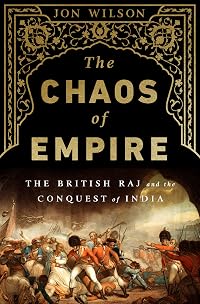
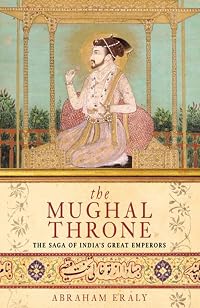
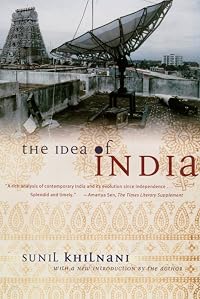
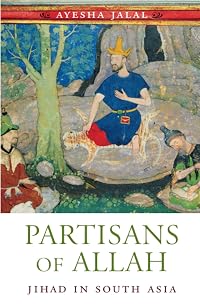
Member Reviews
I found this book totally captivating. I have followed Indian history through books, and have been witnessed incidents taking shape, like Babri Masjid Demolition, Killing of Rajiv Gandhi, Curfew, Coalition Government, Gujarat Violence and burning of the train, the rise of Cyberabad, etc.
The details provided in this book still captured my attention. The authors do a wonderful job of providing a "concise history of modern India", and trying to present the facts as they are.
If we come across any review that either accuses the book of having some prejudice by labeling it with terms like "British authors", "leftist" or "does not capture greatness" or "congress" etc, we can safely assume that the review-writer was standing in front of the show more mirror rather than in front of text and words.
Reading history, I often realize that Truth can be stranger than Fiction. This book share ample anecdotes along those fronts.
The first thing I realized was - British East India Company had a much difficult time establishing trade relations in the subcontinent than French or Portuguese who had arrived earlier because India under Mughal had some resistance going on. They established pure trade relations, incurring a loss, buying cows from India, and facing criticism from Britain. The company did not want to give up on the business opportunity with India and incurred losses for decades.
Then we notice how Britain captured the whole of India. Robert Clive and Mir Jafir, a name that has become eponymous with a traitor start the conquer from South to Nawabs of Bengal. The loot and wealth of India were too tempting for the British to give up or lose control to locals.
I came to know through this book that for administering India, British setup "Indian Civil Services", the highest administrative body in India, which trains qualified candidates in both Britain and India through rigorous exams. The motivation was for that administrative body to report directly to the British state. The "Indian Civil Services" served the system very well, continued after Independence, and reporting structure replaced to the democratically elected official instead of the British state.
The book is a whirlwind, each capture captures multiple events in a century or decades.
I came to know that Mohammed Ali Jinnah, had requested Pakistan to be consisting of multiple divergent states in India which had Muslim Majority (like Hyderabad, Kashmir, parts of Punjab, Bengal, etc). He very well knew that having a separate country with interspersed states was never going to be practical, he wanted to use that demand as negotiation tactic. However, Nehru and congress never gave into it. They receded two states of Pakistan on religious identity. Nehru declared during Independence that India was not built on religious identity and is not a religious state, thus keeping the plan for India with all the states in order.
It seems like India had decided that after independence they will have some money for nation-building purposes. Since India got partition, I came to know that, it was Gandhi who, in his just tendencies, requested for 40 million pounds to be given to Pakistan as it's share.
I had known about the factors leading to Independence a little, but I didn't realize that the British were spending roughly 1000 million pounds per year on India after the war (like supporting Indian soldiers, infrastructure), which had proven economically very costly to hold on.
The book also deals with more recent events, and particularly things that struck me was
a. Keezhaldi massacre and how no one was ever brought to justice.
b. No one was brought to justice for the Gujarath train massacre. The chief minister, Modi was let go by the then government in power, BJP under Atal Bihari Vajpayee.
It is often that case that being in political majority determined the outcome of the punishable act, and humanitarian qualities like justice didn't have a say against power.
As an aside, I could relate to the above statement even in the 2020 Delhi Riots. BJP government did not bring anyone to justice. The same argument holds worldwide too wherein, in the USA, cronyism is so prevalent in republican led administration, and bringing someone to justice for the wrongdoing seems also non-applicable if the person has power. show less
The details provided in this book still captured my attention. The authors do a wonderful job of providing a "concise history of modern India", and trying to present the facts as they are.
If we come across any review that either accuses the book of having some prejudice by labeling it with terms like "British authors", "leftist" or "does not capture greatness" or "congress" etc, we can safely assume that the review-writer was standing in front of the show more mirror rather than in front of text and words.
Reading history, I often realize that Truth can be stranger than Fiction. This book share ample anecdotes along those fronts.
The first thing I realized was - British East India Company had a much difficult time establishing trade relations in the subcontinent than French or Portuguese who had arrived earlier because India under Mughal had some resistance going on. They established pure trade relations, incurring a loss, buying cows from India, and facing criticism from Britain. The company did not want to give up on the business opportunity with India and incurred losses for decades.
Then we notice how Britain captured the whole of India. Robert Clive and Mir Jafir, a name that has become eponymous with a traitor start the conquer from South to Nawabs of Bengal. The loot and wealth of India were too tempting for the British to give up or lose control to locals.
I came to know through this book that for administering India, British setup "Indian Civil Services", the highest administrative body in India, which trains qualified candidates in both Britain and India through rigorous exams. The motivation was for that administrative body to report directly to the British state. The "Indian Civil Services" served the system very well, continued after Independence, and reporting structure replaced to the democratically elected official instead of the British state.
The book is a whirlwind, each capture captures multiple events in a century or decades.
I came to know that Mohammed Ali Jinnah, had requested Pakistan to be consisting of multiple divergent states in India which had Muslim Majority (like Hyderabad, Kashmir, parts of Punjab, Bengal, etc). He very well knew that having a separate country with interspersed states was never going to be practical, he wanted to use that demand as negotiation tactic. However, Nehru and congress never gave into it. They receded two states of Pakistan on religious identity. Nehru declared during Independence that India was not built on religious identity and is not a religious state, thus keeping the plan for India with all the states in order.
It seems like India had decided that after independence they will have some money for nation-building purposes. Since India got partition, I came to know that, it was Gandhi who, in his just tendencies, requested for 40 million pounds to be given to Pakistan as it's share.
I had known about the factors leading to Independence a little, but I didn't realize that the British were spending roughly 1000 million pounds per year on India after the war (like supporting Indian soldiers, infrastructure), which had proven economically very costly to hold on.
The book also deals with more recent events, and particularly things that struck me was
a. Keezhaldi massacre and how no one was ever brought to justice.
b. No one was brought to justice for the Gujarath train massacre. The chief minister, Modi was let go by the then government in power, BJP under Atal Bihari Vajpayee.
It is often that case that being in political majority determined the outcome of the punishable act, and humanitarian qualities like justice didn't have a say against power.
As an aside, I could relate to the above statement even in the 2020 Delhi Riots. BJP government did not bring anyone to justice. The same argument holds worldwide too wherein, in the USA, cronyism is so prevalent in republican led administration, and bringing someone to justice for the wrongdoing seems also non-applicable if the person has power. show less
Barbara y Thomas Metcalf han escrito una historia de la India diferente, que no pretende ofrecer una imagen del país a partir de la óptica del imperialismo británico ni de la aparición de identidades nacionalistas. Esta historia pone en duda las ideas sobre una India inmutable y monolítica marcada por la tradición y las jerarquías religiosas. En vez de eso, muestra una sociedad compleja en continua transformación y que se reinventa a sí misma como consecuencia de sus cambios tecnológicos y sociopolíticos. Una lectura esencial para todos aquellos que quieran entender la India, su complejo pasado y sus perspectivas de futuro en un mundo globalizado.
Aug 10, 2010Spanish
Ratings
Members
- Recently Added By
Lists

Books recommended in the history category on FiveBooks.com
329 works; 4 members
Author Information
9 Works 394 Members
Barbara D. Metcalf is president-elect of the American Historical Association. She is professor emeritus of history at the University of California, Davis, and most recently has taught at the University of Michigan. She is the author of Islamic Revival in British India and the coauthor of A Concise History of Modern India.
Series

Common Knowledge
- People/Characters
- Babur, Emperor of Hindustan
- Important places
- India
- Original language
- English
Classifications
Statistics
- Members
- 290
- Popularity
- 111,069
- Reviews
- 2
- Rating
- (3.97)
- Languages
- 5 — Chinese, English, Italian, Portuguese, Spanish
- Media
- Paper, Audiobook, Ebook
- ISBNs
- 32
- ASINs
- 3