The Great Mental Models, Volume 1: General Thinking Concepts
by Shane Parrish
On This Page
Description
"The Great Mental Models: Volume 1, General Thinking Concepts shows you how making a few tiny changes in the way you think can deliver big results. Drawing on examples from history, business, art, and science, this book details nine of the most versatile, all-purpose mental models you can use right away to improve your decision making and productivity"--Tags
Recommendations









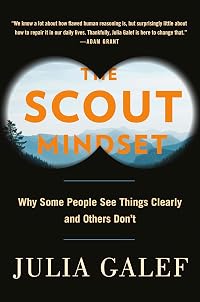
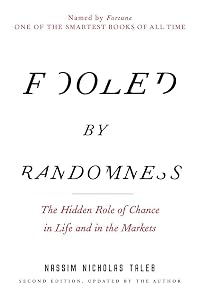
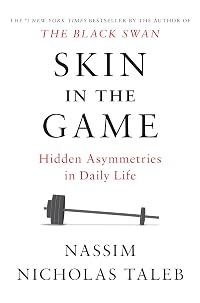
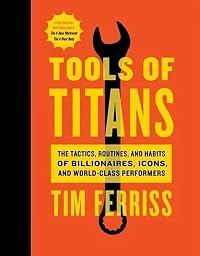


Member Reviews
Most people don’t have bad luck. They have bad thinking.
That’s what The Great Mental Models, Vol. 1 by Shane Parrish quietly exposes.
“Avoiding stupidity is easier than seeking brilliance.”
Read that again.
This book isn’t here to inspire you. It’s here to confront you. Because the uncomfortable truth?
Most of us don’t make decisions—we rationalize them after the fact. We chase short-term wins. We ignore second-order consequences. We repeat the same mistakes with better excuses.
Parrish hands you a set of mental weapons:
1. First Principles Thinking (stop borrowing conclusions)
2. Second-Order Thinking (stop pretending outcomes end where you want them to)
3. Inversion (stop asking how to win; start asking how you’ll show more lose)
“Reality is the ultimate update.”
No spin. No mindset hack will save you from reality.
What makes this book dangerous is its simplicity. You can’t hide behind complexity anymore. Once you see these models, you start noticing your own blind spots everywhere: in money, in relationships, in decisions you thought were “gut instinct.”
And that’s where the real value lies: It doesn’t make you smarter. It makes you harder to fool.
If you read this book and nothing changes, you didn’t read it. You just turned pages. show less
That’s what The Great Mental Models, Vol. 1 by Shane Parrish quietly exposes.
“Avoiding stupidity is easier than seeking brilliance.”
Read that again.
This book isn’t here to inspire you. It’s here to confront you. Because the uncomfortable truth?
Most of us don’t make decisions—we rationalize them after the fact. We chase short-term wins. We ignore second-order consequences. We repeat the same mistakes with better excuses.
Parrish hands you a set of mental weapons:
1. First Principles Thinking (stop borrowing conclusions)
2. Second-Order Thinking (stop pretending outcomes end where you want them to)
3. Inversion (stop asking how to win; start asking how you’ll show more lose)
“Reality is the ultimate update.”
No spin. No mindset hack will save you from reality.
What makes this book dangerous is its simplicity. You can’t hide behind complexity anymore. Once you see these models, you start noticing your own blind spots everywhere: in money, in relationships, in decisions you thought were “gut instinct.”
And that’s where the real value lies: It doesn’t make you smarter. It makes you harder to fool.
If you read this book and nothing changes, you didn’t read it. You just turned pages. show less
My opinion: the mental "models" described aren't models at all for me, but more like processes or decision-making techniques (e.g., Occam's razor or thought experiments). I was expecting frameworks, structures, and the like that are appropriate for various fields like healthcare or personal finance. Maybe I'm being too much of a stickler, but this book wasn't what I expected.
After enjoying the author's podcast and blog, I was excited to read the book. In this case, I read the book as an audiobook. This is a good "mental models 101" introduction. Some of the mental models you will learn: probabilistic thinking, Occam's Razor (favor simple explanations) and Hanlan's Razor (i.e. ""Never attribute to malice that which is adequately explained by stupidity"). I'm curious to see future volumes of the series come out.
So, it's useful information, no doubt. If you haven't heard of the ideas presented in the index of this book, it's a great way to familiarize yourself with them, and has plenty of fun, cerebral anecdotes to get you there.
The problem is that if you know the phrase "mental models", you probably are familiar with the ideas in this book already. The main value isn't in the mental models themselves or having them described, but being able to apply them to real-life situation that you might be facing. I don't know of a technique or way to incorporate these ideas into daily life so that they readily come to mind as you need them (which is sort of the point).
I guess having them described is a good first step, though.
The problem is that if you know the phrase "mental models", you probably are familiar with the ideas in this book already. The main value isn't in the mental models themselves or having them described, but being able to apply them to real-life situation that you might be facing. I don't know of a technique or way to incorporate these ideas into daily life so that they readily come to mind as you need them (which is sort of the point).
I guess having them described is a good first step, though.
I had really high expectations for this book, but it feels like mostly fluff. There were a few generally useful (but obvious or widely known) points about the difference between mental models or maps and reality or territory, but I was expecting something new or at least usefully generalized.
The delivery in the audiobook was also pretty bad, which is ironic since the author is primarily a podcaster.
The delivery in the audiobook was also pretty bad, which is ironic since the author is primarily a podcaster.
Addresses 9 general mental models (ways of thinking). Mainly conceptual with practial examples and some tips. You'll learn:
• 9 proven mental models (or proven thinking tools) to sharpen your thinking and improve decision-making. These include how to: Use frameworks appropriately, know your circle of competence, build from a solid foundation, run thought experiments, consider immediate impact and ripple effects, think in probabilities, think in reverse, apply the Occam’s Razor and Hanlon’s Razor.
• 3 supporting ideas for better reasoning, including: falsifiability, necessity vs sufficiency, and correlation vs causation.
Book summary at: https://readingraphics.com/book-summary-the-great-mental-models-general-thinking...
• 9 proven mental models (or proven thinking tools) to sharpen your thinking and improve decision-making. These include how to: Use frameworks appropriately, know your circle of competence, build from a solid foundation, run thought experiments, consider immediate impact and ripple effects, think in probabilities, think in reverse, apply the Occam’s Razor and Hanlon’s Razor.
• 3 supporting ideas for better reasoning, including: falsifiability, necessity vs sufficiency, and correlation vs causation.
Book summary at: https://readingraphics.com/book-summary-the-great-mental-models-general-thinking...
Ratings
Members
- Recently Added By
Author Information

6 Works 854 Members
Series
Belongs to Publisher Series
Common Knowledge
- Canonical title
- The Great Mental Models, Volume 1: General Thinking Concepts
Classifications
Statistics
- Members
- 464
- Popularity
- 65,528
- Reviews
- 6
- Rating
- (3.76)
- Languages
- English, Spanish
- Media
- Paper, Audiobook, Ebook
- ISBNs
- 7
- ASINs
- 4