On This Page
Description
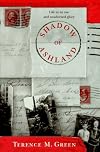
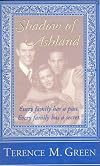
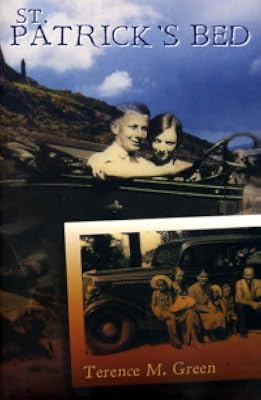
Letters in the mail from his long-dead brother send Leo Nolan on a time-bending journey in this "deceptive novel . . . filled with extraordinary events" (The New York Times). Things have to be settled, or they never go away. Only weeks before she dies in March, 1984, Leo Nolan's mother shows her son a rose she says was just given to her by her brother, Jack, who disappeared 50 years earlier. After her death, letters from Jack begin to arrive at the family home. They are postmarked 1934. show more The final one is from Ashland, Kentucky. Leo heads to Ashland, to track down the source of the letters.... And to find out why they are arriving now, after 50 years. Time shifts. Time runs underground, then surfaces. It is 1934, and Leo experiences the Great Depression and the ghosts of the past as no one has in 50 years, in Ashland, where dreams die and are born again. "A love story, time travel epic, ghost story, labor history, road novel and a bank heist, all with the added touch of Steinbeckian metaphysics. For me it was the surprise of the year, a rich evocation of 1934 small-town Kentucky that winds up completely unpredictable." -The Edmonton Journal, "Top Fiction Pick of the Year" "Green has devised a truly mysterious mystery, he writes with a real and rare sympathy for his characters." -The Atlanta Constitution "A jewel of a novel" -Booklist WORLD FANTASY AWARD FINALIST show lessTags
Recommendations






































Member Reviews
Born from the experience of searching for a missing uncle, this tale starts in the same fashion, and then entwines letters half-a-century old, time travel, the despair of 1930’s unemployment, union organizing, caves, baseball, and the hope of familial connections into a book that reads so much better than I’ve managed to make it sound. From a promise made to his dying mother, Leo follows the trail of his uncle from their home in Toronto as he searches for work heading ever south, eventually staying for some time in Ashland, Kentucky. Leo makes a connection with his Uncle Jack as he experiences some of the same things.
Expecting this to be a family memoir book, I was at first a bit disappointed when encountering the time travel show more component. Though not my preferred cup of tea, I did thoroughly enjoy this particular brew. show less
Expecting this to be a family memoir book, I was at first a bit disappointed when encountering the time travel show more component. Though not my preferred cup of tea, I did thoroughly enjoy this particular brew. show less
Leo, a middle-aged Toronto man, is asked by his dying mother to find out what happened to her brother Jack, from whom she hasn't heard in 50 years. Following the few clues his mother has, and 50-year old letters which begin to arrive regularly, Leo eventually stumbles upon Jack's trail in Ashland, Kentucky, where several people seem to have known him and to recognize Leo himself. Staying in the old hotel room in which Jack lived in 1934, Leo starts to piece together what happened and, in events which bring to mind Field of Dreams, to actually experience some of the tale. Not a thriller, as it might seem, but a graceful story of family and the mystery of time.
Ratings
Members
- Recently Added By
Author Information

9+ Works 373 Members
Awards and Honors
Awards
Series

Common Knowledge
- Original publication date
- 1996
- People/Characters
- Jack Radey; Leo Nolan
- Important places
- Ashland, Kentucky, USA; Toronto, Ontario, Canada
- Important events
- Great Depression
- Epigraph
- Ch. 1: Illusion, Temperament, Succession, Surface, Surprise, Reality, Subjectiveness – these are threads on the loom of time, these are the lords of life. I dare not assume to give their order, but I name them in my way.<... (show all)br>- RALPH WALDO EMERSON
Experience
Ch. 2: . . . our faces marked by toil, by deceptions, by success, by love; our weary eyes looking still, looking always, looking anxiously for something out of life, that while it is expected is already gone . . .
- JOSEP... (show all)H CONRAD
Youth
Ch. 3: So we beat on, boats against the current, borne back ceaselessly into the past.
- F. SCOTT FITZGERALD
The Great Gatsby
Ch. 4: And because they were lonely and perplexed, because they had all come from a place of sadness and worry and defeat, and because they were all going to a new mysterious place, they huddled together; they talked togethe... (show all)r; they shared their lives, their food, and the things they hoped for in the new country.
- JOHN STEINBECK
The Grapes of Wrath
Ch. 5: Look ahead into the past, and back into the future, until the silence.
- MARGARET LAURENCE
The Diviners
Ch. 6: A chill night breeze came whispering down from the depths of the valley, and suddenly the place was full of ghosts – shadows of men alive and dead – my own among them.
- CHARLES NORDHOFF and JAMES NORMAN HALL
Ch. 7: I have an idea that some men are born out of their due place. Accident has cast them amid certain surroundings, but they have always a nostalgia for a home they know not. They are strangers in their birthplace . . .... (show all)
- W. SOMERSET MAUGHAM
The Moon and Sixpence
Ch. 16: They remain shadows . . . shadows whose few remaining words and acts I have invented. Perhaps I only wanted their forgiveness for having forgotten them.
“I remember their deaths, but not their lives. Yet t... (show all)hey’re inside me, flowing unknown in my blood and moving unrecognized in my skull.
- MARGARET LAURENCE
The Diviners
Ch. 17: Writing letters is actually an intercourse with ghosts, and by no means just with the ghost of the addressee but also with one’s own ghost, which secretly evolves inside the letter one is writing.
- FRANZ KAFKA<... (show all)br> Letters to Milena
Ch. 18: Memory is a transcendental function. Its objects may be physical bodies, faces . . . but these are shot with luminosity . . . So though we can’t perceive ‘soul’ or ‘spirit’ firsthand it seems to me that th... (show all)is is precisely the phenomenon we summon back by way of an exercise of memory. And why the exercise of memory at certain times in our lives is almost too powerful to be borne.
- JOYCE CAROL OATES
Facts, Visions, Mysteries: My Father, Frederic Oates - Dedication
- For my brother
Ron
Whom we all miss
Now and Always
1932-1993 - First words
- My mother died on March 14, 1984.
- Quotations
- Time. It was devouring us all, burying us in stratified layers, impervious to archaeological probes.
Her face had lines, but they were good lines, travel lines to places others hadn’t visited. My own face, I knew, was etched with a singular, pre-ordained route.
She walked beside me unselfconsciously. I guessed that she had thickened at the waist in the last five years or so, but her figure was still quite feminine, without attracting attention. I considered my own shape now, aware... (show all) of how my chest had somehow begun to slip toward my beltline of late. I had thinning hair and new creases in my face. We were both, I realized, safely anonymous, and it made me feel comfortable to be with her.
. . . the bouquet of her perfume, mixed with the warm air and California wine, made me want to share some intimacy. I think most men’s brains often work in this simple way.
It isn’t about what people should or shouldn’t do. It’s about what they do or don’t do.
Things have to be settled or they never go away.
Family . . . Woven together with threads of steel. Sometimes the threads bend and twist, and you have to hammer them back into shape. But they don’t tear. They don’t break.
Life, to a great degree, is about loss. Our experience tells us this. We lose our hair, our teeth, our muscle tone, the acuity of our vision, the smoothness of our skin; we lose money, books, pencils, keys, shopping lists, ... (show all)gloves, umbrellas; our cars rust out, neighbors move away, we discard the favorite slippers with the flopping soles. Our hope is that it can be contained to the externals, that the damage to our internal landscape can be minimized. . . .
When my mother died, I lost my youth. There is a sequence that the mind and the soul can accept. It is a form of entropy: the tendency of all things to collapse, given sufficient time. It is when the sequence is disrupted, when that which has not run its normal course and span collapses into disorder, that we feel the steel lance in our hearts, see the vacuum open to swallow us. This happens when youth precedes age into oblivion. It happened when my son did not live. It must have happened when my mother’s little brother disappeared. - Last words
- (Click to show. Warning: May contain spoilers.)Through new tunnels of dark beauty, the light filtering through prisms of mist, wary of precipices and footing, we began the ascent up out of the earth and rock, to new places that we could only know by arriving in them, feeling the warm wind trickling down from the surface ahead of us, just ahead of us.
Classifications
- Genres
- Fiction and Literature, General Fiction, Fantasy, Science Fiction, Historical Fiction
- DDC/MDS
- 813.54 — Literature & rhetoric American literature in English American fiction in English 1900-1999 1945-1999
- LCC
- PR9199.3 .G7574 .S53 — Language and Literature English English Literature English literature: Provincial, local, etc.
- BISAC
Statistics
- Members
- 126
- Popularity
- 259,569
- Reviews
- 2
- Rating
- (3.75)
- Languages
- English
- Media
- Paper, Ebook
- ISBNs
- 9
- ASINs
- 4