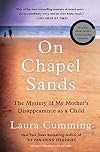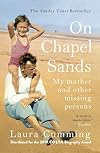
On Chapel Sands: My Mother and Other Missing Persons
by Laura Cumming
On This Page
Description
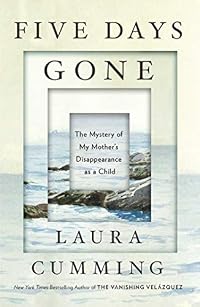
"In the fall of 1929, when Laura Cumming's mother was three years old, she was kidnapped from a beach on the Lincolnshire coast of England. There were no screams when she was taken, suggesting the culprit was someone familiar to her, and when she turned up again in a nearby village several days later, she was found in perfect health and happiness. No one was ever accused of a crime. The incident quickly faded from her memory, and her parents never discussed it. To the contrary, they show more deliberately hid it from her, and she did not learn of it for half a century. This was not the only secret her parents kept from her. For many years, while raising her in draconian isolation and protectiveness, they also hid the fact that she'd been adopted, and that shortly after the kidnapping, her name was changed from Grace to Betty. In Five Days Gone, Laura Cumming brilliantly unspools the tale of her mother's life and unravels the multiple mysteries at its core. Using photographs from the time, historical documents, and works of art, Cumming investigates this case of stolen identity with the toolset of a detective and the unique intimacy of a daughter trying to understand her family's past and its legacies. Compulsive, vivid, and profoundly touching, Five Days Gone is a masterful blend of memoir and history, an extraordinary personal narrative unlike any other."--Amazon show lessTags
Recommendations
























Member Reviews
“Life reproves the imagination: look closer.” So Cummings does. This is the story of her mother, who was inexplicably kidnapped from the beach, aged three, and safely recovered twelve days later. However, it's not a straightforward narrative, beginning at her birth and ending in her old age, and progressing through schooldays, marriage, adult life. For Betty (Laura Cummings' mother), life was something of a mystery, posing unanswered questions which Laura painstakingly unpicks, but not necessarily in date order. Her first point of reference is that adored mother Betty, and her own brief memoir. But there are the villagers from the community where Betty was brought up, and the secrets they kept. There are legal documents. There are show more photographs. And there is Laura's own willingness not to take what she finds out at face value. Her references to the work of artists whom she feels illuminate her story, either by referencing Betty's own home landscape, or by having something to say about the kind of community in which she lived - Brueghel's 'The Fall of Icarus' - are the jewels of this book, enriching and bringing colour to an already involving story. The passages examining Betty's father George's photographic portrait of her mother Veda are among the most memorable in the book.
Finally, Laura's recognition that people are nor simply heroes or villains (though her mother remains her hero) brings the book to a thought provoking conclusion. Baddies turn out to have their redeeming features. Goodies keep silent. Humans are complicated. This is a book that may stay with you once you have turned the last page. show less
Finally, Laura's recognition that people are nor simply heroes or villains (though her mother remains her hero) brings the book to a thought provoking conclusion. Baddies turn out to have their redeeming features. Goodies keep silent. Humans are complicated. This is a book that may stay with you once you have turned the last page. show less
As a family historian and infrequent contributor to the blog Sepia Saturday, the premise of this book intrigued me. And there was an Australian connection too; always a bonus.
The author's professional background as an art critic helps her address her perceived bias when it comes to judging ancestors' motives or attitudes as the story of her mother's "adoption" develops. As well as employing traditional family historian methods of research (looking up census records, parish records, reading newspapers and local histories), Cumming studies, and I mean really studies, the tiny photos in her mother's snapshot album. She looks at the poses, the arrangements and the attitudes of those photographed and, from time to time, very helpfully, show more compares them to her analysis of family portraits in art e.g. Degas and Ghirlandaio. She views and most importantly re-views them in the light of new information. She thinks about the photographer, who controls the framing and why the photo is taken, as well as the attitude of their subjects all in the context of the time. There are some lovely thoughtful lines in this book. I particularly liked "...perhaps experience develops into memory like a photograph, its latent imprint invisible to us until gradually fixed by conversation." I polished this book off in a day and am now compelled to pass it on to my father. He demonstrated great maturity and restraint in not snatching it out of my hands yesterday when I showed it to him. My only regrets as far as this book are concerned are that the images aren't clearer, that we live so far away from the places and the people concerned and that my mother didn't get to read it. show less
The author's professional background as an art critic helps her address her perceived bias when it comes to judging ancestors' motives or attitudes as the story of her mother's "adoption" develops. As well as employing traditional family historian methods of research (looking up census records, parish records, reading newspapers and local histories), Cumming studies, and I mean really studies, the tiny photos in her mother's snapshot album. She looks at the poses, the arrangements and the attitudes of those photographed and, from time to time, very helpfully, show more compares them to her analysis of family portraits in art e.g. Degas and Ghirlandaio. She views and most importantly re-views them in the light of new information. She thinks about the photographer, who controls the framing and why the photo is taken, as well as the attitude of their subjects all in the context of the time. There are some lovely thoughtful lines in this book. I particularly liked "...perhaps experience develops into memory like a photograph, its latent imprint invisible to us until gradually fixed by conversation." I polished this book off in a day and am now compelled to pass it on to my father. He demonstrated great maturity and restraint in not snatching it out of my hands yesterday when I showed it to him. My only regrets as far as this book are concerned are that the images aren't clearer, that we live so far away from the places and the people concerned and that my mother didn't get to read it. show less
This starts with a family photograph album. The pictures are mainly of young Betty, between the ages of 3 and 13. Taken by her father, they start as suddenly as they stop. What stories are they telling. More intriguingly, what is not being told or is being obscured behind the happy face. And what is the last photo in the album doing, with the child identified with another name, Grace, not Betty. All families have their secrets, some of them are told and some are not. In this case, there is a big secret, layered with other secrets and few people are telling.
Laura Cummings writes of her mother's childhood. Betty is the child in the photographs, and we trace Betty's life from her earliest memories to her teens. At its basic level, George show more and Veda are 49 when Betty comes to live with them. They bring her up and see her go to school, then grammar school, then to the post office and finally to art school. We hear a lot about the restrictions that are imposed on her life and strange incidents where certain people are no longer to be welcomed or accepted as friends. The odd incidents, such as the bakers' boy delivering to all of the row except theirs and the woman on the bus saying she had a grandmother who missed her all act as pointers to something not being quite normal. This way Betty finds out of her adoption, as a teenager - probably the worst time to be unmoored like that. Part of this is from Betty's own memoir, some of it seems to have been imagined. We cannot, at this remove, possibly know what George's thoughts or feelings were and to try and imagine them feels, to me, to be a fruitless exercise. The story progresses in an approximately linear manner, with Betty's childhood being laid out in the photographs and the setting she was in. It is interspersed with the efforts that she and the family made to find out things like her father's name and the circumstances of her adoption. The kidnapping, which Betty knew nothing of, is only examined at the end, alongside the present, when Betty meets her half siblings.
I felt that, at times, the author had a preconceived set of ideas about her mother's parents, including how they should have behaved and what they should have felt. These were clearly coloured by current expectations of families and their behaviour. It was a different time, with different social mores and to apply a modern sensibility to people of the past feels unfair to all concerned. I also felt that there was a mismatch between the author's feelings about the grandmother she knew and the way that she perceived that the same person had behaved to her mother. I also felt that the feelings of her grandmother on taking in the child of her husband and another woman were complex and yet were not really explored. It seemed that George was being painted as the villain of the piece and yet it turned out to be rather more complicated than that. The final photograph that is examined changes the picture extensively.
This is a valiant attempt to explore a past that is no longer accessible, those involved are mostly dead, though some on the periphery of the story survive. After decades of silence, they open up. It feels to me that the author wants more than this and regrets the delay in the finding out. Some remained silent until those involved had passed, the absence freeing them from a loyalty that is understandable from their perspective, while being frustrating from the other side.
I listened to this, I wonder if the written text included more in the way of visual materials, the photos, a map of the village and locality. If so, then I would suggest that might be a slightly more fulfilling read. The landscape was most evocatively described, I could almost smell the sea and see the beech stretching for miles. show less
Laura Cummings writes of her mother's childhood. Betty is the child in the photographs, and we trace Betty's life from her earliest memories to her teens. At its basic level, George show more and Veda are 49 when Betty comes to live with them. They bring her up and see her go to school, then grammar school, then to the post office and finally to art school. We hear a lot about the restrictions that are imposed on her life and strange incidents where certain people are no longer to be welcomed or accepted as friends. The odd incidents, such as the bakers' boy delivering to all of the row except theirs and the woman on the bus saying she had a grandmother who missed her all act as pointers to something not being quite normal. This way Betty finds out of her adoption, as a teenager - probably the worst time to be unmoored like that. Part of this is from Betty's own memoir, some of it seems to have been imagined. We cannot, at this remove, possibly know what George's thoughts or feelings were and to try and imagine them feels, to me, to be a fruitless exercise. The story progresses in an approximately linear manner, with Betty's childhood being laid out in the photographs and the setting she was in. It is interspersed with the efforts that she and the family made to find out things like her father's name and the circumstances of her adoption. The kidnapping, which Betty knew nothing of, is only examined at the end, alongside the present, when Betty meets her half siblings.
I felt that, at times, the author had a preconceived set of ideas about her mother's parents, including how they should have behaved and what they should have felt. These were clearly coloured by current expectations of families and their behaviour. It was a different time, with different social mores and to apply a modern sensibility to people of the past feels unfair to all concerned. I also felt that there was a mismatch between the author's feelings about the grandmother she knew and the way that she perceived that the same person had behaved to her mother. I also felt that the feelings of her grandmother on taking in the child of her husband and another woman were complex and yet were not really explored. It seemed that George was being painted as the villain of the piece and yet it turned out to be rather more complicated than that. The final photograph that is examined changes the picture extensively.
This is a valiant attempt to explore a past that is no longer accessible, those involved are mostly dead, though some on the periphery of the story survive. After decades of silence, they open up. It feels to me that the author wants more than this and regrets the delay in the finding out. Some remained silent until those involved had passed, the absence freeing them from a loyalty that is understandable from their perspective, while being frustrating from the other side.
I listened to this, I wonder if the written text included more in the way of visual materials, the photos, a map of the village and locality. If so, then I would suggest that might be a slightly more fulfilling read. The landscape was most evocatively described, I could almost smell the sea and see the beech stretching for miles. show less
This account of the uncovering of the past that was hidden to the author’s mother for much of her life has been much lauded, and I can only add to the chorus of praise. I loved the writing, the delicate unraveling of the mystery, the importance given to images, and the illumination of love between mothers and daughters.
On an autumn evening in 1929, three year-old Betty Elston was taken from a Lincolnshire beach. Her mother, Veda, was close at hand as her daughter played happily on Chapel Sands, but her attention wandered, she looked away, and when she looked back the child had vanished.
Her father, George, a travelling salesman, was called home; the police were summoned; but a few days later, the little girl was found safe and well in show more a nearby village, completely unharmed but dressed in a brand new set of clothes. She was restored to her parents, her memory of what had happened would fade away, and her life would go on.
It was a strange, and often unhappy, life for young Betty. Her parents kept her close, barely letting her mix with other children, and they held themselves apart from their neighbours, only keeping in touch with a few old friends.
You might think that they were being over- protective after what had happened; but if that was the case why did there daughter feel no warmth from them, and why did she hear no words of love and care, not even one single word of reassurance after a strange encounter led her her father to tell her that she had been adopted?
Betty eventually escapes from the confines of her life, to art college in the distant city of Edinburgh; where she will build a new life, as an artist, as a wife, and as mother.
Laura Cumming is Betty Elson’s daughter, and as she grew up she came to realise that her mother never spoke about her own childhood. When Elizabeth (who modified her name, as she had always hated being called Betty) asked what she would most like for her 21st birthday, Laura answered the tale of her mother’s early life.
The mother wrote:
Because you have asked me, dear daughter, here are my earliest recollections. It is an English domestic genre canvas of the 1920s and 1930s, layered over with decades of fading and darkening, but your curiosity has begun to make all glow a little. And perhaps a few figures and events may turn out to be restored through the telling.
And the daughter noted:
This memoir is short, ending with her teenage years, but its writing carries so much of her grace, her truthful eloquence and witness, her artist’s way of looking at the world.
That was the beginning of the journey that is recorded in this book, a journey that Laura Cumming made in the hope of filling in the gaps in her mother’s memory and allowing them both to understand why her early life played out as it did.
I was captivated by her voice, which was intelligent, warm and compassionate.
I loved the way that she used words to paint vivid pictures of her mother and the world that spun around her; and the way that she scrutinised images – both paintings and photographs from the family album – and gained understanding of both the subject and the creator.
The mystery that unravels is cleverly structured and the revelations are judged and timed perfectly. Some are unsurprising but others made me stop and re-evaluate what I knew and what I thought I knew. It reveals a remarkable human story, aspects of which I know will resonate with many readers, and firmly rooted in its place and time.
The arc of the story is relatively simple, but this is not a book to read just to learn the story, it is a book to read to appreciate all of the things that are threaded through that story.
There is very real social history; there is a willingness to learn and to understand; and there is exactly the right amount of restraint – lives and families and communities are illuminated but there is no intrusion and no assumption about things that could not be known.
There is a wonderful appreciation of the depth and complexity of family love; and it the loveliest of tributes from a daughter to a mother.
I’m trying not to say too much, because I was told more that I wanted to know about this book before I started to read.
And so I will simply finish by saying that this book is beautiful, moving and profound. show less
On an autumn evening in 1929, three year-old Betty Elston was taken from a Lincolnshire beach. Her mother, Veda, was close at hand as her daughter played happily on Chapel Sands, but her attention wandered, she looked away, and when she looked back the child had vanished.
Her father, George, a travelling salesman, was called home; the police were summoned; but a few days later, the little girl was found safe and well in show more a nearby village, completely unharmed but dressed in a brand new set of clothes. She was restored to her parents, her memory of what had happened would fade away, and her life would go on.
It was a strange, and often unhappy, life for young Betty. Her parents kept her close, barely letting her mix with other children, and they held themselves apart from their neighbours, only keeping in touch with a few old friends.
You might think that they were being over- protective after what had happened; but if that was the case why did there daughter feel no warmth from them, and why did she hear no words of love and care, not even one single word of reassurance after a strange encounter led her her father to tell her that she had been adopted?
Betty eventually escapes from the confines of her life, to art college in the distant city of Edinburgh; where she will build a new life, as an artist, as a wife, and as mother.
Laura Cumming is Betty Elson’s daughter, and as she grew up she came to realise that her mother never spoke about her own childhood. When Elizabeth (who modified her name, as she had always hated being called Betty) asked what she would most like for her 21st birthday, Laura answered the tale of her mother’s early life.
The mother wrote:
Because you have asked me, dear daughter, here are my earliest recollections. It is an English domestic genre canvas of the 1920s and 1930s, layered over with decades of fading and darkening, but your curiosity has begun to make all glow a little. And perhaps a few figures and events may turn out to be restored through the telling.
And the daughter noted:
This memoir is short, ending with her teenage years, but its writing carries so much of her grace, her truthful eloquence and witness, her artist’s way of looking at the world.
That was the beginning of the journey that is recorded in this book, a journey that Laura Cumming made in the hope of filling in the gaps in her mother’s memory and allowing them both to understand why her early life played out as it did.
I was captivated by her voice, which was intelligent, warm and compassionate.
I loved the way that she used words to paint vivid pictures of her mother and the world that spun around her; and the way that she scrutinised images – both paintings and photographs from the family album – and gained understanding of both the subject and the creator.
The mystery that unravels is cleverly structured and the revelations are judged and timed perfectly. Some are unsurprising but others made me stop and re-evaluate what I knew and what I thought I knew. It reveals a remarkable human story, aspects of which I know will resonate with many readers, and firmly rooted in its place and time.
The arc of the story is relatively simple, but this is not a book to read just to learn the story, it is a book to read to appreciate all of the things that are threaded through that story.
There is very real social history; there is a willingness to learn and to understand; and there is exactly the right amount of restraint – lives and families and communities are illuminated but there is no intrusion and no assumption about things that could not be known.
There is a wonderful appreciation of the depth and complexity of family love; and it the loveliest of tributes from a daughter to a mother.
I’m trying not to say too much, because I was told more that I wanted to know about this book before I started to read.
And so I will simply finish by saying that this book is beautiful, moving and profound. show less
An unusual biography of the author’s mother, her extremely strict parents as she grew up in rural Lincolnshire, and the search for her full story.
Like a detective story, the secrets are gradually revealed and guesses at the protagonists thoughts and motives are made.
As the author is an art critic, there is telling analysis of a few photos from the family album, and imaginative use of paintings to, perhaps, help explain neighbours’ approach and attitudes to what had happened.
Like a detective story, the secrets are gradually revealed and guesses at the protagonists thoughts and motives are made.
As the author is an art critic, there is telling analysis of a few photos from the family album, and imaginative use of paintings to, perhaps, help explain neighbours’ approach and attitudes to what had happened.
Laura Cumming uses family photos to anchor this novel-like investigation into the early life of her mother in a small coastal hamlet in Lincolnshire, and the slightly mysterious circumstances surrounding her adoption.
The “mystery” trailed in the opening chapter is one of those that ceases to be very mysterious as soon as it is stated, so you’re not really going to be turning the pages in a state of suspense, but that isn’t all that important really, what’s interesting here is the way Cumming (with her mother’s off-stage help) manages to convey something of what life was like in such a village eighty years ago, as well as the peculiarly English passion for family silences about important topics. In this case, everyone in two show more villages seems to have known all about who the mother’s biological parents were, but not a soul was prepared to tell her, even many years later. My father, of the same generation as Cumming’s mother, read this as well and tells me that she really puts her finger on what these family silences feel like, and the pain that so often goes with them.
Not always as lean and to the point as it might be, but quite rewarding, especially in the way it shows us how to draw meaning from the photos. show less
The “mystery” trailed in the opening chapter is one of those that ceases to be very mysterious as soon as it is stated, so you’re not really going to be turning the pages in a state of suspense, but that isn’t all that important really, what’s interesting here is the way Cumming (with her mother’s off-stage help) manages to convey something of what life was like in such a village eighty years ago, as well as the peculiarly English passion for family silences about important topics. In this case, everyone in two show more villages seems to have known all about who the mother’s biological parents were, but not a soul was prepared to tell her, even many years later. My father, of the same generation as Cumming’s mother, read this as well and tells me that she really puts her finger on what these family silences feel like, and the pain that so often goes with them.
Not always as lean and to the point as it might be, but quite rewarding, especially in the way it shows us how to draw meaning from the photos. show less
I loved this book. That being said, it's not exactly what it says on the tin. Instead of an account of the child's disappearance, with some context before and some wrapping up after the event, it is instead a memoir of the early years of the author's mother, focusing on how her life was shaped by the domineering father and the repressive silence on all things personal in that family. There is much talk of art, which is fitting for the memoir of a woman who grows up to be an artist and also marry an artist, and much talk of Tennyson, which felt less fitting and I mostly skimmed over any lengthy bits about him. So the kidnapping is in the title, and it is certainly a crucial, defining event in the memoir, but it is not the focus of the show more book; the book is so much more, and it is so much better because of it. show less
Members
- Recently Added By
Lists

Top Five Books of 2020
982 works; 348 members

Books Read in 2020
4,379 works; 124 members

Club Read's Recommended Nonfiction Written by Women
618 works; 30 members
Author Information

5 Works 1,124 Members
Laura Cumming has been the art critic of the Observer since 1999. She has contributed to the London Evening Standard, the Guardian, and Vogue. Her book The Vanishing Velquez was longlisted for the Baillie Gifford Prize and was a New York Times bestseller. She lives in London.
Awards and Honors
Awards
Distinctions
The Guardian Book of the Day (2019-06-26)
Common Knowledge
- Canonical title
- On Chapel Sands: My Mother and Other Missing Persons
- Alternate titles
- Five Days Gone: The Mystery of My Mother's Disappearance as a Child
- Original publication date
- 2019
- Important places
- Lincolnshire, England, UK; Chapel St. Leonards, Lincolnshire, England
Classifications
- Genres
- Biography & Memoir, Nonfiction, General Nonfiction
- DDC/MDS
- 362.8297092 — Social sciences Social problems and social services Social problems of and services to groups of people Problems of and services to other groups Families Specific problems
- LCC
- HV6604 .G72 .E47 — Social sciences Social pathology. Social and public welfare. Criminology Social pathology. Social and public welfare. Criminology Crimes and offenses
- BISAC
Statistics
- Members
- 359
- Popularity
- 87,267
- Reviews
- 14
- Rating
- (3.66)
- Languages
- English
- Media
- Paper, Audiobook, Ebook
- ISBNs
- 13
- ASINs
- 6