The Emperor of Scent: A True Story of Perfume and Obsession
by Chandler Burr
On This Page
Description
This true story profiles a scientific genius with eerie powers of smell who uses his gifts to solve one of the body's last secrets: how the nose works.Tags
Recommendations


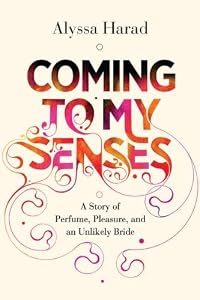
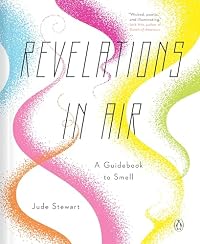
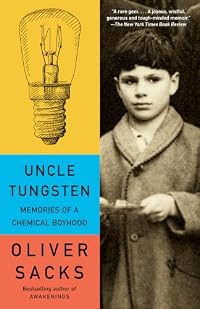
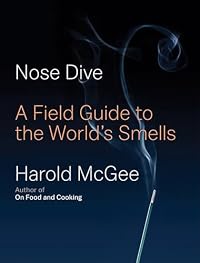




Member Reviews
The Emperor of Scent was the first big surprise of my reading year, and a good reminder not to judge books by their covers. It sat on my TBR shelf for years, always looking like something that was kind of lackluster but ultimately informative. Perfume? Who cares. And the science of smell? Boring, sure to have all this intense neurobiology stuff, eych. Why my dad thought to pass it on to me was a mystery but one does not say no to free books in this household. 😅
But then, last week, I was in the mood for something informative and serious to balance out rom-coms and fantasies and this was the only thing on hand that looked like it would fit the bill (or at least, the most interesting of the options). Turns out, my dad knows my taste and show more Chandler Burr can write.
This is, at the core, a character study of a scientist, Luca Turin. He’s brilliant, a bit of a mad scientist, an information sponge, an out-of-the-box thinker, focused but also all over the place, pithy, irascible, collects perfumes as a hobby. It’s also about chance and coincidence and creativity; about the scientific process and close-mindedness and ego; and about a theory of smell that relies on physics and counters the established knowledge.
And the writing? Burr matches Turin’s tone and manner with an equal vim and his prose is full of pell-mell sentences, pithy turns of phrase, and fascination. He’s aware he’s telling a story and he’s going to tell it right. (You know those long-form journalism pieces that take a deep dive into something really weird, or those Tumblr textposts about the zaniness of everyday life? That’s the vibe.)
There is chemistry and biology and physics, right down to formulas and illustrations and long molecular names. Burr makes sure to explain the basics and work up—what is a molecule? how does quantum mechanics work?—so that when the complicated stuff shows up, the reader can follow it, but he never goes further into detail than needed. It’s enough to say that a certain chemical exists or a certain machine does a thing. He does the same thing with the perfume industry and whatever other tangents the story goes on.
In short, I really enjoyed reading this. The story was a ride, the writing was great, I learned a bunch, and of the two books I was reading, this was the one I was most eager to get back to. I’m invested in Turin’s theory and there’s so much more to chemistry than I imagined. (Molecules are wild and the people who study them, possibly wilder.) The book is almost 20 years old though, so the science might be outdated now, I don’t know, but also, I don’t really care because I had so much fun reading this. show less
But then, last week, I was in the mood for something informative and serious to balance out rom-coms and fantasies and this was the only thing on hand that looked like it would fit the bill (or at least, the most interesting of the options). Turns out, my dad knows my taste and show more Chandler Burr can write.
This is, at the core, a character study of a scientist, Luca Turin. He’s brilliant, a bit of a mad scientist, an information sponge, an out-of-the-box thinker, focused but also all over the place, pithy, irascible, collects perfumes as a hobby. It’s also about chance and coincidence and creativity; about the scientific process and close-mindedness and ego; and about a theory of smell that relies on physics and counters the established knowledge.
And the writing? Burr matches Turin’s tone and manner with an equal vim and his prose is full of pell-mell sentences, pithy turns of phrase, and fascination. He’s aware he’s telling a story and he’s going to tell it right. (You know those long-form journalism pieces that take a deep dive into something really weird, or those Tumblr textposts about the zaniness of everyday life? That’s the vibe.)
There is chemistry and biology and physics, right down to formulas and illustrations and long molecular names. Burr makes sure to explain the basics and work up—what is a molecule? how does quantum mechanics work?—so that when the complicated stuff shows up, the reader can follow it, but he never goes further into detail than needed. It’s enough to say that a certain chemical exists or a certain machine does a thing. He does the same thing with the perfume industry and whatever other tangents the story goes on.
In short, I really enjoyed reading this. The story was a ride, the writing was great, I learned a bunch, and of the two books I was reading, this was the one I was most eager to get back to. I’m invested in Turin’s theory and there’s so much more to chemistry than I imagined. (Molecules are wild and the people who study them, possibly wilder.) The book is almost 20 years old though, so the science might be outdated now, I don’t know, but also, I don’t really care because I had so much fun reading this. show less
Part physics, part biology, part chemistry, but first and foremost a very well written biography of Turin and his quest for recognition of his theory of smell according to which smell is detected through molecular vibrations. His theory contradicts the well
established theory of smell as detection of the shape of molecules.
The book is not only about the theory itself, but about the reception of it among other scientists, and about how much the process of scientific investigation can fail, since it so much based on human prejudices and vested interests.
In Burr's words,
'I began this book as a simple story of creation of a scientific
theory. But, I continued it with the growing awareness that it was,
in fact, a larger, more complex story of show more scientific corruption,
corruption in the most mundane and systemic and virulent and sadly
human sense of jealousy and calcified minds and vested interests.
That it was a scientific morality tale.' show less
established theory of smell as detection of the shape of molecules.
The book is not only about the theory itself, but about the reception of it among other scientists, and about how much the process of scientific investigation can fail, since it so much based on human prejudices and vested interests.
In Burr's words,
'I began this book as a simple story of creation of a scientific
theory. But, I continued it with the growing awareness that it was,
in fact, a larger, more complex story of show more scientific corruption,
corruption in the most mundane and systemic and virulent and sadly
human sense of jealousy and calcified minds and vested interests.
That it was a scientific morality tale.' show less
This the story of a polymath scientist who connected his knowledge of biology, chemistry and physics, his appreciation for scent, and expressive writing skills. The result, driven by innate curiosity, was an updated theory about humans smell. Chandler's writing is clear and enjoyable, as are the masterful excerpts by the scientist turned perfume guide author. The prose is excellent and the story captivating, but more than anything, what it conveys is a disappointing mindset of established scientists. Luca Turin's vibration theory of smell is controversial. New theories are. It's disappointing that so many scientists held onto their own established thinking rather than even being open to contrary possibilities. For some, a lifetime show more invested in one paradigm makes it a religion rather than science. Fortunately, science rests on reality and the scientific method on a logical process. Many of the leading scientists mentioned in this book let their profession down, but the story itself gives hope. show less
Okay, wow. I absolutely loved this book. It had a little something for every part of me that wants something different in a book: there was science, real honest-to-God science, for the snobby intellectual , there was scandal and affrontery for the secret scandalmonger, there was talk of perfumery and the haute couture houses for the girly fashionista, there was exploration of research, development, and business decisions for the pragmatist, there was skewering of the peer-review process for the academician, and there was even a delightfully described trip to India for the travel-lover. And of course, the ever-successful frame of finding oneself rooting for the underdog is all throughout.
I'm kindof in love with this book, in short. It show more was interesting for so many different reaons; I learned a TON, and really enjoyed myself doing it. There are serious things to think about afterwards, but also fun little factoids to tuck away for future reference... and I personally was also left with an urge to seek out some particularly lauded perfumes and smell them for myself. :)
One of my favorite random passages, describing the demands made of the chemists and perfume designers: "'We want the smell of old melting candles in ballrooms of Italian marble during a Chinese winter,' 'Give us the fragrance surrendered by a young blue flower crushed under the heated, ivory back of a woman with chocolate eyes,' 'We must have the scent lightning makes the instant it strikes a platinum rose.'" show less
I'm kindof in love with this book, in short. It show more was interesting for so many different reaons; I learned a TON, and really enjoyed myself doing it. There are serious things to think about afterwards, but also fun little factoids to tuck away for future reference... and I personally was also left with an urge to seek out some particularly lauded perfumes and smell them for myself. :)
One of my favorite random passages, describing the demands made of the chemists and perfume designers: "'We want the smell of old melting candles in ballrooms of Italian marble during a Chinese winter,' 'Give us the fragrance surrendered by a young blue flower crushed under the heated, ivory back of a woman with chocolate eyes,' 'We must have the scent lightning makes the instant it strikes a platinum rose.'" show less
Here we sit at the dawn of the 21st century. Science has figured out the basics and is now just working on the details, right? Would it surprise you to learn that, in this day and age, we have no idea how smell works? The accepted theory is that smell works when receptors in the nose recognize the shape of a molecule. However, even dedicated Shapists recognize that this doesn’t happen all the time. The Emperor of Scent is the story of Luca Turin, a biologist who has proposed a radical new theory for how smell works. Turin believes that receptors in the nose recognize vibrations, just like the eyes and ears do. Turin’s Vibrational theory neatly sidesteps all of the problems associated with the Shape theory. If true, Turin’s theory show more would revolutionize the perfume industry. The Emperor of Scent is also the story of how the scientific community has reacted to Turin’s theory, and it’s a fascinating tale of luck, greed, and arrogance.
The first ¾ of the book is fascinating, because if Turin had not had such varied interests, he never would have gathered all of the little tidbits of information that allowed him to make his theoretical leap. If he had never been fascinated by perfume as a child, he would not have caught the attention of the secretive perfume industry which allowed him access to their laboratories. If he was able to stay focused on whatever project was at hand, he wouldn’t have started reading a journal that was outside of his professional purview and would have missed the article about how electron tunneling works. If he were easily cowed, he would have given up on his theory when all of the experts in his field denounced it repeatedly. The book would be compelling reading if it stopped here, but it doesn’t.
At this point in the book, the author weighs in with a chapter. Burr understands that books like this are supposed to be more balanced, presenting opposing viewpoints to give the audience some perspective on his subject. He explains that he would happily do so if those holding the opposing viewpoints would bother to reply to phone calls or email. Even more interestingly, those who do reply dismiss Turin’s theory out of hand. When pressed about specific points in the paper, they admit they haven’t read it, and seem offended that Burr expects them to. We tend to think of scientists as being above this sort of petty and juvenile behavior, but Burr pulls back the curtain and gives us a glimpse of the Wizard in his true form, and you can’t look away.
The last section of the book details Turin’s appearance at a conference where he presents his theory to some of the giants in his field. The reception is polite, but not spectacular. Some of the top scientists in the field do question Turin, and he responds to their points with a charming mixture of exuberance and exasperation. This is where the imbalance of the book is most glaring. Those who don’t accept the theory, it is implied, are either unwilling or unable to see the truth. It’s all very convincing, but perhaps a bit too convincing. You end up wishing that Turin would run up against someone as smart and stubborn as he is so you could see a real debate on the merits of Turin’s theory.
Is Turin’s theory legitimate? Has he cracked the riddle of how smell? Is his science up to snuff? I don’t know. I’m a bookseller, not a scientist. But Burr does an excellent job of making the science behind Turin’s theory make sense to someone with no scientific background while still maintaining the flow of the story. From the information we’re given, it certainly seems like Turin is onto something. Would the book have benefited from more balance? Certainly. Should Burr have given up on the book when Turin’s detractors refused to cooperate? Certainly not; it’s too much fun to be missed. The Emperor of Scent is a book much like its protagonist: sharp, smart, unconventional, pugnacious, and entertaining.
show less
The first ¾ of the book is fascinating, because if Turin had not had such varied interests, he never would have gathered all of the little tidbits of information that allowed him to make his theoretical leap. If he had never been fascinated by perfume as a child, he would not have caught the attention of the secretive perfume industry which allowed him access to their laboratories. If he was able to stay focused on whatever project was at hand, he wouldn’t have started reading a journal that was outside of his professional purview and would have missed the article about how electron tunneling works. If he were easily cowed, he would have given up on his theory when all of the experts in his field denounced it repeatedly. The book would be compelling reading if it stopped here, but it doesn’t.
At this point in the book, the author weighs in with a chapter. Burr understands that books like this are supposed to be more balanced, presenting opposing viewpoints to give the audience some perspective on his subject. He explains that he would happily do so if those holding the opposing viewpoints would bother to reply to phone calls or email. Even more interestingly, those who do reply dismiss Turin’s theory out of hand. When pressed about specific points in the paper, they admit they haven’t read it, and seem offended that Burr expects them to. We tend to think of scientists as being above this sort of petty and juvenile behavior, but Burr pulls back the curtain and gives us a glimpse of the Wizard in his true form, and you can’t look away.
The last section of the book details Turin’s appearance at a conference where he presents his theory to some of the giants in his field. The reception is polite, but not spectacular. Some of the top scientists in the field do question Turin, and he responds to their points with a charming mixture of exuberance and exasperation. This is where the imbalance of the book is most glaring. Those who don’t accept the theory, it is implied, are either unwilling or unable to see the truth. It’s all very convincing, but perhaps a bit too convincing. You end up wishing that Turin would run up against someone as smart and stubborn as he is so you could see a real debate on the merits of Turin’s theory.
Is Turin’s theory legitimate? Has he cracked the riddle of how smell? Is his science up to snuff? I don’t know. I’m a bookseller, not a scientist. But Burr does an excellent job of making the science behind Turin’s theory make sense to someone with no scientific background while still maintaining the flow of the story. From the information we’re given, it certainly seems like Turin is onto something. Would the book have benefited from more balance? Certainly. Should Burr have given up on the book when Turin’s detractors refused to cooperate? Certainly not; it’s too much fun to be missed. The Emperor of Scent is a book much like its protagonist: sharp, smart, unconventional, pugnacious, and entertaining.
show less
This books is for the most part about this eccentric scientist and his obsession with his nose. The main person in the story is Luca Turin who in fact is highly respected in the perfume industry for his nose and his ability to describe smells in a unique way. In fact at times he can be scathing, witty, and downright pretentious with just a few well placed words. Many times when you read his reviews of perfumes peppered throughout the book the smells are so verbally described I wanted to rush to the nearest cosmetic counter to catch a hint of what he smells. Instead i recall bumping into a friend recently taking in her scent as we embraced. I remarked to her you smell marvelous. She giggled," I rememberd to bathe today. It always comes show more in handy." With a mischevious smile.
The book is quite possibly the funniest science book i have ever read as you walk through the discovery process of a man who has changed the way people think and process the idea of smell across the world. The only problem is that with a idea so big and grand, almost no one believes him. He faces obstacle after obstacle just to get people to pay attention. When he does often as not he is completely ignored to simply put off as a madman. Which honestly from the way the book is written is not far off the mark. One of the funniest parts of the book ambushing people in hallways and offices as he thrusts things under the noses with a mad gleam in his eye. The only question coming out of his mouth. " What does it smell like?" Sufficient to say more than one scientist is timid and scarred from these encounters. At least i would be the same way if everyday a giant bird man thrusted vials of unknown chemicals in your face all day.
Yet the book is a fascinating journey through the various experiments and research involved in the process of creating a new idea. Essentially the book rides as a shining example of the trial and error of science as we know it today. Complete with rivarlies, deception, ignorance, and fear that make this book a joy to read. One day after trial and error and some acceptance who know his idea of smell may revolutionize this aspect of science for decades to come. Now it sits under heavy debate as scientist poke, prod, and sometimes ignore this theory. Highly recommended reading for those who love walking into a spice shop and the nerdy people who need a good book show less
The book is quite possibly the funniest science book i have ever read as you walk through the discovery process of a man who has changed the way people think and process the idea of smell across the world. The only problem is that with a idea so big and grand, almost no one believes him. He faces obstacle after obstacle just to get people to pay attention. When he does often as not he is completely ignored to simply put off as a madman. Which honestly from the way the book is written is not far off the mark. One of the funniest parts of the book ambushing people in hallways and offices as he thrusts things under the noses with a mad gleam in his eye. The only question coming out of his mouth. " What does it smell like?" Sufficient to say more than one scientist is timid and scarred from these encounters. At least i would be the same way if everyday a giant bird man thrusted vials of unknown chemicals in your face all day.
Yet the book is a fascinating journey through the various experiments and research involved in the process of creating a new idea. Essentially the book rides as a shining example of the trial and error of science as we know it today. Complete with rivarlies, deception, ignorance, and fear that make this book a joy to read. One day after trial and error and some acceptance who know his idea of smell may revolutionize this aspect of science for decades to come. Now it sits under heavy debate as scientist poke, prod, and sometimes ignore this theory. Highly recommended reading for those who love walking into a spice shop and the nerdy people who need a good book show less
A gripping story - I finished it in a couple of days, almost un-putdownable. Some of the science simplifications are a tad dodgy (titanium is bulletproof?) but by and large those don't detract from the high drama. The value to me apart from Turin's very attractive theory, is the way resentment for the person corrupts the 'reasons' why various establishment people don't accept his work. I couldn't resist chuckling at the fact that almost all the negative comments about Turin's theory arise from people who 'don't have the time' to read his paper. But most memorable of all was the way a researcher from Leceister Uni refused to consider it 'because there's a history involved'. Talk about 'shooting the messenger'! For all those who think show more science is pure science and personalities don't get involved, read this... on second thoughts no, you won't have time ;-) Thomas Kuhn, eat your heart out... show less
Members
- Recently Added By
Author Information

9+ Works 1,308 Members
Awards and Honors
Awards
Common Knowledge
- Canonical title*
- L'imperatore del profumo
- Original publication date
- 2002
- People/Characters
- Luca Turin
- Dedication
- This one is to my family.
Devon, Nancy, Ralph and Ginny,
Marjorie, and David. - First words
- Start with the deepest mystery of smell. No one knows how we do it.
- Quotations
- "Chemical Senses" received the paper on July 31, 1996. Steve van Toller published "A Spectroscopic Mechanism for Primary Olfactory Reception" on September 30.
- Last words
- (Click to show. Warning: May contain spoilers.)"The rate limiting step in this is your willingness to continuously translate, to force strange languages to be yours, to live in between, to be everywhere and nowhere."
- Blurbers
- Berendt, John; Fuller, Alexandra; Harvey, Miles
*Some information comes from Common Knowledge in other languages. Click "Edit" for more information.
Classifications
Statistics
- Members
- 661
- Popularity
- 43,344
- Reviews
- 22
- Rating
- (4.04)
- Languages
- 5 — Dutch, English, Italian, Portuguese, Spanish
- Media
- Paper, Audiobook, Ebook
- ISBNs
- 14
- UPCs
- 1
- ASINs
- 5