
On This Page
Description
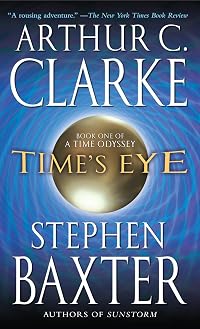
For eons, Earth has been under observation by the Firstborn, beings almost as old as the universe itself. The Firstborn are unknown to humankind-until they act. In an instant, Earth is carved up and reassembled like a huge jigsaw puzzle. Suddenly the planet and every living thing on it no longer exist in a single timeline. Instead, the world becomes a patchwork of eras, from prehistory to 2037, each with its own indigenous inhabitants. Scattered across the planet are floating silver orbs show more impervious to all weapons and impossible to communicate with. Are these technologically advanced devices responsible for creating and sustaining the rifts in time? Are they cameras through which inscrutable alien eyes are watching? Or are they something stranger and more terrifying still? The answer may lie in the ancient city of Babylon, where two groups of refugees from 2037-three cosmonauts returning to Earth from the International Space Station, and three United Nations peacekeepers on a mission in Afghanistan-have detected radio signals: the only such signals on the planet, apart from their own. The peacekeepers find allies in nineteenth-century British troops and in the armies of Alexander the Great. The astronauts, crash-landed in the steppes of Asia, join forces with the Mongol horde led by Genghis Khan. The two sides set out for Babylon, each determined to win the race for knowledge . . . and the power that lies within. Yet the real power is beyond human control, perhaps even human understanding. As two great armies face off before the gates of Babylon, it watches, waiting. . . . show lessTags
Recommendations


Member Reviews
What can I expect from a title like that with hard-hitting authors like this?
A little bit of the strengths of both and a few of their weaknesses, of course. Most of the characters feel like Clarke's inventions, but some of the odder characters kinda felt like Baxter.
The real strength of this novel is the slicings of time and location, jaunting whole segments of the Earth's populace into mish-mashes quite like Riverworld.
How do the armies of Genghis Kahn and Alexander the Great sound, clashing in an epic end? Good?
WELCOME TO THIS NOVEL. :)
Astronauts, AI phones, ravening hoards, gentlemen Greek explorers (HA), and modern Afganistan warriors and, for good measure, the missing link species for humanity. The mix is quite fun and the show more promise is there.
Strong start, fun middle... but what happened to the end?
Oh, wait, book one. Let's see where this goes. :) show less
A little bit of the strengths of both and a few of their weaknesses, of course. Most of the characters feel like Clarke's inventions, but some of the odder characters kinda felt like Baxter.
The real strength of this novel is the slicings of time and location, jaunting whole segments of the Earth's populace into mish-mashes quite like Riverworld.
How do the armies of Genghis Kahn and Alexander the Great sound, clashing in an epic end? Good?
WELCOME TO THIS NOVEL. :)
Astronauts, AI phones, ravening hoards, gentlemen Greek explorers (HA), and modern Afganistan warriors and, for good measure, the missing link species for humanity. The mix is quite fun and the show more promise is there.
Strong start, fun middle... but what happened to the end?
Oh, wait, book one. Let's see where this goes. :) show less
I thoroughly enjoyed Time's Eye - it's got action, science, and solidly developed characters. It's also got an ancient history battle royale between Alexander the Great and his army vs. Genghis Khan and his Mongolian hoard.
Time's Eye is the first in Stephen Baxter and Arthur C. Clarke's Time Odyssey series which takes place in the same universe as Clarke's 2001 stories. Inexplicably (at least initially), Earth is sliced up and stitched back together creating a mish-mash of timeframes. This scenario creates the opportunity for Baxter and Clarke to position a Genghis-Alexander battle for control over the new Earth (dubbed "Mir" by the remnant individuals from the 21st century). The story is broad in scope, with multiple story lines show more intersecting, connecting and culminating in a satisfying conclusion. While the ending isn't quite a cliff-hanger, it certainly sets up book 2 nicely.
Time's Eye has the requisite amount of hard science and pseudo-scientific - and sometimes atheistic - philosophical musings. These are the elements that Baxter and Clarke fans anticipate in their works. The philosophical vignettes are tightly written, and rarely feel forced or out of context with the rest of the story. I was thankful that there wasn't too much rumination on the structure and specifics of time-travel.
The characters are solidly drawn and the authors were able to make the "real" characters like Alexander the Great, some of Alexander's cohorts, and Rudyard Kipling (who gets caught in the time shifts), believable and relatively cliché-free.
In addition to the science fiction standbys of time travel and "those-that-watch-us-from-above", the book contains solid historical fiction elements, specifically when dealing with Alexander and the Mongols. The authors take time to detail their histories, battle strategy and tactics of each set of warriors. There are also shades of Baxter's Evolution while writing on the early hominids that get caught up in the time shifts.
Overall, I strongly recommend this sci-fi / alternative historical fiction from two of the best in the business. show less
Time's Eye is the first in Stephen Baxter and Arthur C. Clarke's Time Odyssey series which takes place in the same universe as Clarke's 2001 stories. Inexplicably (at least initially), Earth is sliced up and stitched back together creating a mish-mash of timeframes. This scenario creates the opportunity for Baxter and Clarke to position a Genghis-Alexander battle for control over the new Earth (dubbed "Mir" by the remnant individuals from the 21st century). The story is broad in scope, with multiple story lines show more intersecting, connecting and culminating in a satisfying conclusion. While the ending isn't quite a cliff-hanger, it certainly sets up book 2 nicely.
Time's Eye has the requisite amount of hard science and pseudo-scientific - and sometimes atheistic - philosophical musings. These are the elements that Baxter and Clarke fans anticipate in their works. The philosophical vignettes are tightly written, and rarely feel forced or out of context with the rest of the story. I was thankful that there wasn't too much rumination on the structure and specifics of time-travel.
The characters are solidly drawn and the authors were able to make the "real" characters like Alexander the Great, some of Alexander's cohorts, and Rudyard Kipling (who gets caught in the time shifts), believable and relatively cliché-free.
In addition to the science fiction standbys of time travel and "those-that-watch-us-from-above", the book contains solid historical fiction elements, specifically when dealing with Alexander and the Mongols. The authors take time to detail their histories, battle strategy and tactics of each set of warriors. There are also shades of Baxter's Evolution while writing on the early hominids that get caught up in the time shifts.
Overall, I strongly recommend this sci-fi / alternative historical fiction from two of the best in the business. show less
I read this book for my SciFi bookclub. After the last two choices, this was excellent. Unfortunately, after the last two choice, a cereal packet would be excellent.
It really felt like the authors wanted to write a book about Ghengis Khan and Alexander the Great having a fight and then built everything else around it. This means there's a lot of scaffolding for just one chapter.
Communication/translation problems seemed far too easily surmounted especially when they started going into scientific concepts.
And "pi = 3" grrrr... No. Just, No.
It really felt like the authors wanted to write a book about Ghengis Khan and Alexander the Great having a fight and then built everything else around it. This means there's a lot of scaffolding for just one chapter.
Communication/translation problems seemed far too easily surmounted especially when they started going into scientific concepts.
And "pi = 3" grrrr... No. Just, No.
Kada vidite da neko postavlja jake masivne temelje od najkvalitetnijeg materijala, ocekujete od graditelja da na njih postavi monumentalno zdanje. Medjutim, kada umesto velebnog zdanja na njima iznikne obicna brvnara morate osetiti razocarenje.
Upravo je u tome problem sa ovim Klarkovim romanom. Pocinje odlicno, prvih 100 strana najavljuje epski zaplet onako sa snaznom Zil Vernovskom aromom, ali onda sledi kontinuirani pad u kvalitetu pisanja, zapleta, opisa, razrade likova, raspleta...Oko 250-te strane vec tone u dosadu i nebulozu. Mocna reka u pocetku sada je samo obican plitki potocic, a ja kao citalac ne mogu a da se ne zapitam gde su se dele sve te propustene prilike za nesto zaista izuzetno veliko epskih razmera.
Roman sam poceo da show more citam u jednom dahu a zavrsio sam ga u tri. Konacni utisak - onako. Moglo je to biti mnogo mnogo bolje. Ostaje da vidim da li ce nastavak ovog prvog dela trilogije "Vremenska Oiseja" biti bolji od svog ne bas reprezentativnog predhodnika.
Konacna ocena 3 zvezdice. show less
Upravo je u tome problem sa ovim Klarkovim romanom. Pocinje odlicno, prvih 100 strana najavljuje epski zaplet onako sa snaznom Zil Vernovskom aromom, ali onda sledi kontinuirani pad u kvalitetu pisanja, zapleta, opisa, razrade likova, raspleta...Oko 250-te strane vec tone u dosadu i nebulozu. Mocna reka u pocetku sada je samo obican plitki potocic, a ja kao citalac ne mogu a da se ne zapitam gde su se dele sve te propustene prilike za nesto zaista izuzetno veliko epskih razmera.
Roman sam poceo da show more citam u jednom dahu a zavrsio sam ga u tri. Konacni utisak - onako. Moglo je to biti mnogo mnogo bolje. Ostaje da vidim da li ce nastavak ovog prvog dela trilogije "Vremenska Oiseja" biti bolji od svog ne bas reprezentativnog predhodnika.
Konacna ocena 3 zvezdice. show less
Time's Eye is built on a relatively unique premise. Rather than your typical time travel story, it's based on an event the novel calls a "discontinuity". Sections of the Earth from different periods in human history are taken and reassembled at random - so 21st century astronauts, 19th century British soldiers, the armies of Genghis Khan and Alexander the Great suddenly find themselves co-existing in a new timeline. The story focuses on the "survivors" of this strange event, as they struggle to survive and explain the mystery of these strange alien orbs evidently responsible for the strange event.
While I found the premise fascinating, the plot was slightly lacking. After the initial event, it sort of drags through the middle - but the show more climax makes up for it, as well as the juicy tidbits we're fed about the alien beings who created this new world. The characters are interesting if not especially well developed, but its rich in detail that make it easy to be drawn into this unusual world.
It might have earned a higher rating if the sequel hadn't been so disappointing. Unfortunately, the groundwork laid in this novel is never built upon; many of the mysteries go unresolved or unsatisfactorily answered. It's a shame really, as the questions poised here were very interesting ones within the context of the story. show less
While I found the premise fascinating, the plot was slightly lacking. After the initial event, it sort of drags through the middle - but the show more climax makes up for it, as well as the juicy tidbits we're fed about the alien beings who created this new world. The characters are interesting if not especially well developed, but its rich in detail that make it easy to be drawn into this unusual world.
It might have earned a higher rating if the sequel hadn't been so disappointing. Unfortunately, the groundwork laid in this novel is never built upon; many of the mysteries go unresolved or unsatisfactorily answered. It's a shame really, as the questions poised here were very interesting ones within the context of the story. show less
I didn't have very high hopes for this book, however surprisingly it was remarkably gripping with well developed characters and a unexpectedly good story line.
Finished Time's Eye for my RL SF book group. It was not bad, but not amazing either. It was about a time distortion event on earth in the year 2037. The earth ended up like a giant pizza with tip rips so that different time periods ended up next to each other. The time rip brought the physical place with it. Different ages, climates, flora and fauna all patched together.
Not many people made it, but there are a few moderns, proto-humans, the British Raj in a fort on the Northwest frontier ala 1880, complete with Rudyard Kipling, and the biggies, Alexander (just after he has taken the arrow in the chest in India) and his army and Genghis Khan and his army.
Yes, it appears the whole point was to have Alex and Genghis have a big ole' show more battle. Ogg.
There are mysterious alien artifacts, 'Eyes' that hover and observe all.
The book was written by both Clarke and Stephen Baxter. The writing isn't bad, and the story flows, but it is very much a summary type of book with occasional character input. It has to be to cover all the viewpoints, but that style for me, detracts from the characters, and the story. I am not gripped to find out what happens next.
It is the first of a series, yet the buzz is that they can be read as stand-alones. Apparently one of the characters from the time ripped earth goes back to the time and world she came from in the next book. Don't think I will join the party.
Really enjoyed the authors having the Macedonians searching Greece for Thebes though.
I wished they had spent more time thinking or talking about whether they were the victims or the survivors of the event. Was their distorted earth the cripple, with a normal untouched earth somewhere in time ? Was the normal earth destroyed, and they were the survivors ? Was there a mirror image of their damaged earth, which absorbed the missing time/earth sections that were replaced by the time rips ?
Either that or spend more time with the characters. There is a similar if smaller scale book about a group of teens on a vacation in the woods of the Pacific Northwest, and dinosaurs start running through the landscape. It is called Footprints of Thunder by James F. David, and I much prefer it, to this latest entry. show less
Not many people made it, but there are a few moderns, proto-humans, the British Raj in a fort on the Northwest frontier ala 1880, complete with Rudyard Kipling, and the biggies, Alexander (just after he has taken the arrow in the chest in India) and his army and Genghis Khan and his army.
Yes, it appears the whole point was to have Alex and Genghis have a big ole' show more battle. Ogg.
There are mysterious alien artifacts, 'Eyes' that hover and observe all.
The book was written by both Clarke and Stephen Baxter. The writing isn't bad, and the story flows, but it is very much a summary type of book with occasional character input. It has to be to cover all the viewpoints, but that style for me, detracts from the characters, and the story. I am not gripped to find out what happens next.
It is the first of a series, yet the buzz is that they can be read as stand-alones. Apparently one of the characters from the time ripped earth goes back to the time and world she came from in the next book. Don't think I will join the party.
Really enjoyed the authors having the Macedonians searching Greece for Thebes though.
I wished they had spent more time thinking or talking about whether they were the victims or the survivors of the event. Was their distorted earth the cripple, with a normal untouched earth somewhere in time ? Was the normal earth destroyed, and they were the survivors ? Was there a mirror image of their damaged earth, which absorbed the missing time/earth sections that were replaced by the time rips ?
Either that or spend more time with the characters. There is a similar if smaller scale book about a group of teens on a vacation in the woods of the Pacific Northwest, and dinosaurs start running through the landscape. It is called Footprints of Thunder by James F. David, and I much prefer it, to this latest entry. show less
Members
- Recently Added By
Lists

Biggest Disappointments
606 works; 168 members
Author Information

860+ Works 130,139 Members
Arthur C. Clarke was born in Minehead, Somerset, England, on December 16, 1917. During World War II, he served as a radar specialist in the RAF. His first published piece of fiction was Rescue Party and appeared in Astounding Science, May 1946. He graduated from King's College in London with honors in physics and mathematics, and worked in show more scientific research before turning his attention to writing fiction. His first book, Prelude to Space, was published in 1951. He is best known for his book 2001: A Space Odyssey, which was later turned into a highly successful and controversial film under the direction of Stanley Kubrick. His other works include Childhood's End, Rendezvous with Rama, The Garden of Rama, The Snows of Olympus, 2010: A Space Odyssey II, 2062: Odyssey III, and 3001: The Final Odyssey. During his lifetime, he received at least three Hugo Awards and two Nebula Awards. He died of heart failure on March 19, 2008 at the age of 90. (Bowker Author Biography) show less

260+ Works 43,820 Members
Some Editions
Series

Work Relationships
Common Knowledge
- Canonical title
- Time's Eye
- Original title
- Time's Eye
- Original publication date
- 2003-03
- People/Characters
- Alexander the Great; Hephaestion; Genghis Khan; Rudyard Kipling
- Epigraph
- Cities and Thrones and Powers
Stand in Times's eye,
Almost as long as flowers,
Which daily die:
But, as new buds put forth
To glad new men,
Out of the spent and unconsidered Earth
The Cities rise again.<... (show all)BR>
—Rudyard Kipling - First words
- Dreißig Millionen Jahre lang war der Planet abgekühlt und ausgetrocknet, bis im Norden Eisschollen an die Kontinente zu drängen begannen. [German edition]
For thirty million years the planet had cooled and dried, until, in the north, ice sheets gouged at the continents. - Last words
- (Click to show. Warning: May contain spoilers.)And over the rooftops of London, a baleful sun was rising.
- Original language
- English
Classifications
Statistics
- Members
- 1,890
- Popularity
- 11,316
- Reviews
- 34
- Rating
- (3.40)
- Languages
- 9 — Czech, English, French, German, Greek, Hungarian, Italian, Polish, Spanish
- Media
- Paper, Audiobook, Ebook
- ISBNs
- 40
- ASINs
- 15