On This Page
Description
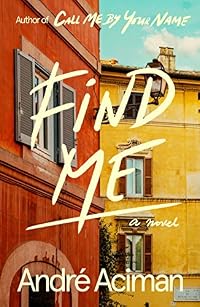
Ten years after the events of Call Me By Your Name, Elio has become a gifted classical pianist in Rome. His father, Samuel, is on a trip from Florence to visit Elio when a chance encounter on the train with a beautiful young woman upends changes his life forever. Elio moves to Paris, where he, too, has a consequential affair. Meanwhile Oliver, now a New England college professor with a family, suddenly finds himself contemplating a return trip across the Atlantic. -- adapted from jacket.Tags
Recommendations










Member Reviews
The melancholy Call Me by Your Name by André Aciman has spoken more powerfully to modern readers about the essence of love than any book in recent memory. It was praised for being "a love letter, an invocation...an exceptionally beautiful book" (Stacey D'Erasmo, The New York Times Book Review) when it was first released in 2007. A popular, Academy Award-winning movie based on the best-selling book has about three quarters of a million copies in circulation. In this continuation of the story Aciman depicts Elio's father, Samuel, traveling from Florence to Rome to see his son who has become a talented classical pianist. Sami's plans are upset and his life is changed forever when he encounters a stunning young woman by chance on the show more train.
Elio soon relocates to Paris, where he also has become involved in a significant relationship, while Oliver, who is now a professor at a college in New England with a family, finds himself suddenly considering a return trip across the Atlantic.
Aciman is a master of sensibility, the personal details, and the subtle emotional undertones that make up passion. The question of whether true love actually ever dies is raised by Find Me, which takes us back to the magical realm of one of our greatest modern romances. However, I found the journey to be somewhat muddled and not up to the high quality and intensity of the previous novel where Elio and Oliver first encountered each other. show less
Elio soon relocates to Paris, where he also has become involved in a significant relationship, while Oliver, who is now a professor at a college in New England with a family, finds himself suddenly considering a return trip across the Atlantic.
Aciman is a master of sensibility, the personal details, and the subtle emotional undertones that make up passion. The question of whether true love actually ever dies is raised by Find Me, which takes us back to the magical realm of one of our greatest modern romances. However, I found the journey to be somewhat muddled and not up to the high quality and intensity of the previous novel where Elio and Oliver first encountered each other. show less
[b:Call Me By Your Name|36336078|Call Me By Your Name (Call Me By Your Name, #1)|André Aciman|https://i.gr-assets.com/images/S/compressed.photo.goodreads.com/books/1519203520l/36336078._SY75_.jpg|1363157], which I adored, was a very neatly self-contained novel. I was surprised to learn that Aciman had written a sequel 13 years later, and obviously had to read it. 'Find Me' is a somewhat different reading experience, although Aciman's writing style remains intoxicating. Unlike [b:Call Me By Your Name|36336078|Call Me By Your Name (Call Me By Your Name, #1)|André Aciman|https://i.gr-assets.com/images/S/compressed.photo.goodreads.com/books/1519203520l/36336078._SY75_.jpg|1363157], 'Find Me' splits the point of view across multiple show more characters and locales. Thus it doesn't have quite the same sustained immersive feeling of being on holiday in sun-drenched rural Italy. Nonetheless, the sense of place and of taking a vacation is vivid and very pleasing. [b:Call Me By Your Name|36336078|Call Me By Your Name (Call Me By Your Name, #1)|André Aciman|https://i.gr-assets.com/images/S/compressed.photo.goodreads.com/books/1519203520l/36336078._SY75_.jpg|1363157] swept me away with its emotional intensity, while 'Find Me' takes a more forensic approach to romance. I found this very interesting, as Aciman attempts to pin down what it is that brings a couple together when ostensibly they have little in common. I often find this underwritten in the romantic plots of books, or perhaps I expect more explanation than most. Here, the first meetings and dates of several couples are chronicled in considerable detail. In the hands of a lesser writer this could have bored me, but Aciman's insight and eye for detail rendered it highly involving.
That said, Sami should have at least offered to wash up after Miranda cooked for him and her father. Standing in the kitchen and admiring the hands of someone who just cooked for you while they wash and dry up is very impolite, in my view. Offer to help, my man! It is notable that the majority of the book is devoted to romantic relationships with quite considerable age gaps, something I think Aciman explores the implications of with wit and care. If you'd told me I'd enjoy a romance between a divorced male professor and a stylish and impetuous woman half his age, I'd have laughed at you in disbelief. Normally I steer well clear of that novelist wish-fulfilment crap, in part because I work with male professors twice my age who are deeply annoying. Aciman manages to avoid crass cliché rather adeptly, although I wouldn't have wanted to read an entire novel about that particular relationship.
As for Elio and Oliver,I found Elio's romance with Michel a striking insight into Elio as an adult. It also acted as a neat inverse of Sami and Miranda, as the point of view was with the younger partner instead of the older. I liked the musical mystery that Elio and Michel investigate, which brings them together while also distracting them from their differences. Elio remains a wonderful protagonist. The final sections, from Oliver then Elio's perspectives, provide pleasing closure that the two get together again and raise Miranda's son. Their return to the same beautiful Italian location where [b:Call Me By Your Name|36336078|Call Me By Your Name (Call Me By Your Name, #1)|André Aciman|https://i.gr-assets.com/images/S/compressed.photo.goodreads.com/books/1519203520l/36336078._SY75_.jpg|1363157] takes place is narratively satisfying, as it seems inevitable.
While both novels are beautiful portraits of romantic love, obviously, I also love them as forays into a world of unfamiliar emotional intensity and culture refinement. 'Find Me' is rich in references to music, sculpture, art, and architecture. It takes place in a heightened, sensuous milieu. What I need from novels right now is to be taken away from reality to somewhere pleasanter, which is undoubtedly achieved here. I vicariously walked the streets of Rome and reflected that academia is a great deal more elegant and refined in fictional Italy than non-fictional Britain. show less
That said, Sami should have at least offered to wash up after Miranda cooked for him and her father. Standing in the kitchen and admiring the hands of someone who just cooked for you while they wash and dry up is very impolite, in my view. Offer to help, my man! It is notable that the majority of the book is devoted to romantic relationships with quite considerable age gaps, something I think Aciman explores the implications of with wit and care. If you'd told me I'd enjoy a romance between a divorced male professor and a stylish and impetuous woman half his age, I'd have laughed at you in disbelief. Normally I steer well clear of that novelist wish-fulfilment crap, in part because I work with male professors twice my age who are deeply annoying. Aciman manages to avoid crass cliché rather adeptly, although I wouldn't have wanted to read an entire novel about that particular relationship.
As for Elio and Oliver,
While both novels are beautiful portraits of romantic love, obviously, I also love them as forays into a world of unfamiliar emotional intensity and culture refinement. 'Find Me' is rich in references to music, sculpture, art, and architecture. It takes place in a heightened, sensuous milieu. What I need from novels right now is to be taken away from reality to somewhere pleasanter, which is undoubtedly achieved here. I vicariously walked the streets of Rome and reflected that academia is a great deal more elegant and refined in fictional Italy than non-fictional Britain. show less
Die ruhige Zugfahrt, die Samuel nach Rom zu seinem Sohn Elio führen soll, wird durch die Ankunft einer jungen Frau mit Hund, die sich zu ihm setzt, jäh gestört. Was der Professor nicht ahnt, ist, dass diese Begegnung sein ganzes Leben auf den Kopf stellen wird. Vorsichtig beginnt das Gespräch mit Miranda, doch bald schon merken sie beide, dass sie sich viel zu sagen haben, ebenso viel aber auch gar nicht gesagt werden muss, weil sie sich blind verstehen, fast so als würden sie sich schon ewig kennen. Sie könnte seine Tochter sein, Zurückhaltung ist geboten, doch am Ende des Tages werden sie gemeinsam durch Rom schreiten. Elio wird gleichermaßen durch eine zufällige Begegnung bei einem Konzert in einer Pariser Kirche von Amors show more Pfeil getroffen und genau wie sein Vater findet auch er den Mut, scheinbar vorhandene Schranken zu ignorieren und dem Herzen zu folgen.
„Find me/Finde mich“ führt die Geschichte fort, die André Aciman in „Fünf Lieben lang“ begonnen hat. Wieder geht es um die Liebe und wieder sind die einzelnen Kapitel nur lose miteinander verwoben und auch in diesem Roman schreibt der Autor über Grenzen, die die Figuren wahrnehmen, die sie jedoch überschreiten, ohne Rücksicht darauf, wie ihr Umfeld reagieren wird. Die beiden ersten, langen Kapitel sind detailreich, emotional, intensiv und lassen damit die beiden kürzeren etwas verblassen.
„Die Liebe ist einfach“, sagte ich. „Was zählt, ist der Mut zu lieben und der Mut zu vertrauen, und nicht jeder hat beides.
„Tempo“ und „Cadenza“, die beiden ersten Kapitel, weisen viele Parallelen auf: beide Male eine zufällige Begegnung, beide Male eine unmittelbare Vertrautheit, zwei ungleiche Partner, die sich zu einander hingezogen fühlen und merken, dass sie jetzt mutig sein müssen, wenn sie nicht wollen, dass diese einmalige Begegnung verpufft und nur Erinnerung bleibt. Beide Male sind es auch die Beziehungen zwischen Vater und Sohn, die ganz wesentlich für die Entwicklung der Charaktere sind. Samuel gibt Elio das Vertrauen, das er benötigt, um offen mit seiner Liebe umzugehen. Michel hat diese tiefe Verbundenheit zu seinem Vater ebenfalls gespürt, wenn ihre auch durch ein Geheimnis, von dem nicht einmal die Mutter etwas ahnt, für immer besiegelt wurde.
Diese literarisch saubere Struktur wird durch das musikalische „Capriccio“, Kapitel drei, unterbrochen. Das Kapitel folgt dem, was der Titel ankündigt: ein Ausbruch aus der Norm, der erwartbaren Struktur, das eigensinnig das Gegenteil berichtet: Elios früherer Geliebter, Oliver, erkennt plötzlich, dass er sich nicht für die richtige Liebe entschieden hat, dass seine Wahl für ein bürgerliches Leben falsch war und er nur das Leben eines toten Mannes führt. Kapitel vier, „Da Capo“ kehrt zurück an den Anfang, den Moment, als die eigentliche Geschichte begann.
Erzählerisch wie sprachlich schlichtweg wundervoll. Um bei den Metaphern aus der Musik zu bleiben: ein großes Stück, das viele Variationen eines einzigen Themas aufweist, mal beschwingt, mal melancholisch daherkommt, ausbricht und wieder zurückkehrt. Es kommt mit zarten Noten wie sie Streichinstrumente leise produzieren, die einem förmlich die Vibrationen der Saiten erleben lassen, und ebenso mit großem Paukenschlag. Man muss am Ende einen Schritt zurücktreten, um das Ganze in Augenschein nehmen zu können und sich nicht in den einzelnen Teilen zu verlieren und noch den Nachhall dessen, was man gelesen hat, spüren zu können. show less
„Find me/Finde mich“ führt die Geschichte fort, die André Aciman in „Fünf Lieben lang“ begonnen hat. Wieder geht es um die Liebe und wieder sind die einzelnen Kapitel nur lose miteinander verwoben und auch in diesem Roman schreibt der Autor über Grenzen, die die Figuren wahrnehmen, die sie jedoch überschreiten, ohne Rücksicht darauf, wie ihr Umfeld reagieren wird. Die beiden ersten, langen Kapitel sind detailreich, emotional, intensiv und lassen damit die beiden kürzeren etwas verblassen.
„Die Liebe ist einfach“, sagte ich. „Was zählt, ist der Mut zu lieben und der Mut zu vertrauen, und nicht jeder hat beides.
„Tempo“ und „Cadenza“, die beiden ersten Kapitel, weisen viele Parallelen auf: beide Male eine zufällige Begegnung, beide Male eine unmittelbare Vertrautheit, zwei ungleiche Partner, die sich zu einander hingezogen fühlen und merken, dass sie jetzt mutig sein müssen, wenn sie nicht wollen, dass diese einmalige Begegnung verpufft und nur Erinnerung bleibt. Beide Male sind es auch die Beziehungen zwischen Vater und Sohn, die ganz wesentlich für die Entwicklung der Charaktere sind. Samuel gibt Elio das Vertrauen, das er benötigt, um offen mit seiner Liebe umzugehen. Michel hat diese tiefe Verbundenheit zu seinem Vater ebenfalls gespürt, wenn ihre auch durch ein Geheimnis, von dem nicht einmal die Mutter etwas ahnt, für immer besiegelt wurde.
Diese literarisch saubere Struktur wird durch das musikalische „Capriccio“, Kapitel drei, unterbrochen. Das Kapitel folgt dem, was der Titel ankündigt: ein Ausbruch aus der Norm, der erwartbaren Struktur, das eigensinnig das Gegenteil berichtet: Elios früherer Geliebter, Oliver, erkennt plötzlich, dass er sich nicht für die richtige Liebe entschieden hat, dass seine Wahl für ein bürgerliches Leben falsch war und er nur das Leben eines toten Mannes führt. Kapitel vier, „Da Capo“ kehrt zurück an den Anfang, den Moment, als die eigentliche Geschichte begann.
Erzählerisch wie sprachlich schlichtweg wundervoll. Um bei den Metaphern aus der Musik zu bleiben: ein großes Stück, das viele Variationen eines einzigen Themas aufweist, mal beschwingt, mal melancholisch daherkommt, ausbricht und wieder zurückkehrt. Es kommt mit zarten Noten wie sie Streichinstrumente leise produzieren, die einem förmlich die Vibrationen der Saiten erleben lassen, und ebenso mit großem Paukenschlag. Man muss am Ende einen Schritt zurücktreten, um das Ganze in Augenschein nehmen zu können und sich nicht in den einzelnen Teilen zu verlieren und noch den Nachhall dessen, was man gelesen hat, spüren zu können. show less
‘This underscored so many things we hadn’t said, or hadn’t had time to say, or couldn’t find the words to say, yet here it was, like a final chord resolving an unfinished melodic air. So much time had passed, so many years, and who knew how many of them might turn out to have been the wasted years that, unbeknownst to us, end up making us better people.’
Oh and, yes, there are some spoilers in this review. Sorry 😊
Ah, the question everyone will be asking themselves when they come to this: should Aciman have re-visited these characters? Should he – dare he – attempt to write a sequel to ‘Call Me By Your Name’? I’m not the one to answer that. But he has, and here we have it.
Like a musical composition (and music show more remains front and centre in this book), ‘Find Me’ has four sections or movements. Their structure is not perhaps what one would expect from a ‘sequel’, for Elio doesn’t appear until the end of the first section, and Oliver not until the third. The opening half of the book (subtitled ‘Tempo’) takes place some ten years on from the end of the actual events of CMBYN (although, hanging over it, is the forewarning we have at the end of the first book that Samuel, Elio’s father, dies). On a train to Rome to visit Elio, Samuel shares a carriage with a younger woman named Miranda. Over the course of their journey they talk, flirt, philosophise, and then continue their time together when he accompanies Miranda to visit her father. Their whirlwind romance is, at times, a little hard to take; within hours they are declaring undying love for each other: ”Let’s never wake up from this”, one of them says. The twenty years or so age-gap between them doesn’t seem to be any obstacle.
In the second section (‘Cadenza’), a mirror-image story evolves, as we move five years into the future and Elio, now a concert pianist living in Paris, embarks on a love affair with Michel, a man twice his age whom he meets at a concert recital. The parallel to part one is obvious, and indeed the whole novel riffs on a theme of fathers, father-figures, and time. Within the Elio-Michel story there is a mystery of a music score left to Michel’s father by a Jewish musician during the end of WW2. As it turns out, this is the self-same story referenced in passing by Samuel in part one, and develops the musical theme of the novel, with a hidden message in the composition suggesting the many different stories and possibilities in our lives that the wider novel explores.
Part three (‘Capriccio’) finally introduces us to Oliver – although his presence is always in the background in the second section as Elio constantly feels his absence. Married with two children, Oliver is hosting a leaving party as he and his wife are returning to their New Hampshire home after a teaching sabbatical in New York. Clearly unhappy, the party provokes memories of Elio, prompted by one of the guests playing the same piece of music as Elio had played for Oliver years before. He has an imagined conversation with JS Bach (!) and, once all the guests have gone and he is left alone to tidy up, he finally confronts the inevitable, the always-present love for Elio.
The final part (‘Da Capo’, in music meaning a return to the beginning) sees us another 5 years in the future, with Elio and Oliver living together in the family home in Italy where it had all begun, along with Miranda and her son by Samuel, named after Oliver, and Elio’s mother, now suffering from dementia. Elio and Oliver are on holiday in Alexandria, a significant city in world literature, and Elio recalls a poem by the famous Alexandrian poet Cavafy, one which muses on lost love, memory (and mis-remembering) and the fleeting moments of perfect love.
This is a beguiling, philosophical novel that bravely attempts to return to what many regard as a perfect story in the first place. It is not perfect; I struggled with the first section, to be honest, although in retrospect I can understand the novel’s structure once I had finished it. The prior knowledge of Samuel’s death gives it a wistful, elegiac tone, and we can understand the urgency with which both he and Miranda feel for their love. Elio’s parallel story with Michel reveals the absence of such feelings, and simply reminds him that the one he needs to find is the one he has already lost. Oliver in part three seems like a man broken by the choices in life that he has made, but the possibility of what may yet be slowly emerges. He has an imagined conversation with Elio that subtly reminds us of the first novel:
‘One person, one name – he knows, I thought. Right now, he knows, he still knows.
“Find me,” he says.
“I will, Oliver, I will,” I say. Or has he forgotten.
But he remembers what I’ve just done.’
There is only one way this can end, but it’s not as straight forward as it may be, and credit to Aciman for making their reunion anything but perfect (although, actually, we know it really is quickly enough!). Whilst the first two sections of the novel are structurally important to what comes after, I felt that these were the weaker parts, and at times I found myself wincing at the improbability of some of what was happening and being said, whilst also finding some of the Elio-Michel relationship ever so slightly verging on the creepy (the shower scene, for example?). But by the time Oliver appears and the end is in sight, well, I make no apologies in admitting I had tears in my eyes. Ultimately, it’s about fate, and love, and finding what you want and who you are. It’s not a perfect novel by any means, but we end where we should, and how can anyone resist a glorious, unashamedly romantic conclusion? Tender and moving, ‘Find Me’ will split opinion, but it wrestles with big themes and does add more texture and layers to Elio and Oliver’s story. 3 stars for the first half, 5 for the end = 4 stars overall. show less
Oh and, yes, there are some spoilers in this review. Sorry 😊
Ah, the question everyone will be asking themselves when they come to this: should Aciman have re-visited these characters? Should he – dare he – attempt to write a sequel to ‘Call Me By Your Name’? I’m not the one to answer that. But he has, and here we have it.
Like a musical composition (and music show more remains front and centre in this book), ‘Find Me’ has four sections or movements. Their structure is not perhaps what one would expect from a ‘sequel’, for Elio doesn’t appear until the end of the first section, and Oliver not until the third. The opening half of the book (subtitled ‘Tempo’) takes place some ten years on from the end of the actual events of CMBYN (although, hanging over it, is the forewarning we have at the end of the first book that Samuel, Elio’s father, dies). On a train to Rome to visit Elio, Samuel shares a carriage with a younger woman named Miranda. Over the course of their journey they talk, flirt, philosophise, and then continue their time together when he accompanies Miranda to visit her father. Their whirlwind romance is, at times, a little hard to take; within hours they are declaring undying love for each other: ”Let’s never wake up from this”, one of them says. The twenty years or so age-gap between them doesn’t seem to be any obstacle.
In the second section (‘Cadenza’), a mirror-image story evolves, as we move five years into the future and Elio, now a concert pianist living in Paris, embarks on a love affair with Michel, a man twice his age whom he meets at a concert recital. The parallel to part one is obvious, and indeed the whole novel riffs on a theme of fathers, father-figures, and time. Within the Elio-Michel story there is a mystery of a music score left to Michel’s father by a Jewish musician during the end of WW2. As it turns out, this is the self-same story referenced in passing by Samuel in part one, and develops the musical theme of the novel, with a hidden message in the composition suggesting the many different stories and possibilities in our lives that the wider novel explores.
Part three (‘Capriccio’) finally introduces us to Oliver – although his presence is always in the background in the second section as Elio constantly feels his absence. Married with two children, Oliver is hosting a leaving party as he and his wife are returning to their New Hampshire home after a teaching sabbatical in New York. Clearly unhappy, the party provokes memories of Elio, prompted by one of the guests playing the same piece of music as Elio had played for Oliver years before. He has an imagined conversation with JS Bach (!) and, once all the guests have gone and he is left alone to tidy up, he finally confronts the inevitable, the always-present love for Elio.
The final part (‘Da Capo’, in music meaning a return to the beginning) sees us another 5 years in the future, with Elio and Oliver living together in the family home in Italy where it had all begun, along with Miranda and her son by Samuel, named after Oliver, and Elio’s mother, now suffering from dementia. Elio and Oliver are on holiday in Alexandria, a significant city in world literature, and Elio recalls a poem by the famous Alexandrian poet Cavafy, one which muses on lost love, memory (and mis-remembering) and the fleeting moments of perfect love.
This is a beguiling, philosophical novel that bravely attempts to return to what many regard as a perfect story in the first place. It is not perfect; I struggled with the first section, to be honest, although in retrospect I can understand the novel’s structure once I had finished it. The prior knowledge of Samuel’s death gives it a wistful, elegiac tone, and we can understand the urgency with which both he and Miranda feel for their love. Elio’s parallel story with Michel reveals the absence of such feelings, and simply reminds him that the one he needs to find is the one he has already lost. Oliver in part three seems like a man broken by the choices in life that he has made, but the possibility of what may yet be slowly emerges. He has an imagined conversation with Elio that subtly reminds us of the first novel:
‘One person, one name – he knows, I thought. Right now, he knows, he still knows.
“Find me,” he says.
“I will, Oliver, I will,” I say. Or has he forgotten.
But he remembers what I’ve just done.’
There is only one way this can end, but it’s not as straight forward as it may be, and credit to Aciman for making their reunion anything but perfect (although, actually, we know it really is quickly enough!). Whilst the first two sections of the novel are structurally important to what comes after, I felt that these were the weaker parts, and at times I found myself wincing at the improbability of some of what was happening and being said, whilst also finding some of the Elio-Michel relationship ever so slightly verging on the creepy (the shower scene, for example?). But by the time Oliver appears and the end is in sight, well, I make no apologies in admitting I had tears in my eyes. Ultimately, it’s about fate, and love, and finding what you want and who you are. It’s not a perfect novel by any means, but we end where we should, and how can anyone resist a glorious, unashamedly romantic conclusion? Tender and moving, ‘Find Me’ will split opinion, but it wrestles with big themes and does add more texture and layers to Elio and Oliver’s story. 3 stars for the first half, 5 for the end = 4 stars overall. show less
I am a big fan of André Aciman’s writing. I think he’s got a truly unique style and I have read all of his fiction. When I heard that there was a sequel coming for “Call Me By Your Name” I was thrilled and a little apprehensive. The problem with reading a sequel is that I’m always going to compare it to the original. Sadly, Find Me doesn’t fare well after such a comparison.
This book is written in three different perspectives and times. The first section is Sami – the beloved father of Elio and my favorite character from the original book. He meets a very young woman on a train and they become involved. The second part of the book is written from Elio’s perspective. He attends a concert and meets a man much older than show more him and they begin a relationship. In the third part of the book, Oliver is the narrator. He is moving on from a home, a job, while contemplating the relationships he has missed out on with a couple of his much younger friends.
Obviously, I don’t know what Aciman was attempting to do when he wrote this story, but I have trouble seeing it as a “sequel”. The largest part of this book is devoted to the bizarre and unbelievable relationship between Sami and Miranda. Samuel first meets Miranda on a train…. and a mere 24 hours later they are basically declaring their undying love for each other. They fall into a physical relationship entirely too quickly and before their first evening is over Miranda is speaking about her desire to have Samuel’s child. Now, I’m a believer in instant attraction and things of that nature, but I was completely unable to suspend my disbelief with this relationship. Miranda claims initially that she doesn’t ever stay with the men in her life, and leaves them all. She’s a “free spirit”, but is probably one of the most cliché characters I have read in a very long time.
Samuel is almost entirely focussed on Miranda’s looks, her physical being, her body… and how attractive she is. It’s quite shallow and I couldn’t balance that with the utter love I had for Samuel in Call Me By Your Name. His thoughts were unbearably shallow at times, focusing on littler more than sexual attraction and physical beauty.
There are only a handful of female characters in this book which isn’t really a problem. The problem for me was that all the female characters border on ridiculous. Miranda… a young photographer who falls in love with Samual within about 12 hours and claims to want his child and to live with him forever. There’s really no depth to Miranda aside from he strange sexual proclivities with respect to her brother. Oliver’s wife… when informed that Oliver is leaving her just shrugs and agrees. There’s no questioning, no arguing, no concern… nothing really. Michel tells Elio of the time when his wife found out that he was in a relationship with a man and her response is a simple “well, I can’t compete with a man.” All of the female characters are half-finished and lack a lot of emotion… or even a normal response to the action that goes on around them.
There are several uncomfortable connections made to family members throughout this novel. Miranda reveals a secret to Samuel that involved incestual feelings of desire. Samuel often thinks of the fact that Miranda is a similar age to his own son whom he adores. Michel (Elio’s older partner) speaks of wanting to go home and pretend that Elio is his son. The sexual relationships and the comparison to family members was confusing as well as disturbing. There were entirely too many comparisons between lovers and family members for me. I could understand the fondness between two people making it come up once…but every character doing it was too much for me.
If this book is about anything, I suppose it’s about fate and taking chances. All the characters express a desire to take chances, paths they previously haven’t traveled. There’s also an underlying theme of “soul mates” (although I hate that tern). The characters have all had and lost significant loves… and will come to have them again. Life is running full circle for everyone in the novel. There are meetings, departures and all the happiness and pain that happens in between.
André Aciman is a remarkable writer. I finished this book because I love the way that he weaves words together. His prose is lyrical, beautiful and engaging and it is the main reason I didn’t give up on reading this novel about halfway through. show less
This book is written in three different perspectives and times. The first section is Sami – the beloved father of Elio and my favorite character from the original book. He meets a very young woman on a train and they become involved. The second part of the book is written from Elio’s perspective. He attends a concert and meets a man much older than show more him and they begin a relationship. In the third part of the book, Oliver is the narrator. He is moving on from a home, a job, while contemplating the relationships he has missed out on with a couple of his much younger friends.
Obviously, I don’t know what Aciman was attempting to do when he wrote this story, but I have trouble seeing it as a “sequel”. The largest part of this book is devoted to the bizarre and unbelievable relationship between Sami and Miranda. Samuel first meets Miranda on a train…. and a mere 24 hours later they are basically declaring their undying love for each other. They fall into a physical relationship entirely too quickly and before their first evening is over Miranda is speaking about her desire to have Samuel’s child. Now, I’m a believer in instant attraction and things of that nature, but I was completely unable to suspend my disbelief with this relationship. Miranda claims initially that she doesn’t ever stay with the men in her life, and leaves them all. She’s a “free spirit”, but is probably one of the most cliché characters I have read in a very long time.
Samuel is almost entirely focussed on Miranda’s looks, her physical being, her body… and how attractive she is. It’s quite shallow and I couldn’t balance that with the utter love I had for Samuel in Call Me By Your Name. His thoughts were unbearably shallow at times, focusing on littler more than sexual attraction and physical beauty.
There are only a handful of female characters in this book which isn’t really a problem. The problem for me was that all the female characters border on ridiculous. Miranda… a young photographer who falls in love with Samual within about 12 hours and claims to want his child and to live with him forever. There’s really no depth to Miranda aside from he strange sexual proclivities with respect to her brother. Oliver’s wife… when informed that Oliver is leaving her just shrugs and agrees. There’s no questioning, no arguing, no concern… nothing really. Michel tells Elio of the time when his wife found out that he was in a relationship with a man and her response is a simple “well, I can’t compete with a man.” All of the female characters are half-finished and lack a lot of emotion… or even a normal response to the action that goes on around them.
There are several uncomfortable connections made to family members throughout this novel. Miranda reveals a secret to Samuel that involved incestual feelings of desire. Samuel often thinks of the fact that Miranda is a similar age to his own son whom he adores. Michel (Elio’s older partner) speaks of wanting to go home and pretend that Elio is his son. The sexual relationships and the comparison to family members was confusing as well as disturbing. There were entirely too many comparisons between lovers and family members for me. I could understand the fondness between two people making it come up once…but every character doing it was too much for me.
If this book is about anything, I suppose it’s about fate and taking chances. All the characters express a desire to take chances, paths they previously haven’t traveled. There’s also an underlying theme of “soul mates” (although I hate that tern). The characters have all had and lost significant loves… and will come to have them again. Life is running full circle for everyone in the novel. There are meetings, departures and all the happiness and pain that happens in between.
André Aciman is a remarkable writer. I finished this book because I love the way that he weaves words together. His prose is lyrical, beautiful and engaging and it is the main reason I didn’t give up on reading this novel about halfway through. show less
No one can describe the intimacy of sex better than Andre Aciman. This sequel to Call Me By Your Name is lushly written. He reinvents love. I admit that the fragmented style prevents an emotional response. The novel needs to be read carefully because of the confusing structure that jumps between time frames and characters abruptly. This isn’t a typical sequel because Oliver and Elio don’t appear till the very short end portion of the book. But enjoying Aciman’s language is thrilling.
As soon as I finished Call Me By Your Name I had to get Find Me. I had expected it to focus more on Elio and Oliver, but they had a minimal section of the book. If you only want to read this one to read more of them, just know that they aren't the main focus.
This book follows Elio's father primarily. I'll be completely honest: some of the comments from this part of the book made me uncomfortable. The language used was... something else entirely. The sex scenes between Miranda and Samuel were gross to say the least.
Speaking of Miranda, she was the only woman in this book, and she was the stereotypical quirky badass. Samuel immediately falls in love with her and objectifies her, if that gives you any idea of how the first portion of this show more book is. It was absolutely absurd, and honestly it confused me. This book felt like it was unraveling everything we loved from the first book.
The second section follows Elio and his new love interest, Michael. This was actually far more tolerable. There was a slight mystery revolving around music, which I both did and didn't enjoy reading. I was hoping Elio would finally find someone else and move on from Oliver, despite my adoration of their relationship.
Oliver's part was a little boring. He hadn't changed much after twenty years; he was still self-centered and slightly manipulative. I was hoping he'd at least have grown into a more thoughtful person, but no.Instead he abandons his family for Elio.
If you picked this book up for Elio and Oliver, don't worry. They do have some slight focus - about the last ten pages or so is about their relationship. It still wasn't near as satisfying to finish this book as it was the first one. I personally believeOliver's readiness to abandon his family in an instant made their relationship feel as if it wasn't really worth it. show less
This book follows Elio's father primarily. I'll be completely honest: some of the comments from this part of the book made me uncomfortable. The language used was... something else entirely. The sex scenes between Miranda and Samuel were gross to say the least.
Speaking of Miranda, she was the only woman in this book, and she was the stereotypical quirky badass. Samuel immediately falls in love with her and objectifies her, if that gives you any idea of how the first portion of this show more book is. It was absolutely absurd, and honestly it confused me. This book felt like it was unraveling everything we loved from the first book.
The second section follows Elio and his new love interest, Michael. This was actually far more tolerable. There was a slight mystery revolving around music, which I both did and didn't enjoy reading. I was hoping Elio would finally find someone else and move on from Oliver, despite my adoration of their relationship.
Oliver's part was a little boring. He hadn't changed much after twenty years; he was still self-centered and slightly manipulative. I was hoping he'd at least have grown into a more thoughtful person, but no.
If you picked this book up for Elio and Oliver, don't worry. They do have some slight focus - about the last ten pages or so is about their relationship. It still wasn't near as satisfying to finish this book as it was the first one. I personally believe
Members
- Recently Added By
Lists

Books We Discovered On LibraryThing
530 works; 130 members
Author Information

26+ Works 10,008 Members
A regular contributor to the New Yorker, The New York Review of Books and The New Republic, Andre Aciman was born in Alexandria: raised in Egypt, Italy, and France; and educated at Harvard. He teaches literature at Bard College and lives in Manhattan. (Bowker Author Biography)
Some Editions
Awards and Honors
Awards
Distinctions
Series

Work Relationships
Common Knowledge
- Canonical title
- Find Me
- Original publication date
- 2019
- People/Characters
- Elio [Call Me by Your Name]; Oliver [Call Me by Your Name]
- Dedication
- Para mis tres hijos
- First words
- Why so glum?
- Last words
- (Click to show. Warning: May contain spoilers.)"I wish my father were alive today."
Oliver looked at me, was silent a while, then said: "So do I, so do I." - Original language
- English
Classifications
Statistics
- Members
- 1,256
- Popularity
- 19,365
- Reviews
- 25
- Rating
- (3.26)
- Languages
- 13 — Chinese, Danish, Dutch, English, Finnish, French, German, Italian, Polish, Spanish, Swedish, Turkish, Portuguese (Portugal)
- Media
- Paper, Audiobook, Ebook
- ISBNs
- 41
- ASINs
- 9