Lux
by Elizabeth Cook
On This Page
Description
David wants Bathsheba. Henry too must have what he wants. He wants Ann, a divorce, a son. He looks up at his tapestry of David and sees a mighty predecessor who defended his faith and took what he liked. But he leaves it to others to count the costs. Among those counting is the poet Wyatt, who sees a different David, a man who repented before God, in song as in life. This is the version of the biblical king which Wyatt must give voice to as he translates David's psalms. As David pursues show more Bathsheba, Henry courts Ann, and Wyatt interweaves the past and present. show lessTags
Recommendations






























Member Reviews
This book contains two separate stories that are not intertwined within each other; the first two thirds of the book are the story of David, and the last third is the story of Wyatt. These are the stories of two men who each inspects his life, his sins, and the effects on the people they’ve loved and hurt.
David has lost his moral bearings and the ability to hear the voice of YHWH. He has come to believe that his actions are due to the will of his God. His people live and die at his whims. This is a story of David’s repentance.
His story is told in gorgeous and lush language that left me wanting to read the words slowly in order to savor them. It describes his relationship with his God, his wives, and his men and comrades. It follows show more his path of repentance, his looking back on the events of his life, and his commitment to redeeming his past actions.
2500 years later, Wyatt, a poet and member of the court of King Henry VIII, lives a life that is subject to the whims of a king who also believes that his will is the will of God.
The author has taken events from David’s life and overlaid Wyatt’s story with parallels to David’s and by referencing events from David’s story.
It was strange reading the story of David and then reading the story of Wyatt. Each story can stand beautifully on its own without the parallels which seem forced and unnecessary. Wyatt’s story, although well written and truly interesting, just wasn’t as compelling to me after reading David’s. If they were separate books I would have liked Wyatt’s story much more I think. show less
David has lost his moral bearings and the ability to hear the voice of YHWH. He has come to believe that his actions are due to the will of his God. His people live and die at his whims. This is a story of David’s repentance.
His story is told in gorgeous and lush language that left me wanting to read the words slowly in order to savor them. It describes his relationship with his God, his wives, and his men and comrades. It follows show more his path of repentance, his looking back on the events of his life, and his commitment to redeeming his past actions.
2500 years later, Wyatt, a poet and member of the court of King Henry VIII, lives a life that is subject to the whims of a king who also believes that his will is the will of God.
The author has taken events from David’s life and overlaid Wyatt’s story with parallels to David’s and by referencing events from David’s story.
It was strange reading the story of David and then reading the story of Wyatt. Each story can stand beautifully on its own without the parallels which seem forced and unnecessary. Wyatt’s story, although well written and truly interesting, just wasn’t as compelling to me after reading David’s. If they were separate books I would have liked Wyatt’s story much more I think. show less
 This review was written for LibraryThing Early Reviewers.
Really enjoyed this book. Her prose was so lyrical but grounded, and deceptively simple. It felt like a quick read despite the heavy subject material. Cook really pulled off the switch in tone between the first two sections (about David and Bathsheba) and the third section (about Thomas Wyatt). Will look forward to other books by this author.
This review was written for LibraryThing Early Reviewers.When I accepted a copy of this book for review, I was under the impression I was receiving a slim little thing; so when a 400+-pager showed up instead, I was a bit nonplussed. But the original pitch---David and Bathsheba, Henry and Ann, both filtered through Thomas Wyatt, with wisdom and poetry and subtle religion---still attracted me. So eventually I picked it up from the floor under my nightstand and started reading.
And was immediately enraptured by the quality of the prose. Cook is a marvelous writer.
The first two thirds of the book are about David and Bathsheba and it dances through theirs and other characters' points of view, before largely settling on David as he hides in a cave during the early stage of his penance. It's not show more until these hundreds of pages pass that we then switch to England where Thomas Wyatt will be our companion the rest of the way. I was perplexed that we had had to wait so long for his appearance. And although in the early pages of Wyatt's appearance we see an elaborate tapestry starring David and Bathsheba which the king has purchased, the connection between the two portions of the book remains ambiguous.
Ambiguous but certain. This is the first time in as long as I can remember* that I have an impulse to immediately start reading the book again because I think I will understand it utterly anew if I do so. But will I?
I've intentionally left it on the bed. I've already told Lady Steed she will like it, so if she jumps right in I won't get the chance. And I rarely reread these days because it makes me impatient. But this could be the exception.
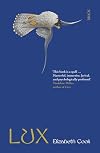
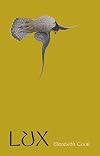
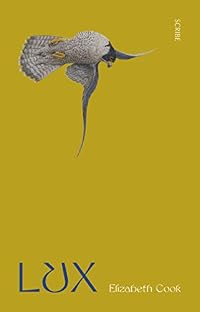
The cover is a curious thing as well. It's lovelier in person---and stranger as well. It's a peculiar cover and I suspect it's terrible as selling the novel, but I actually quite love it. It's just as subtle and unclear as the title and it only makes sense if you put some work into understanding it.
Which I'm not sure is the accepted purpose of bookcovers, but still. At least it's utterly different and interesting and pleasant to have around.
Anyway, this novel is a sentence-by-sentence pleasure and is filled with hidden treasures and richly drawn characters and fully plumbed emotions and provocative themes wisely explored.
The one thing is it not is tiny. Although it did not feel like a slog at all. I enjoyed every page and the chapters are mostly short so it feels not so dissimilar from tiny after all. show less
And was immediately enraptured by the quality of the prose. Cook is a marvelous writer.
The first two thirds of the book are about David and Bathsheba and it dances through theirs and other characters' points of view, before largely settling on David as he hides in a cave during the early stage of his penance. It's not show more until these hundreds of pages pass that we then switch to England where Thomas Wyatt will be our companion the rest of the way. I was perplexed that we had had to wait so long for his appearance. And although in the early pages of Wyatt's appearance we see an elaborate tapestry starring David and Bathsheba which the king has purchased, the connection between the two portions of the book remains ambiguous.
Ambiguous but certain. This is the first time in as long as I can remember* that I have an impulse to immediately start reading the book again because I think I will understand it utterly anew if I do so. But will I?
I've intentionally left it on the bed. I've already told Lady Steed she will like it, so if she jumps right in I won't get the chance. And I rarely reread these days because it makes me impatient. But this could be the exception.
The cover is a curious thing as well. It's lovelier in person---and stranger as well. It's a peculiar cover and I suspect it's terrible as selling the novel, but I actually quite love it. It's just as subtle and unclear as the title and it only makes sense if you put some work into understanding it.
Which I'm not sure is the accepted purpose of bookcovers, but still. At least it's utterly different and interesting and pleasant to have around.
Anyway, this novel is a sentence-by-sentence pleasure and is filled with hidden treasures and richly drawn characters and fully plumbed emotions and provocative themes wisely explored.
The one thing is it not is tiny. Although it did not feel like a slog at all. I enjoyed every page and the chapters are mostly short so it feels not so dissimilar from tiny after all. show less
This review was written for LibraryThing Early Reviewers.I was somewhat disappointed by this book. It started out promising - a retelling of much of the Biblical books of Samuel (from about 1 Samuel 4:15 through about 2 Samuel 17:20), including the stories of Israel's loss of the Ark of the Covenant and its eventual return (one I hadn't remembered), and of David killing Goliath, becoming king, and his lust for Bathsheba and his arrangement for the death of her husband Uriah in battle. I'm no Biblical scholar, but I enjoyed pulling out my old study Bible and reviewing these. The book includes multiple third-person viewpoints in this section (including Uriah and the prophet Nathan), and the parts of the story told from Bathsheba's perspective were particularly good.
That was the first 161 pages. show more The next 100 or so were a letdown - David's seven-day fast in isolation to try to save the life of his illicit son with Bathsheba, and all his thoughts during that time, some expressed in psalms. Author Elizabeth Cook may be a poet, but I found this section tedious and boring.
To me, the only real connections between the first two thirds of the book and the last third - which is set in King Henry VIII's time and focuses on poet Thomas Wyatt - are the set of tapestries Henry acquires that tell the story of David and Bathsheba, and the fact that Wyatt translated psalms supposedly written by David during his repentence.
In an article called "A Blaze of Light," Cook said, "I had long known that I wanted to write about the 16th-century poet, Thomas Wyatt...This novel began with one word, the title, Lux. I wrote it, in capitals, at the start of a new notebook late in December 2000. It was the name of Wyatt’s beloved falcon and plays on the Latin for 'light' and also on the 'luck' which Wyatt only occasionally experienced in the course of a turbulent life." Given this, I was surprised so little of the book (132 pages out of 403) was about Wyatt. I learned a lot about the poet, but for me, the book ended abruptly.
In an article called "On Taking Time," Cook said it took 17 years for her to write this book. Perhaps I lack the patience she has. show less
That was the first 161 pages. show more The next 100 or so were a letdown - David's seven-day fast in isolation to try to save the life of his illicit son with Bathsheba, and all his thoughts during that time, some expressed in psalms. Author Elizabeth Cook may be a poet, but I found this section tedious and boring.
To me, the only real connections between the first two thirds of the book and the last third - which is set in King Henry VIII's time and focuses on poet Thomas Wyatt - are the set of tapestries Henry acquires that tell the story of David and Bathsheba, and the fact that Wyatt translated psalms supposedly written by David during his repentence.
In an article called "A Blaze of Light," Cook said, "I had long known that I wanted to write about the 16th-century poet, Thomas Wyatt...This novel began with one word, the title, Lux. I wrote it, in capitals, at the start of a new notebook late in December 2000. It was the name of Wyatt’s beloved falcon and plays on the Latin for 'light' and also on the 'luck' which Wyatt only occasionally experienced in the course of a turbulent life." Given this, I was surprised so little of the book (132 pages out of 403) was about Wyatt. I learned a lot about the poet, but for me, the book ended abruptly.
In an article called "On Taking Time," Cook said it took 17 years for her to write this book. Perhaps I lack the patience she has. show less
This review was written for LibraryThing Early Reviewers.An intriguing juxtaposition of two men in positions of power and the women who were in one way or another victims of that power. Both men consider themselves men of God, and the Renaissance poet Thomas Wyatt thinks on this as he reflects on David's story during the reign of Henry VIII. Cook's language is vivid and sharp. David's long dark night of the soul, which takes up much of the meat of the book, is rendered in stark flashes that contrast poignantly with the heartbreak being experienced by Bathsheba at the palace. The experiences of David and Wyatt flow from poet to poet on a river of words, but perhaps the most important words, Cook's book suggests, are the ones that were not left for posterity. We have all of David's Psalms but show more nothing that records Bathsheba's experience, volumes and volumes of writings on the court of Henry VIII but much less on the fear and anxiety Anne Boleyn or Catherine of Aragon must have experienced as they felt themselves slipping out of favor and into Henry's net of plots and intrigue to enforce his will. Cook is successful in making both eras feel genuine and immediate, a feat that often eludes writers trying to retell Biblical stories especially, and this novel comes across as fresh and unique. show less
This review was written for LibraryThing Early Reviewers.As another reviewer mentioned, I was extremely surprised, given the description, to find that the two stories -- David and Bathsheba's, and Henry's -- were not intertwined throughout the book. Instead about two-thirds of the book was one story, and the last third the other, told through Wyatt's poetry. To be honest, even having finished, I'm not entirely sure how the two stories are supposed to be brought together, pther than the thin premise of Wyatt's work that we are given. I have a feeling I would have if the tales had alternated.
The writing itself, particularly in the first section, is interesting enough; I always find stories of the Bible to be intriguing, and this one kept my interest. Good prose, and good imagery, good show more characters. Just felt like two separate books really. show less
The writing itself, particularly in the first section, is interesting enough; I always find stories of the Bible to be intriguing, and this one kept my interest. Good prose, and good imagery, good show more characters. Just felt like two separate books really. show less
This review was written for LibraryThing Early Reviewers.I loved the premise of the book - drawing out the tale of King David, the ark of the covenant, and Bathsheba. The first chapters were riveting. I had an early turnoff when the author "redeemed" David's rape of Bathsheba by having Bathsheba consent to the assault. Honestly, that affected how I read the rest of the book. I agree with the other reviewers that there was a complete disconnect between the two sections of the book.
This review was written for LibraryThing Early Reviewers.Members
- Recently Added By
Lists

Books Read in 2019
4,052 works; 108 members
Author Information
1 Work 65 Members
Classifications
Statistics
- Members
- 47
- Popularity
- 633,316
- Reviews
- 17
- Rating
- (3.38)
- Languages
- English
- Media
- Paper, Ebook
- ISBNs
- 5
- ASINs
- 1