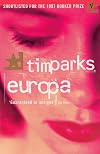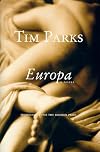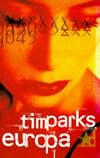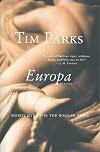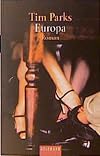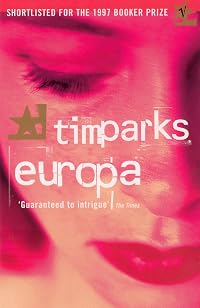
Europa
by Tim Parks
On This Page
Description
At the midpoint of his life, Jerry Marlow finds himself on a bus taking him from Milan to Strasbourg. Sitting slightly off-center on the long back seat, he takes stock of the wreckage strewn behind him--a failed marriage, a daughter going astray, and an affair that has left him both numb and licking every wound, self-inflicted or otherwise. Even Marlow's teaching job at the university in Milan is jeopardized by new Italian laws restricting foreigners. And ahead? What lies in wait around the show more next bend? There are times when the most appalling premonitions seem all too plausible, yet the pull of hope cannot be resisted. Fueled by Marlow's scalpel-sharp commentary--double-edged and unsparing--Europa is a decidedly adult road novel with a rich international gallery of characters, and offers an explosive, sometimes hilarious portrait of a man patching together his life on a continent whose rhetoric of unity is less convincing--and far less exciting--than its bizarre polyglot passions and ancient conflicts. Bristling with ferocious wordplay, mordant comedy, and a vision of the sexes as honest as it is incorrect, Europa is Tim Parks's finest novel to date. show lessTags
Recommendations















Member Reviews
Shortlisted for the Booker Prize 1997
For me, this is not a book that has aged well. Even in 1997, its narrator's view of women must have been at best politically incorrect, even in an era that gave birth to lad-mag culture.
The narrator is Jerry Marlow, a British university lecturer working in Milan University. He agrees to join a party of other lecturers and supporting students on a coach trip to Strasbourg to present a petition to the European Parliament claiming that it is unfair not to give visiting lecturers the same tenure their Italian colleagues are entitled to. This may seem fair enough as material for a novel, but we soon hear that the lecturers have dubbed the coach the "shag wagon", as most of the young students are female. show more This sexual objectification of the students is relentless and continues throughout the book - Jerry forgets their names and refers to them using nicknames all of which end in -Tottie.
Jerry's real interest is with a French fellow lecturer (also on the coach) who has recently ended an affair with him that goes back several years and caused Jerry to leave his wife and daughter. This colleague is generally referred to as She or her and he only brings himself to name her in the final sentence of the book.
There is also a political element to the story but it lacks any real depth.
What may have led the jury to shortlist the book is the style - it does have elements of a Thomas Bernhard misanthropic rant, and uses a lot of long sentences, but Marlow's attitudes reminded me much more of the work of Kingsley Amis.
Overall I found this one disappointing and would not recommend it. show less
For me, this is not a book that has aged well. Even in 1997, its narrator's view of women must have been at best politically incorrect, even in an era that gave birth to lad-mag culture.
The narrator is Jerry Marlow, a British university lecturer working in Milan University. He agrees to join a party of other lecturers and supporting students on a coach trip to Strasbourg to present a petition to the European Parliament claiming that it is unfair not to give visiting lecturers the same tenure their Italian colleagues are entitled to. This may seem fair enough as material for a novel, but we soon hear that the lecturers have dubbed the coach the "shag wagon", as most of the young students are female. show more This sexual objectification of the students is relentless and continues throughout the book - Jerry forgets their names and refers to them using nicknames all of which end in -Tottie.
Jerry's real interest is with a French fellow lecturer (also on the coach) who has recently ended an affair with him that goes back several years and caused Jerry to leave his wife and daughter. This colleague is generally referred to as She or her and he only brings himself to name her in the final sentence of the book.
There is also a political element to the story but it lacks any real depth.
What may have led the jury to shortlist the book is the style - it does have elements of a Thomas Bernhard misanthropic rant, and uses a lot of long sentences, but Marlow's attitudes reminded me much more of the work of Kingsley Amis.
Overall I found this one disappointing and would not recommend it. show less
On many levels, this virtuoso tragic comedy is astounding. The story's erratic plot is humorous and full of likable characters. This book is worth reading because of its better-than-average denouement.
Jerry goes on a trip to European Parliament to support a cause he doesn't believe in. He knows his ex-mistress will be there, and she still has incredible power over him.
Quite a good book in parts, but the dense language and philosophy in parts slowed the book down and seemed to be transparent attempts to show intelligence and depth.
Quite a good book in parts, but the dense language and philosophy in parts slowed the book down and seemed to be transparent attempts to show intelligence and depth.
Hopla, zijn we dan ook weer doorheen. Nederlandse vertaling gelezen (biebleen). Ik verwacht na het gelezen hebben van de vertaling, het boek meer te kunnen waarderen in de oorspronkelijke tekst. Even snel de oorspronk-uh-luk-ke tekst bekeken op archive.org, en warempel, woorden als tottie en fucking die toch veel beter zijn dan gleuf en verdomde. In de Nederlandse vertaling klinkt iedereen wat meer hetzelfde (wat ik na 1 minuut van de original doorkijken concludeer). Het is vrouwonvriendelijk, ordinair en erotisch geobsedeerd, maar hm- ik zou de Engelse tekst willen lezen, leest veel grappiger weg (en dat wederom na 1 minuut en VIER pagina's!!) Welja, is een psychologische roman aldus de B. Eemland kaft. Jazeker, want wij zitten in zijn show more hoofd de hele tijd dans la tête, dasein. Zoals Enter The Void dat ooit alleen eerder heeft gedaan of die andere film waar je als afstandelijke toeschouwer het een en ander neermaait, ja Hardcore Henry was dat (nooit gezien overigens). De charme van de schrijver ontbrak een beetje in de vertaling, en jezus wat ben ik dom, ik kon de Engelse gewoon in de UB lenen... Nou, dan krijgt dit nog een staartje. Jammer wel dat deze vertaler dus 11 van zijn boeken heeft vertaald? Ik ben ook maar ongeleerd!!!! Wat maakt het uit. De hiernavolgende leesvolgorde: 1. gedaanteverandering of 'n metaforiese muizeval; 2. Savant Relics; 3. Last Action Hero (Tine); 4. Last Action Hero (Newman & Marsh); 5. Europa (Parks, ENG). Algoeds. show less
Did not manage more than 50 pages, I was just not interested.
I rarely do not finish a book. I typically struggle through and finish books, even if I am not loving them. But every now and then, I throw in the towel…and that is what happened with Europa by Tim Parks.
This novel was shortlisted for the Booker Prize in 1997 which is how it made its way on to my stack of to-be-read books. I usually like the books which make the Booker lists – in fact some I love. Sometimes, however, I think the judges get it wrong. I was less than impressed with the 2009 winner which won despite the authors total disregard for the rules of grammar…although a couple of the 2009 short listed books were amazing (I’m thinking specifically of The Children’s Book and The Glass House). I don’t really understand show more how Europa managed to make it to the short list in 1997, but I suspect it was Parks’ unusual (albeit annoying ) style which consists of stream of consciousness, run-on, circuitous sentences.
Europa is a novel about Jerry Marlow who is traveling by train from Milan to Strasbourg and reflecting on his less than satisfactory life. Marlow is rather misogynistic, as well as arrogant – and it is this, along with his drawn out reflections, which eventually got me to toss the book aside. I just didn’t like Jerry. Not at all. And I got tired of his “voice” and his endless, circular thoughts.
My final thoughts – don’t waste your time. show less
This novel was shortlisted for the Booker Prize in 1997 which is how it made its way on to my stack of to-be-read books. I usually like the books which make the Booker lists – in fact some I love. Sometimes, however, I think the judges get it wrong. I was less than impressed with the 2009 winner which won despite the authors total disregard for the rules of grammar…although a couple of the 2009 short listed books were amazing (I’m thinking specifically of The Children’s Book and The Glass House). I don’t really understand show more how Europa managed to make it to the short list in 1997, but I suspect it was Parks’ unusual (albeit annoying ) style which consists of stream of consciousness, run-on, circuitous sentences.
Europa is a novel about Jerry Marlow who is traveling by train from Milan to Strasbourg and reflecting on his less than satisfactory life. Marlow is rather misogynistic, as well as arrogant – and it is this, along with his drawn out reflections, which eventually got me to toss the book aside. I just didn’t like Jerry. Not at all. And I got tired of his “voice” and his endless, circular thoughts.
My final thoughts – don’t waste your time. show less
Too much violence & boring with it; I couldn't cope with the last 80 pages, despte the occasional insightful remark about Europe, the violence was too much.
Members
- Recently Added By
Published Reviews
In seinem achten Roman hat der britische Schriftsteller und Übersetzer Tim Parks (*1954) seine Technik perfektioniert, den Leser in den Kopf seines Protagonisten einzusperren und ihn durch ein Labyrinth von Assoziationen und Erinnerungen zu jagen. "Europa" ist ein Roman, der am Rande des Wahnsinns balanciert: Jerry leidet an "Gedankenverstopfung", seine vertrackten Satzschlangen winden sich show more unaufhörlich dem Leser in den Kopf. Mit psychologischer Genauigkeit beschreibt Parks den "Rausch totaler Intimität", den Jerry mit "ihr" erlebt und den er als geheime Sehnsucht aller Europa-Begeisterten fürchtet. Neurotische Liebe und realitätsferne Politik werden aufeinander bezogen show less
added by Indy133
Lists

Booker Prize
491 works; 62 members

Man Booker Prize Longlist 1997
6 works; 2 members

Booker Prize Shortlist: Titles Not Yet Read
161 works; 4 members
Author Information

55+ Works 5,645 Members
Tim Parks is the author of more than twenty novels and works of nonfiction, including Italian Neighbors, An Italian Education, Adultery, Hell and Back, and Teach Us to Sit Still. He is also a contributor to the New York Review of Books and The New Yorker, and translator of the works of Alberto Moravia, Roberto Calasso, Italo Calvino, and Antonio show more Tabucchi, among others. He lives in Italy. show less
Awards and Honors
Awards
Common Knowledge
- Original publication date
- 1997
- People/Characters
- Jerry Marlow
- Important places
- Europe
Classifications
Statistics
- Members
- 346
- Popularity
- 91,244
- Reviews
- 10
- Rating
- (3.13)
- Languages
- Dutch, English, German, Turkish
- Media
- Paper, Ebook
- ISBNs
- 15
- ASINs
- 2