Sagittarius Rising
by Cecil Lewis
On This Page
Description
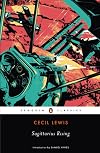
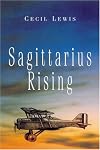
Sent to France with the Royal Flying Corps at just 17, and later a member of the famous 56 Squadron, Cecil Lewis was an illustrious and passionate fighter pilot of World War I, described by Bernard Shaw in 1935 as "a thinker, a master of words, and a bit of a poet." In this vivid and spirited account the author evocatively sets his love of the skies and flying against his bitter experience of the horrors of war, as we follow his progress from France and the battlefields of the Somme, to his show more pioneering defense of London against deadly nighttime raids. show lessTags
Recommendations

















Member Recommendations

Member Reviews
Cecil Lewis's SAGITTARIUS RISING probably does deserve its classic status. It is, after al, a memoir of the role of aviation in the First World War. Aviators at that time were true pioneers, and most of them were brave - or foolish - daredevils to boot, tempting fate every time they took to the sky in their fragile machines.
I read the book mainly because this new edition from Penguin Classics (2014) features an introduction by one of my favorite authors, Samuel Hynes. Hynes's FLIGHTS OF PASSAGE is perhaps one of the best WWII memoirs about flying. And, more recently, Hynes wrote an excellent and very personal sort of history of WWI aviators, THE UNSUBSTANTIAL AIR. I loved both of those books.
Unfortunately, although I loved the show more Introduction, the Lewis book fell a bit flat for me as a memoir. The style seemed overly ornate and the language dated - to be expected, I suppose, but Lewis's many stories and anecdotes of the flying exploits by him and his fellow pilots too quickly became redundant, to the point that I began skimming long portions of the narrative. Yes, he talks of his training, mates lost in fiery crashes, stupid mistakes made by himself and others, of his growing sense of mortality, and, sometimes, burnout and dread which got him posted temporarily back to England from France. He describes his many sorties over the long days of the Somme, near misses and mechanical failures, getting lost and forced landings - all those things are in there. He also gives a glimpse into his post-war days as a civilian pilot instructor in China - mostly a fruitless enterprise.
Lewis wrote his book twenty years after the war, when he was not yet forty, but felt like his life was half over. (In fact he lived to be 99.) He makes a number of comments about war that are still true in these days of global war and terrorist strikes everywhere, and the accompanying political rants so ubiquitous in today's news.
"People who cannot learn from their mistakes are damned ... What have we learned from ours? We are, collectively, the most evil and destructive of human creatures. We back up our greeds and jealousies with religion and patriotism ... No one knows where to put their faith, so they believe nothing. Moral and social standards are confused ... The fear of feeling the ground slipping from under their feet drives whole nations back into mediaeval despotism ... But emulating the ostrich, though it may bring relief for a space, does not solve the problem. It leads straight back to self-immolation on the altar of outworn patriotism, that is, to barbarism ..."
Lewis made these observations in 1936. Hmm ... Not much has changed in eighty years, has it?
He contemplated higher things too, remembering "the cynical wartime prayer: 'O God - if there is a God, save my soul - if I have a soul.'" But Lewis believed he had a soul - "a drop of the Life Force" - although he wasn't sure about heaven and displayed a dark sense of humor.
"If, in heaven, my grosser qualities were to be purged away, leaving me all 'good,' so much the worse. The devil was the pepper in my curry; remove it, and how flat the dish would taste."
And, speaking of his 'grosser qualities,' Lewis is disappointingly circumspect about his 'jolly good times' when he was on home leave, although there are intimations of a girl friend or two. Perhaps it's his 'gentlemen don't tell tales' training. Nevertheless, there is not very much of his personal life here, aside from some time spent with this philosopher father, who enlisted in the army, refusing to take a commission.
Bottom line: SAGITTARIUS RISING is a worthy, if not terribly interesting book. I would recommend it to readers interested in the history of aviation and warfare. (But I still think that the Hynes books are much better.)
- Tim Bazzett, author of the memoir, BOOKLOVER show less
I read the book mainly because this new edition from Penguin Classics (2014) features an introduction by one of my favorite authors, Samuel Hynes. Hynes's FLIGHTS OF PASSAGE is perhaps one of the best WWII memoirs about flying. And, more recently, Hynes wrote an excellent and very personal sort of history of WWI aviators, THE UNSUBSTANTIAL AIR. I loved both of those books.
Unfortunately, although I loved the show more Introduction, the Lewis book fell a bit flat for me as a memoir. The style seemed overly ornate and the language dated - to be expected, I suppose, but Lewis's many stories and anecdotes of the flying exploits by him and his fellow pilots too quickly became redundant, to the point that I began skimming long portions of the narrative. Yes, he talks of his training, mates lost in fiery crashes, stupid mistakes made by himself and others, of his growing sense of mortality, and, sometimes, burnout and dread which got him posted temporarily back to England from France. He describes his many sorties over the long days of the Somme, near misses and mechanical failures, getting lost and forced landings - all those things are in there. He also gives a glimpse into his post-war days as a civilian pilot instructor in China - mostly a fruitless enterprise.
Lewis wrote his book twenty years after the war, when he was not yet forty, but felt like his life was half over. (In fact he lived to be 99.) He makes a number of comments about war that are still true in these days of global war and terrorist strikes everywhere, and the accompanying political rants so ubiquitous in today's news.
"People who cannot learn from their mistakes are damned ... What have we learned from ours? We are, collectively, the most evil and destructive of human creatures. We back up our greeds and jealousies with religion and patriotism ... No one knows where to put their faith, so they believe nothing. Moral and social standards are confused ... The fear of feeling the ground slipping from under their feet drives whole nations back into mediaeval despotism ... But emulating the ostrich, though it may bring relief for a space, does not solve the problem. It leads straight back to self-immolation on the altar of outworn patriotism, that is, to barbarism ..."
Lewis made these observations in 1936. Hmm ... Not much has changed in eighty years, has it?
He contemplated higher things too, remembering "the cynical wartime prayer: 'O God - if there is a God, save my soul - if I have a soul.'" But Lewis believed he had a soul - "a drop of the Life Force" - although he wasn't sure about heaven and displayed a dark sense of humor.
"If, in heaven, my grosser qualities were to be purged away, leaving me all 'good,' so much the worse. The devil was the pepper in my curry; remove it, and how flat the dish would taste."
And, speaking of his 'grosser qualities,' Lewis is disappointingly circumspect about his 'jolly good times' when he was on home leave, although there are intimations of a girl friend or two. Perhaps it's his 'gentlemen don't tell tales' training. Nevertheless, there is not very much of his personal life here, aside from some time spent with this philosopher father, who enlisted in the army, refusing to take a commission.
Bottom line: SAGITTARIUS RISING is a worthy, if not terribly interesting book. I would recommend it to readers interested in the history of aviation and warfare. (But I still think that the Hynes books are much better.)
- Tim Bazzett, author of the memoir, BOOKLOVER show less
Excellent WW1 flying memoir. Good prose, interesting personal insights and enough of the technical aspects of flying and air warfare above a horrific ground war to maintain interest. Change out the equipment and it would easily emulate the WW2 Battle of Britain as fought by similar young men with a cavalier attitude and aristocratic sangfroid.
One of the classic memoirs of WWI, this time of the Royal Flying Corps. Lewis won his wings and went to France with only a total of 13 hours of experience in the air, and a month short of his eighteenth birthday. He describes well the beauty and the terror of flying in those days of open, fragile aircraft when a single bullet in the engine could bring it down in flames. And he writes of the effect of the transience of people in an occupation with, in 1916, a life expectancy of three week:
...for months after, I was to live hypnotized not so much by the dread of death–for death, like the sun, is a thing you cannot look at steadily for ong–as by the menace of the nforseen. Friends, Mess companions, would go out on patrol and never show more come back. Archie, hostile aircraft, and machine-gun fire from the ground all took their toll. As the months went by it seemed only a matter of time until your turn came. You sat down to dinner faced by the empty chairs of men you had laughed and joked with at lunch. They were gone. The next day new men would laugh and joke from those chairs. Some might be lucky and stick it for a bit, some chairs would be empty again very soon. And so it would go on.
One effect was certainly the practice of living day-to-day and abandoning oneself in sex, if one could find it, and wild parties of drinking to oblivion, all as well described by Robinson in Hornet's Sting. Lewis also writes not only as a chronicler of events, but as a philosopher of the effect of the war experience on the broader conduct of society:
The fixity with which men pursued immediate trivialities alarmed and disgusted me. The magnitude of the effort spent on daily futilities was too awful to be faced; it was a sort of St. Vitus dance, bound to end in exhaustion. The mentality of the post-war years was no different from that of the war itself–an obsession to take the next objective whether you wanted it or not, whether you were any better off when you got it or not, whether you had any idea of where to go next or not. It gave men the illusion they were getting something, when, in reality, they were floundering deeper and deeper into chaos. Civilization, I vaguely realized then–and subsequent observation has confirmed the view–could not progress that way. It must have a grater guiding principle to survive. To treat it as a carcase off which each man tears as much as he can for himself, is to stand convicted a brute, fit for nothing better than a jungle existence, which is a death-struggle, leading nowhere. I did not believe that was the human destiny, for Man individually was sane and reasonable, only collectively was he a fool.
Finally, Lewis ruminating on what he sees from the height of an airplane:
With what grace and spontaneity is the world laid out! Man-made order and precision, square, circle, or straight line, is an offence among this greater harmony, wher nothing seems planned, yet all falls home just so. In truth, it cannot last, this mechanical geometrical civilization of ours, for the single and final reason that it does not look right. It offends the aesthetic sense, and that, of all men's senses, is the most deeply rooted and changeless. So, let it go. After all, if we take a perspective in time comparable to the one we have taken in height, how mushroom-like is our scientific epoch. Two hundred years ago it was not thought of. Now it rages, like a cholera epidemic. Soon, having taken its toll, it will die out, leaving us inoculated or immune. That we are doomed to live in thsi feverish age, rushing hither and thither, crying Lo, here! Or Lo, there! Like madmen in a darkened room, is our misfortune; but momentarily withdrawn from it all, sailing godlike above its clamour, comes a curious certainty: it does not matter, it will not last; the world is very foolish, but it is very young. show less
...for months after, I was to live hypnotized not so much by the dread of death–for death, like the sun, is a thing you cannot look at steadily for ong–as by the menace of the nforseen. Friends, Mess companions, would go out on patrol and never show more come back. Archie, hostile aircraft, and machine-gun fire from the ground all took their toll. As the months went by it seemed only a matter of time until your turn came. You sat down to dinner faced by the empty chairs of men you had laughed and joked with at lunch. They were gone. The next day new men would laugh and joke from those chairs. Some might be lucky and stick it for a bit, some chairs would be empty again very soon. And so it would go on.
One effect was certainly the practice of living day-to-day and abandoning oneself in sex, if one could find it, and wild parties of drinking to oblivion, all as well described by Robinson in Hornet's Sting. Lewis also writes not only as a chronicler of events, but as a philosopher of the effect of the war experience on the broader conduct of society:
The fixity with which men pursued immediate trivialities alarmed and disgusted me. The magnitude of the effort spent on daily futilities was too awful to be faced; it was a sort of St. Vitus dance, bound to end in exhaustion. The mentality of the post-war years was no different from that of the war itself–an obsession to take the next objective whether you wanted it or not, whether you were any better off when you got it or not, whether you had any idea of where to go next or not. It gave men the illusion they were getting something, when, in reality, they were floundering deeper and deeper into chaos. Civilization, I vaguely realized then–and subsequent observation has confirmed the view–could not progress that way. It must have a grater guiding principle to survive. To treat it as a carcase off which each man tears as much as he can for himself, is to stand convicted a brute, fit for nothing better than a jungle existence, which is a death-struggle, leading nowhere. I did not believe that was the human destiny, for Man individually was sane and reasonable, only collectively was he a fool.
Finally, Lewis ruminating on what he sees from the height of an airplane:
With what grace and spontaneity is the world laid out! Man-made order and precision, square, circle, or straight line, is an offence among this greater harmony, wher nothing seems planned, yet all falls home just so. In truth, it cannot last, this mechanical geometrical civilization of ours, for the single and final reason that it does not look right. It offends the aesthetic sense, and that, of all men's senses, is the most deeply rooted and changeless. So, let it go. After all, if we take a perspective in time comparable to the one we have taken in height, how mushroom-like is our scientific epoch. Two hundred years ago it was not thought of. Now it rages, like a cholera epidemic. Soon, having taken its toll, it will die out, leaving us inoculated or immune. That we are doomed to live in thsi feverish age, rushing hither and thither, crying Lo, here! Or Lo, there! Like madmen in a darkened room, is our misfortune; but momentarily withdrawn from it all, sailing godlike above its clamour, comes a curious certainty: it does not matter, it will not last; the world is very foolish, but it is very young. show less
I gave this book 5 stars more for the manner in which it was written, than for the "what" that was written. Later in the book I saw that the author claims to some extent to be a poet. No wonder his prose is so engaging! Well written. I have read many books on the air war in WWI. This one stands out because the author deals in many cases with his feelings and perceptions (as well as those of others), not merely the personal experiences of combat and loss. My favorite part of the book is at the end. Here he covers his experiences in China after the war (1920-1921), where is contracted as an instructor for the start-up of the Chinese Air Force. His view of the Chinese culture is most interesting and heart felt. He recognizes the beginning show more of the shift away from the traditional culture toward that of acceptance of the Western culture. Well done. show less
This is a book about a type of flying that is long long gone, except for a few that keep a form of it alive. It was a time when flying was only a dozen years old. When flying machines were cloth, wood and an engine; when instruments were almost nonexistent and death was everywhere.
This writing is worth your time; the writing, I think, is beautiful. It is a story of youth, daring and danger written by poetic teenager who fought in a terrible war.
This writing is worth your time; the writing, I think, is beautiful. It is a story of youth, daring and danger written by poetic teenager who fought in a terrible war.
Sent to France with the Royal Flying Corps at just 17, and later a member of the famous 56 Squadron, Cecil Lewis was an illustrious and passionate fighter pilot of World War I, described by Bernard Shaw in 1935 as "a thinker, a master of words, and a bit of a poet." In this vivid and spirited account the author evocatively sets his love of the skies and flying against his bitter experience of the horrors of war, as we follow his progress from France and the battlefields of the Somme, to his pioneering defense of London against deadly nighttime raids.
Cecil Lewis distinguished himself in action with eight victories throughout WWI and was awarded the Military Cross. After the war he became a flying instructor in China and later achieved show more fame as one of the founders of the BBC and as a respected playwright, winning an Oscar for the screenplay of Pygmalian. He died in 1997. show less
Cecil Lewis distinguished himself in action with eight victories throughout WWI and was awarded the Military Cross. After the war he became a flying instructor in China and later achieved show more fame as one of the founders of the BBC and as a respected playwright, winning an Oscar for the screenplay of Pygmalian. He died in 1997. show less
Autobiography of a WWI British pilot. He tends to wax poetical and when he describes flying it makes you long to take flight and soar through the clouds free of everything.
Some good history about the war from the flying perspective. He lived thru some thick action and once returned from a long weekend away to find most of his fellow airmen killed. He was one of the lucky few who survived. He joined at 17 and I think served for four years.
He spends a little bit of time after the main of the book talking about the time he spent in China after the war trying to help them learn to fly. He describes the way non-Chinese society segregated themselves and often looked down on the Chinese. He found it difficult to teach them, in a large part show more due to the language barrier. show less
Some good history about the war from the flying perspective. He lived thru some thick action and once returned from a long weekend away to find most of his fellow airmen killed. He was one of the lucky few who survived. He joined at 17 and I think served for four years.
He spends a little bit of time after the main of the book talking about the time he spent in China after the war trying to help them learn to fly. He describes the way non-Chinese society segregated themselves and often looked down on the Chinese. He found it difficult to teach them, in a large part show more due to the language barrier. show less
Members
- Recently Added By
Lists

Folio Society
831 works; 53 members

Die Andere Bibliothek
8 works; 1 member

r/AskHistorians' Recommended Books
1,068 works; 19 members

A Good Read (Radio 4)
287 works; 1 member
Author Information

13 Works 520 Members
Some Editions
Series
Belongs to Publisher Series
Common Knowledge
- Original title
- Sagittarius Rising
- Original publication date
- 1936
- People/Characters
- Cecil Lewis
- Important events
- World War I
- First words
- There are fortunate men to whom life is a continuous developing pattern, whose education leads them on to a career that carries them, almost in spite of themselves, to a place in the world from which, as their powers desert t... (show all)hem, they withdraw to ease and seclusion, and whose final demise is as quiet and completing as the full stop at the end of a long and well-constructed sentence.
- Last words
- (Click to show. Warning: May contain spoilers.)But I did not hear.
Classifications
Statistics
- Members
- 442
- Popularity
- 69,348
- Reviews
- 10
- Rating
- (4.15)
- Languages
- English, German, Russian
- Media
- Paper, Audiobook, Ebook
- ISBNs
- 19
- UPCs
- 1
- ASINs
- 24