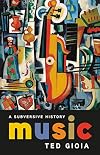
Music: A Subversive History
by Ted Gioia
On This Page
Description
Gioia tells a 4,000-year history of music as a global source of power, change, and upheaval. He shows how social outcasts have repeatedly become trailblazers of musical expression.Tags
Recommendations





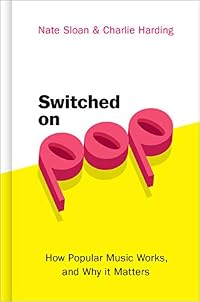
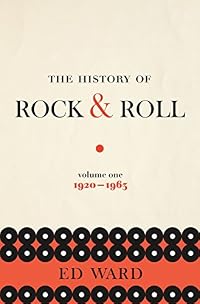
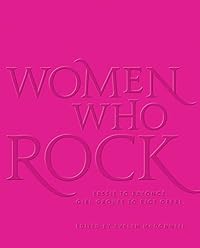



Member Recommendations
Member Reviews
Music: A Subversive History by Ted Gioia started out by surprising me and ended up by blowing me away. Not what I had expected, as in: much more than I expected.
I love to read music histories. Most tend to be about a specific genre, maybe about an era, sometimes about an instrument. The few I have read that are a history of music as a whole still tend to be selective with what is considered music (or at least what they deem worthy of inclusion) and/or limited by a broad style (western vs eastern; tonal vs atonal). This book not only covers all of these but goes so far as to start with the Big Bang. Yes, that Big Bang.
The breadth of topics covered through the portal of music and musicality is breathtaking. From prehistoric ideas of how show more music might have been used through various institutional attempts to control and limit music to the idea of music as primarily entertainment divorced from any practical purpose, Gioia cuts a wide path through not just music history but human history.
He manages to not only cover all of this information but make some arguments for how music has been pivotal in history itself and even some insight into specific musicians (Beethoven, Parker, etc). I think because of the wide sweep through history this book will appeal to a wide range of readers, though admittedly certain sections may be more appealing than others. For scholars in various disciplines this may well indicate how music (broadly defined) might be incorporated into future research. For casual readers I think Gioia has managed to not get bogged down in any one area or time so that even if your primary interest might be a specific time the rest of the book will still interest you. And the early points he makes serve quite often as part of the foundation for later discussions in the book, so reading every section, even if not your main interest area, is highly recommended.
While acknowledging that there will no doubt be some people who don't want this exhaustive or comprehensive history of music, I can't really think of any particular group of readers to whom I wouldn't recommend the book.
Reviewed from a copy made available by the publisher via NetGalley. show less
I love to read music histories. Most tend to be about a specific genre, maybe about an era, sometimes about an instrument. The few I have read that are a history of music as a whole still tend to be selective with what is considered music (or at least what they deem worthy of inclusion) and/or limited by a broad style (western vs eastern; tonal vs atonal). This book not only covers all of these but goes so far as to start with the Big Bang. Yes, that Big Bang.
The breadth of topics covered through the portal of music and musicality is breathtaking. From prehistoric ideas of how show more music might have been used through various institutional attempts to control and limit music to the idea of music as primarily entertainment divorced from any practical purpose, Gioia cuts a wide path through not just music history but human history.
He manages to not only cover all of this information but make some arguments for how music has been pivotal in history itself and even some insight into specific musicians (Beethoven, Parker, etc). I think because of the wide sweep through history this book will appeal to a wide range of readers, though admittedly certain sections may be more appealing than others. For scholars in various disciplines this may well indicate how music (broadly defined) might be incorporated into future research. For casual readers I think Gioia has managed to not get bogged down in any one area or time so that even if your primary interest might be a specific time the rest of the book will still interest you. And the early points he makes serve quite often as part of the foundation for later discussions in the book, so reading every section, even if not your main interest area, is highly recommended.
While acknowledging that there will no doubt be some people who don't want this exhaustive or comprehensive history of music, I can't really think of any particular group of readers to whom I wouldn't recommend the book.
Reviewed from a copy made available by the publisher via NetGalley. show less
This is grand fun. Gioia covers the history of song from ancient Greece and Egypt up through Spotify. It's almost all European music... for sure, how non-European influences have constantly revitalized European music, but nothing about e.g. how southern Indian music has revitalized northern Indian music etc. He certainly proposes this kind of outsider-insider dynamic as fundamental to the evolution of music, but his examples are all Euro-centric. Well, it's a big fat book already! Maybe we need a series of books to follow this one, to cover different musical traditions around the world.
I am a big fan of mathematical music. Gioia see mathematics as opposed to magic. I would say that mathematics is more a battleground itself, show more encompassing magic and chaos along with stable order. Actually it could be a grand fun project, to write a book parallel to this one, like Science and Mathematics: A Subversive History. To show how the same cycle of revolution and legitimization happens in science and math. Maybe Thomas Kuhn already did that.
Well this book of Gioia taps into deep waters in a very effective way. He doesn't exhaust or encompass the terrain, but he opens a gate. That's a lot! show less
I am a big fan of mathematical music. Gioia see mathematics as opposed to magic. I would say that mathematics is more a battleground itself, show more encompassing magic and chaos along with stable order. Actually it could be a grand fun project, to write a book parallel to this one, like Science and Mathematics: A Subversive History. To show how the same cycle of revolution and legitimization happens in science and math. Maybe Thomas Kuhn already did that.
Well this book of Gioia taps into deep waters in a very effective way. He doesn't exhaust or encompass the terrain, but he opens a gate. That's a lot! show less
Gioia's manifesto could use a little better organization. For the first several chapters, it feels like he is still getting started. It takes until maybe the 18th century before the book gains a real flow. But along the way he makes good points, the most notable being that music existed long before Pythagoras created the musical scale and all sorts of rules that most songwriters and composers ever since have felt bound to follow. Just think about that idea for a minute, and it alone should transform the way you think about music Gioia also shows how time after time outsiders create the innovations that are later (surprisingly soon, actually) adopted (and co-opted) by the mainstream. He takes issue with mainstream musical historians who show more are so intent on following the orthodoxy that they don't look beyond the traditional academic boundaries to see what music is really about. Gioia's arguments are convincing throughout and he'll have you taking a look at music in a more open way than perhaps you have before--especially if you have been limiting your exposure to only a part of the incredible diversity music has to offer.
I should also point out that Gioia's book, while extensively researched and with lots of references, is not full of hard-to-read academic jargon. It is written for intelligent readers, but his writing style is clear and direct. show less
I should also point out that Gioia's book, while extensively researched and with lots of references, is not full of hard-to-read academic jargon. It is written for intelligent readers, but his writing style is clear and direct. show less
I only managed the introduction and a few pages of the first chapter before I became so irritated I gave up.
Ratings
Members
- Recently Added By
Lists

Music
89 works; 1 member
Author Information

16+ Works 2,271 Members
Ted Gioia is a music historian and the author of eleven books, including How to Listen to Jazz. His three previous books on the social history of music- Work Songs, Healing Songs, and Love Songs-have each been honored with the ASCAP Deems Taylor Award. Gioia's wide-ranging activities as a critic, scholar, performer, and educator have established show more him as a leading global guide to music past, present, and future. show less
Awards and Honors
Awards
Distinctions
Common Knowledge
- Alternate titles
- Subversive History: Music
Classifications
Statistics
- Members
- 209
- Popularity
- 154,809
- Reviews
- 4
- Rating
- (4.03)
- Languages
- English, Spanish
- Media
- Paper, Audiobook, Ebook
- ISBNs
- 11
- ASINs
- 3