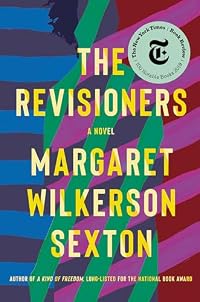
The Revisioners
by Margaret Wilkerson Sexton
On This Page
Description
This New York Times Book Review Notable Book of the Year is "a powerful tale of racial tensions across generations" (People) that explores the depths of women’s relationships—powerful women and marginalized women, healers and survivors.In 1924, Josephine is the proud owner of a thriving farm. As a child, she channeled otherworldly power to free herself from slavery. Now her new neighbor, a white woman named Charlotte, seeks her company, and an uneasy friendship grows between show more them. But Charlotte has also sought solace in the Ku Klux Klan, a relationship that jeopardizes Josephine’s family.
Nearly one hundred years later, Josephine’s descendant, Ava, is a single mother who has just lost her job. She moves in with her white grandmother, Martha, a wealthy but lonely woman who pays Ava to be her companion. But Martha’s behavior soon becomes erratic, then threatening, and Ava must escape before her story and Josephine’s converge.
The Revisioners explores the depths of women’s relationships—powerful women and marginalized women, healers and survivors. It is a novel about the bonds between mothers and their children, the dangers that upend those bonds. At its core, The Revisioners ponders generational legacies, the endurance of hope, and the undying promise of freedom.
"[A] stunning new novel . . . Sexton’s writing is clear and uncluttered, the dialogue authentic, with all the cadences of real speech . . . This is a novel about the women, the mothers." ?The New York Times Book Review. show less
Tags
Recommendations


















Member Reviews
The Revisioners by author Margaret Wilkerson Sexton tells the story of two African American women who live in New Orleans a century apart. Josephine' s story is split between two timelines - 1855 when she is 12 years old, a slave and the daughter of a woman with a gift for making things happen and 1924 when she is a widow with land of her own and her own gift. Ava's story begins in 2017. She is bi-racial, Josephine's great-great-granddaughter, and the single mother of King, her 12 year old son.
The story alternates between the two women but there are many parallels between their stories. It opens with Ava who, thanks to some financial difficulties, has agreed to move in with her aging white grandmother who is beginning to show signs of show more dementia. In 1924, Josephine, having escaped slavery and managed to acquire land of her own, is doing well until a white couple moves in next door. Josephine, at first does everything to stop the white woman's attempts at friendship but eventually begins to enjoy their visits despite her mistrust - she knows too well the dangers of such a friendship.
The Revisioners is a beautiful and beautifully written story. It is heartbreaking, powerful, moving, and, ultimately, hopeful.The word 'amazing' seems somehow trite for this book but it was the first word that sprang to my mind when trying to write this review. I read it without stopping and, even now, days later, the story of these two women has staid with me.
Thanks to Edelweiss+ and Counterpoint for the opportunity to read this book in exchange for an honest review show less
The story alternates between the two women but there are many parallels between their stories. It opens with Ava who, thanks to some financial difficulties, has agreed to move in with her aging white grandmother who is beginning to show signs of show more dementia. In 1924, Josephine, having escaped slavery and managed to acquire land of her own, is doing well until a white couple moves in next door. Josephine, at first does everything to stop the white woman's attempts at friendship but eventually begins to enjoy their visits despite her mistrust - she knows too well the dangers of such a friendship.
The Revisioners is a beautiful and beautifully written story. It is heartbreaking, powerful, moving, and, ultimately, hopeful.The word 'amazing' seems somehow trite for this book but it was the first word that sprang to my mind when trying to write this review. I read it without stopping and, even now, days later, the story of these two women has staid with me.
Thanks to Edelweiss+ and Counterpoint for the opportunity to read this book in exchange for an honest review show less
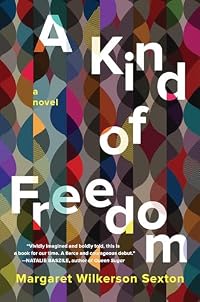
This is the author's second book that contains multitudes. Her debut novel, A Kind Of Freedom, non-linearly told a story of four generations; this one goes back to 1855 and a secret group, the Revisioners, taking Harriet Tubman's Moses path and sending off one member per year to attempt escape from a Louisiana plantation. Throughout the family history, white men, as oppressors and partners, abandon the women of the family, or worse. The 1920s finds widow Josephine, former Revisioner and now a free landowner, owning and managing a farm until a white family moves next door and summons the Klan. In 2017 New Orleans, descendant Ava moves in to care for her white grandmother Martha, who is receding into vicious racism via dementia. Ava's show more mother Gladys is a powerful doula who cares for the souls and bodies of a group of pregnant girls while contending with strong visions of ancestor Josephine. The success and tragedy in all three lives is filled with poetry in the form of hymns and chants and the spirits of the ancestors. show less
This is a novel about three generations of black women in 1855, 1927 and 2017 telling about the joys and struggles that they face..All three have complex relationships with white people in their lives. Also, family and childbirth is a major theme with all three. The author skillfully moves randomly between the three time periods. Ultimately the book is uplifting as they all survive their struggles with style without compromising what they believe in. I liked the book and it is well worth reading.
This is a multi-generational novel, that follows several different timelines, beginning in the Civil War/slavery era, then into 1920s, New Orleans and then follows these descendants into current times. The author masterfully weaves these stories together, emphasizing the African American experience, and their constant struggle, witnessing very little change over the many turbulent, decades. An impressive work.
Strong mother, daughter bonds. They were once slaves, but a future generation will own their own property. In Louisiana, how free is actually free when one is black, even if they do own land of their own? Slavery, escaping from slavery and a freedom that is not in only the seems but for these women, in the unseen as well. A power passed down to future daughters. The lasting effects of slavery and the power and barbarity of the KKK.
The novel is clearly written, powerfully written and though it moves backwards and forwards in time, I found this effective for this story. It is not a story with a clear cut plot, but one where it is the women, their stories that are the main focus. How a mother is always present for the daughter, dead or show more living, never forgotten. Although the slavery sections are never easy to read, it is a hopeful novel, one where each generation is aware of the sacrifices of the prior generation. It is a novel of love, again love that is seen, but also the love that everyone cannot see. I felt this was an authentic novel, no cliches, nor over dramatization. Just a solid, good read. show less
The novel is clearly written, powerfully written and though it moves backwards and forwards in time, I found this effective for this story. It is not a story with a clear cut plot, but one where it is the women, their stories that are the main focus. How a mother is always present for the daughter, dead or show more living, never forgotten. Although the slavery sections are never easy to read, it is a hopeful novel, one where each generation is aware of the sacrifices of the prior generation. It is a novel of love, again love that is seen, but also the love that everyone cannot see. I felt this was an authentic novel, no cliches, nor over dramatization. Just a solid, good read. show less
Solid 3.5.
I tends to like books with non-linear timelines. And I love family sagas. This one hit both of those, as the story jumps back and forth between 1855, 1924, and 2017. And I liked the story, with 1855 and 1924 Josephine, born a slave and later a midwife and landowner, and her modern-day descendants Ava and her mother--a doula in training and a doula. I was a little confused as to how exactly, they descended from Josephine, if they are also Revisioners as Josephine may have been? Or are the revisioners only important because their skills enabled slaves to escape north? What exactly happened between Ava's mom and Ava's white grandmother that she is now caretaker for?
I would have enjoyed this much more if it was twice as long and show more all then holes filled in. show less
I tends to like books with non-linear timelines. And I love family sagas. This one hit both of those, as the story jumps back and forth between 1855, 1924, and 2017. And I liked the story, with 1855 and 1924 Josephine, born a slave and later a midwife and landowner, and her modern-day descendants Ava and her mother--a doula in training and a doula. I was a little confused as to how exactly, they descended from Josephine, if they are also Revisioners as Josephine may have been? Or are the revisioners only important because their skills enabled slaves to escape north? What exactly happened between Ava's mom and Ava's white grandmother that she is now caretaker for?
I would have enjoyed this much more if it was twice as long and show more all then holes filled in. show less
The author took her time to weave together the past and the present in such a way that you could see the characters in their time and space. This story made me cheer, cry, and think out loud while shopping. The only reason I did not give this story 5 stars was because of the ending. I will say no more.
Members
- Recently Added By
Lists

Kirkus Starred Fiction Reviews of Books Published in 2019
411 works; 12 members
Author Information

5 Works 959 Members
Awards and Honors
Common Knowledge
- Canonical title
- The Revisioners
- Original publication date
- 2019-11-05
- Important places
- American South
Classifications
Statistics
- Members
- 317
- Popularity
- 100,218
- Reviews
- 14
- Rating
- (3.74)
- Languages
- English
- Media
- Paper, Audiobook, Ebook
- ISBNs
- 11
- ASINs
- 2