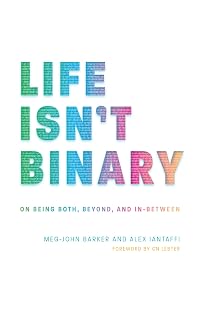
Life Isn't Binary
by Meg-John Barker, Alex Iantaffi
On This Page
Description
Much of society's thinking operates in a highly rigid and binary manner; something is good or bad, right or wrong, a success or a failure, and so on. Challenging this limited way of thinking, this ground-breaking book looks at how non-binary methods of thought can be applied to all aspects of life, and offer new and greater ways of understanding ourselves and how we relate to others. Using bisexual and non-binary gender experiences as a starting point, this book addresses the key issues with show more binary thinking regarding our relationships, bodies, emotions, wellbeing and our sense of identity and sets out a range of practices which may help us to think in more non-binary, both/and, or uncertain ways. A truly original and insightful piece, this guide encourages reflection on how we view and understand the world we live in and how we all bend, blur or break society's binary codes. show lessTags
Recommendations




Member Reviews
Cast aside flat black and white binaries.
See textured landscapes of many colours.
Be kind.
(Source of background.)
Labels (seem to) make life easier, and binary ones even more so.
We fall into using them, unthinkingly and often unquestioningly.
But there are way more grey areas than black and white ones.
Binaries constrain. Even two-dimensional spectrums do.
And they rarely reflect the world as it is.
This book starts with the obvious topics of sexualities (beyond gay/straight) and genders (beyond female/male). Subsequent chapters extend non-binary ideas about both/and (rather than either/or, let alone the divisive, distancing us/them) to:
• Relationships
• Bodies
• Emotions
• Thinking
It occasionally draws on Buddhist mindfulness, queer show more theory, and Paganism, which might have put me off a little had I known in advance, but, it’s all very chatty, readable, relatable, and chunked, so it’s easy to dip in and out.
This book is for you. Yes, YOU
Even if you think LGBTQI+ is “political correctness gone mad”, that gender-fluidity is a faddish label for something that doesn’t exist, or that none of this is relevant to you, you’ll discover that non-binary thinking is liberating and practical, less judgemental and less confrontational.
I read this to better understand my non-binary genderfulid twenty-something, and I think I do. The huge and unexpected bonus is how much better I understand myself, a straight white cisgender woman.
Image: Marbling hands (Source.)
Short video of body marbling HERE
In between the binaries
The Ancient Greeks had seven words for different types of love. We often settle for loving - or not - and many other binaries, all of which are covered, including:
Abled/disabled, black/white, natural/unnatural, normal/abnormal, stupid/clever, educated/ignorant, nature/nurture, old/young, urban/rural, poor/rich, mad/sane, left/right (Conservative/Labour or Brexit/remain or GOP/Democrat), male/female, cis/trans, binary/non-binary, gay/straight, coupled/single, monogamous/non-monogamous, partner/friend, sexual/platonic, ugly/pretty, good/bad, happy/sad, right/wrong, mind/body, emotional/rational, pleasure/pain, gain/loss, praise/blame, fame/disgrace...
Sometimes binaries are coupled in explicitly judgemental ways: gay = unnatural and therefore wrong, for example. But normal, natural, and widespread doesn’t necessarily correlate with good: genius and altruism are abnormal and not widespread, but clearly good, and medicine is widespread but unnatural.
So much of what we read and watch about trans people frames their story as a journey from one binary gender all the way to the opposite one, but that's not necessarily the case. Some trans people are closer to non-binary or genderfluid, and genital dysphoria is not always a major component of a person’s gender dysphoria. We’re in a strange, paradoxical time when many are more open to non-binary ideas of gender just as ultrasound (sonograms) and Instagram make gender reveals the first and primary thing we know about an unborn baby. But gender is bio psycho social construct (identity, role, expression) - see Sally Hines’ excellent Is Gender Fluid? My review is HERE.
(Source of background.)
There are some binaries we readily accept are not really binary. For example, there are more colours and races that black and white, and a near infinite number of blendings (race isn’t a biological category anyway). Most people accept that bisexuality exists, even if they tend judge bi people on their current relationship, so push them towards gay or straight.
Other binaries are ones that change during a life: young to old, obviously, but some people start abled and become disabled. Happiness, education, wealth, and class can change, too. More controversially, the authors demonstrate that some people change sexuality, or evolve to acknowledge attraction in different ways, which is a challenge to the “born that way” gay rights argument.
Binaries can be harmful even to those in the privileged majority: trapping them there, think there is no alternative, or that it’s too risky.
Some binaries are so institutionally embedded they’re hard to break: the two-party system is not working well in the UK or US at present, but it’s difficult for centrist or alternative parties to flourish, and easy for deliberately divisive rhetoric to entrench the binary division.
Too many labels?
I’ve sometimes wondered why people want so many labels to choose between (there are multiple types of asexuality alone for example).
My kid explained that for them and their queer (the word is reclaimed, as an umbrella term) friends it’s about community: safe spaces, shared experiences, representation, support, and belonging. The same point is made here. Being (gender) non-conforming or eccentric is not the same, and not necessarily sufficient.
Singular “they”
Both authors prefer “they” as a personal pronoun. MJ says “I experience myself as pretty plural”.
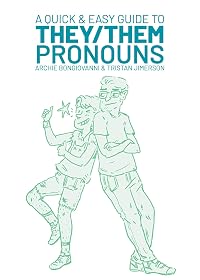
I explain this in detail in my review of A Quick & Easy Guide to They/Them Pronouns by Archie Bongiovanni and Tristan Jimerson, HERE.
Key lessons
• Consider both/and, rather than either/or.
• See landscapes, not binary good/bad.
• Embrace uncertainty, in yourself and the world around.
• Debate isn’t inherently good: beware false equivalency, giving legitimacy to false beliefs to be “fair”.
• Learn from conflict.
Image: Rabbit God versus Duck God, by Paul Noth
Binary thinking is inaccurate and limiting. It’s clearly damaging for oppressed minorities who don’t fit, but those who seem to be privileged can be trapped, too.
• Be kind, don’t judge, and be open to tangential outcomes and compromises.
• Informed consent of those directly affected is what matters.
• Context is all.
For examples of the power and dangers of false binaries and false equivalents used for political ends, see Steven Pool's excellent Unspeak: How Words Become Weapons, HERE.
Categorising
Appropriately, this book does not fit a single, binary label.
• It is both self-help and a textbook.
• It is both a treatise and a dual autobiography.
• And both a mirror and a window.
Image: “Mirror or window?” Shanghai, China, by patrizia zanetti (Source.)
A parable
This Taoist parable is included to demonstrate why it's futile and unhelpful to view everything in terms of good and bad:
See textured landscapes of many colours.
Be kind.
(Source of background.)
Labels (seem to) make life easier, and binary ones even more so.
We fall into using them, unthinkingly and often unquestioningly.
But there are way more grey areas than black and white ones.
Binaries constrain. Even two-dimensional spectrums do.
And they rarely reflect the world as it is.
This book starts with the obvious topics of sexualities (beyond gay/straight) and genders (beyond female/male). Subsequent chapters extend non-binary ideas about both/and (rather than either/or, let alone the divisive, distancing us/them) to:
• Relationships
• Bodies
• Emotions
• Thinking
It occasionally draws on Buddhist mindfulness, queer show more theory, and Paganism, which might have put me off a little had I known in advance, but, it’s all very chatty, readable, relatable, and chunked, so it’s easy to dip in and out.
This book is for you. Yes, YOU
Even if you think LGBTQI+ is “political correctness gone mad”, that gender-fluidity is a faddish label for something that doesn’t exist, or that none of this is relevant to you, you’ll discover that non-binary thinking is liberating and practical, less judgemental and less confrontational.
I read this to better understand my non-binary genderfulid twenty-something, and I think I do. The huge and unexpected bonus is how much better I understand myself, a straight white cisgender woman.
Image: Marbling hands (Source.)
Short video of body marbling HERE
In between the binaries
The Ancient Greeks had seven words for different types of love. We often settle for loving - or not - and many other binaries, all of which are covered, including:
Abled/disabled, black/white, natural/unnatural, normal/abnormal, stupid/clever, educated/ignorant, nature/nurture, old/young, urban/rural, poor/rich, mad/sane, left/right (Conservative/Labour or Brexit/remain or GOP/Democrat), male/female, cis/trans, binary/non-binary, gay/straight, coupled/single, monogamous/non-monogamous, partner/friend, sexual/platonic, ugly/pretty, good/bad, happy/sad, right/wrong, mind/body, emotional/rational, pleasure/pain, gain/loss, praise/blame, fame/disgrace...
Sometimes binaries are coupled in explicitly judgemental ways: gay = unnatural and therefore wrong, for example. But normal, natural, and widespread doesn’t necessarily correlate with good: genius and altruism are abnormal and not widespread, but clearly good, and medicine is widespread but unnatural.
So much of what we read and watch about trans people frames their story as a journey from one binary gender all the way to the opposite one, but that's not necessarily the case. Some trans people are closer to non-binary or genderfluid, and genital dysphoria is not always a major component of a person’s gender dysphoria. We’re in a strange, paradoxical time when many are more open to non-binary ideas of gender just as ultrasound (sonograms) and Instagram make gender reveals the first and primary thing we know about an unborn baby. But gender is bio psycho social construct (identity, role, expression) - see Sally Hines’ excellent Is Gender Fluid? My review is HERE.
(Source of background.)
There are some binaries we readily accept are not really binary. For example, there are more colours and races that black and white, and a near infinite number of blendings (race isn’t a biological category anyway). Most people accept that bisexuality exists, even if they tend judge bi people on their current relationship, so push them towards gay or straight.
Other binaries are ones that change during a life: young to old, obviously, but some people start abled and become disabled. Happiness, education, wealth, and class can change, too. More controversially, the authors demonstrate that some people change sexuality, or evolve to acknowledge attraction in different ways, which is a challenge to the “born that way” gay rights argument.
Binaries can be harmful even to those in the privileged majority: trapping them there, think there is no alternative, or that it’s too risky.
Some binaries are so institutionally embedded they’re hard to break: the two-party system is not working well in the UK or US at present, but it’s difficult for centrist or alternative parties to flourish, and easy for deliberately divisive rhetoric to entrench the binary division.
Too many labels?
I’ve sometimes wondered why people want so many labels to choose between (there are multiple types of asexuality alone for example).
My kid explained that for them and their queer (the word is reclaimed, as an umbrella term) friends it’s about community: safe spaces, shared experiences, representation, support, and belonging. The same point is made here. Being (gender) non-conforming or eccentric is not the same, and not necessarily sufficient.
Singular “they”
Both authors prefer “they” as a personal pronoun. MJ says “I experience myself as pretty plural”.
I explain this in detail in my review of A Quick & Easy Guide to They/Them Pronouns by Archie Bongiovanni and Tristan Jimerson, HERE.
Key lessons
• Consider both/and, rather than either/or.
• See landscapes, not binary good/bad.
• Embrace uncertainty, in yourself and the world around.
• Debate isn’t inherently good: beware false equivalency, giving legitimacy to false beliefs to be “fair”.
• Learn from conflict.
Image: Rabbit God versus Duck God, by Paul Noth
Binary thinking is inaccurate and limiting. It’s clearly damaging for oppressed minorities who don’t fit, but those who seem to be privileged can be trapped, too.
• Be kind, don’t judge, and be open to tangential outcomes and compromises.
• Informed consent of those directly affected is what matters.
• Context is all.
For examples of the power and dangers of false binaries and false equivalents used for political ends, see Steven Pool's excellent Unspeak: How Words Become Weapons, HERE.
Categorising
Appropriately, this book does not fit a single, binary label.
• It is both self-help and a textbook.
• It is both a treatise and a dual autobiography.
• And both a mirror and a window.
Image: “Mirror or window?” Shanghai, China, by patrizia zanetti (Source.)
A parable
This Taoist parable is included to demonstrate why it's futile and unhelpful to view everything in terms of good and bad:
The situation... is like that of the wise Chinese farmer whose horse ran off. When his neighbour came to console him the farmer said, "Who knows what's good or bad?"show less
When his horse returned the next day with a herd of horses following her, the foolish neighbour came to congratulate him on his good fortune. "Who knows what's good or bad?" said the farmer.
Then, when the farmer's son broke his leg trying to ride one of the new horses, the foolish neighbour came to console him again. "Who knows what's good or bad?" said the farmer.
When the army passed through, conscripting men for the war, they passed over the farmer's son because of his broken leg. When the foolish man came to congratulate the farmer that his son would be spared, again the farmer said, "Who knows what's good or bad?"
When do we expect the story to end?
Life Isn't Binary has, without a doubt, been one of the greatest books on gender, sexuality, race, ability, creed, etc. that I have ever read; which means you should read it too! This book is a quick and easy read and will serve as a great entry for anyone who is looking for a better way to understand not only gender and sexuality but all other identities from a non-binary point of view or for anyone who just wants an easy book to help them understand their own identity better. I thought that this book would primarily be about gender but the authors touched many different other things as well and even discussed topics I have never heard of before (i.e. ecosexuality).
This book was fantastic and I would definitely recommend it to anyone show more who is looking for a better way to understand the world around them. show less
This book was fantastic and I would definitely recommend it to anyone show more who is looking for a better way to understand the world around them. show less
Included in a blog post and resource list at https://booksbeyondbinaries.blog/2019/06/10/non-fiction-about-gender-and-trans-e...
Ratings
Members
- Recently Added By
Lists

LQW Research Reading List
75 works; 1 member
Author Information

31+ Works 1,809 Members

10+ Works 391 Members
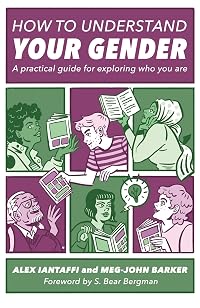
Dr Alex Iantaffi is the co-author of How to Understand Your Gender and Life Isn't Binary. They have researched and published extensively on gender, disability, sexuality, and relationship issues. You can find out more about them at www.alexiantaffi.com or follow them on Twitter @XTaffi.
Classifications
- Genres
- Sexuality and Gender Studies, Nonfiction, General Nonfiction, LGBTQ+
- DDC/MDS
- 305.3 — Society, government, & culture Social sciences, sociology & anthropology Social group - Age, Gender, Ethnicity People by gender or sex
- LCC
- HQ1075 .B37 — Social sciences The family. Marriage, Women and Sexuality The Family. Marriage. Women Sex role
- BISAC
Statistics
- Members
- 169
- Popularity
- 193,904
- Reviews
- 3
- Rating
- (3.94)
- Languages
- English
- Media
- Paper, Ebook
- ISBNs
- 3
- ASINs
- 2