The Ultimate History of Video Games: From Pong to Pokemon--The Story Behind the Craze That Touched Our Lives and Changed the World
by Steven L. Kent
On This Page
Description
Traces the history and development of video games, providing information on the first games, influential developers, how the games have changed over the years, and the most popular games.Tags
Recommendations








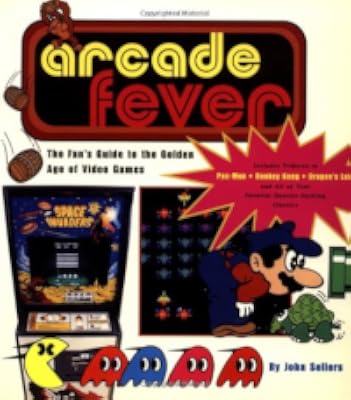
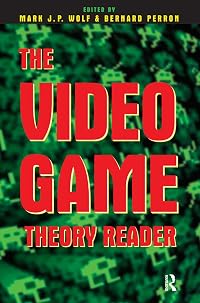
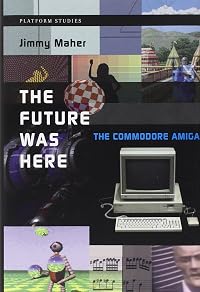
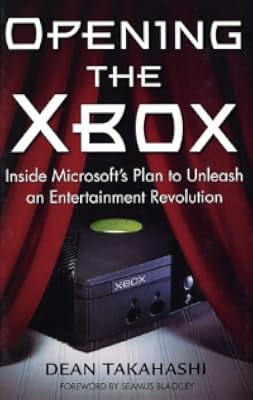
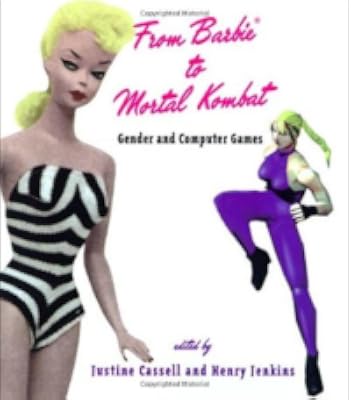
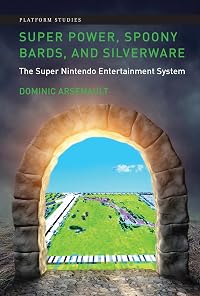
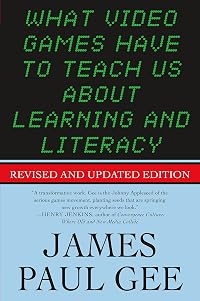




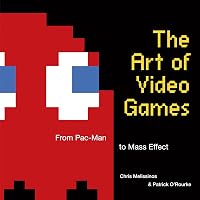










Member Recommendations
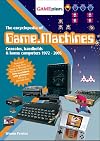
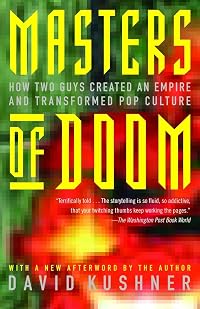
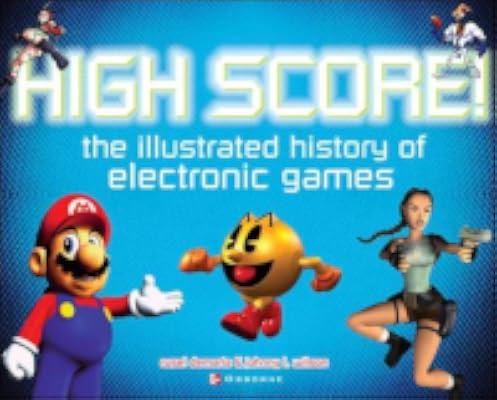
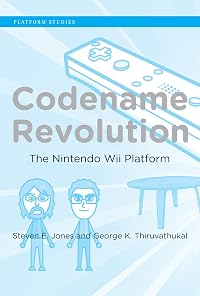
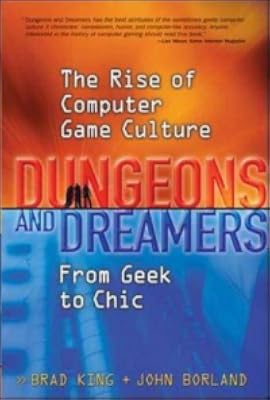
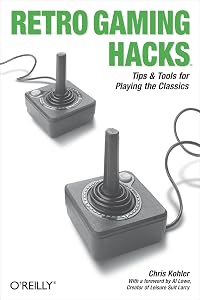
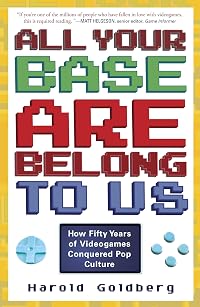
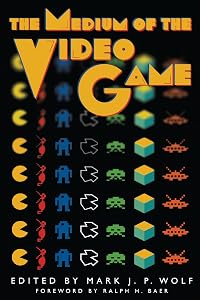
lampbane Strong focus on the hardware side of video gaming, with an international perspective that covers North America, Europe, and Asia. Also has the added advantage of being more up-to-date.
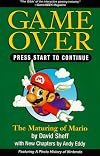
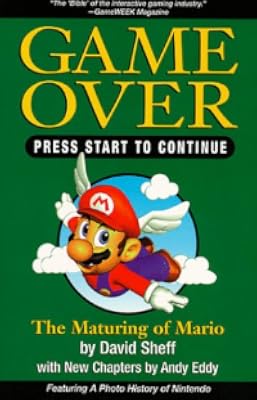
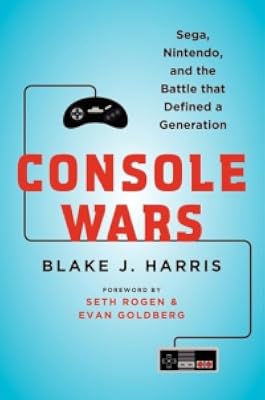
lampbane Steven Kent's tome purposefully skims over the history of Nintendo, directing you to read this book instead.
Member Reviews
http://www.1up.com/do/blogEntry?bId=3137343&publicUserId=5495985
"A really thorough book that starts with pinball machines and the like, tracing the history of the arcade before it kicks into gear about Atari and Nintendo and the like. Offers a lot of interesting information, is well-written (so it is actually an enjoyable read), and also includes periodic illustrations. The book's biggest flaw is it's section on Nintendo, which is brief and fleeting, since he pretty much says you should be reading Game Over for that information, and he'd just be regurgiating it. This wouldn't be so bad, except that as a history of the industry, it then feels largely incomplete at moments... how do you talk about a business that Nintendo pretty much show more built without mentioning Nintendo? It loses context." show less
"A really thorough book that starts with pinball machines and the like, tracing the history of the arcade before it kicks into gear about Atari and Nintendo and the like. Offers a lot of interesting information, is well-written (so it is actually an enjoyable read), and also includes periodic illustrations. The book's biggest flaw is it's section on Nintendo, which is brief and fleeting, since he pretty much says you should be reading Game Over for that information, and he'd just be regurgiating it. This wouldn't be so bad, except that as a history of the industry, it then feels largely incomplete at moments... how do you talk about a business that Nintendo pretty much show more built without mentioning Nintendo? It loses context." show less
Mi primer computador fue un ZX81 y luego dos atari: 65XE y 800XL y jugué Asteroids en las recreativas. Habiendo crecido en esa época, compré este libro para leer los primeros capítulos solamente, ya que nunca completé un nivel de Mario ni nada de eso. El último juego que terminé completo fue Max Payne, pero no sabía diferenciar los juegos de SEGA y Nintendo.
Sin embargo, una vez que comencé, no pude terminar hasta el final. Wow, impresionante la historia de como un grupito de personajes estuvo a cargo del desarrollo de todas estas maravillas. Muy bueno.
Sin embargo, una vez que comencé, no pude terminar hasta el final. Wow, impresionante la historia de como un grupito de personajes estuvo a cargo del desarrollo de todas estas maravillas. Muy bueno.
A very interesting look at the history of video game companies. I really enjoyed learning about how many of these companies got their start and the troubles they may have had. The book goes very deep into the history, discussing even pinball. It focuses a lot on how games and consoles were designed, but more so on the relationships different companies had. It focuses much more on consoles and stops discussing the computer pretty early on. It also discusses the start of video game companies much more in-depth and skims over consoles and events that are more modern. For instance, the discussion of Pokemon is much less then Pong. It also ends with the formation of Playstation and doesn't really discuss Microsoft. I really enjoyed it though show more and thought the narrator for the audiobook did a great job. show less
I've always been fascinated with video gaming history. Although I was born in the mid 80's, consoles such as the Atari 2600 have always captured my interest even though they were "outdated" by the time I got into video games. The neat thing about gaming history is that you can tell the story from so many different angles - different companies, different time periods, etc. Although I've read many books (and articles) on video games prior to this one, there is still plenty to learn - and there was certainly information in here new to me.
There were many things to enjoy in this book, but there were a few shortcomings. I loved how the book went in-depth on the history of the classic gaming era, but it seemed to go a bit soft when it came to show more the 8-bit and 16-bit systems. Arcade games are discussed thoroughly in the beginning of the book, but are ignored near the end. Nintendo and Atari have chapters upon chapters of history, but lesser selling systems (such as the Neo*Geo) are restricted to the footnotes. The book also tended to waste too much time discussing court cases. Now, although many of those cases were turning-points for the gaming industry, a few seemed irrelevant (e.g., Donkey Kong vs. King Kong) and were confusing and hard to follow for someone like me without a background in law.
Make no mistake, the first half of this book is excellent. And in the closing paragraph the author says he intended to publish this book in 1995 or 1996. I think, given the little coverage he makes of anything past the mid-90's, his book would have fared better if released earlier. A few chapters (mainly the ones concerning the legal disputes) I could do without. The book also had a bad habit of jumping around in time. It documents the rise and fall of Atari's coin-op division, but then starts over to talk about the rise and fall of the Atari VCS.
Bottom Line: If classic gaming history is your thing, there are better books to be read than this one. But if you want a broader look on video games that encompasses all generations - you may just enjoy this! show less
There were many things to enjoy in this book, but there were a few shortcomings. I loved how the book went in-depth on the history of the classic gaming era, but it seemed to go a bit soft when it came to show more the 8-bit and 16-bit systems. Arcade games are discussed thoroughly in the beginning of the book, but are ignored near the end. Nintendo and Atari have chapters upon chapters of history, but lesser selling systems (such as the Neo*Geo) are restricted to the footnotes. The book also tended to waste too much time discussing court cases. Now, although many of those cases were turning-points for the gaming industry, a few seemed irrelevant (e.g., Donkey Kong vs. King Kong) and were confusing and hard to follow for someone like me without a background in law.
Make no mistake, the first half of this book is excellent. And in the closing paragraph the author says he intended to publish this book in 1995 or 1996. I think, given the little coverage he makes of anything past the mid-90's, his book would have fared better if released earlier. A few chapters (mainly the ones concerning the legal disputes) I could do without. The book also had a bad habit of jumping around in time. It documents the rise and fall of Atari's coin-op division, but then starts over to talk about the rise and fall of the Atari VCS.
Bottom Line: If classic gaming history is your thing, there are better books to be read than this one. But if you want a broader look on video games that encompasses all generations - you may just enjoy this! show less
Interesting collection of sources, but the flow between "eras" is scattered and the coverage of European and other overseas markets (outside of Japan) generally begins and ends with single sentence throwaways vaguely related to the topic at hand. Sales numbers and demographics were fascinating and were used well to make solid conclusions about the various ups and downs of the industry. Interestingly little on the actual successful game designs, though that would understandably be the first casualty of a guide on "history" rather than "mechanics" or "legacy." Nothing shockingly new - blame the internet for that - and quickly showing age during the epilogue notes, shortly before the release of Microsoft's XBox. Still, a comprehensive and show more factually lush resource. show less
I am half way through, and what a GREAT READ. It is funny to read about all the back stabbing that has gone on in the industry. It is amazing how it all began and how these people got their ideas. I HIGHLY recommended this book if you are video game fanatic like me! It also includes numerous anecdotes from the people who made the games that made history--from Atari's Al Alcorn and Nolan Bushnell through to Square's Hironobu Sakaguchi and Sony's Kaz Hirai.
Ultimate history of *console* games (in the second millennium). As always, it's all about that crucial nintendo vs sega battle. Here, in Europe, no one gave a crap.
Members
- Recently Added By
Author Information

34+ Works 2,152 Members
Steven L. Kent turned a lifelong joystick addiction into a fifteen-year gig writing for outlets like 4 Microsoft News, Boys' Life, USA Today, the Chicago Tribune, and The Japan Times. In addition to his two-volume account The Ultimate History of Video Games, Kent wrote The Making of Final Fantasy: The Spirits Within 2nd The Making of Doom 3. Also show more a novelist, he authored the Clone Republic series and co-authored 100 Fathoms Below with Nicholas Kaufmann. He lives in Seattle, Washington. show less
Some Editions
Common Knowledge
- Original publication date
- 2001
- People/Characters
- D. Gottlieb; Joel Hochberg; Fiorello La Guardia; Harry Mabe; Ralph Baer; Bill Harrison (show all 82); Bill Rusch; Steve Russell; Nolan Bushnell; Bill Nutting; Cynthia Villanueva; Al Alcorn; Bill Gattis; Ted Dabney; David Nutting; Joe Keenan; Steve Jobs; Steve Wozniak; Masaya Nakamura; Harold Lee; Don Valentine; Steve Bristow; Arnold Greenberg; Leonard Greenberg; Steve Mayer; Jay Miner; Manny Gerard; Steve Ross; Paula Bushnell; Ray Kassar; Alan Miller; Ronnie Lamb; Chuck E. Cheese; Ed Logg; Dave Theurer; Dave Stubben; Pac-Man; Ms. Pac-Man; Toru Iwatani; Ed Rotberg; Hiroshi Yamauchi; Minoru Arakawa; Ron Judy; Al Stone; Shigeru Miyamoto; David Crane; Bob Whitehead; Q*Bert; Donkey Kong; Mario [Nintendo]; Luigi [Nintendo]; Don Bluth; Jack Tramiel; Xavier Roberts; James Morgan; Sam Tramiel; Tim Stamper; Chris Stamper; Jumpman; Teddy Ruxpin; David Rosen; Link [Nintendo]; Princess Zelda; Mike Tyson; Mark Cerny; Alexey Pajitnov; Joe Montana; R. J. Mical; Thomas J. Kalwinske; Michael Katz; Yuji Naka; Sonic the Hedgehog; Howard Lincoln; Ecco the Dolphin; Yu Suzuki; Jim Whims; Kaz Hirai; Crash Bandicoot; Hironobu Sakaguchi; Bernie Stolar; Peter Moore; Bill Gates
- Important places
- Massachusetts Institute of Technology, Cambridge, Massachusetts, USA; Cambridge, Massachusetts, USA; University of Utah, Salt Lake City, Utah, USA; Andy Capp's Tavern, Sunnyvale, California, USA; Grass Valley, California, USA
- Dedication
- To Professor Alf Pratte, that rare individual who understands the full responsibilities of journalism and teaching.
- First words
- (Foreword by Peter Molyneux): When Steven Kent asked me to write the foreword to this book, I was deeply honored and rather pleased.
New technologies do not simply spring out of thin air. - Last words
- (Click to show. Warning: May contain spoilers.)To put it another way, the game never ends.
- Blurbers
- Theurer, Dave; Romero, John; Turmell, Mark; Arakawa, Minoru; Jarvis, Eugene
Classifications
- Genres
- Nonfiction, General Nonfiction, Technology, History
- DDC/MDS
- 794.809 — Arts & recreation Recreation, sports, and performing arts Indoor games of skill Electronic games Video Game History
- LCC
- GV1469.3 .K45 — Geography, Anthropology and Recreation Recreation. Leisure Recreation. Leisure Games and amusements Indoor games and amusements Board games. Move games
- BISAC
Statistics
- Members
- 559
- Popularity
- 53,090
- Reviews
- 8
- Rating
- (3.86)
- Languages
- English, Spanish
- Media
- Paper, Audiobook, Ebook
- ISBNs
- 6
- UPCs
- 1
- ASINs
- 5