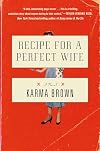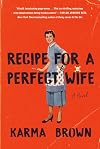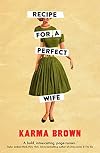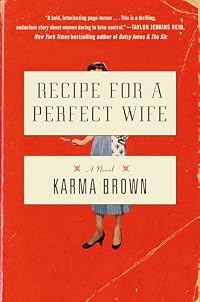
Recipe for a Perfect Wife
by Karma Brown
On This Page
Description
In this captivating dual narrative novel, a modern-day woman finds inspiration in hidden notes left by her home's previous owner, a quintessential 1950s housewife. As she discovers remarkable parallels between this woman's life and her own, it causes her to question the foundation of her own relationship with her husband--and what it means to be a wife fighting for her place in a patriarchal society. When Alice Hale leaves a career in publicity to become a writer and follows her husband to show more the New York suburbs, she is unaccustomed to filling her days alone in a big, empty house. But when she finds a vintage cookbook buried in a box in the old home's basement, she becomes captivated by the cookbook's previous owner--1950s housewife Nellie Murdoch. As Alice cooks her way through the past, she realizes that within the cookbook's pages Nellie left clues about her life--including a mysterious series of unsent letters penned to her mother. Soon Alice learns that while baked Alaska and meatloaf five ways may seem harmless, Nellie's secrets may have been anything but. When Alice uncovers a more sinister--even dangerous--side to Nellie's marriage, and has become increasingly dissatisfied with the mounting pressures in her own relationship, she begins to take control of her life and protect herself with a few secrets of her own. show lessTags
Recommendations






Member Reviews
Wow!! Recipe for a Perfect Wife was a surprise hit for me and I just enjoyed it so much. This was my first book by Karma Brown and it definitely won’t be my last! I loved the format of the dual timelines and I became very immersed with both of the main characters.
Brown introduces us to Alice, who has recently moved out of the city to a fixer-upper with her husband. As her roles are shifting in her own home life, Alice discovers a cookbook and magazines from the previous homeowner. This discovery introduces us to the other main character in this book, Nellie.
The storyline then goes back and forth between present-day Alice and Nellie a “housewife” in the 1950s. I loved how Brown took us back to that era and really dove into what show more life was like for women and the expectations there was of Nellie as a wife in that time period.
The story shifts between Nellie’s narrative, and Alice’s discovery of Nellie’s past while also learning more about her own marriage. Each chapter started with quotes from marital advice from the (not so distant) past and it really helped set the scene for how different life was in the early and mid-1900s.
Brown keeps you super involved in both storylines and I loved that while it was a completely engaging read, it took on some powerful and timely topics. The twists at the end were satisfying, clever and bold. Recipe For A Perfect Wife will definitely stick with me and it would make a wonderful book club discussion.
Thank you to NetGalley and Dutton Books for an advanced copy. show less
Brown introduces us to Alice, who has recently moved out of the city to a fixer-upper with her husband. As her roles are shifting in her own home life, Alice discovers a cookbook and magazines from the previous homeowner. This discovery introduces us to the other main character in this book, Nellie.
The storyline then goes back and forth between present-day Alice and Nellie a “housewife” in the 1950s. I loved how Brown took us back to that era and really dove into what show more life was like for women and the expectations there was of Nellie as a wife in that time period.
The story shifts between Nellie’s narrative, and Alice’s discovery of Nellie’s past while also learning more about her own marriage. Each chapter started with quotes from marital advice from the (not so distant) past and it really helped set the scene for how different life was in the early and mid-1900s.
Brown keeps you super involved in both storylines and I loved that while it was a completely engaging read, it took on some powerful and timely topics. The twists at the end were satisfying, clever and bold. Recipe For A Perfect Wife will definitely stick with me and it would make a wonderful book club discussion.
Thank you to NetGalley and Dutton Books for an advanced copy. show less
"Even in pain Nellie understood her role - the wife who bowed to her husband, who apologized for things out of her control, who made his life easier even if it made hers harder. The perfect wife."
When I first picked up this novel I was expecting a light satire, but boy was I wrong. In Recipe for a Perfect Wife you see two women paralleled, in two different time periods. Nellie is the typical housewife in the 1950's, and Alice is the modern working woman living in 2018. Both women end up living in the same house, only 60 years apart. When Alice finds Nellie's old family recipe book, this seemingly sweet story takes a very sinister turn, and connects both women in a very twisted way.
Each chapter starts out with actual quotes from show more publications from the 1950's that will either make you cringe, or roll your eyes, with their outdated ideologies, but add such 'flavor' to the story. Nellie's chapters also have a recipe from her book, which was also a cute touch, but the cuteness stops there.
There is a tremendous amount of sinister subject matter, including adultery, sexual harassment, and even rape, that is incredibly difficult to read, yet so spellbindingly written, it's like a car accident that you can't tear your eyes away from. The incredibly dark subject matter was stifling and oppressive, yet was written so powerfully that I was glued to every word, yet hating what I was reading at the same time.
The ending was surprising yet not unexpected, considering the context, and all I could think of when I put this novel down was, "Man, this would make a crazy movie!" Recipe for a Perfect Wife is definitely a darker read than what I'm used to, but WOW is all I can say! show less
When I first picked up this novel I was expecting a light satire, but boy was I wrong. In Recipe for a Perfect Wife you see two women paralleled, in two different time periods. Nellie is the typical housewife in the 1950's, and Alice is the modern working woman living in 2018. Both women end up living in the same house, only 60 years apart. When Alice finds Nellie's old family recipe book, this seemingly sweet story takes a very sinister turn, and connects both women in a very twisted way.
Each chapter starts out with actual quotes from show more publications from the 1950's that will either make you cringe, or roll your eyes, with their outdated ideologies, but add such 'flavor' to the story. Nellie's chapters also have a recipe from her book, which was also a cute touch, but the cuteness stops there.
There is a tremendous amount of sinister subject matter, including adultery, sexual harassment, and even rape, that is incredibly difficult to read, yet so spellbindingly written, it's like a car accident that you can't tear your eyes away from. The incredibly dark subject matter was stifling and oppressive, yet was written so powerfully that I was glued to every word, yet hating what I was reading at the same time.
The ending was surprising yet not unexpected, considering the context, and all I could think of when I put this novel down was, "Man, this would make a crazy movie!" Recipe for a Perfect Wife is definitely a darker read than what I'm used to, but WOW is all I can say! show less
A special thank you to NetGalley, Edelweiss, Penguin Random House Canada, and Penguin/Dutton for an ARC in exchange for an honest review.
Recipe for a Perfect Wife is a dual narrative novel where a modern woman finds inspiration from a 1950s housewife in the form of a cookbook and handwritten notes.
Alice Hale has left not only her career in publicity, but the city she loves, and finds herself in the suburbs attempting to write a novel. In the basement of her fixer upper century home, she uncovers a well-loved cookbook and within its pages, there are notations and handwritten letters. She comes to learn that they are written by the previous home owner, Nellie Murdoch, to her mother.
Feeling inspired, and an affinity towards Nellie, Alice show more starts cooking from her recipes and wearing vintage clothing. As she experiments with the tried-and-true recipes, she uncovers a dangerous side to Nellie's marriage and comes to the realization that she too is unhappy with the pressures that are also in her relationship. Alice begins to take control of her life and like Nellie, arms herself with some secrets of her own.
I adore Karma's writing and did this book deliver. Both storylines are equally well-written and engaging—I found myself completely immersed in the narratives and didn't favour one over the other. The women are highly developed and complex, yet there is an intimacy that the reader will feel with them. Alice and Nellie have tremendous depth and incredible strength.
The dual narrative was the perfect vehicle to tell this story. Each chapter begins with (often shocking) marital advice and alternates between Nellie's narrative, and Alice learning about Nellie's past which she uses to frame her own marriage.
What I most appreciated was Brown tackling some weighty and timely topics, keeping the spotlight on the issues that many women face and can relate to: white male privilege, inequality, misogyny, abuse, and reproductive rights. It is a comment on how women are confined by the limited number of choices they have in order to conform with what is expected of them. Many women are completely stifled in their lives, and lose a sense of who they are after becoming wives and/or mothers.
True to her style, the ending is not wrapped up with a bow and presented to the reader. Instead, there is a satisfying conclusion, leaving her audience with some sense of closure, but also left pondering. As such, this would make a fantastic book club choice.
Congratulations, Karma! This is a truly remarkable book. show less
Recipe for a Perfect Wife is a dual narrative novel where a modern woman finds inspiration from a 1950s housewife in the form of a cookbook and handwritten notes.
Alice Hale has left not only her career in publicity, but the city she loves, and finds herself in the suburbs attempting to write a novel. In the basement of her fixer upper century home, she uncovers a well-loved cookbook and within its pages, there are notations and handwritten letters. She comes to learn that they are written by the previous home owner, Nellie Murdoch, to her mother.
Feeling inspired, and an affinity towards Nellie, Alice show more starts cooking from her recipes and wearing vintage clothing. As she experiments with the tried-and-true recipes, she uncovers a dangerous side to Nellie's marriage and comes to the realization that she too is unhappy with the pressures that are also in her relationship. Alice begins to take control of her life and like Nellie, arms herself with some secrets of her own.
I adore Karma's writing and did this book deliver. Both storylines are equally well-written and engaging—I found myself completely immersed in the narratives and didn't favour one over the other. The women are highly developed and complex, yet there is an intimacy that the reader will feel with them. Alice and Nellie have tremendous depth and incredible strength.
The dual narrative was the perfect vehicle to tell this story. Each chapter begins with (often shocking) marital advice and alternates between Nellie's narrative, and Alice learning about Nellie's past which she uses to frame her own marriage.
What I most appreciated was Brown tackling some weighty and timely topics, keeping the spotlight on the issues that many women face and can relate to: white male privilege, inequality, misogyny, abuse, and reproductive rights. It is a comment on how women are confined by the limited number of choices they have in order to conform with what is expected of them. Many women are completely stifled in their lives, and lose a sense of who they are after becoming wives and/or mothers.
True to her style, the ending is not wrapped up with a bow and presented to the reader. Instead, there is a satisfying conclusion, leaving her audience with some sense of closure, but also left pondering. As such, this would make a fantastic book club choice.
Congratulations, Karma! This is a truly remarkable book. show less
A fun read. Two women, living 60 years apart, cope with the realities of being a wife and mother. Sounds familiar, right? But this book takes us deep into the women’s lives, the claustrophobic choices they are forced into, the daring steps into freedom.
It’s all about the lies told in a marriage, the shifting expectations. And it’s told in a way that keeps you glued to the page. There is danger here, real risk, real threat. How the women deal with it and keep themselves intact makes for a robust story.
I did find the sudden change when Ruth finds herself pregnant and becomes all motherly and dedicated and purposeful a bit of a stretch. Just being pregnant does not a whole woman make. And the change does not feel true to the show more character, who has fought getting pregnant throughout the book.
Both women leverage pregnancy to get what they want, which in the case of the 1950’s Nellie makes sense, but is repellent in the modern day scenario.
But then, she did learn to cook, and that’s all that matters, no? (Oh and she got an instant deal for her as yet unwritten book which is annoying.)
Still, a fun fast read. I might even have to try some of the included 50’s recipes. Or not. show less
It’s all about the lies told in a marriage, the shifting expectations. And it’s told in a way that keeps you glued to the page. There is danger here, real risk, real threat. How the women deal with it and keep themselves intact makes for a robust story.
I did find the sudden change when Ruth finds herself pregnant and becomes all motherly and dedicated and purposeful a bit of a stretch. Just being pregnant does not a whole woman make. And the change does not feel true to the show more character, who has fought getting pregnant throughout the book.
Both women leverage pregnancy to get what they want, which in the case of the 1950’s Nellie makes sense, but is repellent in the modern day scenario.
But then, she did learn to cook, and that’s all that matters, no? (Oh and she got an instant deal for her as yet unwritten book which is annoying.)
Still, a fun fast read. I might even have to try some of the included 50’s recipes. Or not. show less
Wow!! Recipe for a Perfect Wife was a surprise hit for me and I just enjoyed it so much. This was my first book by Karma Brown and it definitely won't be my last! I loved the format of the dual timelines and I became very immersed with both of the main characters.
Brown introduces us to Alice, who has recently moved out of the city to a fixer-upper with her husband. As her roles are shifting in her own home life, Alice discovers a cookbook and magazines from the previous homeowner. This discovery introduces us to the other main character in this book, Nellie.
The storyline then goes back and forth between present-day Alice and Nellie a "housewife" in the 1950s. I loved how Brown took us back to that era and really dove into what life was show more like for women and the expectations there was of Nellie as a wife in that time period.
The story shifts between Nellie's narrative, and Alice's discovery of Nellie's past while also learning more about her own marriage. Each chapter started with quotes from marital advice from the (not so distant) past and it really helped set the scene for how different life was in the early and mid-1900s.
Brown keeps you super involved in both storylines and I loved that while it was a completely engaging read, it took on some powerful and timely topics. The twists at the end were satisfying, clever and bold. Recipe For A Perfect Wife will definitely stick with me and it would make a wonderful book club discussion.
Thank you to NetGalley and Dutton Books for an advanced copy. show less
Brown introduces us to Alice, who has recently moved out of the city to a fixer-upper with her husband. As her roles are shifting in her own home life, Alice discovers a cookbook and magazines from the previous homeowner. This discovery introduces us to the other main character in this book, Nellie.
The storyline then goes back and forth between present-day Alice and Nellie a "housewife" in the 1950s. I loved how Brown took us back to that era and really dove into what life was show more like for women and the expectations there was of Nellie as a wife in that time period.
The story shifts between Nellie's narrative, and Alice's discovery of Nellie's past while also learning more about her own marriage. Each chapter started with quotes from marital advice from the (not so distant) past and it really helped set the scene for how different life was in the early and mid-1900s.
Brown keeps you super involved in both storylines and I loved that while it was a completely engaging read, it took on some powerful and timely topics. The twists at the end were satisfying, clever and bold. Recipe For A Perfect Wife will definitely stick with me and it would make a wonderful book club discussion.
Thank you to NetGalley and Dutton Books for an advanced copy. show less
Recipe for a Perfect Wife has all the ingredients I like in a book. It has a domestic setting, it's dual timeline and it has recipes!
The dual timelines are 2018 and 1955. In the 2018 story Alice Hale and her husband, Nate, are about to move from the city to the suburbs of New York. Nate wants a baby but Alice isn't sure what she wants. Having had a career in PR she now thinks that she wants to write a book.
The house they move to has a décor that is stuck in the 1950s which is when the previous owner, Nellie Murdoch, first lived there. We flit between the two times as we watch Nellie's marriage to Richard sour, alongside Alice's own marital difficulties.
In books such as this I usually have a favourite of the two stories. This time I'm show more not sure I did. I enjoyed both. There are dark elements to them, particularly the 50s story when a wife was supposed to pander to her husband, be there with a welcoming smile, wearing her kitten heels with a cocktail ready for him when he comes home. I have to say that the idea of me putting kitten heels on before my partner comes home is laughable. I'm usually slobbing around in my slippers. Although I think it's often easy to view the past with rose-tinted spectacles, I wouldn't have wanted to live in such unenlightened times for women.
Nellie's chapters all start with a recipe and I loved seeing what she was making. Alice's chapters, however, all begin with a quote from various publications about how a good wife should behave *roll eyes*. I liked these touches though as they are so illuminating.
This is a good read. I didn't take to any of the characters, although I was sympathetic to the female ones. There were one or two surprises that I really didn't see coming at all. All in all, this is an enjoyable and thought-provoking book. show less
The dual timelines are 2018 and 1955. In the 2018 story Alice Hale and her husband, Nate, are about to move from the city to the suburbs of New York. Nate wants a baby but Alice isn't sure what she wants. Having had a career in PR she now thinks that she wants to write a book.
The house they move to has a décor that is stuck in the 1950s which is when the previous owner, Nellie Murdoch, first lived there. We flit between the two times as we watch Nellie's marriage to Richard sour, alongside Alice's own marital difficulties.
In books such as this I usually have a favourite of the two stories. This time I'm show more not sure I did. I enjoyed both. There are dark elements to them, particularly the 50s story when a wife was supposed to pander to her husband, be there with a welcoming smile, wearing her kitten heels with a cocktail ready for him when he comes home. I have to say that the idea of me putting kitten heels on before my partner comes home is laughable. I'm usually slobbing around in my slippers. Although I think it's often easy to view the past with rose-tinted spectacles, I wouldn't have wanted to live in such unenlightened times for women.
Nellie's chapters all start with a recipe and I loved seeing what she was making. Alice's chapters, however, all begin with a quote from various publications about how a good wife should behave *roll eyes*. I liked these touches though as they are so illuminating.
This is a good read. I didn't take to any of the characters, although I was sympathetic to the female ones. There were one or two surprises that I really didn't see coming at all. All in all, this is an enjoyable and thought-provoking book. show less
There are two narratives in this novel. In the one set in 2018, Alice Hale has just unwillingly moved with her husband Nate from Manhattan to the suburbs. Having left her job, she thinks she will write a novel but suffers from writer’s block until she chances upon a vintage cookbook and letters left by Nellie Murdoch, a previous resident in the house Alice and Nate have bought. Alice slowly becomes aware of the secrets Nellie hid about her marriage.
The second story is set in the 1950s and focuses on Nellie and her life with her husband Richard. That life consists of little other than cooking, cleaning, and entertaining. Gardening is her solace, especially because her marriage is not a happy one since Richard is domineering and show more physically abusive.
As the title and dedication indicate, the book examines the expectations with which women have had to contend. Certainly, women were expected to marry, and one of the most interesting elements in the novel is the advice women were given about fulfilling the role of wife. Interspersed throughout are quotations from actual books offering advice like “Be a good listener. Let him tell you his troubles; yours will seem trivial in comparison” and “Happiness does not flourish in an atmosphere of dyspepsia” and “Do your best to make him happy and you will find happiness yourself” and “From the wedding day, the young matron should shape her life to the probable and desired contingency of conception and maternity. Otherwise she has no right or title to wifehood” and “your most important job is to build up and maintain his ego” and “in case of an occasional lapse on the part of the husband . . . forgive and forget.”
It is obvious that Nellie tries to follow this advice. She outlines her “education on what it meant to be Richard Murdoch’s wife”: “the most important thing she could do was stand by his side, take care of him, give herself over to him bit by bit. He needed her to look pretty, cook him hot meals, open her legs to him without feigning a headache or lady troubles. She was to keep her opinions to herself while also keeping his dozen or so white dress shirts sparkling and clean of other women’s lipstick.” The reader cannot but feel sympathy for her; she has few options.
Alice, however, does not elicit any sympathy. She constantly lies to Nate and keeps secrets, even asking at one point, “What did it say about her, and her marriage, that she hadn’t simply been honest with Nate from the beginning?” Her deceptions show her to be immature, selfish, and manipulative. Her position is nothing like Nellie’s because Alice has many opportunities to speak up for herself but she doesn’t take them. Nate is certainly not Richard because he is not abusive and allows his wife to express her opinions. Granted, he does make some decisions without consulting Alice, but since she chooses not to communicate her feelings, she bears some responsibility for misunderstandings. Sometimes, Alice is just stupid: in 2018, an adult, who could not but be aware of the health dangers, would take up smoking and even go so far as to cut off the filters?
There are hints that the house is haunted by Nellie and that she gradually is taking over Alice’s personality. When she and Nate first see the house, Alice sees “movement out of the corner of her eye. A flutter of curtain from the top left window, as though someone was pushing it to the side.” Alice starts cooking Nellie’s recipes, wearing vintage clothing and using Nellie’s cigarette holder. The realtor pointedly mentions that Nellie died in the house; there are references to temperature changes; Alice comments that “’the house likes it when I cook’”; and Nate comments that “’Maybe we never should have moved here. . . . It’s not good for you, or me. . . . This goddamn house.‘” Closing references to Alice’s planting certain flowers so the housewife would be “pleased to see how well her beloved gardens were faring” and Alice’s “invoking the housewife’s ghost” suggest that Alice can always do what Nellie did!? This supernatural element is unnecessary and just muddies Alice’s narrative in a way that the author probably did not intend.
I enjoyed Nellie’s story but found Alice’s much less compelling. Alice presents a poor portrait of a feminist if she is supposed to be seen as one. Surely, the author does not intend to suggest that feminists are dishonest, non-communicative, and manipulative? Perhaps the two stories are supposed to be parallels, but it is difficult to see many parallels between Nellie and Alice. Nellie is a victim of society’s expectations of a wife whereas Alice, if she is a victim, has only herself to blame. In the end, I’m left confused as to what the author was trying to communicate.
Note: I received a digital galley from the publisher via NetGalley.
Please check out my reader's blog (https://schatjesshelves.blogspot.com/) and follow me on Twitter (@DCYakabuski). show less
The second story is set in the 1950s and focuses on Nellie and her life with her husband Richard. That life consists of little other than cooking, cleaning, and entertaining. Gardening is her solace, especially because her marriage is not a happy one since Richard is domineering and show more physically abusive.
As the title and dedication indicate, the book examines the expectations with which women have had to contend. Certainly, women were expected to marry, and one of the most interesting elements in the novel is the advice women were given about fulfilling the role of wife. Interspersed throughout are quotations from actual books offering advice like “Be a good listener. Let him tell you his troubles; yours will seem trivial in comparison” and “Happiness does not flourish in an atmosphere of dyspepsia” and “Do your best to make him happy and you will find happiness yourself” and “From the wedding day, the young matron should shape her life to the probable and desired contingency of conception and maternity. Otherwise she has no right or title to wifehood” and “your most important job is to build up and maintain his ego” and “in case of an occasional lapse on the part of the husband . . . forgive and forget.”
It is obvious that Nellie tries to follow this advice. She outlines her “education on what it meant to be Richard Murdoch’s wife”: “the most important thing she could do was stand by his side, take care of him, give herself over to him bit by bit. He needed her to look pretty, cook him hot meals, open her legs to him without feigning a headache or lady troubles. She was to keep her opinions to herself while also keeping his dozen or so white dress shirts sparkling and clean of other women’s lipstick.” The reader cannot but feel sympathy for her; she has few options.
Alice, however, does not elicit any sympathy. She constantly lies to Nate and keeps secrets, even asking at one point, “What did it say about her, and her marriage, that she hadn’t simply been honest with Nate from the beginning?” Her deceptions show her to be immature, selfish, and manipulative. Her position is nothing like Nellie’s because Alice has many opportunities to speak up for herself but she doesn’t take them. Nate is certainly not Richard because he is not abusive and allows his wife to express her opinions. Granted, he does make some decisions without consulting Alice, but since she chooses not to communicate her feelings, she bears some responsibility for misunderstandings. Sometimes, Alice is just stupid: in 2018, an adult, who could not but be aware of the health dangers, would take up smoking and even go so far as to cut off the filters?
There are hints that the house is haunted by Nellie and that she gradually is taking over Alice’s personality. When she and Nate first see the house, Alice sees “movement out of the corner of her eye. A flutter of curtain from the top left window, as though someone was pushing it to the side.” Alice starts cooking Nellie’s recipes, wearing vintage clothing and using Nellie’s cigarette holder. The realtor pointedly mentions that Nellie died in the house; there are references to temperature changes; Alice comments that “’the house likes it when I cook’”; and Nate comments that “’Maybe we never should have moved here. . . . It’s not good for you, or me. . . . This goddamn house.‘” Closing references to Alice’s planting certain flowers so the housewife would be “pleased to see how well her beloved gardens were faring” and Alice’s “invoking the housewife’s ghost” suggest that Alice can always do what Nellie did!? This supernatural element is unnecessary and just muddies Alice’s narrative in a way that the author probably did not intend.
I enjoyed Nellie’s story but found Alice’s much less compelling. Alice presents a poor portrait of a feminist if she is supposed to be seen as one. Surely, the author does not intend to suggest that feminists are dishonest, non-communicative, and manipulative? Perhaps the two stories are supposed to be parallels, but it is difficult to see many parallels between Nellie and Alice. Nellie is a victim of society’s expectations of a wife whereas Alice, if she is a victim, has only herself to blame. In the end, I’m left confused as to what the author was trying to communicate.
Note: I received a digital galley from the publisher via NetGalley.
Please check out my reader's blog (https://schatjesshelves.blogspot.com/) and follow me on Twitter (@DCYakabuski). show less
Members
- Recently Added By
Author Information

8+ Works 1,108 Members
Common Knowledge
- Canonical title
- Recipe for a Perfect Wife
- Original title
- Recipe for a Perfect Wife
- Original publication date
- 2020
- People/Characters
- Alice Livingston Hale; Eleanor "Nellie" Swann Murdoch; Nathan "Nate" Hale; Bronwyn Murphy; Richard Murdoch; Jaclyn Daikan (show all 13); Steve Daikan; Elsie Matilde Swann; Georgia Wittington; Sally Claussen; Miriam Claussen; James Dorian; Drew Baxter
- Important places
- Greenville, New York, USA
- Epigraph
- Art is a hard mistress, and there is no art
quite so hard as that of being a wife.
---BLANCHE EBBUTT, Dont's for Wives (1913) - Dedication
- For my nana, Miriam Ruth Christie, who was a feminist despite the confines of her generation. A "from the can" cook, she was not known for her kitchen skills but did make a a mean Chicken á la King. Which I miss, though not ... (show all)as much as I miss her.
And to all the women who have come before me, thank you for lighting the pathway. For those coming after---especially you, Addison Mae---I'm sorry the work is not done. I hope we've left you with enough to finish the job. - First words
- It was late in both day and season for planting, but she had no choice in the matter.
- Quotations
- The sun always returned...as long as you were strong enough to wait for it.
- Last words
- (Click to show. Warning: May contain spoilers.)Alice gingerly sipped her too-hot tea, rereading the last couple of pages she'd managed the previous day. Then, as Nellie looked on, Alice ducked her head and let her mind go, invoking the house wife's ghost, the tapping of keys filling the otherwise quiet, contented house.
- Blurbers
- Reid, Taylor Jenkins; Stapley, Marissa; Kubica, Mary; Davis, Fiona; Robson, Jennifer; Brenner, Jamie (show all 7); Hood, Ann
Classifications
Statistics
- Members
- 556
- Popularity
- 53,043
- Reviews
- 29
- Rating
- (3.65)
- Languages
- 5 — English, French, German, Korean, Polish
- Media
- Paper, Audiobook, Ebook
- ISBNs
- 20
- ASINs
- 3