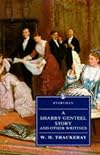
A Shabby Genteel Story
by William Makepeace Thackeray 
34 Members (3.83)
On This Page
Description
George Brandon, an impoverished gentleman, scorns the family he lodges with, but decides to amuse himself by attempting to seduce the daughters, ultimately setting his sights on the youngest. His casual amusement, however, ends with the very real threat of a duel. Self-delusion, snobbery, and an obsession with money are the underlying themes in this engrossing tale.Tags
Recommendations



















Member Reviews
Members
- Recently Added By
Author Information

716+ Works 24,569 Members
William Makepeace Thackeray was born in Calcutta, India, where his father was in service to the East India Company. After the death of his father in 1816, he was sent to England to attend school. Upon reaching college age, Thackeray attended Trinity College, Cambridge, but he left before completing his degree. Instead, he devoted his time to show more traveling and journalism. Generally considered the most effective satirist and humorist of the mid-nineteenth century, Thackeray moved from humorous journalism to successful fiction with a facility that was partially the result of a genial fictional persona and a graceful, relaxed style. At his best, he held up a mirror to Victorian manners and morals, gently satirizing, with a tone of sophisticated acceptance, the inevitable failure of the individual and of society. He took up the popular fictional situation of the young person of talent who must make his way in the world and dramatized it with satiric directness in The Luck of Barry Lyndon (1844), with the highest fictional skill and appreciation of complexities inherent within the satiric vision in his masterpiece, Vanity Fair (1847), and with a great subtlety of point of view and background in his one historical novel, Henry Esmond (1852). Vanity Fair, a complex interweaving in a vast historical panorama of a large number of characters, derives its title from John Bunyan's Pilgrim's Progress and attempts to invert for satirical purposes, the traditional Christian image of the City of God. Vanity Fair, the corrupt City of Man, remains Thackeray's most appreciated and widely read novel. It contrasts the lives of two boarding-school friends, Becky Sharp and Amelia Smedley. Constantly attuned to the demands of incidental journalism and his sense of professionalism in his relationship with his public, Thackeray wrote entertaining sketches and children's stories and published his humorous lectures on eighteenth-century life and literature. His own fiction shows the influence of his dedication to such eighteenth-century models as Henry Fielding, particularly in his satire, which accepts human nature rather than condemns it and takes quite seriously the applicability of the true English gentleman as a model for moral behavior. Thackeray requested that no authorized biography of him should ever be written, but members of his family did write about him, and these accounts were subsequently published. (Bowker Author Biography) show less
William Makepeace Thackeray has a Legacy Library. Legacy libraries are the personal libraries of famous readers, entered by LibraryThing members from the Legacy Libraries group.
Work Relationships
Classifications
Statistics
- Members
- 34
- Popularity
- 800,509
- Rating
- (3.83)
- Languages
- English
- Media
- Paper, Ebook
- ISBNs
- 7