
How Should We Then Live?: The Rise and Decline of Western Thought and Culture
by Francis A. Schaeffer
On This Page
Description
As one of the foremost evangelical thinkers of the twentieth century, Francis Schaeffer long pondered the fate of declining Western culture. In this brilliant book he analyzed the reasons for modern society's state of affairs and presented the only viable alternative: living by the Christian ethic, acceptance of God's revelation, and total affirmation of the Bible's morals, values, and meaning. How Should We Then Live? has become the benchmark for Christian worldview thinking today.Tags
Recommendations




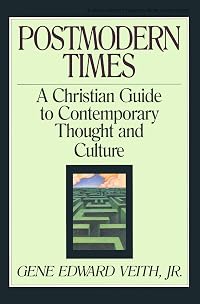





















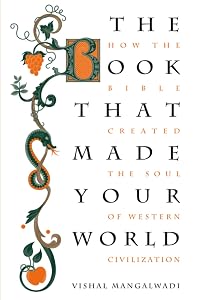



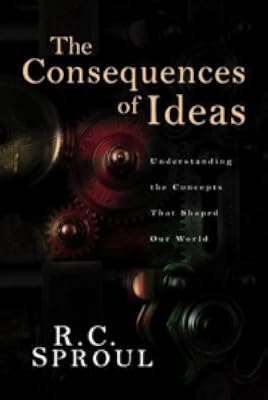












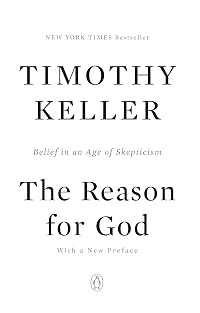






Member Reviews
How Should We Then Live? is one of Francis Schaeffer's best known works. It was followed by a film series (available here on YouTube), narrated by the author and directed by his son Frank Schaeffer.
Schaeffer's work is essentially pessimistic. He surveys the cultural landscape from the ancient Romans onward and traces what he sees as a downward trend from a Biblical foundation of absolutes through the damaging effects of the Renaissance and the Enlightenment.
Particularly interesting was his correlations between music, art, and ideology. As the totalitarian regimes of the twentieth century increased in influence, art turned abstract and music turned to increased dissonance (such as Schoenberg's twelve-tone technique).
When he considered show more the future, some of his ideas have proven to be accurate:
"The possibility of information storage, beyond what men and governments ever had before, can make available at the touch of a button a man's total history. ... The combined use of the technical capability of listening in on all these forms of communications with the high-speed computer literally leavees no place to hide and little room for any privacy" (244).
Or, consider this comment with respect to the recent economic crisis:
"There would be a lowering of prosperity and affluence among those individuals and countries which have come to take an ever-increasing level of prosperity for granted" (248).
The scope of this book is immense, and the connections and projections drawn between apparently discrete cultural phenomena are compelling. Still, I don't buy the overall package for a couple reasons:
1. The idea that worldwide culture has only gone in one direction (downhill) in its pursuit of humanism is too simplistic. That meta-narrative plays well in the minds of Christians with an escapism eschatological view, but not for those with a more incarnational bent.
2. Schaeffer views realism in art as paramount, and views impressionism and abstract work as corruptions which reveal our ideological heart. Where does that leave those of us who see beauty in the abstract and deeper meaning in impressionism than realism?
This landmark book deserves to be read, both as a window into the evangelical psyche in the 1970s and as an interesting survey of cultural history. The arguments he made from this survey, however, need to be read with healthy skepticism. show less
Schaeffer's work is essentially pessimistic. He surveys the cultural landscape from the ancient Romans onward and traces what he sees as a downward trend from a Biblical foundation of absolutes through the damaging effects of the Renaissance and the Enlightenment.
Particularly interesting was his correlations between music, art, and ideology. As the totalitarian regimes of the twentieth century increased in influence, art turned abstract and music turned to increased dissonance (such as Schoenberg's twelve-tone technique).
When he considered show more the future, some of his ideas have proven to be accurate:
"The possibility of information storage, beyond what men and governments ever had before, can make available at the touch of a button a man's total history. ... The combined use of the technical capability of listening in on all these forms of communications with the high-speed computer literally leavees no place to hide and little room for any privacy" (244).
Or, consider this comment with respect to the recent economic crisis:
"There would be a lowering of prosperity and affluence among those individuals and countries which have come to take an ever-increasing level of prosperity for granted" (248).
The scope of this book is immense, and the connections and projections drawn between apparently discrete cultural phenomena are compelling. Still, I don't buy the overall package for a couple reasons:
1. The idea that worldwide culture has only gone in one direction (downhill) in its pursuit of humanism is too simplistic. That meta-narrative plays well in the minds of Christians with an escapism eschatological view, but not for those with a more incarnational bent.
2. Schaeffer views realism in art as paramount, and views impressionism and abstract work as corruptions which reveal our ideological heart. Where does that leave those of us who see beauty in the abstract and deeper meaning in impressionism than realism?
This landmark book deserves to be read, both as a window into the evangelical psyche in the 1970s and as an interesting survey of cultural history. The arguments he made from this survey, however, need to be read with healthy skepticism. show less
This was the free audiobook of the month on ChristianAudio.com last month. I read Colson and Pearcey's How Now Shall We Live in college, which is a much longer updated version of this book with more applications. I recommend that as a follow-up text. Books on church history, histories of Europe in the Middle Ages would be helpful as prerequisites, as well as overviews of philosophy, before reading Schaeffer's work.
This book is a fairly brief summary of the development of Western culture through its art and architecture, as well as a defense of the Christian world view's role in preserving culture and promoting principles of liberty. Schaeffer beings by examining the way art and architecture changed from the Roman empire to the Middle show more Ages. Christians, Schaeffer remarks, were remarkably resistant to syncretism, refusing to worship idols or caesars or adopt these practices into their worship. Schaeffer holds up many examples but this contrasts with his later observations of how the Catholic Church incorporated Greek philosophy into its theology, persecuting Galileo and Copernicus when their findings contradicted Aristotle (and not the Bible, which modern "new atheists" often purport). He defends the Reformation against accusations that it was antithical to art and culture. The Refomers did not go about criticizing art for art's sake, but were highly supportive of art that was based in truths. They simply rejected art that was contrary to those truths that society and law were based upon-- namely that of a biblical world view. Likewise, Schaeffer writes, the Renaissance wasn't made possible simply because of the re-discovery of "lost" Greek works, but by having a Christian worldview as the basis for exploring those works. This contradicts some historians like Norman Cantor (Schaeffer doesn't mention these, I reviewed Cantor's work earlier this year) who argue that the Church had to re-address Aristotelian philosophy as their works were translated into Latin in the 11th century as Muslims and Jews had already been doing in their own languages for centuries. Schaeffer traces the development of humanism and determinism out of the Renaissance as parallel with the development of biblical theology out of the Reformation.
There is quite a bit of a disconnect as Schaeffer leaves out various details. Disconnect between the Luther that Schaeffer espouses and Luther's many statements inciting violence, hatred of the Jews, etc. He doesn't discuss the theocratic nature of European governments; you don't see Calvin burning anyone at the stake for heresy under state law. Schaeffer does write, however, that the Reformers and Christianity obviously got race wrong. But he points out that it was Christians like William Wilberforce who were instrumental in ending chattel slavery.
The power of this book comes in Schaeffer's examination of the logical conclusions of humanism and determinism and how earlier scholars like Newton and Da Vinci rejected determinism because they read to anti-biblical conclusion. Explanations of time chance are problematic because neither time nor chance are forces that can do anything. Ultimately, cosmologists and biologists alike are convinced that we are ultimately machines. This is what Leonardo Da Vinci also determined was the natural conclusion of mathematics. Mathematics leads us to particulars (via Aristotle) but only lead us to humanity being a machine-- which Da Vinci rejected as incompatible with a worldview that included belief in a deity defining absolute truths. If we are simply machines, then we have no moral basis for any of our laws or society-- who defines what? Hence, the American Revolution differed from the French Revolution because it was based on a Christian belief that all men are endowed by a Creator with inalienable rights. The French revolution had no such basis, it was simply an overthrow of the order and rooted in humanism-- hence it led to violence, chaos, and the rise of another dictator. Schaeffer recounts how those conclusions played out in the USSR and China, still very Communist when he wrote this in 1976. He looks at policy prescriptions from the 1960s and 1970s by psychologists and philosophers-- including putting LSD in the water, Galbraith's desire (along with various "futurists") to have society ruled by an elite cadre of technocrats. "Who rules the rulers?" asks Schaeffer, pointing out that the psychologists and psychiatrists that determine the fitness of these rulers ultimately are the king-makers holding power. These prescriptions reminded me a lot of Plato's Republic, though Schaeffer does not draw that parallel.
What determines truth? The 51% of majority rule? America's founding fathers found that anathema, drawing on the work of earlier political philosophers. The tyranny of the majority can be cruel indeed. Young people today believe that the only basis for our laws should be majority will, which does not bode well for minority rights when they have also been indocrinated in the humanistic doctrine that we are all simply machines with no afterlife to consider.
Schaeffer has prescience about global terrorism: People will be willing to give up liberty in exchange for strong agents pledged to fight against the lack of economic power and security as a result of terrorist activity. Schaeffer quotes Gibbons' in pointing out that Rome had five characteristics in its decline: 1. A mounting love of show and luxury. 2. A widening gap between rich and poor. 3. Obsession with sex. 4. Freakishness in the arts and enthusiasms pretending to be creativity (reality TV and Jackass, anyone?). 5. An increased desire to live off the State. "It all sounds so familiar. We have come a long road since our first chapter, and we are back in Rome."
The book is brief and skips over perhaps too many details. Items such as the difficulties of Thomas Aquinas' thought are "much richer than we can discuss here..." among others. But I would recommend every Christian (and non-Christian) read this book. It is worth reading while reading Hitchens, Dawkins, or other "new atheists," as Schaeffer makes a strongly logical argument in contrast with theirs. Decide for yourself which society you prefer. 4.5 stars out of 5. show less
show more 《前车可鉴》是当代基督教卓越的思想家、有知识分子宣教士之称的法兰西斯•薛华博士的巨著。他深入神学、哲学、历史、社会学、艺术等各个领域,向读者展示了一幅历史画卷:基督教的兴起、古罗马的败亡、中世纪教会的变质、文艺复兴、宗教改革、启蒙运动、现代思想文化的形成及特质,并从圣经真理的角度对其进行客观分析和评价。勾勒出一个人本之人文主义兴起并不断向神本挑战对决,然后出现各种各样妥协思潮的过程。薛华特别从社会文化的各个方面描述分析了从文艺复兴全盛时期、启蒙运动时代人的意气风发到现代人的悲观绝望,指出西方文化衰落的根源乃在于身为造物的人竟企图僭越造物主的位置——这恶中最大的恶,并呼吁唯有接受上帝的启示,依照圣经真理而活,人类才有希望。 show less
*Sigh* Alright, here we go. This book was written in 1976 by Dr. Francis A. Schaeffer. It analyses the falling off of culture as a whole from Ancient Rome to the Modern day(c. 1976). This book was suggested as a result of me wanted to challenge my worldview, and boy did it ever do that. Luckily the Library had a copy of this book on hand.
Dr. Schaeffer was an Evangelical Christian who studied Philosophy and Theology. His main argument in this book can be boiled down to the idea that the Bible is the message of God and God is the source of all morality. Earlier civilizations failed because they did not have a basis for their morality and thoughts in God and Jesus. Even if they base it on something like the Categorical Imperative, say, it show more doesn't have any teeth because ultimately there is no Eternal Basis.
Ignoring a Biblical basis of morality leads to the Holocaust and Mussolini. Dr. Schaeffer makes his opinions clear enough with simple down-to-earth language and a lack of jargon. Dr. Schaeffer's views shall never be my own, and I had to deal with a bit of Cognitive Dissonance while reading this. It honestly gave me a slight headache, but I thought it was okay. All in all, I would not read the book again any time soon, but it did give me some insight into the ideas of Evangelical Christians. show less
Dr. Schaeffer was an Evangelical Christian who studied Philosophy and Theology. His main argument in this book can be boiled down to the idea that the Bible is the message of God and God is the source of all morality. Earlier civilizations failed because they did not have a basis for their morality and thoughts in God and Jesus. Even if they base it on something like the Categorical Imperative, say, it show more doesn't have any teeth because ultimately there is no Eternal Basis.
Ignoring a Biblical basis of morality leads to the Holocaust and Mussolini. Dr. Schaeffer makes his opinions clear enough with simple down-to-earth language and a lack of jargon. Dr. Schaeffer's views shall never be my own, and I had to deal with a bit of Cognitive Dissonance while reading this. It honestly gave me a slight headache, but I thought it was okay. All in all, I would not read the book again any time soon, but it did give me some insight into the ideas of Evangelical Christians. show less
An important book, although Schaeffer makes some historical generalizations that are questionable. The last chapter on Statist idolatry is powerful, and seems even more relevant now as America expands its militarized approach to governing its citizenry.
Mr. Schaeffer takes his readers on a quick tour through history and the development of religious thought and the church and society. He points out the moments in history when certain types of thoughts prevailed and took the society in which they prevailed on a different path to that which they had been traveling. He uses examples from people's lives and works, music, art, philosophy and culture. All this to show the repeating trends of cultures and how the relativism which is so prevalent today has been in vogue before and led to hopelessness. He points out the dangers of living for personal peace (the desire to keep one's own life peaceful, no matter the costs down the road to others) and affluence (a life made up of things and more show more things). One of the dangers is that people will easily give themselves over to an authoritarian government if they think it will provide those two things. He says conditions which make this likely are: economic breakdown, war or serious threat of war, the chaos of violence or terrorism, the radical redistribution of the wealth of the world, food shortage or other natural resource shortages. All these conditions sound terribly familiar to me today as I watch the news and see how many of our individual rights we are handing over to the government for their promise of "safety" and "welfare". It is scary to me. show less
Bits of this essay bubbled to the surface of my mind during painful wrangling with postmodern and poststructuralist thought in the first years of my doctoral studies. Schaeffer was a formative scholar for my undergraduate friends and me. One day I'll go back and reread.
Members
- Recently Added By
Lists

Trinity Norman Recommended Christian Readings
170 works; 5 members
Generation Joshua
115 works; 3 members

CCE 100 Great Books List
145 works; 8 members
Author Information

176+ Works 29,663 Members
Francis A. Schaeffer authored more than twenty books on theology, philosophy, art, and culture, selling millions worldwide. He and his wife, Edith, founded L'Abri Fellowship (international study and discipleship centers). Schaeffer passed away in 1984, but his influence and legacy continue to this day.
Awards and Honors
Notable Lists
Work Relationships
Common Knowledge
- Original title
- How should we then live? The rise and decline of western thought and culture
- Alternate titles
- 西方思想文化的興衰
- Original publication date
- 1976
- Related movies
- How Should We Then Live? (1977)
Classifications
- Genres
- Religion & Spirituality, Nonfiction, History, Philosophy, General Nonfiction, Art & Design
- DDC/MDS
- 909.09821 — History & geography History World history Other Geographic Classifications Other Classifications Ocean And Sea Basins The West; the Atlantic region
- LCC
- BR115 .C5 .S33 — Philosophy, Psychology and Religion Christianity Christianity Christianity in relation to special subjects
- BISAC
Statistics
- Members
- 4,126
- Popularity
- 3,769
- Reviews
- 17
- Rating
- (4.14)
- Languages
- 6 — Chinese, Dutch, English, French, German, Portuguese
- Media
- Paper, Audiobook, Ebook
- ISBNs
- 28
- UPCs
- 1
- ASINs
- 19