On This Page
Description
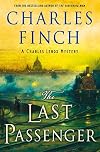
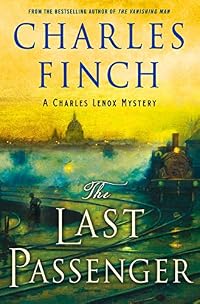
"From bestselling author Charles Finch comes the third and final in a prequel trilogy to his lauded Charles Lenox series. London, 1855: A young and eager Charles Lenox faces his toughest case yet: a murder without a single clue. Slumped in a first-class car at Paddington Station is the body of a young, handsome gentleman. He has no luggage, empty pockets, and no sign of violence upon his person - yet Lenox knows instantly that it's not a natural death. Pursuing the investigation against the show more wishes of Scotland Yard, the detective encounters every obstacle London in 1855 has to offer, from obstinate royalty to class prejudice to the intense grief of his closest friend. Written in Charles Finch's unmistakably warm, witty, and winning voice, The Last Passenger is a cunning and deeply satisfying conclusion to the journey begun in The Woman in the Water and The Vanishing Man"-- show lessTags
Recommendations













Member Reviews
I came to this series late with “The Vanishing Man” and was excited to download the last and final in a prequel trilogy to the Charles Lenox series. Another great period piece that opens on October 1, 1855 when the city of London, England decides that it is time for Charles Lenox to be married. While not the central theme of the story it does help move it along together with Lenox’s contemplation of his profession and whether that course is sustainable. The characteristics of dry wit, humor and a smidgeon of self-deprecation that Finch attributes to Lenox win out on every page making him so very human and likable.
The story is involved and is not a straightforward investigation by Scotland Yard into a murder that has too many show more questions and no blatant answers. The murder is the front and center story but its resolution requires meandering down many lanes and alleys and as far afield as the time’s prevalent politics in the United States. Of course there is the murder, but attention is also paid to friendship, public and private conscience, an examination of class structure, prejudice and greed. It took no effort to become reacquainted with Lenox’s inner circle; his butler Graham, good friend and next door neighbor Lady Jane, and his brother Edmund. His introduction of new characters was done skillfully and served to enhance the story through their distinct personalities.
There is no doubt that I have to and will read each and every book in this series.Thank you NetGalley and Minotaur Books for a copy. show less
The story is involved and is not a straightforward investigation by Scotland Yard into a murder that has too many show more questions and no blatant answers. The murder is the front and center story but its resolution requires meandering down many lanes and alleys and as far afield as the time’s prevalent politics in the United States. Of course there is the murder, but attention is also paid to friendship, public and private conscience, an examination of class structure, prejudice and greed. It took no effort to become reacquainted with Lenox’s inner circle; his butler Graham, good friend and next door neighbor Lady Jane, and his brother Edmund. His introduction of new characters was done skillfully and served to enhance the story through their distinct personalities.
There is no doubt that I have to and will read each and every book in this series.Thank you NetGalley and Minotaur Books for a copy. show less
4.5 / 5 stars
Author Charles Finch has done it again! Thirteen books into this series and the writing is still fresh and keeps getting better with each installment. If you're a fan of well conceived and delightfully written historical fiction, then I commend this book to you, without reservation.
The story opens in London - October, 1855 with our young protagonist, Charles Lenox, being introduced to all the young ladies of London who are marriage suitable for a man of his standing. Initially, he finds it all rather tedious. There is one who caught his eye but who knows how all that will turn out.
Meanwhile, tippling Inspector Hemstock appears at Charles' home hoping to engage Charles' assistance in solving a murder down at Paddingtron show more Station. Not rushing to the inspector's aid, Charles eventually heads off to Paddington and arrives there even before the inspector. It's a messy business. The eviscerated young victim had no identification and it all appeared to be a mystery with no clues. Fear not; Charles Lenox is on scene and happy to offer his services in aiding the Yard to solve yet another crime.Charles is never boastful but he is clever and has had some success to his credit.
This is the third installment in the Charles Lenox mystery prequels. Of the three, this one by far is the best, in my opinion. Lenox is at a pivotal point in his rather lonesome life. Charles Finch does a spectacular job sharing with us the gravitas of decisions Lenox makes and how they will impact his future. We all are exposed to Lenox's vulnerable side and frustration with himself when he falls short of perfection. But one of his best traits is his desire for at least justice when fairness cannot be easily obtained. Lenox has a gentle soft spot for the folks who struggle through life owing to the lives into which they were born. He sees industrious and clever young Willikens selling papers, tobacco and mints on the train platforms, hustling to be present and available as each train disembarks. Willikens is a child born into poverty and abandoned. It pulls on Charles' heartstrings and results in some kindnesses extended to the boy.
Finch is superb at his character development. The humorous banter between Lenox and those he holds dear is absolutely charming. There are quite a few red herrings as the book progresses but when all is said and done, it is an extremely satisfying yarn which has been spun. I cannot wait to see what Lenox gets himself into next.
I am grateful to author Charles Finch and his publisher, Minotaur Books for having provided a free e-book through NetGalley. Their generosity, however, has not influenced this review - the words of which are mine alone. show less
Author Charles Finch has done it again! Thirteen books into this series and the writing is still fresh and keeps getting better with each installment. If you're a fan of well conceived and delightfully written historical fiction, then I commend this book to you, without reservation.
The story opens in London - October, 1855 with our young protagonist, Charles Lenox, being introduced to all the young ladies of London who are marriage suitable for a man of his standing. Initially, he finds it all rather tedious. There is one who caught his eye but who knows how all that will turn out.
Meanwhile, tippling Inspector Hemstock appears at Charles' home hoping to engage Charles' assistance in solving a murder down at Paddingtron show more Station. Not rushing to the inspector's aid, Charles eventually heads off to Paddington and arrives there even before the inspector. It's a messy business. The eviscerated young victim had no identification and it all appeared to be a mystery with no clues. Fear not; Charles Lenox is on scene and happy to offer his services in aiding the Yard to solve yet another crime.Charles is never boastful but he is clever and has had some success to his credit.
This is the third installment in the Charles Lenox mystery prequels. Of the three, this one by far is the best, in my opinion. Lenox is at a pivotal point in his rather lonesome life. Charles Finch does a spectacular job sharing with us the gravitas of decisions Lenox makes and how they will impact his future. We all are exposed to Lenox's vulnerable side and frustration with himself when he falls short of perfection. But one of his best traits is his desire for at least justice when fairness cannot be easily obtained. Lenox has a gentle soft spot for the folks who struggle through life owing to the lives into which they were born. He sees industrious and clever young Willikens selling papers, tobacco and mints on the train platforms, hustling to be present and available as each train disembarks. Willikens is a child born into poverty and abandoned. It pulls on Charles' heartstrings and results in some kindnesses extended to the boy.
Finch is superb at his character development. The humorous banter between Lenox and those he holds dear is absolutely charming. There are quite a few red herrings as the book progresses but when all is said and done, it is an extremely satisfying yarn which has been spun. I cannot wait to see what Lenox gets himself into next.
I am grateful to author Charles Finch and his publisher, Minotaur Books for having provided a free e-book through NetGalley. Their generosity, however, has not influenced this review - the words of which are mine alone. show less
London, 1855. When a plodding, dissolute Scotland Yard inspector asks Charles Lenox for help solving a murder at Paddington Station, that request puts Lenox in a difficult position with most of the force. First of all, Charles is an amateur; secondly, unlike any police inspector, he’s of gentle birth (the second son of a baronet); and thirdly, he has a way of turning up evidence and making deductions that arouses envy.
But this particular case offers no clues to be envious about. The dead man carries no means of identification — no wallet, papers, or belongings — and the murderer removed all the labels in the victim’s clothes.
What’s more, the investigation reaches frequent impasses. You never have the feeling that justice is show more inexorable, which adds to the tension, and what strikes you most isn’t Lenox’s skill but his eagerness to learn. That quality separates him from some (though not all) duly sanctioned officers of the law.
Since The Last Passenger is the thirteenth entry in the Charles Lenox series, the third of a prequel trilogy portraying how he began his career, I didn’t know I’d wind up reviewing it until I realized, within the first few chapters, how it stood out for me from its siblings. The mystery is extremely clever, and the prose graceful, but with Finch, those are givens. Rather, what appeals to me most about The Last Passenger is how the narrative probes more deeply into Charles’s character and moral and political beliefs than any other installment I’ve read.
To many men of his social station, he’s betrayed his class, and they cut him accordingly, which hurts. That has happened before, but here, he aches more from it. Further, he fears his mother disapproves as well, which carries extra weight, and she’s his sole surviving parent.
Nor does his loneliness end there. Still a bachelor at age twenty-seven, and having extinguished his torch for his childhood friend and next-door neighbor, Lady Jane Grey (now, there’s a name from Tudor history!), he finds that Lady Jane and his mother keep putting eligible young women in his way. At first, he wishes they didn’t, but when one young woman in particular smiles upon him, he wonders about that thing called love.
I don’t remember another Lenox novel in which our hero pays so much attention to the disparity of wealth that the metropolis displays, and of which he’s an example. Nor has he before now recognized racial prejudice, in himself or anyone else, or considered deeply the institution of American slavery that has aroused protest in England as the story opens. (Echoes of current issues, perhaps?)
Finally, as regular readers of Finch’s series know, the author delights in peppering his narratives with arcane facts, of which this one offers a more than usual portion. Among other bits, you learn what the British railway had in common with ancient Roman chariot tracks; why, in prior centuries to the nineteenth, no respectable lady wore green; the derivation of the word nickname; and how the phrases mind your P’s and Q’s and cold turkey entered the language.
Also noteworthy is how Finch takes care to show his detective’s mistakes, and not only because Lenox is learning his craft. Unlike Holmes, say, Lenox never carries the whiff of infallibility, so he’s that much more human. And in The Last Passenger, you see his maturation in more than one way, which is very satisfying. This is not just another mystery, or even just another Lenox mystery. show less
But this particular case offers no clues to be envious about. The dead man carries no means of identification — no wallet, papers, or belongings — and the murderer removed all the labels in the victim’s clothes.
What’s more, the investigation reaches frequent impasses. You never have the feeling that justice is show more inexorable, which adds to the tension, and what strikes you most isn’t Lenox’s skill but his eagerness to learn. That quality separates him from some (though not all) duly sanctioned officers of the law.
Since The Last Passenger is the thirteenth entry in the Charles Lenox series, the third of a prequel trilogy portraying how he began his career, I didn’t know I’d wind up reviewing it until I realized, within the first few chapters, how it stood out for me from its siblings. The mystery is extremely clever, and the prose graceful, but with Finch, those are givens. Rather, what appeals to me most about The Last Passenger is how the narrative probes more deeply into Charles’s character and moral and political beliefs than any other installment I’ve read.
To many men of his social station, he’s betrayed his class, and they cut him accordingly, which hurts. That has happened before, but here, he aches more from it. Further, he fears his mother disapproves as well, which carries extra weight, and she’s his sole surviving parent.
Nor does his loneliness end there. Still a bachelor at age twenty-seven, and having extinguished his torch for his childhood friend and next-door neighbor, Lady Jane Grey (now, there’s a name from Tudor history!), he finds that Lady Jane and his mother keep putting eligible young women in his way. At first, he wishes they didn’t, but when one young woman in particular smiles upon him, he wonders about that thing called love.
I don’t remember another Lenox novel in which our hero pays so much attention to the disparity of wealth that the metropolis displays, and of which he’s an example. Nor has he before now recognized racial prejudice, in himself or anyone else, or considered deeply the institution of American slavery that has aroused protest in England as the story opens. (Echoes of current issues, perhaps?)
Finally, as regular readers of Finch’s series know, the author delights in peppering his narratives with arcane facts, of which this one offers a more than usual portion. Among other bits, you learn what the British railway had in common with ancient Roman chariot tracks; why, in prior centuries to the nineteenth, no respectable lady wore green; the derivation of the word nickname; and how the phrases mind your P’s and Q’s and cold turkey entered the language.
Also noteworthy is how Finch takes care to show his detective’s mistakes, and not only because Lenox is learning his craft. Unlike Holmes, say, Lenox never carries the whiff of infallibility, so he’s that much more human. And in The Last Passenger, you see his maturation in more than one way, which is very satisfying. This is not just another mystery, or even just another Lenox mystery. show less
The new Charles Lennox mystery is another prequel to the series, but I think it's the last of the prequels. It begins in 1855 in an amusing way, it seems his mother has decided the 27 year-old should be married and has called upon all of her many friends to introduce appropriate young women to her son and help push him into marriage.
The mystery begins with the vicious murder of a young man on a train. Charles learns the dead man is American, a Congressman, and an abolitionist. Before the book ends Charles must wade through the sordid business of slavery and tracks down both Americans and Englishmen involved in a slavery venture. A new character, an American detective, is introduced and I think we'll be seeing him in future show more installments. He's a very likeable character and promises to give Charles some professional training. Does this mean a trip to America is in Charles' future?
It's always gratifying to read a series that gets better with each issue, and I think that's the case here. The Last
Passenger wrestles with a more serious topic but our favorite characters are still involved, though maybe not to the same extent. I'm only disappointed I have to wait a whole year to see where we go from here. show less
The mystery begins with the vicious murder of a young man on a train. Charles learns the dead man is American, a Congressman, and an abolitionist. Before the book ends Charles must wade through the sordid business of slavery and tracks down both Americans and Englishmen involved in a slavery venture. A new character, an American detective, is introduced and I think we'll be seeing him in future show more installments. He's a very likeable character and promises to give Charles some professional training. Does this mean a trip to America is in Charles' future?
It's always gratifying to read a series that gets better with each issue, and I think that's the case here. The Last
Passenger wrestles with a more serious topic but our favorite characters are still involved, though maybe not to the same extent. I'm only disappointed I have to wait a whole year to see where we go from here. show less
Charles Lenox! Always a pleasure!
The third and final of the prequels about the eccentric society detective, Charles Lenox's pulling together more of his background as a beginning detective. The disdain from many of the upper one thousand, his relationship with Scotland Yard, the development of his inquiry techniques, and his family and friends.
A male body is found in a train at Paddington Station. The 449 from Manchester.
No clues as to who the man was. Even the tags had been cut from his clothing.
This case will take Charles from undesirable denizens of London to those placed in the highest in the land.
And just when Charles thinks the case is solved a Mr Winston Cobb, a detective and an American Federal Marshal, turns up at his door. show more Together they come to realize that the resolution of the case is a double bind, a smokescreen, and their enquiries will have to go back to the beginning. It is indeed a case with a dark soul that will haunt Charles.
On the social front Charle's mother has decided that he needs a helpmate. She enlists Lady Jane aid to introduce him to some interesting young women. One stands out for Charles--Kitty Ashcroft. But even this relationship has a mystery hanging over it.
I think what cinched this story for me as a five star read was meeting Lady Jane's husband. Lord Deere becomes Charles' chess partner and what a lovely, sincere man he is. (Well naturally, we know Lady Jane to be a woman of exquisite sensibilities.) It is only later that Charles is struck by the friendship offered to him by Deere, or Grey as he's asked Charles to call him. Grey was a soldier first and foremost. His going to India he saw as his duty and I have vey dark thoughts about the man he was asked replace, it seems on a pretext. I must admit to shedding a tear where Deere is concerned.
A wonderfully rigorous mystery set in 1855 England that encompasses the gambit of racial discrimination and slavery. Yet it's more the personal side of this tale that called to me. A special addition to the Charles Lenox arc!
A Minotaur Books ARC via NetGalley show less
The third and final of the prequels about the eccentric society detective, Charles Lenox's pulling together more of his background as a beginning detective. The disdain from many of the upper one thousand, his relationship with Scotland Yard, the development of his inquiry techniques, and his family and friends.
A male body is found in a train at Paddington Station. The 449 from Manchester.
No clues as to who the man was. Even the tags had been cut from his clothing.
This case will take Charles from undesirable denizens of London to those placed in the highest in the land.
And just when Charles thinks the case is solved a Mr Winston Cobb, a detective and an American Federal Marshal, turns up at his door. show more Together they come to realize that the resolution of the case is a double bind, a smokescreen, and their enquiries will have to go back to the beginning. It is indeed a case with a dark soul that will haunt Charles.
On the social front Charle's mother has decided that he needs a helpmate. She enlists Lady Jane aid to introduce him to some interesting young women. One stands out for Charles--Kitty Ashcroft. But even this relationship has a mystery hanging over it.
I think what cinched this story for me as a five star read was meeting Lady Jane's husband. Lord Deere becomes Charles' chess partner and what a lovely, sincere man he is. (Well naturally, we know Lady Jane to be a woman of exquisite sensibilities.) It is only later that Charles is struck by the friendship offered to him by Deere, or Grey as he's asked Charles to call him. Grey was a soldier first and foremost. His going to India he saw as his duty and I have vey dark thoughts about the man he was asked replace, it seems on a pretext. I must admit to shedding a tear where Deere is concerned.
A wonderfully rigorous mystery set in 1855 England that encompasses the gambit of racial discrimination and slavery. Yet it's more the personal side of this tale that called to me. A special addition to the Charles Lenox arc!
A Minotaur Books ARC via NetGalley show less
This is a brilliant third prequel in the Charles Lenox historical mystery series set in 1850's London.
In this outstanding installment, we again meet a younger Lenox, Lady Jane (and her husband), and Graham, but this time, as they were dealing with the murder of a train passenger whose clothing had all of its tags removed, making it difficult for police to identify the body.
I especially loved how author Charles Finch wove in details about the U.S. and American slavery to create an exceptionally interesting plot.
One of my favorite mystery series and, as always, highly recommended!!
(I received a copy from the publisher, via Net Galley, in exchange for a fair and honest review).
In this outstanding installment, we again meet a younger Lenox, Lady Jane (and her husband), and Graham, but this time, as they were dealing with the murder of a train passenger whose clothing had all of its tags removed, making it difficult for police to identify the body.
I especially loved how author Charles Finch wove in details about the U.S. and American slavery to create an exceptionally interesting plot.
One of my favorite mystery series and, as always, highly recommended!!
(I received a copy from the publisher, via Net Galley, in exchange for a fair and honest review).
Barbara’s Rating 4.5 of 5
Series: Charles Lenox Mysteries #0.3
Publication Date: 2/18/20
Number of Pages: 304
Charles Finch is back with the third, and I believe final, prequel to the Charles Lenox Mysteries series – and I think this might be my favorite. We have a well-crafted mystery that involves two continents and some really vile villains. We also get to know and like Lady Jane’s husband and a young Charles falls in love. Add in tragedy and misery and goodness – there is everything you could possibly want in this book.
In October of 1855, it seems that all of his friends and relatives – at his mother’s behest – are trying to get Charles married off. Charles doesn’t have a particular objection to marriage, he just show more hadn’t really considered it. He’s been busy developing his chosen career as a private detective. Although the rest of the aristocracy looks down upon him for that choice, he still can’t give it up.
Lenox was sitting in his study playing chess with his neighbor – Jane’s husband, Lord Deere – when he received a visit from Inspector Hemstock of Scotland Yard. Hemstock is disinterested and inept and is asking Charles to accompany him to Paddington Station where there has been a murder.
Thus began an intriguing mystery that is filled with twists and turns. Just when you (and Charles) think you have it all figured out, the clues take them off in another direction. The victim was horribly murdered and anything that could possibly identify him had been removed from the body. So, not only do they have a murder, they don’t know who the victim is nor any clues to help identify him.
Charles pursues his investigation even though some in Scotland Yard want him to leave it alone and are really irate when he seems to be the only one who is finding any clues. When Charles identifies the victim and his mission in England, the investigation takes off in a whole new direction. When Charles finds additional victims, he finds himself in danger as well.
I loved getting to spend time with Jane’s husband and getting to know him better. He was such a sweet and honorable man that you can easily see how Jane came to love him. Charles also spent some time falling in love, but – well – I never did come to understand her at all.
This was an intriguing and mystifying read and I loved every page. I hope you will as well.
I voluntarily read and reviewed an Advanced Reader Copy of this book. All thoughts and opinions are my own. show less
Series: Charles Lenox Mysteries #0.3
Publication Date: 2/18/20
Number of Pages: 304
Charles Finch is back with the third, and I believe final, prequel to the Charles Lenox Mysteries series – and I think this might be my favorite. We have a well-crafted mystery that involves two continents and some really vile villains. We also get to know and like Lady Jane’s husband and a young Charles falls in love. Add in tragedy and misery and goodness – there is everything you could possibly want in this book.
In October of 1855, it seems that all of his friends and relatives – at his mother’s behest – are trying to get Charles married off. Charles doesn’t have a particular objection to marriage, he just show more hadn’t really considered it. He’s been busy developing his chosen career as a private detective. Although the rest of the aristocracy looks down upon him for that choice, he still can’t give it up.
Lenox was sitting in his study playing chess with his neighbor – Jane’s husband, Lord Deere – when he received a visit from Inspector Hemstock of Scotland Yard. Hemstock is disinterested and inept and is asking Charles to accompany him to Paddington Station where there has been a murder.
Thus began an intriguing mystery that is filled with twists and turns. Just when you (and Charles) think you have it all figured out, the clues take them off in another direction. The victim was horribly murdered and anything that could possibly identify him had been removed from the body. So, not only do they have a murder, they don’t know who the victim is nor any clues to help identify him.
Charles pursues his investigation even though some in Scotland Yard want him to leave it alone and are really irate when he seems to be the only one who is finding any clues. When Charles identifies the victim and his mission in England, the investigation takes off in a whole new direction. When Charles finds additional victims, he finds himself in danger as well.
I loved getting to spend time with Jane’s husband and getting to know him better. He was such a sweet and honorable man that you can easily see how Jane came to love him. Charles also spent some time falling in love, but – well – I never did come to understand her at all.
This was an intriguing and mystifying read and I loved every page. I hope you will as well.
I voluntarily read and reviewed an Advanced Reader Copy of this book. All thoughts and opinions are my own. show less
Members
- Recently Added By
Published Reviews
ThingScore 63
Overall, a bit more history than mystery. Choose this if you revel in atmosphere.
added by rretzler
Finch effectively integrates the politics of the time, including pre–Civil War tensions in America, and his insertion of subplots regarding his lead’s romantic life doesn’t distract from the clever murder puzzle.
added by rretzler
Lists

Books Read in 2020
4,379 works; 123 members

Books Read in 2021
5,361 works; 113 members
Series

Common Knowledge
- Canonical title
- The Last Passenger
- Original publication date
- 2020-02-18
- People/Characters
- Charles Lenox; Graham; Lady Jane Deere
- Important places
- London, England, UK
- Dedication
- This book is dedicated with gratitude to Ellen Leschek and Maureen Kelly
- First words
- On or about the first day of October 1855, the city of London, England, decided it was time once and for all that Charles Lenox be married.
- Last words
- (Click to show. Warning: May contain spoilers.)On the other hand, he knew it didn’t matter whether she had or not—that simply the being there, when it was all said and done, an unfailing friend, was
enough.
Classifications
Statistics
- Members
- 250
- Popularity
- 129,321
- Reviews
- 12
- Rating
- (4.09)
- Languages
- English, Italian
- Media
- Paper, Audiobook, Ebook
- ISBNs
- 10
- ASINs
- 2