
On This Page
Description
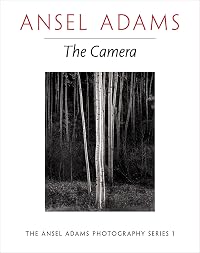
Serves as an introduction to "The New Ansel Adams Photography Series." Discusses photographic material and emphasizes concepts such as visualization.Tags
Recommendations
















Member Reviews
This book is a classic. On the face of it, you would question the relevance of the book in today's digital age. However, when I started to read the book, I marvelled at the beauty of the concepts that he outlined, and the clarity with which he explained them.
His understanding of the camera, it's principles, is masterly. His lessons, pithy as they are, on visualisation, are timeless. They are as valid today as when he wrote them, and will be valid tomorrow.
The principles of the camera, lenses, depth of field, hyper focal distance etc are valid today as they were yesterday, and his handling of the subject is masterly
For one, like me, who would like to experiment again with the old cameras, this book its invaluable
A masterpiece. A gem
His understanding of the camera, it's principles, is masterly. His lessons, pithy as they are, on visualisation, are timeless. They are as valid today as when he wrote them, and will be valid tomorrow.
The principles of the camera, lenses, depth of field, hyper focal distance etc are valid today as they were yesterday, and his handling of the subject is masterly
For one, like me, who would like to experiment again with the old cameras, this book its invaluable
A masterpiece. A gem
Many people know Ansel Adams was a photographer, fewer know he was the preeminent photographer of his time (and that extends to now), and still fewer know that Adams was also a photo-chemist, mathematician, and technical genius who elevated photography from being an interesting gimmick to an accepted art form.
“The Camera” is the first of three volumes of the world’s most comprehensive instruction in wet photography. The information in this book is accessible to novices through seasoned professionals. It is difficult to imagine a more elegant or instructive piece of literature ever being written on digital photography and it is a sad commentary on our changing lifestyles that Kodak has stopped making paper and chemicals for black show more and white photography.
This is an excellent book. Very well written, copiously diagrammed and explained, and in the words of the master, himself. If you appreciate photography, you owe it to yourself to have this three volume set in your possession.
Dave
D. A. Blankinship show less
“The Camera” is the first of three volumes of the world’s most comprehensive instruction in wet photography. The information in this book is accessible to novices through seasoned professionals. It is difficult to imagine a more elegant or instructive piece of literature ever being written on digital photography and it is a sad commentary on our changing lifestyles that Kodak has stopped making paper and chemicals for black show more and white photography.
This is an excellent book. Very well written, copiously diagrammed and explained, and in the words of the master, himself. If you appreciate photography, you owe it to yourself to have this three volume set in your possession.
Dave
D. A. Blankinship show less
Great read if you're serious about photography. Shows how a camera works. Worth reading, even if you're shooting digital only (like me).
First book in a series of three about the Zone System of exposure for film photography by Ansel Adams. It discusses all formats of cameras and the advantages/disadvantages of each. Necessary reading for those photographers interested in learning how to produce high quality fine art prints using a film camera.
Stated First Edition, first volume of the New Ansel Adams Photography series.
Members
- Recently Added By
Author Information

180+ Works 9,988 Members
Ansel Easton Adams born on February 20, 1902 in San Francisco, California. In 1915 his father removed him from school and he was home-schooled in Greek, the English classics, algebra, and the nature that surrounded their home. His father also bought him a season pass to the Panama-Pacific Exposition, which he visited nearly every day. In 1916 the show more Adams family visited Yosemite National Park, where Adams was given his first camera. At this point in his life, Adams had planned to become a concert pianist, but he soon discovers the joys of photography. Adams' first acknowledged picture appears in 1927. In 1932, he formed the f/64 group with Edward Veston, with whom he goes on to teach his first workshop with at Yosemite, called the U. S. Camera Photogrpahic Forum. Adams began serving on the Board of the Sierra Club in 1932, a position he held until 1971. In March of 1933, Adams met Alfred Stieglitz, owner of An American Place photo gallery. Stieglitz was so impressed with Adams work that he held an exhibition for Adams in 1936. In 1943, Adams sought to contribute to the war effort by recording the lives of the American-born citizens of Japanese descent who were interned in the Manzanar War Relocation Camp. In 1949 Adams tested Polaroid cameras for Edwin Land, In 1953, Adams collaborated with Dorothea Lange on a Life commission for a photo essay on the Mormons in Utah. In 1967, he was instrumental in the foundation of the Friends of Photography. Adams was a commercial photographer for 30 years, within which he won three Guggenheim grants to photograph the national parks. In 1980, The Ansel Adams Conservation Award was established by the Wilderness Club, and Adams named as the first recipient. Ansel Adams died April 22 of heart failure aggravated by cancer. (Bowker Author Biography) In a career that spanned more than five decades, Ansel Adams was at once America's foremost landscape photographer & one of its most ardent environmentalists. (Publisher Provided) show less
Series

Work Relationships
Is contained in
Common Knowledge
- Canonical title
- The Camera
- Dedication
- I dedicate this book to my many friends, students and colleagues who have contributed much to the art and craft of photography. Without their interest and support this book (and what it may represent as an approach to the med... (show all)ium) would not have been possible.
- Publisher's editor*
- Editora Senac São Paulo
*Some information comes from Common Knowledge in other languages. Click "Edit" for more information.
Classifications
Statistics
- Members
- 1,003
- Popularity
- 25,944
- Reviews
- 5
- Rating
- (4.14)
- Languages
- 5 — English, German, Italian, Portuguese, Spanish
- Media
- Paper, Ebook
- ISBNs
- 9
- ASINs
- 15