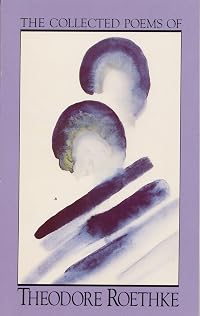
The Collected Poems of Theodore Roethke
by Theodore Roethke
On This Page
Description
With the publication of Open House in 1941, Theodore Roethke began a career which established him as one of the most respected American poets. His subsequent volumes included The Waking, winner of the Pulitzer Prize in 1953, Words for the Wind, recipient of a National Book Award and the Bollingen Prize in Poetry of Yale University, and the posthumously published The Far Field, which won a National Book Award in 1965. Available for the first time in paperback, this volume contains the show more complete text of Roethke's seven published books as well as sixteen previously uncollected poems. These two hundred poems demonstrate the variety of Roethke's themes and styles, the comic and serious sides of his temperament, and his breakthroughs in the use of language. Together they document the development of an extraordinary creative source in American poetry. show lessTags
Recommendations





Member Reviews
This collection is a mixed bag. I’m rating it with five stars anyway, for when Roethke was good, he was very good. I liked in particular “The Lost Son.” It has a language and themes all its own and gives the feeling it could have been written by no other poet. There are many other fine ones as well. I’m struck by how many good love poems he wrote, as incongruous as they seem in company of those in which he rages in the mire of physical life. Throughout, there is the contention between flesh and spirit and the awareness of death. Many images are recurrent: stone, snail, snake, and the basic elements, especially fire and water. He was also obsessed with birds and—son of the greenhouse—flowers.
A telling line from “What Can I show more Tell My Bones” seems a key to Roethke’s perceptions and obsessions: “The dead love the unborn.” Roethke is intensely aware that his particular person is part of a great network of being, connected not only to all of nature (animate and inanimate) but to all that came before or will come. His yearning for reconnection with this leads not only to the imagery of rebirth; his longing extends to a recapitulation of evolution. The self-referential “worm,” conventionally in the pen of other writers an expression of self-loathing (at times in Roethke as well), is, for him, a sign of kinship.
Roethke’s nursery poems point in the same direction, a recapturing of simplicity. For the most part, however, these songs of experience-informed innocence don’t work for me. Nevertheless, there are many poems in this book that I’ll return to again and again. show less
A telling line from “What Can I show more Tell My Bones” seems a key to Roethke’s perceptions and obsessions: “The dead love the unborn.” Roethke is intensely aware that his particular person is part of a great network of being, connected not only to all of nature (animate and inanimate) but to all that came before or will come. His yearning for reconnection with this leads not only to the imagery of rebirth; his longing extends to a recapitulation of evolution. The self-referential “worm,” conventionally in the pen of other writers an expression of self-loathing (at times in Roethke as well), is, for him, a sign of kinship.
Roethke’s nursery poems point in the same direction, a recapturing of simplicity. For the most part, however, these songs of experience-informed innocence don’t work for me. Nevertheless, there are many poems in this book that I’ll return to again and again. show less
Never have office supplies been so melancholy, so lyrical. "I have known the inexorable sadness of pencils..." Roethke is one of those magical poets that makes you see everything as if for the first time, that makes you hear every word as if you never knew what it meant until that moment.
In honor of the nicest weekend of 2007, and walking 18 miles in two days after remaining totally sedentary for four months, the poem I've decided to memorize for March is Theodore Roethke's buoyant ode "I Knew a Woman":
I knew a woman, lovely in her bones,
When small birds sighed, she would sigh back at them;
Ah, when she moved, she moved more ways than one:
The shapes a bright container can contain!
Of her choice virtues only gods should speak,
Or English poets who grew up on Greek
(I'd have them sing in chorus, cheek to cheek.)
How well her wishes went! She stroked my chin,
She taught me Turn, and Counter-turn, and stand;
She taught me Touch, that undulant white skin:
I nibbled meekly from her proffered hand;
She was the sickle; I, poor I, the show more rake,
Coming behind her for her pretty sake
(But what prodigious mowing did we make.)
Love likes a gander, and adores a goose:
Her full lips pursed, the errant note to seize;
She played it quick, she played it light and loose;
My eyes, they dazzled at her flowing knees;
Her several parts could keep a pure repose,
Or one hip quiver with a mobile nose
(She moved in circles, and those circles moved.)
Let seed be grass, and grass turn into hay:
I'm martyr to a motion not my own;
What's freedom for? To know eternity.
I swear she cast a shadow white as stone.
But who would count eternity in days?
These old bones live to learn her wanton ways:
(I measure time by how a body sways.)
What is not to love about this poem? In a season starved for the beginning of springtime, it is a light wiff of summery playfulness and lovely sunny language. I love the roguish, slightly goofy sense of humor in lines like "But what prodigious mowing we did make!" (nudge nudge, wink wink!) and the reference to "English poets who grew up on Greek" being uniquely endowed to speak of the love interest, along with gods. But mostly I take a sheer, visceral delight in the quality of the language, the way the words trip along so musically and unexpectedly. "She played it quick, she played it light and loose" is a line that embodies so perfectly its own content, that it makes me smile to myself every time. Try saying it out loud; it trips so joyously off the tongue that I almost feel like singing the melody rather than saying the words.
Also breathtaking for their word-candy quality are "I'm martyr to a motion not my own" and "These old bones live to learn her wanton ways." The uncontrolled exuberance implied by all of the poetic devices employed in the second line - assonance between "old" and "bones"; alliteration between "live" and "learn," as well as between "wanton" and "ways"; the fact that the entire line rhymes with the line above it AND the line below it - encapsulates so perfectly the overwrought lover intoxicated by the object of his affection as (perhaps) only an older man in love with a younger woman can be. Or maybe the speaker only felt old before meeting the woman who reinvigorated his state of being and taught him to delight in making a happy, sensual fool out of himself. That, too, is a satisfying interpretation.
I like the poem's accepting, even celebratory, attitude toward the less dignified aspects of falling in love: "She was the sickle; I, poor I, the rake, / Coming behind her for her pretty sake / (But what prodigious mowing we did make!)" Whether because one is the old (feeling) man being blessed with an infusion of youthful beauty, or for myriad other reasons, loving another person usually involves humbling oneself and coming off as a bit ridiculous on occasion; this poem joyfully proclaims the exercise more than worthwhile.
Of course, there is also a hint of sadness in the poem, a bit of the elegy even, since it is written in the past tense: the speaker knew a woman, but, he implies, no longer knows her in the present day. All of her flowing, dancerly actions are taking place in a gilded past of perpetual summer. Toward the end of the poem, in particular, are many reminders of mortality: "Let seed be grass, and grass turn into hay" being the most blatant. This gives the line "These old bones live to learn her wanton ways" a little more emotional weight, since the speaker may be carrying on a legacy in addition to imitating an inspiring lover. I think the joy of the poem works even better with the addition of this hint of sadness. Personally, though, I choose not to dwell on the tragic elements of the poem; or, more accurately, I have a hard time focusing on them because the astonishing lingual delight of the words and phrases keeps distracting me. I end up, like the poem's narrator, "martyr to a motion not my own," and that motion will, hopefully, keep me smiling until Spring arrives for real. show less
I knew a woman, lovely in her bones,
When small birds sighed, she would sigh back at them;
Ah, when she moved, she moved more ways than one:
The shapes a bright container can contain!
Of her choice virtues only gods should speak,
Or English poets who grew up on Greek
(I'd have them sing in chorus, cheek to cheek.)
How well her wishes went! She stroked my chin,
She taught me Turn, and Counter-turn, and stand;
She taught me Touch, that undulant white skin:
I nibbled meekly from her proffered hand;
She was the sickle; I, poor I, the show more rake,
Coming behind her for her pretty sake
(But what prodigious mowing did we make.)
Love likes a gander, and adores a goose:
Her full lips pursed, the errant note to seize;
She played it quick, she played it light and loose;
My eyes, they dazzled at her flowing knees;
Her several parts could keep a pure repose,
Or one hip quiver with a mobile nose
(She moved in circles, and those circles moved.)
Let seed be grass, and grass turn into hay:
I'm martyr to a motion not my own;
What's freedom for? To know eternity.
I swear she cast a shadow white as stone.
But who would count eternity in days?
These old bones live to learn her wanton ways:
(I measure time by how a body sways.)
What is not to love about this poem? In a season starved for the beginning of springtime, it is a light wiff of summery playfulness and lovely sunny language. I love the roguish, slightly goofy sense of humor in lines like "But what prodigious mowing we did make!" (nudge nudge, wink wink!) and the reference to "English poets who grew up on Greek" being uniquely endowed to speak of the love interest, along with gods. But mostly I take a sheer, visceral delight in the quality of the language, the way the words trip along so musically and unexpectedly. "She played it quick, she played it light and loose" is a line that embodies so perfectly its own content, that it makes me smile to myself every time. Try saying it out loud; it trips so joyously off the tongue that I almost feel like singing the melody rather than saying the words.
Also breathtaking for their word-candy quality are "I'm martyr to a motion not my own" and "These old bones live to learn her wanton ways." The uncontrolled exuberance implied by all of the poetic devices employed in the second line - assonance between "old" and "bones"; alliteration between "live" and "learn," as well as between "wanton" and "ways"; the fact that the entire line rhymes with the line above it AND the line below it - encapsulates so perfectly the overwrought lover intoxicated by the object of his affection as (perhaps) only an older man in love with a younger woman can be. Or maybe the speaker only felt old before meeting the woman who reinvigorated his state of being and taught him to delight in making a happy, sensual fool out of himself. That, too, is a satisfying interpretation.
I like the poem's accepting, even celebratory, attitude toward the less dignified aspects of falling in love: "She was the sickle; I, poor I, the rake, / Coming behind her for her pretty sake / (But what prodigious mowing we did make!)" Whether because one is the old (feeling) man being blessed with an infusion of youthful beauty, or for myriad other reasons, loving another person usually involves humbling oneself and coming off as a bit ridiculous on occasion; this poem joyfully proclaims the exercise more than worthwhile.
Of course, there is also a hint of sadness in the poem, a bit of the elegy even, since it is written in the past tense: the speaker knew a woman, but, he implies, no longer knows her in the present day. All of her flowing, dancerly actions are taking place in a gilded past of perpetual summer. Toward the end of the poem, in particular, are many reminders of mortality: "Let seed be grass, and grass turn into hay" being the most blatant. This gives the line "These old bones live to learn her wanton ways" a little more emotional weight, since the speaker may be carrying on a legacy in addition to imitating an inspiring lover. I think the joy of the poem works even better with the addition of this hint of sadness. Personally, though, I choose not to dwell on the tragic elements of the poem; or, more accurately, I have a hard time focusing on them because the astonishing lingual delight of the words and phrases keeps distracting me. I end up, like the poem's narrator, "martyr to a motion not my own," and that motion will, hopefully, keep me smiling until Spring arrives for real. show less
Though Schmidt in "Lives of the Poets" excouriates Roethke for being too derivative, I still enjoy him.
I was more than a little disappointed in these. Only familiar with one poem, an elegy written for a student of his, which was lovely. This was pretty pricey too, and came without a dust jacket.
This paperback edition contains the complete text of Roethke's seven published volumes plus sixteen previously uncollected poems. Included are his Pulitzer Prize and National Book Award winners The Walking, Words for the Wind, and The Far Field.
Members
- Recently Added By
Lists

Harold Bloom - The Western Canon: D. The Chaotic Age
833 works; 24 members

Tom's Bookstore
346 works; 2 members
Author Information

35+ Works 2,008 Members
Theodore Roethke was a poet and educator. He was born on May 25, 1908 in Saginaw, Michigan. Roethke graduated from the University of Michigan in 1929. He entered Michigan Law School, but withdrew in 1930 to pursue a master's degree in literature at Harvard. Roethke did not complete his degree due to financial problems. Roethke worked as an show more instructor at Lafayette College, Pennsylvania State University, and Bennington College. His 1951 book, Praise to the End, won the Bollington Prize and his 1953 volume, The Waking, Poems 1933-1953, won the Pulitzer Prize. Roethke was also a two-time winner of the National Book Award and the recipient of a Guggenheim Fellowship. Roethke died on August 1, 1963. (Bowker Author Biography) show less
Awards and Honors
Awards
Distinctions
Common Knowledge
- First words
- My secrets cry aloud.
- Quotations
- Dissection is a virtue when / It operates on other men.
- Last words
- (Click to show. Warning: May contain spoilers.)With that, he hitched his pants and humped away.
Classifications
Statistics
- Members
- 1,015
- Popularity
- 25,686
- Reviews
- 6
- Rating
- (4.16)
- Languages
- English
- Media
- Paper, Ebook
- ISBNs
- 8
- ASINs
- 14