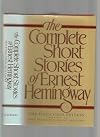
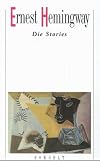
The Complete Short Stories of Ernest Hemingway
by Ernest Hemingway 
On This Page
Description
The definitive short story collection that established Ernest Hemingway's literary reputation, originally published in 1938.Ernest Hemingway is a cultural icon—an archetype of rugged masculinity, a romantic ideal of the intellectual in perpetual exile—but, to his countless readers, Hemingway remains a literary force much greater than his image. Of all of Hemingway's canonical fictions, perhaps none demonstrate so forcefully the power of the author's revolutionary style as his short show more stories. In classics like "Hills like White Elephants," "The Butterfly in the Tank," and "The Short Happy Life of Francis Macomber," Hemingway shows us great literature compressed to its most potent essentials. We also see, in Hemingway's short fiction, the tales that created the legend: these are stories of men and women in love and in war and on the hunt, stories of a lost generation born into a fractured time.
The Short Stories of Ernest Hemingway presents many of Hemingway's most famous classics alongside rare and unpublished material: Hemingway's early drafts and correspondence, his dazzling out-of-print essay on the art of the short story, and two marvelous examples of his earliest work—his first published story, "The Judgment of Manitou," which Hemingway wrote when still a high school student, and a never-before-published story, written when the author was recovering from a war injury in Milan after WWI. This work offers vital insight into the artistic development of one of the twentieth century's greatest writers. It is a perfect introduction for a new generation of Hemingway readers, and it belongs in the collection of any true Hemingway fan. Classic Literature. Short Stories. Literature. Fiction. show less
Tags
Recommendations












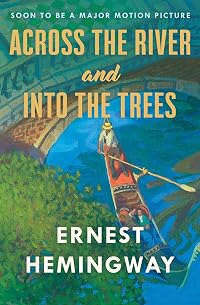
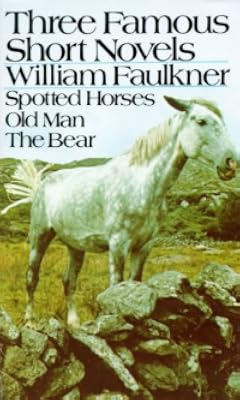
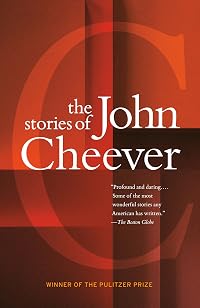
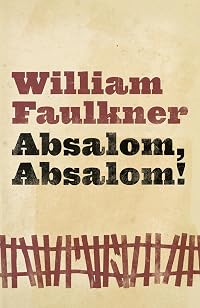




Member Recommendations

by anonymous user
artturnerjr The only 20th century American writer who rivals Hemingway in economy and forcefulness of language.
Member Reviews
A kötet írásainak jelentős részét már ismertem, de sebaj, jó volt újraolvasni őket. Mert Hemingwayt olvasni, úgy nagy általánosságban: jó. Különösen érdekes figyelni, ahogy Ernest rendre a szövegen kívülre helyezi el magát a feszültséget biztosító eseményt – az író újítása ugyanis, hogy maga a konkrét cselekmény gyakran már a novella kezdete előtt megtörtént, vagy a novellán kívül történik, és a szereplők párbeszédéből, pontosabban a párbeszéd pulzálásából vagyunk kénytelenek rekonstruálni azt. Ez, párosulva a közmondásos hemingwayi szűkszavúsággal, helyenként igazán élménydús és izgalmas prózát produkál, ezzel tette hozzá a Papa a magáét a XX. századi show more irodalomhoz*, nem az igazi Férfiak** szerepeltetésével – igazi Férfiakat ugyanis már Hemingway előtt is szép számmal ontott magából a regényirodalom. Persze azért a hemingwayi Férfi is bőven megér egy misét – ez a karakán csávó, aki ha fél is, megharcol a félelemmel, mert azt is lábhoz tudja szoktatni. És aki szótlanul, többé-kevésbé cserzett arccal bámul bele a Nagy Semmibe, miközben mindenfélére gondol: egy régi folyóra, ahol pisztrángra horgászott, egy oroszlánra, ahogy a bozótban lapul, egy torrero köpenyének lebbenésére, egy gránátra, ami átsüvít a lövészárkok fölött… vagy arra, hogy mi lenne, ha éppen haldokolna, folyna el belőle az élet, és haldoklás közben egy régi folyóra gondolna, ahol… etc, etc. Jó, hát őszintén megmondom, néha kicsit már sok ezekből a Férfiakból. És igen, időnként kedvem támadt jól tökön rúgni őket, csak hogy megteljen élettel az a férfibús tekintetük.
(Amúgy lelkiismeret-furdalás nélkül langyos négyest adtam volna rá, ha nincs benne Az öreg halász…, amit remekműnek tartok. Egyszerűen pazar, hogy működik, mint szimpla kalandregény, főszerepben a megvénült és legatyásodott Bear Gryllsszel, és működik a létezés sokszintű, mégis közérthető metaforájaként is. Így némileg forróbb négyes jár neki.)
* Érdemes megnézni a skandináv minimalistákra gyakorolt hatását.
** Ez a „Férfi” nem keverendő össze a „férfi” kifejezéssel – utóbbi az emberi faj hímnemű egyedeit, előbbi pedig egy morális állapotot, illetve az ebből fakadó cselekvési sémákat jelöli, amiket Hemingway egyértelműen a biológiai nemhez köt. show less
(Amúgy lelkiismeret-furdalás nélkül langyos négyest adtam volna rá, ha nincs benne Az öreg halász…, amit remekműnek tartok. Egyszerűen pazar, hogy működik, mint szimpla kalandregény, főszerepben a megvénült és legatyásodott Bear Gryllsszel, és működik a létezés sokszintű, mégis közérthető metaforájaként is. Így némileg forróbb négyes jár neki.)
* Érdemes megnézni a skandináv minimalistákra gyakorolt hatását.
** Ez a „Férfi” nem keverendő össze a „férfi” kifejezéssel – utóbbi az emberi faj hímnemű egyedeit, előbbi pedig egy morális állapotot, illetve az ebből fakadó cselekvési sémákat jelöli, amiket Hemingway egyértelműen a biológiai nemhez köt. show less
It has never occurred to me before, but the autor seems to have been obsessed with physical violence, whether in the form of war, boxing, corrida, hunting ... Which is maybe why I still consider one of the few 'non-violent' stories, A Clean, Well-Lighted Place, the best he's ever written.
Hemingway expresses it well himself in one of the stories when he describes his alter-ego as writing morbid stories. Maybe not morbid, but they all have such a morose feel to them. It's like listening to hours of music in a minor key, discordant and mournful. He was not a happy camper. There is no joy in any of his stories. Awe sometimes, but never joy.
for me to give these marvelous nick adams and early war stories anything less than five stars would be blasphemous indeed. I've read and re-read the early stories, and especially "Up in Michigan," "Indian Camp," and "Big Two-Hearted RIver (parts 1 and 2)" are delicious to read again, and again. If I were allowed only one book or one person's work to have for eternity, it would be Papa's Before one thinks I am going to put him on a pedestal and worship him as a cohort of the angels, let me say I know he spelled worse than an Irish immigrant and didn't "develope" a style in maturity. His fifth grade essay reprinted by Carlos Baker in that author's biography shows the exact same literary style as used in "A Farewell to Arms." I sure wish I show more could find an editor like Max Perkins, or an agent like Scott Meredith. show less
This collection of stories is wonderful. Hemingway was a master of the short story genre and one of the finest American writers ever. Ever word is meaningful and well crafted into extraordinary stories. "Hills Like White Elephants" is my absolute favorite of the bunch.
Each story is an interesting anecdote about a set of events about individuals in curious situations. The stories by themselves appear to have no start or end but expose ways of thinking about each instance.
Elegant and cool
Members
- Recently Added By
Lists

Classics you know you should have read but probably haven't
421 works; 408 members

Recommend the 20 best books you've read in the last five years
2,168 works; 603 members

20th Century Literature
1,161 works; 54 members

Harold Bloom - The Western Canon: D. The Chaotic Age
833 works; 24 members

Folio Society
831 works; 53 members

Fiction For Men
142 works; 11 members

http://thegreatestbooks.org's Greatest Fiction Books
59 works; 1 member
American Lit for Eng 11 Research Project
368 works; 6 members

The 150 Greatest Novels of All Time
150 works; 6 members

Blue Pyramid 1,276 Best Books of All Time
1,248 works; 32 members

Unread books
1,063 works; 83 members
Top-Rated Books on LibraryThing
272 works; 118 members
Author Information

669+ Works 174,565 Members
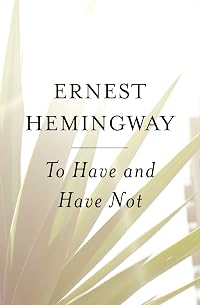
Ernest Miller Hemingway was born in the family home in Oak Park, Ill., on July 21, 1899. In high school, Hemingway enjoyed working on The Trapeze, his school newspaper, where he wrote his first articles. Upon graduation in the spring of 1917, Hemingway took a job as a cub reporter for the Kansas City Star. After a short stint in the U.S. Army as a show more volunteer Red Cross ambulance driver in Italy, Hemingway moved to Paris, and it was here that Hemingway began his well-documented career as a novelist. Hemingway's first collection of short stories and vignettes, entitled In Our Time, was published in 1925. His first major novel, The Sun Also Rises, the story of American and English expatriates in Paris and on excursion to Pamplona, immediately established him as one of the great prose stylists and preeminent writers of his time. In this book, Hemingway quotes Gertrude Stein, "You are all a lost generation," thereby labeling himself and other expatriate writers, including F. Scott Fitzgerald, T.S. Eliot, and Ford Madox Ford. Other novels written by Hemingway include: A Farewell To Arms, the story, based in part on Hemingway's life, of an American ambulance driver on the Italian front and his passion for a beautiful English nurse; For Whom the Bell Tolls, the story of an American who fought, loved, and died with the guerrillas in the mountains of Spain; and To Have and Have Not, about an honest man forced into running contraband between Cuba and Key West. Non-fiction includes Green Hills of Africa, Hemingway's lyrical journal of a month on safari in East Africa; and A Moveable Feast, his recollections of Paris in the Roaring 20s. In 1954, Hemingway won the Nobel Prize in Literature for his novella, The Old Man and the Sea. A year after being hospitalized for uncontrolled high blood pressure, liver disease, diabetes, and depression, Hemingway committed suicide on July 2, 1961, in Ketchum, Idaho. (Bowker Author Biography) show less
Ernest Hemingway has a Legacy Library. Legacy libraries are the personal libraries of famous readers, entered by LibraryThing members from the Legacy Libraries group.
Awards and Honors
Series
Belongs to Publisher Series
Work Relationships
Is contained in
Contains
Has as a student's study guide
Common Knowledge
- Canonical title
- The Complete Short Stories of Ernest Hemingway
- Original publication date
- 1987; 1979; Original story copyrights :1925-1953; 1938 (for "The First Forty-Nine Stories") (for "The First Forty-Nine Stories")
- People/Characters
- Nicholas Adams
- First words
- The Short Happy Life of Francis Macomber: It was now lunch time and they were all sitting under the double green fly of the dining tent pretending that nothing had happened.
- Last words
- (Click to show. Warning: May contain spoilers.)"I can see we'll have to go."
- Disambiguation notice
- Please distinguish this "Complete Stories" edition from the "Finca Vigía edition," which includes an additional seven stories of previously unpublished fiction.
Classifications
Statistics
- Members
- 813
- Popularity
- 34,150
- Reviews
- 7
- Rating
- (4.13)
- Languages
- 14 — Chinese, Czech, Danish, Dutch, English, German, Greek, Hungarian, Italian, Japanese, Norwegian (Bokmål), Norwegian, Portuguese, Turkish
- Media
- Paper, Audiobook, Ebook
- ISBNs
- 28
- UPCs
- 1
- ASINs
- 31