On This Page
Description
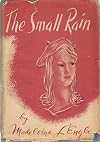
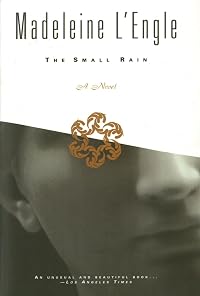
"An unusual and beautiful book," the first novel by the bestselling author of A Wrinkle in Time explores the life of a young artist (Los Angeles Times). At only ten years old, Katherine Forrester has already experienced her fair share of upheaval. It has been three years since she last saw her mother, a concert pianist whose career was cut short by a terrible accident. After a brief reunion, tragedy strikes once more, forcing Katherine from the familiarity of New York City to a foreign Swiss show more boarding school. Far from home, she struggles with the challenges of growing up. Stifled by her daily routine and the pettiness of her classmates, Katherine's piano lessons with a gifted young teacher provide an anchor in the storm. After graduation, she follows in her mother's footsteps, pursuing a career as a pianist in Greenwich Village. There, she must learn to reconcile her blossoming relationship with her fiancé with the one consistent and dominant force in her life: music. Inspired by the author's time living among artists, The Small Rain follows Katherine's journey from a distraught girl to an exuberant and talented woman with the breadth and poignancy that defines Madeleine L'Engle's signature style. This eBook features an illustrated biography of Madeleine L'Engle including rare images from the author's estate. show lessTags
Recommendations











Member Reviews
Young Katherine Forrester's mother and father are both accomplished musical artists. But Katherine's difficult and enlightening path as a pianist can't and won't be forged by riding on either of her parents' coattails in The Small Rain by author Madeleine L'Engle.
What I said about this novel nearly ten years ago:
"Beyond the look into the life of a serious artist, this story exposes a young woman who, in her earlier years, cannot seem to help being herself... Katherine is a character who, for whatever reasons, simply cannot live (what would be for her) a façade of a life. To me, that's what's most valuable about this book."
Oh, this pretty somber kind of literary fiction isn't my usual kind of read. Upon witnessing Katherine's coming of show more age for the second time, it took a while before I remembered why I first appreciated this novel the way I did. Yes, it usually gets hard for me when reading about characters who don't exactly seem to know how to...be happy, even when they're happy, and I wish they wouldn't drink so much.
Yet, I have to admit there's still something I understand about odd artist-types I don't understand. (I'm an odd artist-type myself.) And what Katherine comes to realize in this story is much like what I once came to realize for myself, even though my journey to realization was different from hers.
What's more, because this author can let enigmas be enigmas, and she knows how to work an understatement instead of slathering on conspicuous layers of woe at every turn, reading through this serious but ultimately hopeful book was no chore for me.
I'm looking forward to rereading the sequel. show less
What I said about this novel nearly ten years ago:
"Beyond the look into the life of a serious artist, this story exposes a young woman who, in her earlier years, cannot seem to help being herself... Katherine is a character who, for whatever reasons, simply cannot live (what would be for her) a façade of a life. To me, that's what's most valuable about this book."
Oh, this pretty somber kind of literary fiction isn't my usual kind of read. Upon witnessing Katherine's coming of show more age for the second time, it took a while before I remembered why I first appreciated this novel the way I did. Yes, it usually gets hard for me when reading about characters who don't exactly seem to know how to...be happy, even when they're happy, and I wish they wouldn't drink so much.
Yet, I have to admit there's still something I understand about odd artist-types I don't understand. (I'm an odd artist-type myself.) And what Katherine comes to realize in this story is much like what I once came to realize for myself, even though my journey to realization was different from hers.
What's more, because this author can let enigmas be enigmas, and she knows how to work an understatement instead of slathering on conspicuous layers of woe at every turn, reading through this serious but ultimately hopeful book was no chore for me.
I'm looking forward to rereading the sequel. show less
Every decade or two, I can't remember why I don't own this book (it's by Madeleine L'Engle! I must love it!) and acquire another copy. Then I discover that I'm not too enamoured of the book (again). The heroine is a bit gormless. The dialogue is oddly written. Some authors are able to vary the pace of dialogue by writing, say, "Katherine demurred" instead of "'No. Maybe.'", but apparently, when writing her first book, not L'Engle. Almost without exception, the dialogue is back and forth speech, with no stage business, people don't move around, don't murmur or mumble or use adverbs, they just put it out there in inverted commas. Since they obligingly speak in turn, they seldom even need their identity indicated. I almost laughed when I show more saw a page with its entire right side empty while the dialogue marched down the left side of the page in two- or three-word snippets. On the other hand, the heroine is capable of maundering on for an entire page without drawing breath. I lost patience. show less
I never realized as a kid that L'Engle just can't write believable dialogue. She really had a tin ear. And it really doesn't matter.
It's interesting to me how, as I work my way through the L'Engle on my shelves, I keep complaining about it and following the complaints with "but it really doesn't matter". It's true, though. The bones of the writing are so good that the flesh ... wait, it's L'Engle, so: the soul of the writing is so good that the flesh is inconsequential. Her examination of matters spiritual and philosophical is so absorbing and important that the wooden dialogue and clumsy plotting becomes invisible.
This character study of Katherine Forrester gets under my skin a little because of L'Engle's treatment of homosexuality, show more in a very disturbing scene in a bar in the Village as well as some decidedly odd scenes from boarding school. It foreshadows the weirdness in A House Like A Lotus, I think. show less
It's interesting to me how, as I work my way through the L'Engle on my shelves, I keep complaining about it and following the complaints with "but it really doesn't matter". It's true, though. The bones of the writing are so good that the flesh ... wait, it's L'Engle, so: the soul of the writing is so good that the flesh is inconsequential. Her examination of matters spiritual and philosophical is so absorbing and important that the wooden dialogue and clumsy plotting becomes invisible.
This character study of Katherine Forrester gets under my skin a little because of L'Engle's treatment of homosexuality, show more in a very disturbing scene in a bar in the Village as well as some decidedly odd scenes from boarding school. It foreshadows the weirdness in A House Like A Lotus, I think. show less
Wonderful descriptive language, and I felt so much empathy for this maturing teen who had to hold all her feelings inside. I was less enchanted by some of the questioning verbosity of Katherine's bohemian friends.
Katherine could be summarized as a "poor little rich kid" but you really have sympathy for someone whose mother is "getting treatment" still 4 years after an accident and whose father is in a creative cloud most of the time so she is raised by "Aunt Manya" an unconventional family friend. Story opens with Katherine, age 10, acting in a professional play w/Aunt Manya, but often left with a nanny or other caregiver. Katherine is driven to become as wonderful a pianist as her famous mother. The story unfolds the next 8 years as show more her mother dies shortly after reuniting with her, and she oscillates between holding on to her inner strength vs falling for people to trust.
At one point, I started to wonder what decade this was happening--she travels between US and Europe and there's no mention of wars or recent destruction from previous war. When I finished, I read L'Engle's preface to the 1984 edition & see it was set in the "years of precarious peace between the First and Second World War" which is really not the first NYC Bohemian 1860-90 but the Postmodern Bohemian culture of the 1920's (thank you Wikipedia). show less
Katherine could be summarized as a "poor little rich kid" but you really have sympathy for someone whose mother is "getting treatment" still 4 years after an accident and whose father is in a creative cloud most of the time so she is raised by "Aunt Manya" an unconventional family friend. Story opens with Katherine, age 10, acting in a professional play w/Aunt Manya, but often left with a nanny or other caregiver. Katherine is driven to become as wonderful a pianist as her famous mother. The story unfolds the next 8 years as show more her mother dies shortly after reuniting with her, and she oscillates between holding on to her inner strength vs falling for people to trust.
At one point, I started to wonder what decade this was happening--she travels between US and Europe and there's no mention of wars or recent destruction from previous war. When I finished, I read L'Engle's preface to the 1984 edition & see it was set in the "years of precarious peace between the First and Second World War" which is really not the first NYC Bohemian 1860-90 but the Postmodern Bohemian culture of the 1920's (thank you Wikipedia). show less
This was given to me, along with its companion A Severed Wasp by my stepmother when I was 15 or 16. The Small Rain was Madeleine L'Engle's first novel, published in 1945.
Inspired by my daughters and many here, I have been rereading some of my favorites from my young adulthood, including A Tree Grows in Brooklyn, Step to the Music, and others. I have been delighted that I have loved them just as much now as I did at 15. Initially I was a little disappointed in The Small Rain: it does not have that timeless feel to it, and does seem dated. It is darker and far more somber than I remembered, with a few sinister undercurrents I had not remembered at all. Yet the more I read it, the more I absolutely could not put it down, and now having show more finished it, I recognize the masterful story that so captivated me when I was young. Reading it again at my age gave me a whole new level of meaning and appreciation for the book.
The book follows Katherine Forrester from the age of 10 to the age of 19. 10 year-old Katherine lives in New York with her "Aunt" Manya, a great friend of her mother, and famous Russian actress. Katherine's mother Julie was a famous concert pianist, but had a tragic accident that ended her playing career. Her physical injuries and mental trauma kept her away from Katherine for three years. Katherine is reunited with her mother, awkwardly at first, then lovingly as they make a new life together. Katherine's father (a famous composer) marries Aunt Manya. When Julie dies a few years later, Katherine is sent to a boarding school in Switzerland. Katherine is a bit like a bitter, solitary old woman trapped in a child's body, and does not find it easy to fit in or make friends. Her one chance at true friendship with a classmate named Sarah is thwarted by her schoolmasters in what could be the bitterest, most small-minded scene I'll read all year: again, reading it afresh at this age revealed meaning I may have missed (or forgotten, but more likely missed) at 15 or 16. Katherine's one solace is her tutelage by Justin Vigneras, a gifted pianist and school music master.
The book follows Katherine through school, romances and crushes, and then back to New York, where she lives independently and studies with her mother's old teacher, falls in love, and meets Sarah again. I can't say more without spoiling. I don't know that I'll read A Severed Wasp next (sometimes I think I have an internal witching rod that mysteriously chooses my next book for me), but I will be reading it soon. Interestingly, A Severed Wasp was written 37 years (and 29 books) after The Small Rain, and follows Katherine as a much older woman. As a more mature reader than I was the first few times I read them, I will be interested to compare Ms. L'Engle's writing as a young first novelist, and as an older, successful writer. And oh, how wonderful is the world of books that we can take these new and old journeys! show less
Inspired by my daughters and many here, I have been rereading some of my favorites from my young adulthood, including A Tree Grows in Brooklyn, Step to the Music, and others. I have been delighted that I have loved them just as much now as I did at 15. Initially I was a little disappointed in The Small Rain: it does not have that timeless feel to it, and does seem dated. It is darker and far more somber than I remembered, with a few sinister undercurrents I had not remembered at all. Yet the more I read it, the more I absolutely could not put it down, and now having show more finished it, I recognize the masterful story that so captivated me when I was young. Reading it again at my age gave me a whole new level of meaning and appreciation for the book.
The book follows Katherine Forrester from the age of 10 to the age of 19. 10 year-old Katherine lives in New York with her "Aunt" Manya, a great friend of her mother, and famous Russian actress. Katherine's mother Julie was a famous concert pianist, but had a tragic accident that ended her playing career. Her physical injuries and mental trauma kept her away from Katherine for three years. Katherine is reunited with her mother, awkwardly at first, then lovingly as they make a new life together. Katherine's father (a famous composer) marries Aunt Manya. When Julie dies a few years later, Katherine is sent to a boarding school in Switzerland. Katherine is a bit like a bitter, solitary old woman trapped in a child's body, and does not find it easy to fit in or make friends. Her one chance at true friendship with a classmate named Sarah is thwarted by her schoolmasters in what could be the bitterest, most small-minded scene I'll read all year: again, reading it afresh at this age revealed meaning I may have missed (or forgotten, but more likely missed) at 15 or 16. Katherine's one solace is her tutelage by Justin Vigneras, a gifted pianist and school music master.
The book follows Katherine through school, romances and crushes, and then back to New York, where she lives independently and studies with her mother's old teacher, falls in love, and meets Sarah again. I can't say more without spoiling. I don't know that I'll read A Severed Wasp next (sometimes I think I have an internal witching rod that mysteriously chooses my next book for me), but I will be reading it soon. Interestingly, A Severed Wasp was written 37 years (and 29 books) after The Small Rain, and follows Katherine as a much older woman. As a more mature reader than I was the first few times I read them, I will be interested to compare Ms. L'Engle's writing as a young first novelist, and as an older, successful writer. And oh, how wonderful is the world of books that we can take these new and old journeys! show less
I bought quite a few books by Madeleine L'Engle at the thrift shop. The Small Rain was her first novel. It is the story of Katherine Forrester, daughter of a famous concert pianist whose career is cut short after a devastating accident. Katherine also has great talent and despite tragedy in her life, she always finds solace in her music. This is the first book in a two-book series and we leave Katherine pursuing her musical career in New York City. L'Engle has crafted a compelling story of a young woman coming of age and learning how to let her spirit live. The story continues in A Severed Wasp, which is on my shelf waiting for its turn.
It's been a long time since I read this (18 years--I read it during the first year of my marriage), but I still remember that this book wrecked me. That might not sound like a recommendation, but it is: I love it when writing is that powerful.
That year (1995) was my Madeline L'Engle year. I read books of hers I hadn't read and re-read what I had read before, and it was all grand. Madeline L'Engle feeding frenzies are good for the soul.
That year (1995) was my Madeline L'Engle year. I read books of hers I hadn't read and re-read what I had read before, and it was all grand. Madeline L'Engle feeding frenzies are good for the soul.
Members
- Recently Added By
Lists

Best Books Set in Boarding Schools
160 works; 57 members
Author Information

122+ Works 129,114 Members
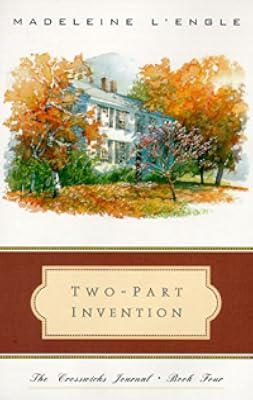
Author Madeleine L'Engle was born in New York City on November 29, 1918. She graduated from Smith College. She is best known for A Wrinkle in Time (1962), which won the 1963 Newbery Medal for best American children's book. While many of her novels blend science fiction and fantasy, she has also written a series of autobiographical books, including show more Two Part Invention: The Story of a Marriage, which deals with the illness and death of her husband, soap opera actor Hugh Franklin. In 2004, she received a National Humanities Medal from President George W. Bush. She died on September 6, 2007 of natural causes. Since 1976, Wheaton College in Illinois has maintained a special collection of L'Engle's papers, and a variety of other materials, dating back to 1919. (Bowker Author Biography) show less
Series

Common Knowledge
- Canonical title
- The Small Rain
- Original publication date
- 1945
- People/Characters
- Katherine Forrester; Julie Forrester; Madame Sergeivna ("Manya"); Tom Forrester; Justin Michel Vigneras; Sarah (show all 10); Miss Valentine; Charles Bejart; Pete; Felix Bodeway
- Important places
- New York, New York, USA; Switzerland
- Dedication
- To my father,
Charles Wordsworth Camp - First words
- Katherine knew, before the first act was half over, that something was wrong with Manya.
[Preface, 1984] The Small Rain is very much a first novel. - Quotations
- the entire sky was the color of the inside of an oyster shell and seemed to press against the naked earth, to be clamped over it like a shell, so that it became more and more difficult to breathe. (p.35)
The birches around her were silvery and mysterious, holding in themselves the moonlight and starlight of years gone by. The pool had caught it, too...She lay there, listening to the whispering in the trees, the low chunking ... (show all)of the frogs, the sweet lapping of the water. For the first time since Julie's death she felt a kind of peace that was not the nervous hypnotism of work at the piano, but that seemed to reach all the way inside her and suddenly made her exhaustion a simple thing, almost beautiful, because now she could close her eyes and sleep. (p.69-70)
Throughout the dining room the liquid clinking of spoons against glass dishes made a clear ringing sound like myriads of little bells...so that the sound of conversation was like a chorus of voices echoing a pagan prayer in a... (show all) faraway temple...and excitement slid up her spine like a crack up a pane of glass.(p.111) - Last words
- (Click to show. Warning: May contain spoilers.)After Manya had completely disappeared, when the shore was only a chain of blinking, beckoning lights, Katherine pulled up a deck chair and lay there, under the stairs, under the wind, under the vastness of the universe, while land became lost in the September night, and water reached out, illimitable, mysterious, on all sides.
Classifications
Statistics
- Members
- 816
- Popularity
- 34,037
- Reviews
- 20
- Rating
- (3.92)
- Languages
- English
- Media
- Paper, Audiobook, Ebook
- ISBNs
- 11
- ASINs
- 8