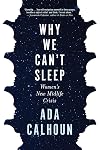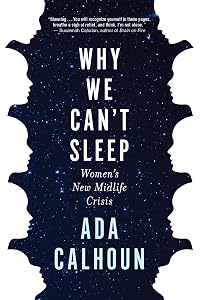
Why We Can't Sleep: Women's New Midlife Crisis
by Ada Calhoun
On This Page
Description
"When Ada Calhoun found herself in the throes of a midlife crisis, she thought that she had no right to complain. She was married with children and a good career. So why did she feel miserable? And why did it seem that other Generation X women were miserable, too? Calhoun decided to find some answers. She looked into housing costs, HR trends, credit card debt averages, and divorce data. At every turn, she saw a pattern: sandwiched between the Boomers and the Millennials, Gen X women were show more facing new problems as they entered middle age, problems that were being largely overlooked. Speaking with women across America about their experiences as the generation raised to "have it all," Calhoun found that most were exhausted, terrified about money, underemployed, and overwhelmed. Instead of their issues being heard, they were told instead to lean in, take "me-time," or make a chore chart to get their lives and homes in order. In Why We Can't Sleep, Calhoun opens up the cultural and political contexts of Gen X's predicament and offers solutions for how to pull oneself out of the abyss-and keep the next generation of women from falling in. The result is reassuring, empowering, and essential reading for all middle-aged women, and anyone who hopes to understand them"-- show lessTags
Recommendations













Member Reviews
Best for:
Women at the start of their midlife.
In a nutshell:
Author Calhoun explores the unique challenges that Gen X women are facing as they enter and continue through midlife.
Worth quoting:
“But Gen Xers entered life with ‘having it all’ not as a bright new option but as a mandatory social condition.”
“The last think we need at this stage of life is self-help…What we need at this stage isn’t more advice, but solace.”
Why I chose it:
Well, by most accounts I am Gen X. I’m in my 40s. And things are getting fucking hard.
How it left me feeling:
Seen
Review:
Without getting into too much detail, my visit to see my parents over New Year was stressful in a new way. They are in their 70s, and with that comes some of the expected show more challenges. I live about 6,000 miles from them, and my sibling lives about 3,000 miles from them, so that’s something else added into the mix. During a quick outing one day, my partner and I popped into a bookstore and this book damn near jumped off the shelves into my hand.
Calhoun looks at so many different aspects of what life is like for middle-aged Gen Xers, and I appreciate that she’s clear that it isn’t all bad. There is a lot that we have going well for us, but there are a lot of issues that she argues are unique to our generation - that won’t impact Millenials the same way, for example. A lot of the focus is on how the expectations have not matched reality, and she argues that Millenials don’t have the same types of expectations, which on the one hand, bummer, but on the other hand, allows them to age with a more realistic outlook on what is reasonable to expect out of life.
The book could feel defeatist in the hands of a less talented author, but the way Calhoun shares the stories of those she has interviewed, and mixes it with her research into what middle-aged women are experiencing, makes it feel more hopeful (in a realistic way). She shares some of her own stories too, but the focus is on other women and how they’re navigating the discrepancy between what they thought their life would be (and what society has told them it SHOULD be), and what it actually is. She doesn’t provide a bunch of tips or solutions, save the big one, which is to adjust one’s expectations. That sounds like a total bummer reading it in just this tiny review, but in the context of the book? It felt pretty great to read.
The only area that rubbed me the wrong way was the choice she made to heavily quote from a male ‘expert’ when talking about divorce. That guy had some … interesting takes. I’m still baffled as to why it was included.
Calhoun interviewed over 200 women across demographics to inform this book, though she shares that it is primarily focused on middle-class women because, “Very poor women in this country bear additional burdens that are beyond the scope of a book this size. Very rich women have plenty of reality TV shows about them already.” So the reader knows that, like, obviously the women this book is aimed at will have different challenges than people who have very little money. I appreciate that the book doesn’t try to be all things to all women, and I also appreciate that within the economic boundaries she set, the author spoke to women of different races, sexualities, and career fields, along with women who are partnered, single, have children, and don’t.
Recommend to a Friend / Keep / Donate it / Toss it:
Keep and recommend to friends by age. show less
Women at the start of their midlife.
In a nutshell:
Author Calhoun explores the unique challenges that Gen X women are facing as they enter and continue through midlife.
Worth quoting:
“But Gen Xers entered life with ‘having it all’ not as a bright new option but as a mandatory social condition.”
“The last think we need at this stage of life is self-help…What we need at this stage isn’t more advice, but solace.”
Why I chose it:
Well, by most accounts I am Gen X. I’m in my 40s. And things are getting fucking hard.
How it left me feeling:
Seen
Review:
Without getting into too much detail, my visit to see my parents over New Year was stressful in a new way. They are in their 70s, and with that comes some of the expected show more challenges. I live about 6,000 miles from them, and my sibling lives about 3,000 miles from them, so that’s something else added into the mix. During a quick outing one day, my partner and I popped into a bookstore and this book damn near jumped off the shelves into my hand.
Calhoun looks at so many different aspects of what life is like for middle-aged Gen Xers, and I appreciate that she’s clear that it isn’t all bad. There is a lot that we have going well for us, but there are a lot of issues that she argues are unique to our generation - that won’t impact Millenials the same way, for example. A lot of the focus is on how the expectations have not matched reality, and she argues that Millenials don’t have the same types of expectations, which on the one hand, bummer, but on the other hand, allows them to age with a more realistic outlook on what is reasonable to expect out of life.
The book could feel defeatist in the hands of a less talented author, but the way Calhoun shares the stories of those she has interviewed, and mixes it with her research into what middle-aged women are experiencing, makes it feel more hopeful (in a realistic way). She shares some of her own stories too, but the focus is on other women and how they’re navigating the discrepancy between what they thought their life would be (and what society has told them it SHOULD be), and what it actually is. She doesn’t provide a bunch of tips or solutions, save the big one, which is to adjust one’s expectations. That sounds like a total bummer reading it in just this tiny review, but in the context of the book? It felt pretty great to read.
The only area that rubbed me the wrong way was the choice she made to heavily quote from a male ‘expert’ when talking about divorce. That guy had some … interesting takes. I’m still baffled as to why it was included.
Calhoun interviewed over 200 women across demographics to inform this book, though she shares that it is primarily focused on middle-class women because, “Very poor women in this country bear additional burdens that are beyond the scope of a book this size. Very rich women have plenty of reality TV shows about them already.” So the reader knows that, like, obviously the women this book is aimed at will have different challenges than people who have very little money. I appreciate that the book doesn’t try to be all things to all women, and I also appreciate that within the economic boundaries she set, the author spoke to women of different races, sexualities, and career fields, along with women who are partnered, single, have children, and don’t.
Recommend to a Friend / Keep / Donate it / Toss it:
Keep and recommend to friends by age. show less
The women of Generation X face a unique set of stressors, and we're really feeling it. In this book, Calhoun examines the conditions leading up to all of this misery, and offers a bit of gentle commiseration.
I'm at the tail end of Gen X, sometimes categorized as part of the "micro-generation" called Xennials, but I've always thought of myself as more X than not. Calhoun defines it like this: "Whether to identify as Gen X is a decision every woman must make for herself, but I believe that if, like me, you were a kid in the Reagan years, had a Koosh ball, or know what sound a dial-up modem makes, you count." Since I meet all three of those criteria, I think I'm in. I'm certainly experiencing the angst she describes, though "midlife show more crisis" sounds overly dramatic to me. (Calhoun points out that "the stereotypical male midlife crisis involves busting stuff up -- mostly marriages but also careers, norms, reputations. . . . Women's crises tend to be quieter than men's. . . . There has yet to be a blockbuster movie centered on a woman staring out her car's windshield and sighing.")
As Calhoun sees it, Gen X women feel an unusual amount of pressure to have it all: job, family, looks, money, house, etc. And, of course, nobody being perfect, we're all almost certainly failing on some measures. Boomer women who achieved career success were lauded for their accomplishments, but Gen X women grew up being told that we could do it all, so if we find that we can't (or don't want to), it feels like failure. And, of course, we're the first generation to hit midlife with social media as a means of constant comparison to the lives of others. Gen X is smaller than the generations on either side, so many of us are facing the pressure for caring for loved ones both older and younger, with fewer people to share the load.
Much of this book is spent defining the problem, looking at various aspects of life. There's a chapter on caregiving (both for children and for aging parents), one on divorce, one on being single and/or childless, one on job instability, one on perimenopause, and more.
The chapter on being single and childless particularly resonated with me. She talks about the concept of "ambiguous loss" -- a woman in midlife might still find a partner, or might still have or adopt children, but the possibility feels like it's decreasing. Calhoun relates the not particularly uplifting stat that, among the employed and college educated, there are 65 unmarried men to every 100 unmarried women. While some women enjoy a single life, for those who don't, this is the point at which it starts to feel painfully inevitable and permanent.
"The last thing we need at this stage of life is self-help. Everyone keeps telling us what to do, as if there is a quick fix for the human condition. What we need at this stage isn't more advice, but solace." Calhoun goes on to talk about shifts in thinking and behavior that might help, ending with the reminder that midlife isn't forever, and that unhappiness is a bell curve that peaks at midlife. If we wait long enough, we will find ourselves on the other side. I did find some solace in the confirmation that I am not alone in my weltschmerz. show less
I'm at the tail end of Gen X, sometimes categorized as part of the "micro-generation" called Xennials, but I've always thought of myself as more X than not. Calhoun defines it like this: "Whether to identify as Gen X is a decision every woman must make for herself, but I believe that if, like me, you were a kid in the Reagan years, had a Koosh ball, or know what sound a dial-up modem makes, you count." Since I meet all three of those criteria, I think I'm in. I'm certainly experiencing the angst she describes, though "midlife show more crisis" sounds overly dramatic to me. (Calhoun points out that "the stereotypical male midlife crisis involves busting stuff up -- mostly marriages but also careers, norms, reputations. . . . Women's crises tend to be quieter than men's. . . . There has yet to be a blockbuster movie centered on a woman staring out her car's windshield and sighing.")
As Calhoun sees it, Gen X women feel an unusual amount of pressure to have it all: job, family, looks, money, house, etc. And, of course, nobody being perfect, we're all almost certainly failing on some measures. Boomer women who achieved career success were lauded for their accomplishments, but Gen X women grew up being told that we could do it all, so if we find that we can't (or don't want to), it feels like failure. And, of course, we're the first generation to hit midlife with social media as a means of constant comparison to the lives of others. Gen X is smaller than the generations on either side, so many of us are facing the pressure for caring for loved ones both older and younger, with fewer people to share the load.
Much of this book is spent defining the problem, looking at various aspects of life. There's a chapter on caregiving (both for children and for aging parents), one on divorce, one on being single and/or childless, one on job instability, one on perimenopause, and more.
The chapter on being single and childless particularly resonated with me. She talks about the concept of "ambiguous loss" -- a woman in midlife might still find a partner, or might still have or adopt children, but the possibility feels like it's decreasing. Calhoun relates the not particularly uplifting stat that, among the employed and college educated, there are 65 unmarried men to every 100 unmarried women. While some women enjoy a single life, for those who don't, this is the point at which it starts to feel painfully inevitable and permanent.
"The last thing we need at this stage of life is self-help. Everyone keeps telling us what to do, as if there is a quick fix for the human condition. What we need at this stage isn't more advice, but solace." Calhoun goes on to talk about shifts in thinking and behavior that might help, ending with the reminder that midlife isn't forever, and that unhappiness is a bell curve that peaks at midlife. If we wait long enough, we will find ourselves on the other side. I did find some solace in the confirmation that I am not alone in my weltschmerz. show less
3.5 stars! A book that makes Gen Xers happy because it tells us how tough we have had it as a generation! Then throw in perimenopause and menopause and there you go, complete Gen X happiness because it is loaded in sarcasm, reality and our propensity to utter, "I've got it." I would have given more stars if it maybe offered more advice? Not sure, but it did feel good to know that I am not the only one dealing with all of this nonsense. The last chapter was the best, going for acceptance, knowing that it will end, lowering expectations of self/others/goals/where you thought you'd be, importance of support systems/counseling/friends of all ages and finally a reason to say, "Maybe I don't 'got it' but that is okay." We are a resilient show more bunch and I am proud of myself and of us. show less
Disconcerting as hell. Possibly unwise of me to start this now, this December looking to be so deadly and fraught.
***
I liked it less as it went on. Very near the end there was a line about Gen Z being the best-educated and most diverse generation. I can't be bothered to go and look up the quote, let alone the source, but that's borderline nonsense right? Yes, a higher percentage of the population in each generation has been bankrupting itself in pursuit of the magical degree that will enable them to live in relative comfort, a relentless educational arms race that serves no one one because actual wages haven't gone up in forty years, although education sure has. And housing. And healthcare.
While I accept the validity of making show more cross-demographic comparisons at one time, or cross-generational comparisons at set timepoints, trying to make both arguments at once isn't convincing. And it just becomes a series of anecdotes with some factoids. It's interesting, and I really like Calhoun's tone.
But this is not the year to publish a book that doesn't dwell in intersectionality. So much has gone so horrifically wrong for so many, and the misery has been distributed as unfairly as everything else in the US.
Library copy show less
***
I liked it less as it went on. Very near the end there was a line about Gen Z being the best-educated and most diverse generation. I can't be bothered to go and look up the quote, let alone the source, but that's borderline nonsense right? Yes, a higher percentage of the population in each generation has been bankrupting itself in pursuit of the magical degree that will enable them to live in relative comfort, a relentless educational arms race that serves no one one because actual wages haven't gone up in forty years, although education sure has. And housing. And healthcare.
While I accept the validity of making show more cross-demographic comparisons at one time, or cross-generational comparisons at set timepoints, trying to make both arguments at once isn't convincing. And it just becomes a series of anecdotes with some factoids. It's interesting, and I really like Calhoun's tone.
But this is not the year to publish a book that doesn't dwell in intersectionality. So much has gone so horrifically wrong for so many, and the misery has been distributed as unfairly as everything else in the US.
Library copy show less
Er zijn twee problemen met dit boek.
1. Het maakt mij opstandig. Woedend zelfs. Het maakt me nog feministischer dan ik al was, en ik was al behoorlijk overtuigd.
2. Alleen vrouwen gaan het lezen, want het gaat over vrouwen, en er zijn twee soorten boeken op de wereld: mensenboeken en vrouwenboeken.
Ik liep rond met het idee om een blogpost te schrijven over alle manieren waarop ik de afgelopen jaren slaap ben verloren en hoe ik ook op te weinig slaap toch min of meer ben blijven functioneren al die tijd. (Correctie: hoe ik AL die tijd UITSTEKEND ben blijven functioneren.) En toen kwam plots dit boek op mijn radar. Dat moest ik dan natuurlijk wel even lezen.
Strikt genomen ben ik te jong om tot Generation X te behoren en voor een midlife show more crisis is het nog te vroeg. Ook heb ik voorlopig gelukkig nog geen (peri)menopauze om me zorgen over te maken, al vind ik het wel goed om te weten wat me nog te wachten staat over een paar jaar. Maar ik voel me ook te oud om een millennial te zijn en veel van wat Ada Calhoun in haar boek schrijft, is wel ontzettend herkenbaar voor een vrouw die ergens tussen Generation X en Y in zweeft: sandwichen tussen zorg voor kinderen en ouders, check, te moe zijn om te werken door zwangerschap, PMS, maandstonden, maar dat verbergen, omdat we nog niet geëmancipeerd genoeg zijn om toe te geven dat vrouwen dit ritme niet kunnen volgen, check, de ene dag ontzettend opgelucht en bevrijd zijn door je scheiding, en de volgende dag verstikt worden door angst voor de toekomst, check.
Niet slapen, en toch gaan werken, blijven opstaan en doorgaan, en als je dan toch even gas terug moet nemen, omdat het even echt allemaal te veel is, je in duizend bochten wringen om daar een fysieke oorzaak op te kleven, omdat je niet de indruk wil wekken dat je niet stressbestendig bent.
Ik? Niet stressbestendig? Give me a break!
We blijven maar doorwerken aan een rotvaart, onder een steeds stijgende tijdsdruk, en intussen blijven we ook nog gewoon glimlachen en niet toegeven dat het misschien allemaal niet zo haalbaar is als we graag doen uitschijnen. En we slikken nog wat antidepressiva of slaan een paar glazen rode wijn achterover, en rennen verder mee in een wereld die op maat van mannen gesneden is, waarin van vrouwen verwacht wordt dat ze kinderen opvoeden alsof ze geen jobs hebben en werken alsof ze thuis een vrouw hebben die voor hun kinderen zorgt.
I want an American Wife, citeert Ada Calhoun ergens in het boek. Ik wil een vrouw die voor mijn kinderen zorgt, terwijl ik ga werken. Ik wil iemand die achter me opruimt en poetst en alles regelt wat geregeld moet worden. Ik doe het allemaal. En het is veel. Het is echt veel. Ik maak lijstjes en begin dan een bullet journal om die lijstjes niet te verliezen. Ik luister naar podcasts van vrouwen die andere vrouwen willen helpen om het allemaal beter de baas te kunnen. (Supergoeie podcast trouwens.) Maar het zijn allemaal lapmiddeltjes voor een ernstige systeemfout.
Ik ben 35 en voel me soms 53. Ik ben moe. En ik doe mijn best om gewoon gelukkig te zijn, om gewoon blij te zijn met wat ik wel heb. Maar dit ritme is niet vol te houden. Het is ploeteren en spartelen om boven te blijven. Alleen, als ik dat uitspreek, zullen mensen me een ‘zagewijf’ vinden en zeggen dat ik het maar niet allemaal moet willen. Het is niet eens een kwestie van het allemaal te willen. Het enige wat ik wil, is: een beetje tijd, een beetje zelfontplooiing en genoeg geld om drie monden van te voeden. Zoveel is dat niet, vind ik. Maar om dat beetje geld te verdienen om drie monden van te voeden, moet ik wel acht uur per dag betaalde arbeid doen, en daarnaast nog minstens drie uur per dag onbetaalde arbeid (huishouden en zorg), en zoveel tijd voor zelfontplooiing blijft er dan helaas ook niet meer over. In de ideale wereld zou ik mijn zelfontplooiing in mijn werk vinden, maar de wereld is niet ideaal, en ik heb vooralsnog nog niemand bereid gevonden om mij te betalen voor mijn sterkste competenties, namelijk mijn empathie en mijn inzicht in hoe de wereld vierkant draait.
Ik ben kwaad. Ik ben woedend. Ik vind dat het tijd is voor een vrouwenstaking, een echte. Het is godverdomme tijd om in opstand te komen.
Een prachtige metafoor in het boek is deze: als je aan een vrouw vraagt of ze liever kip of vis eet, maar de kip ligt op een berg en het regent, en de vis ligt vlak voor haar neus in een tent, kan je dat dan beschouwen als een keuze? En mag je dan echt zeggen dat vrouwen liever vis dan kip eten, omdat ze biologisch gezien gemaakt zijn om liever vis te eten?
We hebben keuzes, ja, but then again, we don’t.
Stel je eens een wereld voor waarin vrouwen niet voortdurend het gevoel hebben dat ze ‘niet genoeg’ zijn. Stel je eens een wereld voor waarin vrouwen over hun eigen grenzen waken, collectief. Stel je eens een wereld voor waarin vrouwen zich niet voortdurend schuldig voelen.
De motor van de economie is het schuldgevoel van vrouwen. show less
1. Het maakt mij opstandig. Woedend zelfs. Het maakt me nog feministischer dan ik al was, en ik was al behoorlijk overtuigd.
2. Alleen vrouwen gaan het lezen, want het gaat over vrouwen, en er zijn twee soorten boeken op de wereld: mensenboeken en vrouwenboeken.
Ik liep rond met het idee om een blogpost te schrijven over alle manieren waarop ik de afgelopen jaren slaap ben verloren en hoe ik ook op te weinig slaap toch min of meer ben blijven functioneren al die tijd. (Correctie: hoe ik AL die tijd UITSTEKEND ben blijven functioneren.) En toen kwam plots dit boek op mijn radar. Dat moest ik dan natuurlijk wel even lezen.
Strikt genomen ben ik te jong om tot Generation X te behoren en voor een midlife show more crisis is het nog te vroeg. Ook heb ik voorlopig gelukkig nog geen (peri)menopauze om me zorgen over te maken, al vind ik het wel goed om te weten wat me nog te wachten staat over een paar jaar. Maar ik voel me ook te oud om een millennial te zijn en veel van wat Ada Calhoun in haar boek schrijft, is wel ontzettend herkenbaar voor een vrouw die ergens tussen Generation X en Y in zweeft: sandwichen tussen zorg voor kinderen en ouders, check, te moe zijn om te werken door zwangerschap, PMS, maandstonden, maar dat verbergen, omdat we nog niet geëmancipeerd genoeg zijn om toe te geven dat vrouwen dit ritme niet kunnen volgen, check, de ene dag ontzettend opgelucht en bevrijd zijn door je scheiding, en de volgende dag verstikt worden door angst voor de toekomst, check.
Niet slapen, en toch gaan werken, blijven opstaan en doorgaan, en als je dan toch even gas terug moet nemen, omdat het even echt allemaal te veel is, je in duizend bochten wringen om daar een fysieke oorzaak op te kleven, omdat je niet de indruk wil wekken dat je niet stressbestendig bent.
Ik? Niet stressbestendig? Give me a break!
We blijven maar doorwerken aan een rotvaart, onder een steeds stijgende tijdsdruk, en intussen blijven we ook nog gewoon glimlachen en niet toegeven dat het misschien allemaal niet zo haalbaar is als we graag doen uitschijnen. En we slikken nog wat antidepressiva of slaan een paar glazen rode wijn achterover, en rennen verder mee in een wereld die op maat van mannen gesneden is, waarin van vrouwen verwacht wordt dat ze kinderen opvoeden alsof ze geen jobs hebben en werken alsof ze thuis een vrouw hebben die voor hun kinderen zorgt.
I want an American Wife, citeert Ada Calhoun ergens in het boek. Ik wil een vrouw die voor mijn kinderen zorgt, terwijl ik ga werken. Ik wil iemand die achter me opruimt en poetst en alles regelt wat geregeld moet worden. Ik doe het allemaal. En het is veel. Het is echt veel. Ik maak lijstjes en begin dan een bullet journal om die lijstjes niet te verliezen. Ik luister naar podcasts van vrouwen die andere vrouwen willen helpen om het allemaal beter de baas te kunnen. (Supergoeie podcast trouwens.) Maar het zijn allemaal lapmiddeltjes voor een ernstige systeemfout.
Ik ben 35 en voel me soms 53. Ik ben moe. En ik doe mijn best om gewoon gelukkig te zijn, om gewoon blij te zijn met wat ik wel heb. Maar dit ritme is niet vol te houden. Het is ploeteren en spartelen om boven te blijven. Alleen, als ik dat uitspreek, zullen mensen me een ‘zagewijf’ vinden en zeggen dat ik het maar niet allemaal moet willen. Het is niet eens een kwestie van het allemaal te willen. Het enige wat ik wil, is: een beetje tijd, een beetje zelfontplooiing en genoeg geld om drie monden van te voeden. Zoveel is dat niet, vind ik. Maar om dat beetje geld te verdienen om drie monden van te voeden, moet ik wel acht uur per dag betaalde arbeid doen, en daarnaast nog minstens drie uur per dag onbetaalde arbeid (huishouden en zorg), en zoveel tijd voor zelfontplooiing blijft er dan helaas ook niet meer over. In de ideale wereld zou ik mijn zelfontplooiing in mijn werk vinden, maar de wereld is niet ideaal, en ik heb vooralsnog nog niemand bereid gevonden om mij te betalen voor mijn sterkste competenties, namelijk mijn empathie en mijn inzicht in hoe de wereld vierkant draait.
Ik ben kwaad. Ik ben woedend. Ik vind dat het tijd is voor een vrouwenstaking, een echte. Het is godverdomme tijd om in opstand te komen.
Een prachtige metafoor in het boek is deze: als je aan een vrouw vraagt of ze liever kip of vis eet, maar de kip ligt op een berg en het regent, en de vis ligt vlak voor haar neus in een tent, kan je dat dan beschouwen als een keuze? En mag je dan echt zeggen dat vrouwen liever vis dan kip eten, omdat ze biologisch gezien gemaakt zijn om liever vis te eten?
We hebben keuzes, ja, but then again, we don’t.
Stel je eens een wereld voor waarin vrouwen niet voortdurend het gevoel hebben dat ze ‘niet genoeg’ zijn. Stel je eens een wereld voor waarin vrouwen over hun eigen grenzen waken, collectief. Stel je eens een wereld voor waarin vrouwen zich niet voortdurend schuldig voelen.
De motor van de economie is het schuldgevoel van vrouwen. show less
This book both horrified me and eased some of my anxiety. The fact that so many women are suffering in silence, overwhelmed and frustrated, is absolutely heartbreaking. And yet, that is precisely the situation in which I (a 40-year old woman with a successful business, a wonderful husband, and a 7-year old) find myself. As does every one of my female friends who's of a similar age. I thought it was just us, but after reading Calhoun's book, I have a much better understanding of what's happening and why so many of us find ourselves in this position.
As one of my friends recently said, "I feel like I'm just aimlessly filling my time while I wait for the next person to need something from me." That about sums it up. Calhoun does a great job show more exploring how we ended up with so many caregiving responsibilities and how our jobs, our relationships, and our high expectations all add to the constant stress of our lives.
I turned the last page with a pit in my stomach. While Calhoun promised a hopeful look at what we can do to shift the tide, I didn't find that here. Instead, I came away with a clearer understanding of why things are the way they are, but no practical solutions. Still, I'm glad I picked this up. At least I know I'm not alone. show less
As one of my friends recently said, "I feel like I'm just aimlessly filling my time while I wait for the next person to need something from me." That about sums it up. Calhoun does a great job show more exploring how we ended up with so many caregiving responsibilities and how our jobs, our relationships, and our high expectations all add to the constant stress of our lives.
I turned the last page with a pit in my stomach. While Calhoun promised a hopeful look at what we can do to shift the tide, I didn't find that here. Instead, I came away with a clearer understanding of why things are the way they are, but no practical solutions. Still, I'm glad I picked this up. At least I know I'm not alone. show less
Interesting observations on shared experiences of a generation of women and how these experiences might be influencing an already difficult life stage. Ms Calhoun’s book is about American women and she seems to have talked to a number of them. She describes Gen-X women as one of the most educated and ambitious generation, who expect to have it all but don’t seem to be able to get it as they face many obstacles and receive only little support when compared to women of other generations. The fact that some of these challenges coincide with the disappearance of the middle class in America and the stark differences between the parenting styles and expectations of the Baby Boomers and the Gen-X women are interesting points to consider. show more Overall, it is an interesting read and brings up many points worth to think about. But there are some important gaps.
First, even though she focuses on the American women, Ms Calhoun leaves out important members of this community: minorities, women of color, and immigrants. Women in these groups share many of the experiences described in the book. But they also face additional hardships, biases, and discriminations at school, at work, at home, and in their social lives.
Second, Ms Calhoun throws in a large number of issues as causes of conflict or stress. While all of these may be important, many are not specific to women or to this generation. It feels as if she has thought about all of these factors, cannot decide herself and wants the reader to see if they are relevant.
And finally, at some point Ms Calhoun starts giving medical advice, specifically on the perimenopausal use of estrogen. She makes it sound as, after talking to a few experts, she has reached the final correct conclusion, that estrogen is safe and it was a mistake to worry about side effects, and her duty is to enlighten all middle age women. Hormonal replacement is a huge topic in medicine and there are some good reasons why the medical community has had longstanding debates. Readers should not view this book as a complete or correct argument on a very important medical topic.
Overall, this book presents an interesting summary about the common challenges faced by Gen-X women and offers a lot to think about, but lacks focus and depth. show less
First, even though she focuses on the American women, Ms Calhoun leaves out important members of this community: minorities, women of color, and immigrants. Women in these groups share many of the experiences described in the book. But they also face additional hardships, biases, and discriminations at school, at work, at home, and in their social lives.
Second, Ms Calhoun throws in a large number of issues as causes of conflict or stress. While all of these may be important, many are not specific to women or to this generation. It feels as if she has thought about all of these factors, cannot decide herself and wants the reader to see if they are relevant.
And finally, at some point Ms Calhoun starts giving medical advice, specifically on the perimenopausal use of estrogen. She makes it sound as, after talking to a few experts, she has reached the final correct conclusion, that estrogen is safe and it was a mistake to worry about side effects, and her duty is to enlighten all middle age women. Hormonal replacement is a huge topic in medicine and there are some good reasons why the medical community has had longstanding debates. Readers should not view this book as a complete or correct argument on a very important medical topic.
Overall, this book presents an interesting summary about the common challenges faced by Gen-X women and offers a lot to think about, but lacks focus and depth. show less
Members
- Recently Added By
Lists

Science: Health & Medical
100 works; 1 member
Author Information

7+ Works 1,417 Members
Journalist Ada Calhoun is the author of Wedding Toasts, I'll Never Give and St. Marks is Dead adacafhoun.com
Awards and Honors
Awards
Common Knowledge
- Canonical title
- Why We Can't Sleep: Women's New Midlife Crisis
- Original publication date
- 2020-01-07
Classifications
- Genres
- Sociology, General Nonfiction, Nonfiction, Sexuality and Gender Studies
- DDC/MDS
- 305.2440973 — Society, government, & culture Social sciences, sociology & anthropology Social group - Age, Gender, Ethnicity Age groups Early adulthood
- LCC
- HQ1059.5 .U5 .C35 — Social sciences The family. Marriage, Women and Sexuality The Family. Marriage. Women The family. Marriage. Home
- BISAC
Statistics
- Members
- 402
- Popularity
- 77,546
- Reviews
- 19
- Rating
- (3.58)
- Languages
- English
- Media
- Paper, Audiobook, Ebook
- ISBNs
- 11
- ASINs
- 3