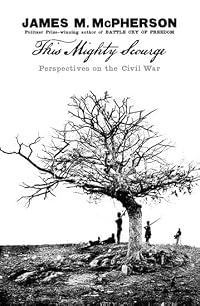
This Mighty Scourge: Perspectives on the Civil War
by James M. McPherson
On This Page
Description
In this collection of provocative and illuminating essays, Pulitzer Prize-winning historian James M. McPherson offer fresh interpretations and insights into many of the most enduring questions and debates surrounding America's greatest historical crisis - the Civil War.Tags
Recommendations








Member Reviews
Great collection of 16 essays by a leading Civil War historian addressing the ruthless rewriting of history and brainwashing of the Lost Cause myth, attempts to negotiate an end of the Civil War, the myths about Jesse James, habeas corpus and other legal issues facing Lincoln, the team of Grant and Sherman, opening the Mississippi, and more. This could be very dry analysis but the facts and observations make it fascinating as well as informative reading. The essay about the Lost Cause Myth spells out how Southerners recast the war to preserve slavery into a war for everything but preserving slavery, despite the written record. Even today there is a strong resistance to admitting the truth of the matter. Overall, a very thoughtful book show more and well worth reading. show less
With 'This Mighty Scourge: Perspectives on the Civil War' James McPherson demonstrates once again why he is America's foremost Civil War historian. McPherson serves up sixteen essays for your delectation (most of which have been previously published elsewhere).
McPherson arranges his essays around several themes: What caused the war? What were the goals of each side? What strategies did the leaders pursue? And how is the war remembered?
McPherson's genius lies in his ability to synthesize perspectives of value to any reader, but especially the general reader with some knowledge of the war. Many of the essays analyze recent scholarship with McPherson's encyclopedic knowledge and understanding gained from years of study. This reader show more especially appreciates McPherson's even-handed dispassionate scholarship in a still field laced with emotional landmines despite the passage of nearly 150 years.
Despite all that has been written, McPherson remains remarkably able to bring fresh insight. One essay ('Long-Legged Yankee Lies: The Lost Cause Textbook Crusade') examines the extraordinary efforts by Confederate loyalists to distort the war's history and its teaching, especially in Southern schools. No doubt that gets the goat of the SCV (Sons of Confederate Veterans) and the UDC (United Daughters of the Confederacy), but they don't like him anyway.
An earlier essay ('And the War Came') establishes beyond cavil that the institution of slavery and the interests behind it were the cause of the war. In other essays McPherson examines the relative merits of Grant, Lee, and Sherman and whether the South was foreordained to lose the war due to the imbalance of resources.
I am not a Civil War historian, but I can't imagine that even the most learned professor would not benefit from McPherson's wonderfully distilled insights. I've read a number of McPherson's other works and rank this book at the top. McPherson's sparkling prose and easy clarity made reading 'This Mighty Scourge: Perspectives on the Civil War' a rare pleasure. show less
McPherson arranges his essays around several themes: What caused the war? What were the goals of each side? What strategies did the leaders pursue? And how is the war remembered?
McPherson's genius lies in his ability to synthesize perspectives of value to any reader, but especially the general reader with some knowledge of the war. Many of the essays analyze recent scholarship with McPherson's encyclopedic knowledge and understanding gained from years of study. This reader show more especially appreciates McPherson's even-handed dispassionate scholarship in a still field laced with emotional landmines despite the passage of nearly 150 years.
Despite all that has been written, McPherson remains remarkably able to bring fresh insight. One essay ('Long-Legged Yankee Lies: The Lost Cause Textbook Crusade') examines the extraordinary efforts by Confederate loyalists to distort the war's history and its teaching, especially in Southern schools. No doubt that gets the goat of the SCV (Sons of Confederate Veterans) and the UDC (United Daughters of the Confederacy), but they don't like him anyway.
An earlier essay ('And the War Came') establishes beyond cavil that the institution of slavery and the interests behind it were the cause of the war. In other essays McPherson examines the relative merits of Grant, Lee, and Sherman and whether the South was foreordained to lose the war due to the imbalance of resources.
I am not a Civil War historian, but I can't imagine that even the most learned professor would not benefit from McPherson's wonderfully distilled insights. I've read a number of McPherson's other works and rank this book at the top. McPherson's sparkling prose and easy clarity made reading 'This Mighty Scourge: Perspectives on the Civil War' a rare pleasure. show less
This Mighty Scourge is a collection of essays by the Civil War historian James McPherson. Probably most well known for his book Battle Cry of Freedom, this collection contains both previously published articles as well as some new essays.
The collection covers a vast array of topics, broken into sections by theme, which makes it easier to pick and chose what might interest the reader. These sections include military history, Lincoln, and the home front. I especially enjoyed the section on the Lost Cause. The essay which discusses efforts by southern war organizations to influence southern history textbooks after the war is especially fascinating.
McPherson is an easy historian to read, as many of his writings are written in a more show more narrative tone, though a few readers might find some of the essays a bit dry due to their more academic prose (as some were originally published in traditional journals). While not as easy to get into as a few of his other titles, This Mighty Scourge is a good introduction to some readers who might be interested in something beyond a basic history of the Civil War. show less
The collection covers a vast array of topics, broken into sections by theme, which makes it easier to pick and chose what might interest the reader. These sections include military history, Lincoln, and the home front. I especially enjoyed the section on the Lost Cause. The essay which discusses efforts by southern war organizations to influence southern history textbooks after the war is especially fascinating.
McPherson is an easy historian to read, as many of his writings are written in a more show more narrative tone, though a few readers might find some of the essays a bit dry due to their more academic prose (as some were originally published in traditional journals). While not as easy to get into as a few of his other titles, This Mighty Scourge is a good introduction to some readers who might be interested in something beyond a basic history of the Civil War. show less
An enlightening collection of essays focusing on a variety of topics, this book covers some of the most important issues of the Civil War. Including topics from the "Lost Cause" interpretation of the war to the soldiers' interest in newspapers and, of course, Abraham Lincoln. The historic research is impeccable and the essays are always readable.
The best book to read about the Civil War if you want synthesis and answers to the big questions: why did the South enter the war? Was Sherman an asshole? Was Grant a drunk? How did it start that people claimed it wasn't about slavery? How close did the South get to the masterstroke of recognition by foreign governments?
It's all incredibly interesting stuff, and thoughtfully explained by one of the premier Civil War historians out there. It's the best.
It's all incredibly interesting stuff, and thoughtfully explained by one of the premier Civil War historians out there. It's the best.
The book is a series of essays on subjects about the American civil war. Several of them are about people, including Lincoln, John Brown, Jeff Davis and Jessie James. Those were the most interesting. Some of the political discussions were down right boring. The author did provide some new insights and I generally enjoyed the book.
Another enjoyable collection of essays from McPherson. I especially liked the portion dealing with the "lost cause", but it was all insightful. Suggests for anyone from the buff to the casual reader.
Members
- Recently Added By
Lists

Books Read in 2013
1,629 works; 51 members
Author Information

67+ Works 16,518 Members
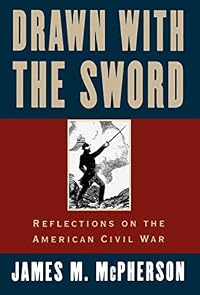
James M. McPherson is the author of Battle Cry of Freedom: The Civil War Era, which won a Pulitzer Prize in history, and For Cause and Comrades: Why Men Fought in the Civil War, a Lincoln Prize winner. He is the George Henry Davis Professor of American History at Princeton University in New Jersey, where he also lives. His newest book, entitled show more Abraham Lincoln, celebrates the 200th anniversary of Lincoln's birth with a short, but detailed look at this president's life. (Bowker Author Biography) James M. McPherson, McPherson was born in 1936 and received a Ph.D. from Johns Hopkins University in 1963. He began teaching at Princeton University in the mid 1960's and is the author of several articles, reviews and essays on the Civil War, specifically focusing on the role of slaves in their own liberation and the activities of the abolitionists. His earliest work, "The Struggle for Equality," studied the activities of the Abolitionist movement following the Emancipation Proclamation. "Battle Cry of Freedom" won the Pulitzer Prize for History in 1989. "Drawn With the Sword" (1996) is a collection of essays, with one entitled "The War that Never Goes Away," that is introduced by a passage from Abraham Lincoln's second inaugural address on March 4, 1865 from which its title came: "Fondly do we hope - and fervently do we pray - that this mighty scourge of war may speedily pass away. Yet, if God wills that it continue, until all the wealth piled by the bond-man's two hundred and fifty years of unrequited toil shall be sunk, and until every drop of blood drawn with the lash, shall be paid by another drawn with the sword, as was said three thousand years ago, so still it must be said, 'the judgments of the Lord, are true and righteous altogether.'" "From Limited to Total War: 1861-1865" shows the depth of the political and social transformation brought about during the Civil War. It told how the human cost of the Civil War exceeded that of any country during World War I and explains the background to Lincoln's announcement of the Emancipation Proclamation, in 1862. The book also recounts the exploits of the Fifty-fourth Massachusetts Volunteer Infantry, one of the first black regiments organized in the Civil War, and their attack on Fort Wagner in July 1863. It pays tribute to Robert Gould Shaw, the white commanding officer of the regiment, who died in the attack and was buried in a mass grave with many of his men. Professor McPherson's writings are not just about the middle decades of the nineteenth century but are also about the last decades of the twentieth century. The political turmoil prior to the Civil War, the violence of the war, Lincoln's legacy and the impeachment of Andrew Johnson shed some light on contemporary events. (Bowker Author Biography) show less
Common Knowledge
- Original title
- This mighty scourge : perspectives on the Civil War
- Original publication date
- 2007
- People/Characters
- Abraham Lincoln; Jefferson Davis; Robert E. Lee; Ulysses S. Grant; William Tecumseh Sherman; Jesse James (show all 8); Harriet Tubman; John Brown, abolitionist
- Important places
- Antietam, Maryland, USA; Gettysburg, Pennsylvania, USA; Washington, D.C., USA
- Dedication
- To the next two generations:
Jenny, Jeff,
Gwynne, James,
and Annie - First words
- In 1917 the British Pacifist Viscount John Morley made an astonishing avowal. Writing in the midst of a war that would create many new pacifists, Viscount Morley declared that the American Civil War has been "the only war in ... (show all)modern times as to which we can be sure, first, that no skill or patience of diplomacy would have avoided it; and second, that preservation of the American Union and abolition of negro slavery were two vast triumphs of good by which even the inferno of was was justified." (Preface: from John Morley, Recollections (London, 1917), p. 20)
- Quotations
- A North Carolinian educated in that state during the 1920s who later left the South and eventually became dean of Yale Divinity School looked back on the books he had read in school: "I never could understand how our Confeder... (show all)ate troops could have won every battle in the War so decisively and then have lost the war itself!" (p. 105; quote from Rollin G. Osterweis, The Myth of the Lost Cause ((Hamden, Conn., 1973)), p.113)
But you will not abide the election of a Republican president! In that supposed event, you say, you will destroy the Union; and then you say, the great crime of having destroyed it will be upon us! That is cool.... (show all) A highwayman holds a pistol to my ear, and mutters through his teeth, "Stand and deliver, or I shall kill you, and then you will be a murderer!" (p. 199, quoting Basler, Collected Works of Lincoln 3:535, 546-47; Lincoln's Cooper Union [NY] speech) - Last words
- (Click to show. Warning: May contain spoilers.)If many of these wolves were killed and others penned up for a time, that was the necessary price for the freedom of four million sheep and their descendants.
- Publisher's editor
- India Cooper
Classifications
Statistics
- Members
- 383
- Popularity
- 81,366
- Reviews
- 8
- Rating
- (4.04)
- Languages
- English
- Media
- Paper, Audiobook, Ebook
- ISBNs
- 14
- ASINs
- 4