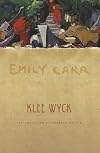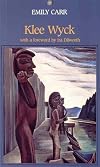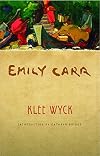
Klee Wyck
by Emily Carr
On This Page
Description
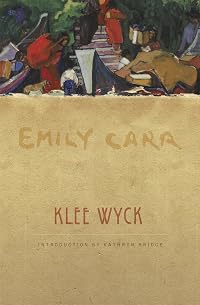
Douglas & McIntyre is proud to announce definitive, completely redesigned editions of Emily Carr's seven enduring classic books. These are beautifully crafted keepsake editions of the literary world of Emily Carr, each with an introduction by a distinguished Canadian writer or authority on Emily Carr and her work. Emily Carr's first book, published in 1941, was titled Klee Wyck ("Laughing One"), in honour of the name that the Native people of the west coast gave to her. This collection of show more twenty-one word sketches about Native people describes her visits and travels as she painted their totem poles and villages. Vital and direct, aware and poignant, it is as well regarded today as when it was first published in 1941 to instant and wide acclaim, winning the Governor General's Award for Non-fiction. In print ever since, it has been read and loved by several generations of Canadians, and has also been translated into French and Japanese. Kathryn Bridge, who, as an archivist, has long been well acquainted with the work of Emily Carr, has written an absorbing introduction that places Klee Wyck and Emily Carr in historical and literary context and provides interesting new information. show lessTags
Recommendations




















Member Reviews
While I think the stories in this book are important, they do not represent Carr's best. Many are repetitive. The value of the book lies in the portraits she paints of the changes to the tribes in and around British Columbia.
Emily Carr is a renowned Canadian artist, most noted for her paintings of British Colombia, particularly the remote areas and Native culture. Klee Wyck, whose title comes from the name -- Laughing One -- the Natives gave to Carr, is a series of 21 descriptive essays about her forays into the wilderness and the friendships she developed. She is particularly taken by the totems -- especially those of D'Sonoqua, the wild woman of the forest who is feared for stealing children and revered for her gift of knowledge:
"Like the D'Sonoqua of the other villages, she was carved into the bole of a red cedar tree. Sun and storm had bleached the wood, moss here and there softened the crudeness of the modelling; sincerity underlay every stroke....
I show more sat down to sketch. What was the noise of purring and rubbing going on about my feet? Cats. I rubbed my eyes to make sure I was seeing right, and counted a dozen of them. They jumped into my lap and sprang to my shoulders. They were real -- and very feminine.
There we were--D'Sonoqua, the cats and I -- the woman who only a few moments ago had forced herself to come behind the houses in trembling fear of the 'wild woman of the woods: -- wild in the sense that forest-creatures are wild -- shy, untouchable."
Highly recommended. show less
"Like the D'Sonoqua of the other villages, she was carved into the bole of a red cedar tree. Sun and storm had bleached the wood, moss here and there softened the crudeness of the modelling; sincerity underlay every stroke....
I show more sat down to sketch. What was the noise of purring and rubbing going on about my feet? Cats. I rubbed my eyes to make sure I was seeing right, and counted a dozen of them. They jumped into my lap and sprang to my shoulders. They were real -- and very feminine.
There we were--D'Sonoqua, the cats and I -- the woman who only a few moments ago had forced herself to come behind the houses in trembling fear of the 'wild woman of the woods: -- wild in the sense that forest-creatures are wild -- shy, untouchable."
Highly recommended. show less
I loved this book. I don't say that very often but this is an exceptional book. In the forword Ira Dilworth talks about Carr's writing process:
I have seen her "peeling" a sentence, as she called it,--a process which involved stripping away all ambiguous or unnecessary words, replacing a vague word by a sharper, clearer one until the sentence emerged clean and precise in its meaning and strong in its impact on the reader. As a result, there is in her writing the quality of immediacy, the ability, by means of descriptive words chosen with the greatest accuracy, to carry the reader into the very heart of the experience she is describing, whether it be an incident from her own childhood or a sketch of an Indian and his village--and that so show more swiftly as to give an impression almost of magic, of incatation.
I did feel carried into the places she described and I felt like I knew the people she met. I think the story that had the most strong effect on me was "Sophie". Sophie was a woman who came by Carr's studio in Vancouver to sell her baskets. Carr didn't have any money to pay her but Sophie told her she would take some old clothes. Sophie left the basket she wanted even though Carr said she would have to go back to Victoria to get the clothes and that wouldn't be for some time. Sophie told her she lived in the North Vancouver Mission and that anyone there would know her. Some time later Carr took the clothes over to Sophie and they became friends. One of the first things Sophie did was take Carr to the cemetary where her children were buried. Almost every year Sophie had a baby and almost every year she buried a child. Sophie had twenty-one children in all and none of them survived her. I think this story speaks volumes about the kind of person Emily Carr was. She could be good friends with an illiterate woman who had nothing, not even the children she bore. show less
I have seen her "peeling" a sentence, as she called it,--a process which involved stripping away all ambiguous or unnecessary words, replacing a vague word by a sharper, clearer one until the sentence emerged clean and precise in its meaning and strong in its impact on the reader. As a result, there is in her writing the quality of immediacy, the ability, by means of descriptive words chosen with the greatest accuracy, to carry the reader into the very heart of the experience she is describing, whether it be an incident from her own childhood or a sketch of an Indian and his village--and that so show more swiftly as to give an impression almost of magic, of incatation.
I did feel carried into the places she described and I felt like I knew the people she met. I think the story that had the most strong effect on me was "Sophie". Sophie was a woman who came by Carr's studio in Vancouver to sell her baskets. Carr didn't have any money to pay her but Sophie told her she would take some old clothes. Sophie left the basket she wanted even though Carr said she would have to go back to Victoria to get the clothes and that wouldn't be for some time. Sophie told her she lived in the North Vancouver Mission and that anyone there would know her. Some time later Carr took the clothes over to Sophie and they became friends. One of the first things Sophie did was take Carr to the cemetary where her children were buried. Almost every year Sophie had a baby and almost every year she buried a child. Sophie had twenty-one children in all and none of them survived her. I think this story speaks volumes about the kind of person Emily Carr was. She could be good friends with an illiterate woman who had nothing, not even the children she bore. show less
Reminiscences of encounters and painting trips to native villages in British Columbia during the early 20thC, with a surprisingly modern perspective on indigenous cultures. Interesting to contrast with Francis Poole's account, a generation earlier, of colonists' exploration for mineral resources on the Queen Charlotte Islands (Haida Gwaii), which introduced smallpox and praised the benefits of missionaries for First Nations populations up and down the coast. Carr's own criticisms of missionaries were expurgated from the first editions of this book.
First published in 1941, Emily Carr wrote these stories about her first visits to the West Coast natives in the early 1900s. The book is of great historic and artistic significance as it captures the first nations people as they lived then, and Carr's reactions to her encounters with them and with the natural world she portrayed so vividly in her art. Her writing is simple, direct and vivid, and often beautiful and moving. Essential Canlit, recommended.
This book is composed of short chapters written by Emliy Carr of her efforts to sketch and paint the totem poles found on the Queen Charlotte Islands. She is a brave and adventurous young woman who travels alone with her dog to these remote locations by hitching a ride by canoe or wagon to isolated native villages. She writes beautifully and describes so well the wild nature and elements of the villages. Her prose captures the dampness of the rain forests and the abundance of growth and greenery. Her descriptions of the totems is revealing. She has an interesting perspective on missionaries and the RCMP. She easily developed a rapport with the natives because of her innocence and her curiosity. I enjoyed this story very much. I will show more read more about this overlooked and talented Canadian artist. show less
In this small book, basically a set of vignettes, Emily Carr writes about her travels in the wilderness of British Columbia and her relationships with the Indians. There is very little about her paintings, but we learn a lot about her courage and her compassion.
Members
- Recently Added By
Lists

CBC's 100 True Stories
100 works; 6 members

Best Biographies of Notable Women
279 works; 101 members
Author Information

Emily Carr, generally considered Canada's most famous woman painter, was born in Victoria, British Columbia in 1871 and died there in 1945. She was an unusually gifted woman renowned not only for her magnificent paintings but also for her extraordinarily vivid and imaginative prose. She began writing late in life when she was forced by failing show more health to curtail her sketching activities. Her first book, Klee Wyck, was an instant success and won a Governor General's award show less
Some Editions
Awards and Honors
Work Relationships
Is abridged in
Common Knowledge
- People/Characters
- Emily Carr
- Important places
- British Columbia, Canada
- First words
- The lady Missionaries expected me. They sent an enormous Irishman in a tiny canoe to meet the steamer.
Classifications
Statistics
- Members
- 390
- Popularity
- 80,097
- Reviews
- 8
- Rating
- (3.96)
- Languages
- English, French, German
- Media
- Paper, Ebook
- ISBNs
- 14
- ASINs
- 13