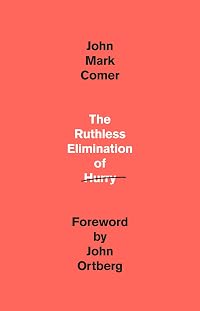
The Ruthless Elimination of Hurry: How to Stay Emotionally Healthy and Spiritually Alive in the Chaos of the Modern World
by John Mark Comer
On This Page
Description
ECPA BESTSELLER • A compelling emotional and spiritual case against hurry and in favor of a slower, simpler way of life“As someone all too familiar with ‘hurry sickness,’ I desperately needed this book.”—Scott Harrison, New York Times best-selling author of Thirst
“Who am I becoming?”
That was the question nagging pastor and author John Mark Comer. Outwardly, he appeared successful. But inwardly, things weren’t pretty. So he turned to a trusted mentor for show more guidance and heard these words:
“Ruthlessly eliminate hurry from your life. Hurry is the great enemy of the spiritual life.”
It wasn’t the response he expected, but it was—and continues to be—the answer he needs. Too often we treat the symptoms of toxicity in our modern world instead of trying to pinpoint the cause. A growing number of voices are pointing at hurry, or busyness, as a root of much evil.
Within the pages of this book, you’ll find a fascinating roadmap to staying emotionally healthy and spiritually alive in the chaos of the modern world. show less
Tags
Recommendations

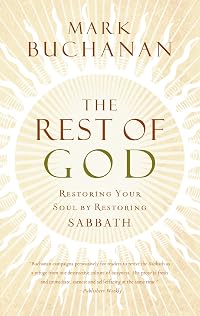
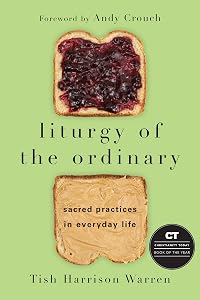
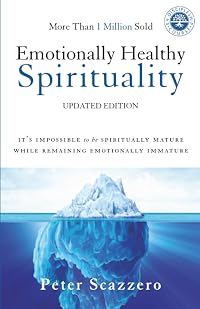
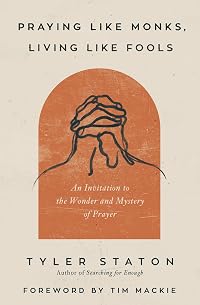
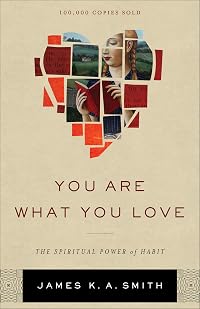
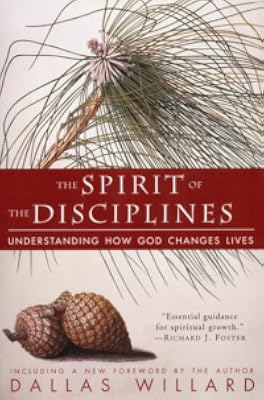
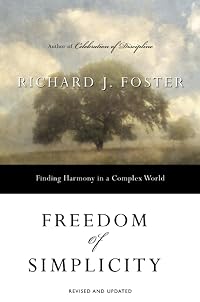
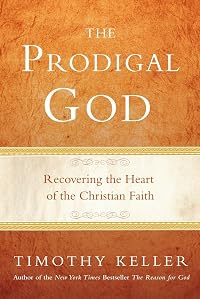
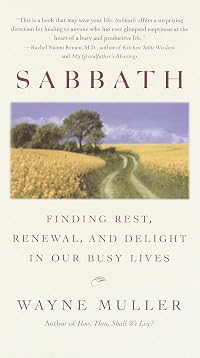
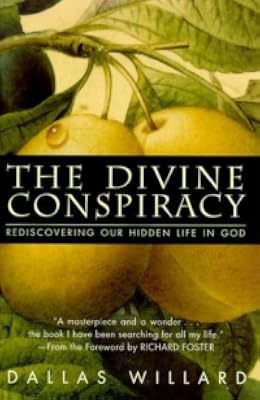
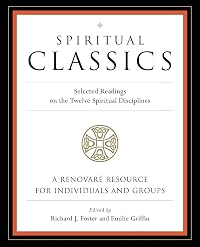
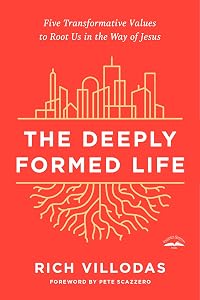

Member Reviews
John Mark Comer’s The Ruthless Elimination of Hurry is part spiritual reflection, part cultural critique, and part practical guide—a call to slow down in a world that idolizes speed, productivity, and constant noise. Drawing from his own experience as a megachurch pastor overwhelmed by burnout, Comer makes a compelling argument that “hurry” is not just a scheduling problem but a spiritual one: a barrier to presence, compassion, and a meaningful life.
At its heart, the book challenges readers to rethink the pace at which they move through the world. Comer blends biblical teaching with accessible storytelling, modern psychology, and observations about digital culture, weaving them together in a way that feels both convicting and show more comforting. The tone is conversational—sometimes humorous, sometimes quietly piercing—making the book easy to read even when the content demands self-examination.
Comer’s central practices for eliminating hurry—silence and solitude, Sabbath, simplicity, and slowing—aren’t innovative in the modern sense; instead, they intentionally revive ancient rhythms. What makes his approach effective is how he frames these practices not as guilt-laden religious duties but as invitations to freedom. Readers who come from Christian backgrounds will find strong theological grounding, while those outside the tradition may still appreciate the pragmatic value of slowing down and cultivating attention.
The Ruthless Elimination of Hurry is an engaging, timely, and accessible work that speaks to readers exhausted by modern busyness. Comer’s message is clear and resonant: a slower, more present life isn’t just possible—it’s essential. show less
At its heart, the book challenges readers to rethink the pace at which they move through the world. Comer blends biblical teaching with accessible storytelling, modern psychology, and observations about digital culture, weaving them together in a way that feels both convicting and show more comforting. The tone is conversational—sometimes humorous, sometimes quietly piercing—making the book easy to read even when the content demands self-examination.
Comer’s central practices for eliminating hurry—silence and solitude, Sabbath, simplicity, and slowing—aren’t innovative in the modern sense; instead, they intentionally revive ancient rhythms. What makes his approach effective is how he frames these practices not as guilt-laden religious duties but as invitations to freedom. Readers who come from Christian backgrounds will find strong theological grounding, while those outside the tradition may still appreciate the pragmatic value of slowing down and cultivating attention.
The Ruthless Elimination of Hurry is an engaging, timely, and accessible work that speaks to readers exhausted by modern busyness. Comer’s message is clear and resonant: a slower, more present life isn’t just possible—it’s essential. show less
Terrible for me to say as a regular church goer, but I'm not one for normally picking up a religious book as my reading book of choice.
Our minister sent me this book recently in thanks for something I've been helping the church out with (the joy of receiving an unexpected book gift through the post!), and when I had a quick flick through it I was pleasantly surprised at the style - it felt young, relevant and above all not remotely preachy.
Now that I've read the whole thing, I actually got a lot out of it. Even if you're not remotely religious, I think Comer gives a lot to think about around how increasingly busy and exhausting life has become. We're all hurrying to try to do more and to obtain more, and in doing so are often show more increasingly worn out, cross and far from our best version of ourselves. We've no time for ourselves, little quality time for our loved ones, and not much time (for those who are Christian) for God.
Comer puts forward a good case for reclaiming the Sabbath as a day of rest and... wait for it... enjoyment! This seemed so far from my 1970s upbringing in which the Sabbath felt like it was supposed to be almost a day of drudgery. In Comer's head, the Sabbath - if you plan it properly - should be the best day of the week, the one to really look forward to with all chores and work shelved and time with family, friends and God prioritised, doing things that remind us of just how good our lives really are (including wine - hurrah!).
In all, as the title says, this is a book challenging us to be ruthless about eliminating hurry from our lives, and not just hurry but also the exhausting desire to always be striving to obtain more things rather than learning to live much more happily with less. I do get what he means by that - when we go on holiday I often muse how we can be happily sufficient for a couple of weeks with just what we've been able to carry in a suitcase, and I'm quite sure there is a lightness to be had from purging one's house of all the crap that we accumulate over the years. But... easier said than done.
Cromer is a pastor so of course there is a religious subtext to the book, but this was written in a really fresh way which gave me plenty of food for thought about how I could do much better on all fronts. I liked the chatty style - it felt non-judgmental and above all modern and relevant. Cromer's a young guy and he gets that times have changed since the biblical Middle East, so his arguments for slowing down were in the context of the reality of the world we now live in.
4 stars - mindfulness for the time-drained and a good 'entry book' for those curious about (re)finding God in the modern world. show less
Our minister sent me this book recently in thanks for something I've been helping the church out with (the joy of receiving an unexpected book gift through the post!), and when I had a quick flick through it I was pleasantly surprised at the style - it felt young, relevant and above all not remotely preachy.
Now that I've read the whole thing, I actually got a lot out of it. Even if you're not remotely religious, I think Comer gives a lot to think about around how increasingly busy and exhausting life has become. We're all hurrying to try to do more and to obtain more, and in doing so are often show more increasingly worn out, cross and far from our best version of ourselves. We've no time for ourselves, little quality time for our loved ones, and not much time (for those who are Christian) for God.
Comer puts forward a good case for reclaiming the Sabbath as a day of rest and... wait for it... enjoyment! This seemed so far from my 1970s upbringing in which the Sabbath felt like it was supposed to be almost a day of drudgery. In Comer's head, the Sabbath - if you plan it properly - should be the best day of the week, the one to really look forward to with all chores and work shelved and time with family, friends and God prioritised, doing things that remind us of just how good our lives really are (including wine - hurrah!).
In all, as the title says, this is a book challenging us to be ruthless about eliminating hurry from our lives, and not just hurry but also the exhausting desire to always be striving to obtain more things rather than learning to live much more happily with less. I do get what he means by that - when we go on holiday I often muse how we can be happily sufficient for a couple of weeks with just what we've been able to carry in a suitcase, and I'm quite sure there is a lightness to be had from purging one's house of all the crap that we accumulate over the years. But... easier said than done.
Cromer is a pastor so of course there is a religious subtext to the book, but this was written in a really fresh way which gave me plenty of food for thought about how I could do much better on all fronts. I liked the chatty style - it felt non-judgmental and above all modern and relevant. Cromer's a young guy and he gets that times have changed since the biblical Middle East, so his arguments for slowing down were in the context of the reality of the world we now live in.
4 stars - mindfulness for the time-drained and a good 'entry book' for those curious about (re)finding God in the modern world. show less
https://timothyrice.org/hurry/
Rating: 4.5/5 – Recommended without hesitation
Read if you need: A kick in the pants to get focused on what really matters in this life (and the next)
Hurry, this book claims, “involves excessive haste or a state of urgency. It is associated with words such as hurl, hurdle, hurly-burly (meaning “uproar”), and hurricane.” The Ruthless Elimination of Hurry claims it’s about slowing down this frenetic pace of one’s life, but it’s really about two separate – albeit related – problems:
Being too hurried.
Being too distracted.
The author attempts to present these as though they’re the same concept, but I think it’s perfectly possible to be afflicted with one and not the other. Long periods of show more my life have been spent in a discontented malaise, each day spent chasing pointless distractions and entertainments.
This particular disagreement notwithstanding, I think the author makes a lot of very good points in this book. He deftly identifies many sources of our distraction and hurry and suggests precise and actionable steps to correct them. I have made several changes to my life (mostly focused on technology usage) since reading this book that have had a real, noticeable impact on my day to day life.
I would be surprised if someone read this book and didn’t find some useful advice. A short read, the author wastes none of your time with endless reiterations and rephrases, moving quickly from one point to the next. The Ruthless Elimination of Hurry gave me a lot to think about, and I’m sure you’ll find it just as thought provoking as I did. show less
Rating: 4.5/5 – Recommended without hesitation
Read if you need: A kick in the pants to get focused on what really matters in this life (and the next)
Hurry, this book claims, “involves excessive haste or a state of urgency. It is associated with words such as hurl, hurdle, hurly-burly (meaning “uproar”), and hurricane.” The Ruthless Elimination of Hurry claims it’s about slowing down this frenetic pace of one’s life, but it’s really about two separate – albeit related – problems:
Being too hurried.
Being too distracted.
The author attempts to present these as though they’re the same concept, but I think it’s perfectly possible to be afflicted with one and not the other. Long periods of show more my life have been spent in a discontented malaise, each day spent chasing pointless distractions and entertainments.
This particular disagreement notwithstanding, I think the author makes a lot of very good points in this book. He deftly identifies many sources of our distraction and hurry and suggests precise and actionable steps to correct them. I have made several changes to my life (mostly focused on technology usage) since reading this book that have had a real, noticeable impact on my day to day life.
I would be surprised if someone read this book and didn’t find some useful advice. A short read, the author wastes none of your time with endless reiterations and rephrases, moving quickly from one point to the next. The Ruthless Elimination of Hurry gave me a lot to think about, and I’m sure you’ll find it just as thought provoking as I did. show less
The Ruthless Elimination of Hurry by John Mark Comer is a combination of a book on slowing down and a book on the spiritual disciplines. Comer calls them spiritual practices. “Discipline” is an offensive word today. Of course, the spiritual disciplines force us to slow down, so the combination works well. Western culture in particular loves the idea that the secret to life is ambition, assertiveness, busyness, multitasking, and constant hustling. There’s no time to sleep or rest. However, the truth is we live in a culture of low-grade exhaustion and anxiety. Something is missing, and no matter how hard we hustle, we can’t quite grasp that elusive happiness hustling and grinding promises. That’s where the spiritual practices show more come in. Comer calls them “the way of Jesus.”
Comer bases his premise on Jesus’ words in Matthew 11:28-30. “Come to me, all of you who are weary and burdened, and I will give you rest. Take up my yoke and learn from me, because I am lowly and humble in heart, and you will find rest for your souls. For my yoke is easy and my burden is light.” Jesus calls the weary and burdened and promises them rest. How do they get it? Take up His yoke and learn from Him. Comer writes:
What if the secret to a happy life—and it is a secret, an open one but a secret nonetheless; how else do so few people know it?—what is the secret isn’t “out there” but much closer to home? What if all you had to do was slow down long enough for the merry-go-round blur of life to come into focus? What if the secret to the life we crave is actually easy?
I’ll admit as I read The Ruthless Elimination of Hurry I thought to myself, “This is all great stuff, but I’m really not that busy. Life is pretty relaxed.” Funny how God works. Almost immediately after finishing the book I was asked to teach two classes, coach my son’s team which practices 4 days a week, and take care of the lines on the team’s field, all in addition to my full time job. My schedule is now full. There are moments where I have this impending sense of not having enough time to get it all done. I keep coming back to Comer’s book and the spiritual practices he lays out for our hyper world.
The Ruthless Elimination of Hurry clearly lays out our modern problem using a variety of sources. The quotes alone are brilliant and pointed me to great sources for additional reading. The book lays the groundwork for the solution based on the way of Jesus, and then offers four practices to help unhurry your life. Comer’s writing is smart and engaging. He says he wants you to feel like you’re having a conversation with him over coffee. I think he succeeds. I highly recommend this one.
John Mark Comer also cohosts the This Cultural Moment podcast, which is very smart and helpful. Check it out. show less
Comer bases his premise on Jesus’ words in Matthew 11:28-30. “Come to me, all of you who are weary and burdened, and I will give you rest. Take up my yoke and learn from me, because I am lowly and humble in heart, and you will find rest for your souls. For my yoke is easy and my burden is light.” Jesus calls the weary and burdened and promises them rest. How do they get it? Take up His yoke and learn from Him. Comer writes:
What if the secret to a happy life—and it is a secret, an open one but a secret nonetheless; how else do so few people know it?—what is the secret isn’t “out there” but much closer to home? What if all you had to do was slow down long enough for the merry-go-round blur of life to come into focus? What if the secret to the life we crave is actually easy?
I’ll admit as I read The Ruthless Elimination of Hurry I thought to myself, “This is all great stuff, but I’m really not that busy. Life is pretty relaxed.” Funny how God works. Almost immediately after finishing the book I was asked to teach two classes, coach my son’s team which practices 4 days a week, and take care of the lines on the team’s field, all in addition to my full time job. My schedule is now full. There are moments where I have this impending sense of not having enough time to get it all done. I keep coming back to Comer’s book and the spiritual practices he lays out for our hyper world.
The Ruthless Elimination of Hurry clearly lays out our modern problem using a variety of sources. The quotes alone are brilliant and pointed me to great sources for additional reading. The book lays the groundwork for the solution based on the way of Jesus, and then offers four practices to help unhurry your life. Comer’s writing is smart and engaging. He says he wants you to feel like you’re having a conversation with him over coffee. I think he succeeds. I highly recommend this one.
John Mark Comer also cohosts the This Cultural Moment podcast, which is very smart and helpful. Check it out. show less
First -- it's extremely Christian; I wasn't sure how much that'd play into before I read it. I'd be reluctant to recommend it to people who aren't intimately familiar with the culture. It's written as if it were a sermon -- think a long, easy-to-read speech instead of typical book or collection of essays.
Excellent core idea: "hurry" is preventing us from living thoroughly good lives, burning us out, ruining our relationships and spirituality. It's one of those "sticky ideas"; you hear the concept and then start trying to apply it to all aspects of life; the title kinda becomes a mantra. I found myself thinking about this within the context of work (how can I reduce hurry there?) life, relationships, how I organise my day to minimise show more stress, etc etc etc.
But wow, the author feels a little... tone deaf? Naive? Arrogant? sometimes. The author nods to an article by Anne Helen Petersen and then dunks on it because she proposes "democratic socialism and unions" as a burnout solution, saying "I highly doubt they will be any more effective against burnout than essential oils"; which completely misses the entire theme that weaves through most of Petersen's work -- that burnout is a product of society, not a personal failure, and improving social structures and support networks is a great way to combat that. I think this pissed me off especially because it's got that smug Christian "man, those atheists don't know what they're talking about" vibe, but... like... he could probably learn something by engaging with secular thinkers if he was willing to do more than just read the one article, and then dunk on them.
There's a later section talking about Sabbath as a response to freedom from slavery; where the author promotes maintaining the Sabbath as a way to ensure that the poor also get to rest:
None of this stuff works without societal change or advocacy. If everyone took Sundays off with no other changes (to e.g. the living wage) then it's gonna be a whole lot worse for a lot of people.
In this sense, it's a very individualistic book --- solutions and prescribed ideas are things you can change in your own life, which might then have influence on societal settings later if enough people do them -- and a product of the (American evangelical) culture it exists in.
Still some good ideas worth reflecting on. I personally got more from [b:How to Do Nothing: Resisting the Attention Economy|42771901|How to Do Nothing Resisting the Attention Economy|Jenny Odell|https://i.gr-assets.com/images/S/compressed.photo.goodreads.com/books/1550724373l/42771901._SY75_.jpg|66525499] (though that is much less practical in terms of concrete advice), but the way this is written is "stickier", I wasn't sure what to take away from "How to do Nothing" but "figure out how to eliminate hurry" is a pretty good guiding principle. Another way of putting it would be "Approach time from a place of abundance, not scarcity.", per Chelsea Scudder. show less
Excellent core idea: "hurry" is preventing us from living thoroughly good lives, burning us out, ruining our relationships and spirituality. It's one of those "sticky ideas"; you hear the concept and then start trying to apply it to all aspects of life; the title kinda becomes a mantra. I found myself thinking about this within the context of work (how can I reduce hurry there?) life, relationships, how I organise my day to minimise show more stress, etc etc etc.
But wow, the author feels a little... tone deaf? Naive? Arrogant? sometimes. The author nods to an article by Anne Helen Petersen and then dunks on it because she proposes "democratic socialism and unions" as a burnout solution, saying "I highly doubt they will be any more effective against burnout than essential oils"; which completely misses the entire theme that weaves through most of Petersen's work -- that burnout is a product of society, not a personal failure, and improving social structures and support networks is a great way to combat that. I think this pissed me off especially because it's got that smug Christian "man, those atheists don't know what they're talking about" vibe, but... like... he could probably learn something by engaging with secular thinkers if he was willing to do more than just read the one article, and then dunk on them.
There's a later section talking about Sabbath as a response to freedom from slavery; where the author promotes maintaining the Sabbath as a way to ensure that the poor also get to rest:
Can you imagine what would happen to society if all commerce stopped once a week? If 24-7 stores went 24-6? Websites stopped receiving orders. Amazon warehouses closed for a day. Restaurants powered off the oven. Can you imagine what this would do for the poor in our cities? Creating space for them to rest and spend time with their loved ones?
None of this stuff works without societal change or advocacy. If everyone took Sundays off with no other changes (to e.g. the living wage) then it's gonna be a whole lot worse for a lot of people.
In this sense, it's a very individualistic book --- solutions and prescribed ideas are things you can change in your own life, which might then have influence on societal settings later if enough people do them -- and a product of the (American evangelical) culture it exists in.
Still some good ideas worth reflecting on. I personally got more from [b:How to Do Nothing: Resisting the Attention Economy|42771901|How to Do Nothing Resisting the Attention Economy|Jenny Odell|https://i.gr-assets.com/images/S/compressed.photo.goodreads.com/books/1550724373l/42771901._SY75_.jpg|66525499] (though that is much less practical in terms of concrete advice), but the way this is written is "stickier", I wasn't sure what to take away from "How to do Nothing" but "figure out how to eliminate hurry" is a pretty good guiding principle. Another way of putting it would be "Approach time from a place of abundance, not scarcity.", per Chelsea Scudder. show less
John Mark Comer was a young pastor who burned himself out early in his career chasing the mega-church model of modern Christianity. He chose to leave that model, move to the city (Portland) and reconstruct his work around the idea of daily rhythms that eliminated hurry and allowed him to rest, even in his work, living a life of constant war against hurry.
The current volume tells that story, along with his identifying the problem of hurry in our society, his solution for following Christ in an "easy yoke", and four practices for living and unhurried life: silence and solitude, sabbath, simplicity and slowing.
There is good wisdom in the book, particularly as it relates to our frenetic American lifestyle. His exhortation toward greater show more simplicity in our lives is good and needed in our culture. But I found myself a little troubled by two main issues as I read the book.
The first is how he constructs the life we seek to live in following Christ. In my view, it's a life of self-denial and trust, following Christ wherever He leads. Our church now supports a pastor in Syria who is overwhelmed with the endless need of tens of thousands of refugees he ministers to in Lebanon. Likewise, another pastor we support is in constant danger for his life in northern Kenya. Should our main exhortation to these men, serving in these extreme circumstances, be to live a life of silence and solitude? To slow down? Rather, it seems to me, it should be to follow Christ, to trust Him, to live as He calls, to deny myself and follow wherever that path leads.
I'm not saying that Comer's call to eliminate hurry is wrong. Rather, I have the unsettled feeling that he is aiming us at the wrong goal. That there is a risk our yearning for silence and solitude is a reaction to the poor way we have envisioned evangelical Christianity and worship in the last several decades, and that there is great danger it might lead to more self-focus than Christ-focus in how we live out our call.
The second is more a point of curiosity: I do some writing myself and know something of the demands of the life of a pastor. Both can be--are--easily full time jobs. As I read the book, I kept finding myself wondering, "Has he really eliminated hurry in his life if he is leading a church and writing this book at the same time? Is his life really that simple and slow?" I don't know him at all, but do know that the bent toward activity that burnt him out in his early career is not easily cast aside. Praying that he has not exchanged one frenetic life for another.
As my last point, I ask my two "audio books" brothers: do you have the guts to read "The Ruthless Elimination of Hurry" at 1.5 or 1.75 speed? show less
The current volume tells that story, along with his identifying the problem of hurry in our society, his solution for following Christ in an "easy yoke", and four practices for living and unhurried life: silence and solitude, sabbath, simplicity and slowing.
There is good wisdom in the book, particularly as it relates to our frenetic American lifestyle. His exhortation toward greater show more simplicity in our lives is good and needed in our culture. But I found myself a little troubled by two main issues as I read the book.
The first is how he constructs the life we seek to live in following Christ. In my view, it's a life of self-denial and trust, following Christ wherever He leads. Our church now supports a pastor in Syria who is overwhelmed with the endless need of tens of thousands of refugees he ministers to in Lebanon. Likewise, another pastor we support is in constant danger for his life in northern Kenya. Should our main exhortation to these men, serving in these extreme circumstances, be to live a life of silence and solitude? To slow down? Rather, it seems to me, it should be to follow Christ, to trust Him, to live as He calls, to deny myself and follow wherever that path leads.
I'm not saying that Comer's call to eliminate hurry is wrong. Rather, I have the unsettled feeling that he is aiming us at the wrong goal. That there is a risk our yearning for silence and solitude is a reaction to the poor way we have envisioned evangelical Christianity and worship in the last several decades, and that there is great danger it might lead to more self-focus than Christ-focus in how we live out our call.
The second is more a point of curiosity: I do some writing myself and know something of the demands of the life of a pastor. Both can be--are--easily full time jobs. As I read the book, I kept finding myself wondering, "Has he really eliminated hurry in his life if he is leading a church and writing this book at the same time? Is his life really that simple and slow?" I don't know him at all, but do know that the bent toward activity that burnt him out in his early career is not easily cast aside. Praying that he has not exchanged one frenetic life for another.
As my last point, I ask my two "audio books" brothers: do you have the guts to read "The Ruthless Elimination of Hurry" at 1.5 or 1.75 speed? show less
This book is a poignant reminder that we live in a time that unnaturally faster than the pace are meant for. Living hurriedly is not fully living. "Hurry sickness" weakens us, spiritually, physically and in our connectedness to others. Comer provides lots of practical guidelines for slowing down, living intentionally, and simplifying our lives. I loved the concepts of silence, sabbath, simplifying and slowing, the emphasis on rich examples from Jesus's life—how he demonstrated taking things slowly and meaningfully, and how sometimes constraints can actually be good for us.
Members
- Recently Added By
Lists

Non-Fiction Worth Reading
1,016 works; 262 members

spirituality and self growth
84 works; 1 member
Author Information
29 Works 3,059 Members
John Mark Comer is the founding pastor at Bridgetown Church, director and teacher of Practicing the Way, and the New York Times bestselling author of Live No Lies and other books. His passion is the intersection of spiritual formation and post-Christian culture, and to that end, he is regularly found reading the desert fathers and mothers, ancient show more saints and obscure contemplatives, modern psychologists and social scientists, and op-eds from the New York Times. Most important, he is husband to T and father to Jude, Moses, and Sunday. show less
All Editions
Common Knowledge
- Original publication date
- 2019-10-29
- Epigraph
- Come to me,
all you who are weary and burdened,
and I will give you rest.
Take my yoke upon you
and learn from me,
for I am gentle
and humble in heart,
and you will find
rest for your souls.
For my ... (show all)yoke is easy
and my burden is light.
—Jesus in Matthew 11 v 28-30 - Dedication
- For Dallas Willard—thank you.
Classifications
- Genres
- Religion & Spirituality, Nonfiction, General Nonfiction
- DDC/MDS
- 248.4 — Religion Christian practice & observance Christian experience, practice, life Christian Living
- LCC
- BV4647 .S48 .C66 — Philosophy, Psychology and Religion Practical Theology Practical Theology Practical religion. The Christian life Moral theology Virtues
- BISAC
Statistics
- Members
- 1,256
- Popularity
- 19,580
- Reviews
- 32
- Rating
- (4.25)
- Languages
- Dutch, English, German, Spanish
- Media
- Paper, Audiobook, Ebook
- ISBNs
- 11
- ASINs
- 4
