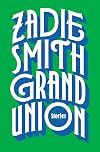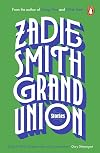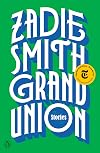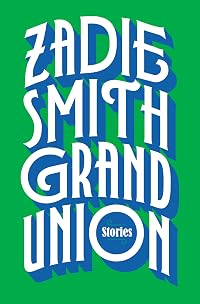
Grand Union: Stories
by Zadie Smith
On This Page
Description
Longlisted for the Carnegie Medal!A dazzling collection of short fiction
Zadie Smith has established herself as one of the most iconic, critically respected, and popular writers of her generation. In her first short story collection, she combines her power of observation and her inimitable voice to mine the fraught and complex experience of life in the modern world. Interleaving eleven completely new and unpublished stories with some of her best-loved pieces from The New Yorker and show more elsewhere, Smith presents a dizzyingly rich and varied collection of fiction. Moving exhilaratingly across genres and perspectives, from the historic to the vividly current to the slyly dystopian, Grand Union is a sharply alert and prescient collection about time and place, identity and rebirth, the persistent legacies that haunt our present selves and the uncanny futures that rush up to meet us.
Nothing is off limits, and everything—when captured by Smith's brilliant gaze—feels fresh and relevant. Perfectly paced and utterly original, Grand Union highlights the wonders Zadie Smith can do. show less
Tags
Recommendations



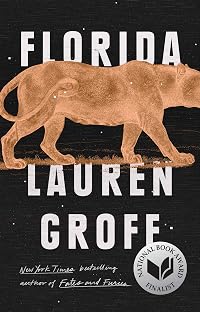
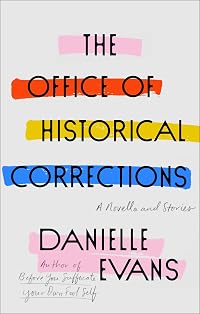

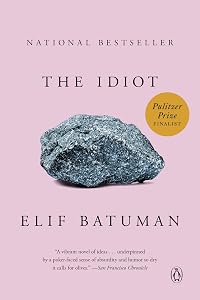
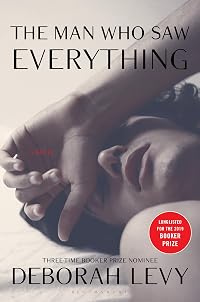

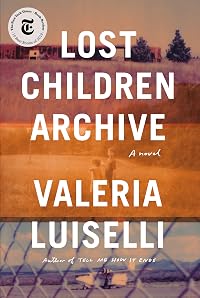
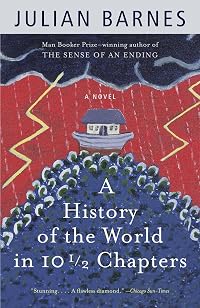
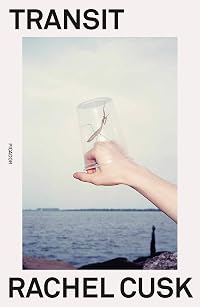


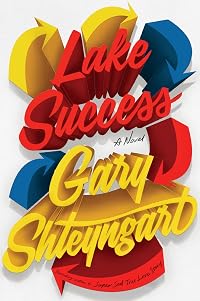





Member Reviews
In a Zadie Smith story, even when the characters are cussing they sound posh. I don't know if that's just me. Her voice is so careful, precise, & carries a kind of deliberate humour that makes me feel like she can't step out of her brain and just... release. Feel. I felt like the only story where I felt a kind of release was "For The King" & that's cause the whole story happens in 'one-take' following a friend meeting a friend & the conversation they have till they go home. So it's less controlled in that sense, plus Zadie Smith's dialogue is always stellar.
With this kind of precision and tightness, some stories work far better than others. When it works it's powerful as with the story "Two Men Arrive in A Village" which read like a show more tense, terrifying parable & shows Smith's intense intelligence & observation on human intent & behaviour. This bit moved me most in the whole book:
"But there is such a thing as physical courage, real, persistent, very hard to explain, existing in tiny pockets here, there, and everywhere, and though almost always useless it is still something you don't easily forget once you've seen it—like a very beautiful face or a giant mountain range, it sets a limit somehow on your own hopes for yourself—and, sensing this, maybe, the tall, dim one raise his gleaming machete and, with the same fluid yet effortless gesture with which you might take the head off a flower, separate the boy from his life."
But a lot of times the stories read a little too 'perfectly' & therefore I felt like I could not find their soul. So once in a while when I felt a kind of release, it's like getting gold. For example in a story that was a kind of humorous riff on cancel culture, I guess ("Now More Than Ever") we get this passage:
"To the suffering person, suffering is solely suffering. It is only for others, as a symbol, that suffering takes on any meaning or purpose. No one ever got lynched and thought, Well, at least this will lead inexorably to the civil rights movement. They just shook, suffered, screamed, and died. Pain is the least symbolic thing there is." show less
With this kind of precision and tightness, some stories work far better than others. When it works it's powerful as with the story "Two Men Arrive in A Village" which read like a show more tense, terrifying parable & shows Smith's intense intelligence & observation on human intent & behaviour. This bit moved me most in the whole book:
"But there is such a thing as physical courage, real, persistent, very hard to explain, existing in tiny pockets here, there, and everywhere, and though almost always useless it is still something you don't easily forget once you've seen it—like a very beautiful face or a giant mountain range, it sets a limit somehow on your own hopes for yourself—and, sensing this, maybe, the tall, dim one raise his gleaming machete and, with the same fluid yet effortless gesture with which you might take the head off a flower, separate the boy from his life."
But a lot of times the stories read a little too 'perfectly' & therefore I felt like I could not find their soul. So once in a while when I felt a kind of release, it's like getting gold. For example in a story that was a kind of humorous riff on cancel culture, I guess ("Now More Than Ever") we get this passage:
"To the suffering person, suffering is solely suffering. It is only for others, as a symbol, that suffering takes on any meaning or purpose. No one ever got lynched and thought, Well, at least this will lead inexorably to the civil rights movement. They just shook, suffered, screamed, and died. Pain is the least symbolic thing there is." show less
There is something thoughtful about these nineteen stories. Or rather, thought is foregrounded over action, character, or emotion. They have a tendency to feel constructed. Especially the ones explicitly concerned with deconstruction. Metaphysical would not be a term of abuse here. Even philosophical. The kind of stories in which a narrator might casually bring up P. F. Strawson’s, “Individuals: An Essay in Descriptive Metaphysics,” using its full title, as I’ve just done. Which might be considered a bit heavy handed philosophy signalling, in the absence of virtue.
Perhaps the most famous story from this collection is the oft-reproduced, “Escape From New York,” in which Michael Jackson, Elizabeth Taylor, and Marlon Brandon show more flee New York City together by car in the aftermath of the 9-11 attacks. It’s such an outlandish premiss as to almost partake of the zany. There are other near-zany stories, such as “Miss Adele Amidst the Corsets.” Some, such as, “Parents’ Morning Epiphany,” are not stories, per se, but would not look out of place on McSweeny’s Internet Tendency. Some feel like formal narrative experiments, which perhaps like scientific experiments are considered successful whether they confirm or disconfirm an hypothesis.
So, not a lot here to warm to. Although one might nod one’s head in appreciation at the inspiration and (sometimes) the execution. But I couldn’t help thinking, often, that I’d rather read one of Zadie Smith’s fine essays or finer novels.
And so, only gently recommended. show less
Perhaps the most famous story from this collection is the oft-reproduced, “Escape From New York,” in which Michael Jackson, Elizabeth Taylor, and Marlon Brandon show more flee New York City together by car in the aftermath of the 9-11 attacks. It’s such an outlandish premiss as to almost partake of the zany. There are other near-zany stories, such as “Miss Adele Amidst the Corsets.” Some, such as, “Parents’ Morning Epiphany,” are not stories, per se, but would not look out of place on McSweeny’s Internet Tendency. Some feel like formal narrative experiments, which perhaps like scientific experiments are considered successful whether they confirm or disconfirm an hypothesis.
So, not a lot here to warm to. Although one might nod one’s head in appreciation at the inspiration and (sometimes) the execution. But I couldn’t help thinking, often, that I’d rather read one of Zadie Smith’s fine essays or finer novels.
And so, only gently recommended. show less
Liked, didn't love—I had mixed feelings about this one, and I say that as a fan of Smith's. She's so smart—and I think her work is best when she's showing off her brilliance as a creative writer and dialoguist (I'm sure there's an actual word for that but it escapes me at the moment), channeling other voices to weave strange and wonderful realities or provide a sharp, skewed commentary on the contemporary day. When the voice and characters are closer to her own I like the work less—there's an odd blurring of short story, memoir, and essay going on in a few of the pieces that didn't work for me, as much as I enjoy seeing the gears in her excellent brain turn.
This collection includes nineteen stories, about half of which are exquisite and about half of which were either okay or, in three cases, lost me altogether. Both the first and the last stories were in this latter category but in between are an assortment of mostly very-good-to-excellent short works exploring time, identity, reality. Set in past, present, or future and moving between New York and the UK, Smith's stories tend to begin in the middle. The reader is asked to follow along as the time, place, and relationships among characters are revealed more or less indirectly. My favorites: "Words and Music," "Big Week," "Two Men Arrive in a Village," "Kelso Deconstructed," and "Blocked." Recommended for a patient reader.
This is my first Zadie Smith book, a collection of short stories, most of which are quite short. The first one hit me well:
It's all in the middle of a story that is obviously written by a person who didn't exploit the material for the sake of igniting shock and awe; in other words, Smith is far away from Bret Easton Ellis and his ilk.
Some of the conversations between Americans and Jamaicans were good to read. The lack of obvious plot felt fresh and lovely. On the other hand, I'm left with a feeling that I breezed through the stories. They were easily read, for sure, but I won't remember many of them, only the sentiment that this collection left me with. It's a good feeling and I will read Smith again. show less
“In a matriarchy, you’d hear women boasting to their mates: ‘I subsumed him in my anus. I really made his penis disappear. I just stole it away and hid it deep inside myself until he didn’t even exist.’ ”
It's all in the middle of a story that is obviously written by a person who didn't exploit the material for the sake of igniting shock and awe; in other words, Smith is far away from Bret Easton Ellis and his ilk.
My son asked me if the young man was “sick in the head” which is our downtown euphemism for batshit crazy, but my daughter 01 who is very, very savvy said, “No way—look at hisshow more
clothes!” I thought that was an interesting answer. It meant she was becoming an American. It meant she now refused to believe rich people can be batshit crazy.
Some of the conversations between Americans and Jamaicans were good to read. The lack of obvious plot felt fresh and lovely. On the other hand, I'm left with a feeling that I breezed through the stories. They were easily read, for sure, but I won't remember many of them, only the sentiment that this collection left me with. It's a good feeling and I will read Smith again. show less
I have read all of Zadie Smith's novels which I have enjoyed. However, it seems that I like each of her novels less than the previous one. In the case of this short story collection, it didn't totally work. 19 stories, 7 of which had been previously published. Some of stories were short and seemed more like exercises as a preliminary to a more extensive work. A less famous author probably would not have had these published. "Kelso Deconstructed" was the best story in the collection and was a true example of how good a writer Zadie Smith is. If you have not read her, I suggest you start with her first novel "White Teeth" and go from there.
It has taken me a long time to catch up with this, Zadie Smith's first short story collection, and it is not an easy book to rate or review, because the stories are so varied in length, style and subject matter. Some of them are enjoyable, some a little hard to follow and some rather introspective and personal. It also seems rather odd to name a collection after one of its shortest stories.
Many of the stories are set in New York, but the most powerful is probably Kelso Deconstructed, which tells the true story of an Antiguan murdered in London in 1959.
Many of the stories are set in New York, but the most powerful is probably Kelso Deconstructed, which tells the true story of an Antiguan murdered in London in 1959.
Members
- Recently Added By
Lists

Books Read in 2022
5,168 works; 114 members

Fiction: Classics, Literary, Short Stories
85 works; 1 member

Kirkus Starred Fiction Reviews of Books Published in 2019
411 works; 12 members

To Read
617 works; 7 members

Short Story Collections and Anthologies
261 works; 42 members

Books Read in 2021
5,361 works; 114 members
Author Information

52+ Works 41,108 Members
Zadie Smith is a novelist, essayist and short story writer. As of 2012, she has published four novels, White Teeth (2000), The Autograph Man (2002), On Beauty (2005), and NW (2012), all of which have received critical praise. In 2003, she was included on Granta's list of 20 best young authors and Smith won the Orange Prize for Fiction in 2006. Her show more novel White Teeth was included in Time magazines TIME 100 Best English-language. Smith joined NYU's Creative Writing Program as a tenured professor in 2010. Smith attended Hampstead Comprehensive School, and King's College, Cambridge University where she studied English literature. (Bowker Author Biography) show less
Some Editions
Awards and Honors
Awards
Distinctions
Series
Belongs to Publisher Series
Gallimard, Folio (7122)
Work Relationships
Contains
Common Knowledge
- Original title
- Grand Union
- Original publication date
- 2019
- Quotations*
- In Monica’s meritocracy, it was important not to keep memories: they only tied you to a past you were already preparing to abandon. She never consciously tried to remember anything. In dreams, it was different.
- Original language
- English
*Some information comes from Common Knowledge in other languages. Click "Edit" for more information.
Classifications
Statistics
- Members
- 666
- Popularity
- 43,243
- Reviews
- 22
- Rating
- (3.10)
- Languages
- 9 — Dutch, English, French, German, Italian, Polish, Spanish, Swedish, Turkish
- Media
- Paper, Audiobook, Ebook
- ISBNs
- 34
- ASINs
- 3