Marcella
by Mrs. Humphry Ward
On This Page
Description
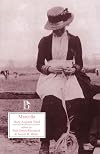
Marcella, young and with a new-womanly independence, has a yearning to help the poor. When a gamekeeper is murdered near where she lives, Marcella finds herself at odds with her wealthy fiancé over beliefs about property and justice. The discovery leads Marcella to pursue--among other things--a career in nursing. In settings ranging from village cottages, London slums and hospital wards to fashionable drawing rooms and the Ladies' Gallery of the Houses of Parliament, the book combines a show more gripping story with serious issues--socialism, rural and urban poverty, poaching laws, journalistic ethics, the Woman Question--inspiring critics to liken Marcella to George Eliot's novels. The Broadview Literary Texts edition records the substantive differences between the two major editions published during Ward's lifetime, and included among the many appendices are news accounts of the murder trial and executions that inspired the novel, and previously unpublished letters by Ward. NB: Mary Augusta Ward has traditionally been known as Mrs. Humphry Ward. show lessTags
Recommendations


















Member Recommendations

lahochstetler Two tales of Victorian women navigating the perils of social reform and romance.
Member Reviews
This book is a Victorian family saga, focused on a family estate, a spurned lover, and a devious villain. Marcella Boyce is young, bright, and taken with socialism. When her parents inherit the family estate in the country Marcella takes up the miserable conditions of the local workforce as her cause. She falls in love with the local favorite son, a Conservative, vying for a seat in Parliament. Socialist Marcella must discover if she can live with a man with different politics, and her feelings on the issue threaten to damage a number of lives.
Marcella shares many of the conventions of the late-Victorian novel. The lead character is intellectually inclined and socially-minded, but her gender ensures that her attention to show more socio-political issues will either make her look foolish or lead to her demise. The late-Victorian countryside offers no real place for a politically active woman. Ward also gives the reader a strong sense that the best thing for Marcella would be marriage, though Marcella is generally unable to see this for herself. The single woman's folly is readily apparent.
Ward offers a complicated plot and interesting characterizations. That said, I had to pace myself in reading this rather long novel, as Ward is entirely conventional in her treatment of women like Marcella Boyce, and I find Victorian characterizations of women so pat. Oddly enough, I find that to be especially true of books written by Victorian women. It's clear that authors like Mrs. Humphrey Ward were looking for an outlet for intelligent women, but they were still too limited by Victorian gender conventions to be able to revolutionary change in their literature. show less
Marcella shares many of the conventions of the late-Victorian novel. The lead character is intellectually inclined and socially-minded, but her gender ensures that her attention to show more socio-political issues will either make her look foolish or lead to her demise. The late-Victorian countryside offers no real place for a politically active woman. Ward also gives the reader a strong sense that the best thing for Marcella would be marriage, though Marcella is generally unable to see this for herself. The single woman's folly is readily apparent.
Ward offers a complicated plot and interesting characterizations. That said, I had to pace myself in reading this rather long novel, as Ward is entirely conventional in her treatment of women like Marcella Boyce, and I find Victorian characterizations of women so pat. Oddly enough, I find that to be especially true of books written by Victorian women. It's clear that authors like Mrs. Humphrey Ward were looking for an outlet for intelligent women, but they were still too limited by Victorian gender conventions to be able to revolutionary change in their literature. show less
Ratings
Members
- Recently Added By
Lists

Books referenced in A Very Great Profession: The Woman's Novel 1914-39
199 works; 6 members
Author Information

55+ Works 708 Members
Some Editions
Awards and Honors
Series
Belongs to Publisher Series
Virago Modern Classics (155)
Work Relationships
Common Knowledge
- Canonical title
- Marcella
- Original title
- Marcella
- Original publication date
- 1894
- People/Characters
- Marcella Boyce; Aldous Raeburn; Minta Hurd; Jim Hurd; Lord Maxwell; Harry Wharton (show all 10); Agneta Raeburn; Lady Winterbourne; Betty Macdonald; Frank Leven
- Important places
- Mellor, Goodshire, England, UK (fictional)
- Epigraph
- If Nature put not forth her power,
About the opening of the flower,
Who is it that could live an hour?
Alfred, Lord Tennyson, "The Two Voices" 160-62 - Dedication
- To my father, I inscribe this book in love and gratitude
- First words
- 'The mists--and the sun--and the first streaks of yellow in the beeches--beautiful!--beautiful!'
- Last words
- (Click to show. Warning: May contain spoilers.)'Choose some better word--my wife!'
- Original language
- English UK
Classifications
Statistics
- Members
- 184
- Popularity
- 177,823
- Reviews
- 1
- Rating
- (3.55)
- Languages
- English
- Media
- Paper, Ebook
- ISBNs
- 24
- ASINs
- 10