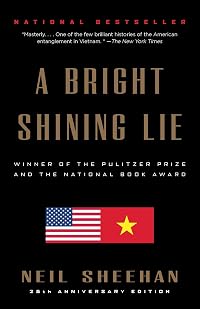
A Bright Shining Lie: John Paul Vann and America in Vietnam
by Neil Sheehan
On This Page
Description
One of the most acclaimed books of our time—the definitive Vietnam War exposé and the winner of the Pulitzer Prize and the National Book Award.When he came to Vietnam in 1962, Lieutenant Colonel John Paul Vann was the one clear-sighted participant in an enterprise riddled with arrogance and self-deception, a charismatic soldier who put his life and career on the line in an attempt to convince his superiors that the war should be fought another way. By the time he died in 1972, Vann had show more embraced the follies he once decried. He died believing that the war had been won.
In this magisterial book, a monument of history and biography that was awarded the National Book Award and the Pulitzer Prize for Nonfiction, a renowned journalist tells the story of John Vann—"the one irreplaceable American in Vietnam"—and of the tragedy that destroyed a country and squandered so much of America's young manhood and resources.
. show less
Tags
Recommendations



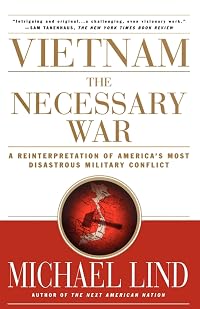
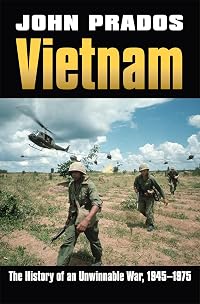








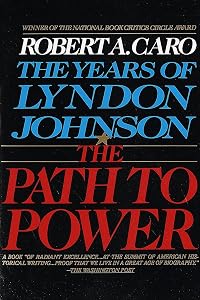
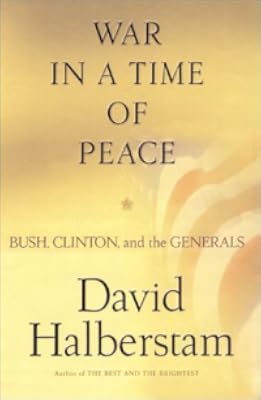
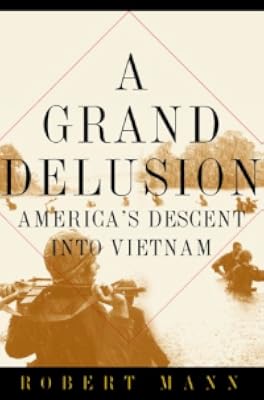
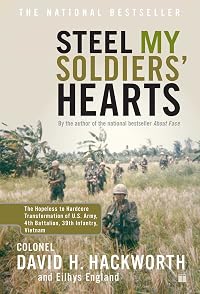


Member Reviews
Its certainly true that at times this book can be a bit of a slog. However, its also the best book I have ever read on the Vietnam War, and I have read a lot of them. Ostensibly a biography of John Paul Vann, an important figure in that war (and it does contain a biography of him), this book is so much more, using this one figure to examine every aspect of the conflict and the major players in it. It doesn't just explain what happened during the two decades of American involvement, but it goes a long way to explaining why things happened and why decisions were made. It is a fascinating piece of analysis of the people who shaped this conflict and what forces drove them to make decisions that, with the distance of time, seem so ridiculous show more to most of us now. If you have any interest in this conflict, I believe this is the one indispensable work that must be read. show less
Just like John Paul Vann was the "single essential American in Vietnam", A Bright Shining Lie is the single essential general history of the Vietnam War. Sheehan ably blends the overall history of the war, which we know all too well, with the career of one of it's strangest figures: the renegade Lt. Colonel, counter-insurgency expert, early war Cassandra and late war Dr. Pangloss, civilian General, good friend and depraved predator, who was John Paul Vann.
Lt. Col Vann went to Vietnam in 1962 as an adviser to an ARVN division in the Mekong Delta. An ambitious man and skilled soldier, he had some initial successes creating joint plans with his South Vietnamese counterpart, he was unable to force ARVN to fight to a conclusion with the show more Viet Cong, or mitigate the fundamentally corrupt nature of the Diem government. After the catastrophic battle of Ap Bac, which saw the Viet Cong stand and fight against helicopters and APCs for the first time, Vann began to oppose the relentless optimism of General Harkins and the Kennedy administration. Vann leaked his honest opinions about the incipient defeat to the Saigon press corps, including the author and David Halberstam (The Making of a Quagmire, The Best the the Brightest). Opposing the American strategy and the entire Pentagon bureaucracy, he argued for direct American control over the Vietnamese government to root out corruption, win over the rural peasantry, and contain the use of firepower in favor of an Americanized version of People's War. In after action reports and strategic leaks, Vann sacrificed his career to the truth, earning the admiration of the press corps as the most honest American officer of the war.
But this sacrifice was worthless, and a sop to his friends in the media. Behind the charismatic and energetic officer was a traumatized boy from the slums of Norfolk, the fatherless son of an alcoholic prostitute. Vann managed to make a career in the military, just missing WW2 and serving in Korea, but whether it was symbolic revenge on his mother or other issues, Vann's voracious sexual appetites destroyed first his marriage and then his career when a 15 year old babysitter accused him of raping her. Vann was acquitted, but the charge alone was enough to sink his chances of promotion to general. If he couldn't be on top in the Army, he wanted out.
The war was in Vann's blood like malaria, and after a dissatisfying year on civvie street he went back to Vietnam as a civilian with USAID. Believing himself more or less invulnerable to harm, Vann took insane risks driving rural roads beset with landmines and VC checkpoints (an aid was captured and spent 7 years in a VC prison camp), took up with two Vietnamese girlfriends, and fought a slow war in the bureaucracy that bore some fruit with the establishment of CORDS as a centralized arm for pacification, as opposed to scattered programs run through the State Department, the military, the CIA, Saigon, etc. Corruption in South Vietnam remained unsolved. Making alliances with McNamara's Office of Systems Analysis and Daniel Ellsberg (The Pentagon Papers) Vann survived bureaucratic infighting and the Tet Offensive to rise ever higher in the US government's efforts in South Vietnam, talking a new line that argued that with the Viet Cong decimated in the Tet offensive, victory was now possible. He thought NVA regulars were nearly as alien to the average South Vietnamese peasant as American soldiers, and that the political war could be won.
Vann's pacification campaign was little better than what had gone before, but he achieved his greatest success during the 1972 Easter Offensive. A fixture in Vietnam, and the senior American in II Corps, Vann took charge of the defenses, commanding two ARVN divisions, a paratrooper brigade, and all the attached American aviation assets, from light helicopters to strategic bombers. Vann was a demon in defense, omnipresent in his OH-58 Kiowa scout helicopter. He personally delivered supplies to besieged firebases, evacuated American advisers attacked by tanks, called in 'danger close' B-52 strikes and then flew over the crater fields taking potshots at stunned survivors with an M-16. Only Vann could have held the brittle ARVN command system together for the Battle of Kon Tum, which saved South Vietnam from being split in two by NVA tank columns. He had no time to celebrate his achievement, as his helicopter flew into a copse of trees returning from a victory celebration, killing everyone aboard in a fiery crash. Like a real world Colonel Kurtz, Vann went into Vietnam and became great and monstrous, too much so to ever return to America. The attendees at his funeral, the most senior men in the military, attested to Vann's success against all odds, but the fall of Saigon in 1975 rendered his efforts moot.
A Bright Shining Lie is the book that started me down this strange path. 45 or so Vietnam War books later, it still holds up as the best in its comprehensive sweep of the war from the 1930s to 1972, and its depiction of one of the wiser men who fought it. Yes, it's long. Yes, it's digressive on Vann's personal life, Vietnamese history, and the things Sheehan witnessed as a reporter. But it's the kind of true tribute that only a friend can make, with flaws and grand dreams treated with equal respect. This is a great book. show less
Lt. Col Vann went to Vietnam in 1962 as an adviser to an ARVN division in the Mekong Delta. An ambitious man and skilled soldier, he had some initial successes creating joint plans with his South Vietnamese counterpart, he was unable to force ARVN to fight to a conclusion with the show more Viet Cong, or mitigate the fundamentally corrupt nature of the Diem government. After the catastrophic battle of Ap Bac, which saw the Viet Cong stand and fight against helicopters and APCs for the first time, Vann began to oppose the relentless optimism of General Harkins and the Kennedy administration. Vann leaked his honest opinions about the incipient defeat to the Saigon press corps, including the author and David Halberstam (The Making of a Quagmire, The Best the the Brightest). Opposing the American strategy and the entire Pentagon bureaucracy, he argued for direct American control over the Vietnamese government to root out corruption, win over the rural peasantry, and contain the use of firepower in favor of an Americanized version of People's War. In after action reports and strategic leaks, Vann sacrificed his career to the truth, earning the admiration of the press corps as the most honest American officer of the war.
But this sacrifice was worthless, and a sop to his friends in the media. Behind the charismatic and energetic officer was a traumatized boy from the slums of Norfolk, the fatherless son of an alcoholic prostitute. Vann managed to make a career in the military, just missing WW2 and serving in Korea, but whether it was symbolic revenge on his mother or other issues, Vann's voracious sexual appetites destroyed first his marriage and then his career when a 15 year old babysitter accused him of raping her. Vann was acquitted, but the charge alone was enough to sink his chances of promotion to general. If he couldn't be on top in the Army, he wanted out.
The war was in Vann's blood like malaria, and after a dissatisfying year on civvie street he went back to Vietnam as a civilian with USAID. Believing himself more or less invulnerable to harm, Vann took insane risks driving rural roads beset with landmines and VC checkpoints (an aid was captured and spent 7 years in a VC prison camp), took up with two Vietnamese girlfriends, and fought a slow war in the bureaucracy that bore some fruit with the establishment of CORDS as a centralized arm for pacification, as opposed to scattered programs run through the State Department, the military, the CIA, Saigon, etc. Corruption in South Vietnam remained unsolved. Making alliances with McNamara's Office of Systems Analysis and Daniel Ellsberg (The Pentagon Papers) Vann survived bureaucratic infighting and the Tet Offensive to rise ever higher in the US government's efforts in South Vietnam, talking a new line that argued that with the Viet Cong decimated in the Tet offensive, victory was now possible. He thought NVA regulars were nearly as alien to the average South Vietnamese peasant as American soldiers, and that the political war could be won.
Vann's pacification campaign was little better than what had gone before, but he achieved his greatest success during the 1972 Easter Offensive. A fixture in Vietnam, and the senior American in II Corps, Vann took charge of the defenses, commanding two ARVN divisions, a paratrooper brigade, and all the attached American aviation assets, from light helicopters to strategic bombers. Vann was a demon in defense, omnipresent in his OH-58 Kiowa scout helicopter. He personally delivered supplies to besieged firebases, evacuated American advisers attacked by tanks, called in 'danger close' B-52 strikes and then flew over the crater fields taking potshots at stunned survivors with an M-16. Only Vann could have held the brittle ARVN command system together for the Battle of Kon Tum, which saved South Vietnam from being split in two by NVA tank columns. He had no time to celebrate his achievement, as his helicopter flew into a copse of trees returning from a victory celebration, killing everyone aboard in a fiery crash. Like a real world Colonel Kurtz, Vann went into Vietnam and became great and monstrous, too much so to ever return to America. The attendees at his funeral, the most senior men in the military, attested to Vann's success against all odds, but the fall of Saigon in 1975 rendered his efforts moot.
A Bright Shining Lie is the book that started me down this strange path. 45 or so Vietnam War books later, it still holds up as the best in its comprehensive sweep of the war from the 1930s to 1972, and its depiction of one of the wiser men who fought it. Yes, it's long. Yes, it's digressive on Vann's personal life, Vietnamese history, and the things Sheehan witnessed as a reporter. But it's the kind of true tribute that only a friend can make, with flaws and grand dreams treated with equal respect. This is a great book. show less
In some ways, Sheehan's A Bright Shining Lie is the best of the Big Three works on the war from the American viewpoint, the other two being Stanley Karnow's history of Vietnam and David Halberstam's The Best and the Brightest. Like the other two, Sheehan was there. And as a result, his description of the corruption, incompetence, and egotistical vanity of the South Vietnamese and the Americans rings all too true. His detailed description of how the war moved from a a handful of American advisors to a cataclysm involving over half a million American servicemen is invaluable.
Sheehan's particular hook in this book was to center the history around the biography of maverick American Lt. Col. John Paul Vann, whose early criticisms of the show more conduct of the war influenced Sheehan, Halberstam, and Karnow. As a biography, the work does a good sell. Vann was a rapist, child abuser, serial adulterer, wife abuser, liar, and victim of an horrific childhood. Sheehan never moralizes or excuses, he simply describes. And whatever it was that made Vann who he was, it also made him uniquely suited to the war in Vietnam. As Sheehan makes clear, Vann couldn't imagine life outside the war.
A couple of problems, in my view. Sheehan is far to eager to picture the North Vietnamese and Viet Cong as completely clear headed and superior in their strategy and tactics. They were not. They were just as capable of fooling themselves and misreading the populace as were the Americans. Tet showed that. I think Sheehan gives North Vietnam and the NLF in the south unearned praise for their concept of honorable mission and purity of purpose. show less
Sheehan's particular hook in this book was to center the history around the biography of maverick American Lt. Col. John Paul Vann, whose early criticisms of the show more conduct of the war influenced Sheehan, Halberstam, and Karnow. As a biography, the work does a good sell. Vann was a rapist, child abuser, serial adulterer, wife abuser, liar, and victim of an horrific childhood. Sheehan never moralizes or excuses, he simply describes. And whatever it was that made Vann who he was, it also made him uniquely suited to the war in Vietnam. As Sheehan makes clear, Vann couldn't imagine life outside the war.
A couple of problems, in my view. Sheehan is far to eager to picture the North Vietnamese and Viet Cong as completely clear headed and superior in their strategy and tactics. They were not. They were just as capable of fooling themselves and misreading the populace as were the Americans. Tet showed that. I think Sheehan gives North Vietnam and the NLF in the south unearned praise for their concept of honorable mission and purity of purpose. show less
During June of 1971 my commanding officer pointed out the sharply-dressed person talking with a pair of uniformed folks beside the road in Pleiku's MACV Team 21 complex. He told me something to the effect that I was seeing a civilian who'd been appointed to the job of a two-star general. I think CWO2 Walraven also told me a little bit of John Vann's previous history, but his main point was wonder at the oddity. I'd be discharged before Vann died about a year later, but I noticed his name in the news when the death happened. Then from time to time I'd see him mentioned in my reading, which made me interested in his biography.
So: When this book was first published I bought a copy, read it, found it interesting, and had an interesting show more discussion with my barber about it. Her husband had somehow encountered Vann during his career, so she was also curious about Vann's life. In her mind Vann was an interesting character she'd heard a bit about.
My first reading of this book was largely an effort to understand Vann. My recent reading was much more about understanding my generation's Southeast Asian war. The book serves both purposes well, though I'd certainly not recommend it as your only source of information about the Vietnam war. It is, though, one perspective that certainly merits your attention.
A Bright Shining Lie is well-researched and well-written, with lots of discussion about how the American military approached the Vietnam war. The second chapter is the best short history I've seen of the events that brought the United States into Vietnam, and how it stumbled into a war. It touches on politics, on the biases of American diplomacy and military leadership, and on the serious problems created by the South Vietnamese leadership. There's also a lot of description of operational realities faced by American soldiers. And, of course, it covers the life of John Paul Vann, who was seriously flawed but extremely capable.
Most books about the Vietnam war either concentrate at the command and/or political aspects of the conflict OR they concentrate on the experience of the soldiers who fought it. This book, partly because of the details of Vann's career, manages to address both.
It's a good book. I'm glad I reread it. show less
So: When this book was first published I bought a copy, read it, found it interesting, and had an interesting show more discussion with my barber about it. Her husband had somehow encountered Vann during his career, so she was also curious about Vann's life. In her mind Vann was an interesting character she'd heard a bit about.
My first reading of this book was largely an effort to understand Vann. My recent reading was much more about understanding my generation's Southeast Asian war. The book serves both purposes well, though I'd certainly not recommend it as your only source of information about the Vietnam war. It is, though, one perspective that certainly merits your attention.
A Bright Shining Lie is well-researched and well-written, with lots of discussion about how the American military approached the Vietnam war. The second chapter is the best short history I've seen of the events that brought the United States into Vietnam, and how it stumbled into a war. It touches on politics, on the biases of American diplomacy and military leadership, and on the serious problems created by the South Vietnamese leadership. There's also a lot of description of operational realities faced by American soldiers. And, of course, it covers the life of John Paul Vann, who was seriously flawed but extremely capable.
Most books about the Vietnam war either concentrate at the command and/or political aspects of the conflict OR they concentrate on the experience of the soldiers who fought it. This book, partly because of the details of Vann's career, manages to address both.
It's a good book. I'm glad I reread it. show less
I intended to give this book 4 stars but in the end I have not and the reason is that while there is much to admire in this book, there is also much that made me question the authors perspective. The writer was a war correspondent in Vietnam during the war, but this both enhances and subtracts from the book. The book seeks to be three things at the same time 1) A biography of John Paul Vann 2) A history of Americas involvement in the Vietnam war and 3) The authors experience of Vietnam, that explains why the book is 861 pages long. However it is also 4) A criticism of America being in Vietnam 5) A criticism of the existence of South Vietnam and 6) A justification for the Communist victory. All of which makes it a strange book, well show more written, well researched and in many places quite insightful and then...and then you get the sometimes explicit sometimes implied idea that it was all for nothing and always would be. That victory was impossible in Vietnam, no matter what was done, But he goes further than that, he goes further than simply saying that America and South Vietnam were wrong or foolish, but that the Communist victory was the best outcome. But having said that, it is well written and researched and it covers aspects of the war not often available in popular histories of the war. show less
I was very tired of John Paul Vann by the end of the second volume. Several times while reading I questioned why we needed to read all the prurient details of Vann's nightlife and questionable morals.
However, it all adds to a heck of a tale, and if there is a better one-man representation of US efforts is our Vietnam war I haven't heard of him.
However, it all adds to a heck of a tale, and if there is a better one-man representation of US efforts is our Vietnam war I haven't heard of him.
Superbe ! Si vous ne lisez qu'une seule histoire de la guerre du Vietnam, ce doit être celle-là, admirable et exaltante.' 'Minutieux mais jamais ennuyeux, complet mais jamais accablant, Sheehan est, dans la même page, journaliste, historien, romancier. Il raconte Vann, mais aussi le Vietnam, Washington, les politiciens, la presse et l'armée, toute l'Amérique de l'après-guerre.' 'Le récit de Neil Sheehan a l'efficacité des films d'action de Hollywood, en même temps que la probité des enquêtes à l'américaine.' 'Une enquête extraordinaire, un personnage fascinant et le grand livre qui manquait sur le Vietnam.'
Members
- Recently Added By
Lists

Non-Fiction Worth Reading
1,016 works; 263 members

Modern Library 100 Best Nonfiction Books
100 works; 8 members

Read These Too
458 works; 9 members
Author Information

American journalist Cornelius Mahoney "Neil" Sheehan was born on October 27, 1936 in Holyoke, Massachusetts. In 1958 he received a B.A. from Harvard University. After serving in the U.S. Army from 1959 to 1962, Sheehan began working for the United Press International. Following a stint in the Tokyo bureau he worked as a bureau chief covering the show more Vietnam War for two years. Sheehan joined The New York Times in 1964 and reported from Indonesia and again Vietnam before becoming the Pentagon correspondent in 1966. He began reporting on the White House in 1968. In 1971 Sheehan published in The New York Times controversial details from the classified Pentagon Papers regarding the war in Vietnam. The government lost the resulting case, New York Times Co. v. United States, in which it had tried to halt these actions. Sheehan has written several bestselling books. He won a non-fiction Pulitzer Prize in 1989 for A Bright Shining Lie, considered to be one of the best books ever written about the Vietnam War. It also won the 1988 National Book Award for Nonfiction. He has also published The Arnheiter Affair, After the War Was Over, and A Fiery Peace in a Cold War. Neil Sheehan died in Washington, D. C. on January 7, 2021 at the age of 84. (Bowker Author Biography) show less
Some Editions
Awards and Honors
Awards
Distinctions
Series
Belongs to Publisher Series
Seuil, Points actuels (112)
Work Relationships
Has the adaptation
Common Knowledge
- Canonical title*
- L'innocence perdue. Un Américain au Vietnam
- Original title
- A Bright Shining Lie: John Paul Vann and America in Vietnam
- Original publication date
- 1988
- People/Characters
- John Paul Vann; George Jacobson
- Important places
- Vietnam; South Vietnam; Saigon, South Vietnam
- Important events
- Vietnam War
- Related movies
- A Bright Shining Lie (1998 | IMDb)
- Epigraph
We had also, to all the visitors who came over their,
been one of the bright shining lies.
—John Paul Vann
to a U.S. Army historian,
July 1963- Dedication
Once Again and Always for Susan
A First Time for Maria and Catherine
And for my Mother and Kitty- First words
- It was a funeral to which they all came. They gathered in the red brick chapel beside the cemetery gate.
- Last words
- (Click to show. Warning: May contain spoilers.)He died believing he had won the war.
- Publisher's editor
- Loomis, Robert
- Original language
- English
*Some information comes from Common Knowledge in other languages. Click "Edit" for more information.
Classifications
- Genres
- History, Nonfiction, General Nonfiction, Biography & Memoir
- DDC/MDS
- 959.7043373 — History & geography History of Asia Southeast Asia: Myanmar, Thailand, Laos, Cambodia, Vietnam Vietnam 1949- 1961–1975 Vietnamese War Participation of countries, localities, groups American participation
- LCC
- DS558 .S47 — History of Europe, Asia, Africa and Oceania Asia History of Asia Southeast Asia French Indochina Vietnam. Annam Vietnamese Conflict
- BISAC
Statistics
- Members
- 2,451
- Popularity
- 7,957
- Reviews
- 35
- Rating
- (4.24)
- Languages
- English, French, German, Italian
- Media
- Paper, Audiobook, Ebook
- ISBNs
- 22
- ASINs
- 32